Arrested for Failing to Attend a Court Hearing You Knew Nothing About?
There’s a hoary old trope in detective stories which holds that criminals are always drawn back to the scene of the crime.
In this week’s blog post I will reveal how that adage was apparently at the heart of some real- life “Keystone Cops” policing, as my client was arrested for failing to attend Court… after a Summons had been sent, not to her home address, but to the stretch of road where she’d been arrested.
What is a Postal Summons?
A Postal Summons, also known as a Postal Requisition or Notice of Criminal Charge, is the means by which the Police notify a person of criminal charges against them, if they are not charged “in person” at the Police station. The Summons sets out the date on which the person must attend at Court to enter a guilty or not guilty plea to the charge. Should they fail to attend, the Court will almost automatically issue a warrant for their arrest, and so the next thing through the wanted person’s front door will not be a letter – but the boots of Police Officers.
The obvious fallibility in the Postal Summons system is this – what if the notice is sent to the wrong address? What is your right of redress when you are arrested for failing to attend a Court hearing you genuinely knew nothing about?
What Happened in this case?
In October 2022, my client, Maria (name changed for this blog post) was arrested on suspicion of driving under the influence of drugs. She was then released under investigation.
In the early hours of the morning of 15 December 2023, Metropolitan Police Officers attended Maria’s home address with a warrant for her arrest for failing to attend Court in March 2023.
Maria was not home, and the officers left.
Maria subsequently self-presented on the 27 December 2023 at Charing Cross police station.
Maria was then arrested for “failing to attend Court”. Following process, she was detained in a cell and transported to Westminster City Magistrates’ Court in handcuffs.
At Court, it was ascertained that the Summons had been sent, not merely to an incorrect address, but actually no address at all, rather the location of Maria’s arrest on the A406 Westbound in Finchley.
On that basis, Maria was immediately released.
I obtained a copy of Maria’s Summons, and it doesn’t take much rocket science to identify the problem (redacted to remove her actual name and DOB) –
A Reminder of your Rights: What to do if this Happens to You
After the harrowing experience of her arrest, Maria consulted me for expert advice and I offered her representation on a no win, no fee basis and prepared a succinct and effective letter of claim against the Met.
I am pleased to report that I have recently settled Maria’s claim for damages for her unlawful arrest in the sum of £4,350, plus her legal costs.
Much more regularly, less obvious mistakes leading to equally unjust outcomes occur, generally involving the Police posting the Summons to a person’s old address, and I’m pleased to be here to be able to offer assistance if this happens to you.
I can help guide you past the provisions of the Constables Protection Act (which grants immunity from suit to Police Officers enforcing an Arrest Warrant), utilising the Human Rights Act, Data Protection Act and the many twists and turns of the law of civil wrongs (also known as tort law) – including negligence and misfeasance in public office – and ensure that when the Police do admit liability you get the maximum amount of compensation you are entitled to, given the unique circumstances of your case.
Read here about some of the many clients whom I have helped recover substantial damages after they were arrested for failing to attend Court hearings which they could never in fact have known about because of the summons/ postal requisitions being sent to the wrong address –
I am proud that throughout the many years I have been blogging on this site, it’s success has been organic, not paid for by advertising campaigns in order to “game” the Google and AI rankings. If you value my site and my regular postings, you can be a crucial part of its ongoing success by giving a positive review. Every 5 star review which I receive makes a big difference in helping those who need the right advice to come to the right place. Thank you!
An innocent driver detained by Police after a ‘stinger’ was deployed against his car was denied compensation, until he turned to me for help and advice.
In April 2023 my client Will was driving his own vehicle through his home neighbourhood in the West Midlands.
He had just reached a road junction when a stinger device was suddenly thrown in front of his vehicle by West Midlands Police Officers, puncturing all four of his tyres and causing the car to come to a complete stop.
What are Stingers?
Stingers, also known as road spikes, are a form of device used by Police and Paramilitary organisations worldwide to enable them to immobilise target vehicles. They are a belt of spikes capable of being quickly whipped out across the road, which then rip and puncture the tyres of the moving vehicle, bringing it to an immediate and violent halt. They are an extremely serious use of force which should never been deployed lightly – but in my experience are frequently misused by the Police against innocent drivers.
When the Police use these devices to ‘crash’ the wrong car, they should pay for the consequences; but they will usually seek to avoid doing so, unless you have an experienced legal professional on your side.
A Police ‘Ambush’
Already in a state of shock and confusion, Will now found Police Officers surrounding his vehicle and he was ordered to remove the keys from his ignition and place them onto the dashboard – which he did.
Officers then extracted Will from the vehicle and placed him into the rear of a Police car. In request, Will provided his personal details which officers proceeded to check in police systems.
One of the officers then queried whether Will knew a particular individual – and he replied honestly that he did not.
After approximately 20 minutes, still essentially entirely in the dark as to why any of this had happened, Will was told he was going to be released and that he should contact West Midlands Police Legal Services, though merelyto recover the cost of replacing his tyres. The officers then left.
Will, however, was going nowhere immediately – owing to the damage to his tyres his car could obviously not be driven and he was therefore forced to call for a recovery vehicle and have it conveyed to his home address.
Will was then put to further expense getting his tyres replaced. He is a self-employed roofer and this expense and inconvenience impacted significantly upon his job – as well as the mental trauma of what he had just gone through.
As had been suggested by the officers at the scene, Will did subsequently contact West Midlands Police Legal Services – only to receive a letter from them some three months later refusing his claim. The letter of denial stated that the deployment of the stinger against Will’s vehicle “was authorised on intelligence”, but did not in any way explain what that “intelligence” was or provide any disclosure of documentary evidence in support.
It was in those circumstances that Will then approached me for expert legal advice and assistance.
Stinger Mis-deployment Admission
In response to the letter of claim which I wrote on Will’s behalf, West Midlands Police made the following admission –
“Having reviewed the matter it is apparent that a suspected drug dealer had contacted WMP to report that his girlfriend had damaged his vehicle. However, the details that he provided (for reasons unknown) were that of [the Claimant’s] vehicle.
As a result of this information and the caller’s links to drug dealing the decision was taken to deploy the stinger device and stop the vehicle. It is of course accepted that [the Claimant] was an innocent party and that his vehicle details had been erroneously provided by the caller.”
From the information available, my client believes that the suspected drug dealer referred to by West Midland Police was the boyfriend of one of his neighbours, and the call from him to the Police occurred several days prior to the stinger attack on Will’s vehicle. My client himself had no involvement in that earlier incident.
In pursing this claim, the evidence uncovered uncontrovertibly demonstrated that the police had not done their “due diligence” in investigating this matter –
Police database searches carried out prior to the day of the stinger attack showed that my client’s vehicle had no link to the suspected “County Lines” drug dealer and that it was insured in my client’s sole name and he was the registered keeper.
My client himself had no links to criminality whatsoever.
My client is a young white man in his mid-20s, and the suspect the police were looking for is older, black and of a significantly larger build.
Why the drugs suspect initially reported the wrong registration number we can only speculate – but a modicum of common-sense and investigative effort if applied by the police to ‘join up the dots’ in this case would have saved everybody involved a lot of time, trauma and trouble.
I am pleased to confirm that what Will rightfully recovered at the end of the case was £6,500 damages, plus his legal costs.
This was far more than just the cost of his punctured tyres – because civil liberties are much more expensive than that.
My client’s name has been changed.
I hope that you have enjoyed reading this week’s blog and the many others available on this website. If you have, then I would like to ask you a favour – in a world in which large and non-specialist law firms (generally from a personal injury background) are increasingly throwing huge marketing budgets into online advertising in order to ‘capture’ Actions Against the Police clients – I need your help to ensure that those in need of real expert advice come to the best place for representation. If you value the insights and expertise which I share on this blog, and the results which I have achieved for the people whose stories are recounted here, please post a positive review to get the word out. Every 5 star review which I receive makes a big difference in helping those who need the right advice to come to the right place. Thank you!
I use the example of a young man twice wrongly profiled as a “shoplifter” to discuss the rights of innocent shoppers who are assaulted/ detained by security guards and how you can win damages if this happens to you.
Both of the examples given below befell the same person, who I suspect was wrongly targeted because of his age and appearance. To Security Staff that age-old cry of corrupt law- enforcement: “Round Up The Usual Suspects”: generally means – give the youths in “hoodies” a shakedown.
Asda: Assault & Detention by Security Guard
In the first incident, in November 2023, my client Connor, then 17 years old, was shopping in Asda at Trafford Park, Manchester.
On his way to work, he called into the store to purchase some chocolate, which he did from a cashier operated till, paying with his phone. Having done so, he made his way through the exit, carrying the chocolate bars in his hand, with his hoody up and his ‘ear bud’ headphones in as he was listening to music.
Connor was about halfway across the foyer when, without warning he was confronted by a man of Asian appearance, dressed in black. Although it is now known that this man was an Asda security guard, my client at first thought that he was being mugged and turned away as the security guard lunged towards him.
The guard grabbed Connor’s right arm and the back of his jacket and shouted, “Criminal”. His actions caused my client to drop some of the chocolate bars on the ground, and the guard then seized the other chocolate bars from Connor, and held them to his chest, whilst maintaining a grip on the boy’s arm.
Connor and the Security Guard then wrestled with one another, as my client sought to retrieve his goods, the guard shouting “Get out criminal” several times. Connor broke away, took his mobile out of his right sided pocket and began to record what was happening.
In a classic bad cop – or ‘wanna-be’ cop move – the Security guard now tried to grab my client’s phone, lunging at Connor and striking him in the face whilst doing so. Literally adding insult to injury, the guard’s repeated accusations “You are a criminal!” were causing other shoppers to pay attention and naturally causing Connor a great deal of shame and embarrassment.
Faced with Connor’s insistence that he had paid for the goods, the Security Guard asked for the receipt, my client explained that he had just used ‘Apple Pay’ on his phone. The Guard now said, “Go criminal, go” and collected the chocolates that his assault upon my young client had caused to become scattered on the floor.
Connor then walked back into the store to speak to the staff member who had served him. He explained what had happened to him and asked her if she could do something about it. She first went to speak with the Security Guard and then, when she returned, confirmed that Connor could replace the items which the Guard had effectively stolen from him. The Guard himself was unrepentant, however, only complaining to Connor about a scratch which he claimed Connor had caused to his hand during their tussle.
As a result of the incident, my client suffered bruising and discomfort to his right cheek. When he got into work, one of his colleagues asked about the marks on his face, causing him further embarrassment.
Assault by B & M Security Guard
The second incident occurred in February 2024, when Connor was visiting a B&M store in Manchester. He was wearing a black jacket, black cargo pants, trainers and carrying a ruck sack. Was he once again wrongly ‘profiled’ because of his age and apparel?
This time, Connor wanted to buy snacks on his way to an afternoon tuition session at a local college, and unwittingly entered the B&M premises via an open “exit” door.
As Connor walked through the store, he looked in his pockets for his payment card. Upon realising he had actually forgotten it, he decided to leave the store. At no point had Connor touched or handled any goods, as he realised he had forgotten his card before he had picked up any items.
To exit the premises, Connor walked through the till area and out of the main exit. At no time was he approached, spoken to or challenged by any member of staff or security personnel.
Connor walked about 80 yards to a nearby McDonalds, located on the same retail park. Here, he intended to pay for some food using an app on his phone.
As my client was standing in McDonalds, busying himself on his phone, he was suddenly and without warning grabbed from behind by a large bald male. The male did not identify himself but demanded to see inside Connor’s bag. He instinctively refused, as he had no idea who this person was, as they had not identified themselves and had just grabbed him.
As Connor was already holding his mobile phone, he pressed the record button, given the intimidating and confusing situation with which he was now presented. The male replied, “Don’t take a picture of me, you little shit” and continued to demand that Connor open his bag.
Connor attempted to move away, but the male blocked his way to the door stating that he would not allow Connor to leave. The man started to push Connor around, and when Connor asked him to take his hands off him, the man replied, “What are you going do about it?”
All would now become clear, for Connor was, once again, the victim of a “Mall- Cop” with delusions of grandeur and the demeanour of a bully. The man informed Connor that he represented B & M security. Connor replied that he was a minor (he was indeed still only 17) and the security guard replied “I don’t give a fuck”. Connor remonstrated that the man had assaulted him.
Connor decided to leave the McDonalds, without having purchased his food, pursued by the Security guard, who again demanded to see inside Connor’s bag. My client refused but said that if the guard called for the police, he would happily let them search his bag. The Security guard now announced that he had called the police. Although Connor had college lessons to attend that afternoon, he now proceeded back to the B & M store, keen to ensure that the Police got the true story – not a pack of lies.
On arrival, Connor asked the Security guard for his SIA badge details, which the guard refused to provide. Connor then left the store to wait outside for the police to arrive.
Some time later, two marked police cars entered the retail park. The Security guard spoke to a female officer through her open car window. The other police car pulled up nearby.
The female police officer approached my client, who gave his full account and allowed a search of his ruck sack – which of course contained only his college work. The female officer took his details. Two officers went into the B & M store and when they returned a few minutes later Connor showed the officers the video footage of the Security guard’s aggressive behaviour on his phone. The officers’ response? “Take it up with B & M”.
Some time after these events, Connor was contacted by B & M and was informed that the Security guard involved in the incident had been dismissed; I consider that to have been an appropriate outcome, and the aisles of B&M safer for shoppers as a result.
How Much Did Connor Secure for These False “Shoplifting” Accusations?
Following these events, I was instructed by Connor and pursued civil claims against both ASDA and B&M.
I am pleased to confirm that both claims have recently been concluded, with Connor receiving £6,000 damages from Asda and £3,160 from B & M, together with his legal costs.
The Lessons To Be Learned
What are the key lessons to be learned from incidents like this?
For Shop/ Security staff – That the powers they have in “shoplifting scenarios” are no more than any of us are allowed under the law of “Citizen’s Arrest” and are absolutely dependant on objectively reasonable suspicion that an act of theft is being committed. Prejudiced assumptions based on a person’s appearance are, unsurprisingly, not constituents of a lawful suspicion.
For Shoppers –
That even a short-lived detention like those which Connor faced when he was being manhandled by the Asda Security Guard or being blocked by the B&M Security Guard constitute “false imprisonment” for which additional damages will accrue over and above the act of assault/ battery itself and any injuries inflicted.
And that “An Englishman’s Shopping Bag Is His Castle” as we might put it: Security Staff do not have any of the powers to search a person or their property which the Police are allowed under Section 1 of the Police and Criminal Evidence Act 1984 (PACE) i.e they cannot conduct a “Stop & Search” upon you in any circumstances.
For All – get the right legal advice from expert specialist practitioners such as myself.
Connor can testify that lightning did indeed “Strike Twice” : But it was ultimately the violent Security Guards and their employers who got the shock.
My client’s name has been changed.
I have over 30 years experience in taking action against the police. This blog post took several hours to write. I hope you found it of value and entertaining and if you have, please spend a few minutes of your time to post a 5 star review. Every 5 star review which I receive makes a big difference in helping those who need the right advice to come to the right place. Thank you!
An armed Police vehicle stop results in a man being accidentally shot in the hand; although the Police deny negligence, significant damages have now been recovered.
Armed Police Stop
One evening in the summer of 2022, my client Luke was a front seat passenger in a Vauxhall Astra motor vehicle driven by his friend Ray. Two other men were also passengers in the car.
Suddenly and without warning, the vehicle was subject to a forced stop by armed Metropolitan Police Officers, with Police vehicles blocking the road before and behind Ray’s car.
The officers were investigating a serious crime, and the vehicle my client was travelling in was linked to that offence – but what happened next was completely unjustified.
One of the firearms officers surrounding the vehicle told all of the occupants, including Luke, to put their hands out in front of them. Luke and his companions complied – but then as another firearms officer approached, he accidentally discharged his SIG MCX Carbine into the car, in a sudden flash of light.
The bullet from the officer’s gun went through the rear driver’s side door of the car and then hit the middle finger of Luke’s right (dominant) hand, fracturing the bone and causing him immediate severe pain, shock and bleeding.
As Luke was forcibly extracted from the vehicle and was handcuffed to the rear, he was aware that he had been shot but struggled to comprehend what had happened.
Under Arrest – in the Emergency Department
Luke was then placed under arrest – but taken straight to hospital, rather than custody. When the doctors attended upon him, he was advised that he might actually have to have his middle finger amputated, which caused him great distress, though thankfully that did not transpire.
Whilst Luke was being treated by the Plastic Surgery Department, the Police made a (mandatory) referral of the incident to the Independent Office of Police Conduct (IOPC), as this was a DSI – Death or Serious Injury – incident.
IOPC Investigation
The Officer who had fired the gun subsequently confirmed that he had actually been intending to “stow” his weapon behind him, prior to extracting the driver from the car, when it had gone off:
“I have moved my left hand from the pistol grip, at the same time moving my trigger finger back to the selector lever to place the selector lever to safe at which point a single gunshot has been fired.”
The Officer went on the state that at first, startled by the unexpected noise of the shot, he did not realise it was his own gun that had been fired. Thankfully, matters did not escalate from there, as could have been the case if other Officers had thought that the shot had come from inside the vehicle.
The IOPC investigation exonerated the firearms Officer of any professional misconduct but went on to conclude that the following areas of “learning” should be considered (noting that the Officer in this incident was left-handed):
To ensure that left- handed users of the SIG MCX Carbine were made aware of the possibility of their magazine releasing unintentionally when their carbines are stowed behind them, due to the magazine release catch being on the side of the weapon that touches their back.
Consider identifying alternative models of the SIG MCX for left- handed users.
Ensure an effective maintenance programme is in place to confirm that all weapons used by Police Officers are in a serviceable condition.
The Civil Claim: An Act of God – or PC Plod?
Despite the fact that the word “accident” should give no-one room to hide behind when it comes to shooting someone with a gun, the Met Police nevertheless sought to do so – denying liability, despite admitting that the officer had not intended to shoot, and that therefore could have no possible justification, even subjectively, for what he did.
I was forced to bring civil court proceedings against the Metropolitan Police Commissioner, and the Defence which the Met’s legal team advanced was as follows – Despite admitting the “unintentional discharge” of the weapon, and that this was an “accident”, they sought to assert that this was a “non- negligent act.”
In all my decades of litigation experience, I have never come across such a bizarre argument. It was almost as if the Police were trying to argue that the firing of the gun was a spontaneous event – an act of nature or of God; whereas in fact it was an act of human clumsiness, which could have so easily had catastrophic consequences, and which clearly met the definition of “negligence.”
As it was, although Luke had not lost his finger, he was left with a deformed middle finger-tip and pain on gripping/ pinching with that finger – likely to prevent him from working in heavier manual jobs, and for which a joint fusion operation is now required – as well as the mental scars of this event.
I am pleased to confirm that notwithstanding their denial of liability, reason has prevailed, and the Met have recently agreed to settle Luke’s claim for £22,500 damages, plus legal costs.
Spotlights must, I believe, be shone upon events like this because there can be no room for error when lives are at stake and the concessions we have made to dispensing with the traditional UK model of unarmed policing (as opposed to an American model) must be themselves rigorously policed to ensure that only the elite carry lethal weapons, and that they are held to account when ‘mistakes’ occur; not least because another lesson of this blog is that the Police do not always target the right vehicle in forced- stop scenarios.
On this occasion, it was a finger; next time, it could be a head.
Names have been changed.
The purpose of this site is to educate people about what I consider to be the fundamental rights which uphold our civil society. If you value what I am doing here, please show your appreciation by posting a 5 star review on TrustPilot. Every 5 star review which I receive makes a big difference in helping those who need the right advice to come to the right place. Thank you!
I was recently approached by an investigative journalist at the BBC who was writing a report on“the apparent rise in the police raiding wrong addresses” and seeking insight from me, in view of my expertise in that area of law.
I told him that I believe that the ‘apparent increase’ is not because the Police used to be better at this activity and made less mistakes in the past, but because people are now more aware of their rights and their entitlement to make a claim for what can be very shocking ‘home invasion’ events. In other words, Police data showing an increase in claims/ complaints would indicate more people taking action rather than more incidents occurring. I would attribute this to increased media coverage of Police misconduct cases generally (always to be welcomed) and the work of specialist solicitors such as myself in highlighting the problem.
An example in point would be the following exchange on the “Mumsnet” forum fromFebruary2024, in which the victim of just such an act of Police trespass into her home was seeking advice. Police broke into my home – any advice? | Mumsnet
Her account was as follows:
“To provide a brief overview, around 5 am, a group of 10-15 officers forcefully entered my residence, breaking down two doors in the process. The entire incident unfolded in the presence of me and our four children, making it an extremely traumatic experience. Following the entry, my husband was arrested upstairs and brought downstairs (in handcuffs). we were detain upstairs. Downstairs my husband was asked his name and to confirm our address. It was at this point that the officers realized they had mistakenly targeted the wrong address. Subsequently, my husband was uncuffed, and the entire team of officers vacated our premises. The damaged doors were boarded up, and we were advised to file a claim. While we have received payment for the doors, we are now seeking further redress for the trespass, violation of privacy, arrest/detainment, trauma. Our youngest child is 8 years old, and our eldest is 14. I would like to inquire about what aspects I can seek compensation for and at what estimated value.”
One of the replies to this enquiry encapsulated what I suspect was a common misunderstanding in the past – “I would be surprised if you will get any money for this, no matter how terrifying it was. It was a dreadful mistake but a mistake nonetheless…”
Thankfully, however, they were corrected by the next poster, who queried “Honest mistake or carelessness?” and pointed the original enquirer to my blog.
Getting the Best Advice
I am proud to be part of the information eco-system which is helping to ensure people both know their rights and how to enforce them; and in the long run, it can be hoped that the increase in such claims will force the Police to get their house in order, and lead to less of these nightmarish events plaguing the lives of innocent families.
One important caveat I would add, however, is to make sure that your claim is handled by a real expert in this field of law, such as myself. The increase in publicity about bungled Police raids has tempted many law firms who are not specialists to advertise for this type of work and clients who go with such firms (whose experience is generally rooted in accident claims rather than actions against the Police/ Human Rights law) risk having their case as badly mishandled as the original Police operation was. I have recently had to ‘rescue’ a family from Merseyside who were wrongly advised by their original solicitors that the maximum amount of money they would receive would be the cost of replacing the door which the Police had sawed open… They were presenting the claim in entirely the wrong way, but since I became involved Merseyside Police have both admitted liability and apologised to my clients and a substantial settlement will follow in the near future; one that will buy them more than just a new front door.
I will write about the full details of that Merseyside case once it is concluded, but in the meantime, read about some of the many other cases in which I have assisted clients whose homes have been broken into by the Police. To call them ‘mistakes’ minimises their horrendous impact on people’s lives and is not an excuse I will ever let the Police hide behind.
I hope that you have enjoyed reading this week’s blog post and the many others available on this website. If you have, then I would like to ask you a favour – in a world in which large and non-specialist law firms (generally from a personal injury background) are increasingly throwing huge marketing budgets into online advertising in order to ‘capture’ Actions Against the Police clients – I need your help to ensure that those in need of real expert advice come to the best place for representation. If you value the insights and expertise which I share on this blog, and the results which I have achieved for the people whose stories are recounted here, please post a positive review on Trustpilot to get the word out. Every 5 star review I receive makes a big difference in helping those who need the right advice to come to the right place. Thank you!
In the Summer of 2023 my client Angus, a young man then in his early 20s, was arrested by the Metropolitan Police on suspicion of sending sexual messages/images to an under-age girl. Angus asserted his innocence and fully cooperated with the police investigation. His home was searched, his electronic devices were taken, and he was released under investigation.
Arrested Twice – for the same Offence
Then, some 6 months later, in January 2024, while Angus was still awaiting to hear the outcome of the investigation the Metropolitan Police returned to his home address and arrested him for exactly the same offence.
Angus tried to explain to the officers that he had already been arrested on this accusation and that his electronic equipment had already been seized. Notwithstanding this, he was handcuffed to the rear and taken into police custody.
Whilst the first arrest had taken place behind closed doors at a Police station – after Angus had voluntarily answered a Police request to attend there – this second arrest was a very different and more distressing affair, with Angus being led out of his house in a state of partial undress, and in full view of neighbours/ passersby, feeling shamed and humiliated.
After nearly 4 ½ hours at the police station the police realised their mistake, whereupon Angus was immediately released.
I am pleased to confirm that Angus subsequently received confirmation that no further action was to be taken against him regarding the original allegation.
Angus therefore, representing himself initially, presented a complaint and a claim to the Metropolitan Police.
Compensation for Wrongful Arrest
The Met obviously didn’t have a leg to stand on in terms of liability – there was no justification for this ‘double-jeopardy’ arrest and so they rapidlytried to ‘buy the claim off’ for a mere £750.
The solicitor representing the Met must have known that such an offer was significantly lower than Angus was likely to be awarded if he took his case to court, given the length of his detention, his handcuffing and the obvious outraging/aggravating factors of the arrest – but nevertheless sought to take advantage of Angus’ presumed lack of legal knowledge, and at that time, his lack of legal representation.
Angus would have suffered a second injustice if he had accepted such a paltry sum of damages – notwithstanding the fact that he did not have legal advice, if he had compromised his claim by accepting the offer, he would not have been able to go back upon it. The Metropolitan Police were under no obligation to ‘play fair’ regards to Angus’ claim and were in the eyes of the law fully entitled to cynically attempt to under-settle his claim. In other words, what they were doing was morally dishonourable, but not legally dishonest.
Thankfully, at that point, Angus sought my advice.
As soon as they were notified that Angus had retained my services, the solicitors representing the Met doubled their offer of settlement to £1,500.
I provided Angus with detailed advice explaining how his claim would be analysed and valued by the court and had no hesitation in encouraging him to reject this latest offer as well.
I am pleased to confirm that I have recently settled Angus’ claim for damages in the sum of £7,000 i.e. almost 10 times the amount which the Met originally offered him.
Angus found the right solicitor and he got the right result.
How you can help me
I hope that you have enjoyed reading this week’s blog post and the many others available on this website. If you have, then I would like to ask you a favour – in a world in which large and non-specialist law firms (generally from a personal injury background) are increasingly throwing huge marketing budgets into online advertising in order to ‘capture’ Actions Against the Police clients – I need your help to ensure that those in need of real expert advice come to the best place for representation. If you value the insights and expertise which I share on this blog, and the results which I have achieved for the people whose stories are recounted here, please post a positive review on Trustpilot to get the word out. Every 5 star review I receive makes a big difference in helping those who need the right advice to come to the right place. Thank you!
“An Asian man who witnessed a fatal road traffic accident was detained against his will at the scene by Police Officers, and had his vehicle seized, despite the fact that it was clear he was not involved in the collision and all other witnesses had been allowed to leave. Such a detention without arrest was unlawful, and he received substantial damages for false imprisonment. This case highlights an insidious form of Police abuse of power – Officers telling individuals that they are ‘detained’ despite knowing that they have no grounds to arrest them.”
My client Sohale Rahman, a middle- aged British Muslim, was driving home through Nottinghamshire, one night in May 2018, when to his horror he witnessed what proved to be a fatal road traffic collision between a cyclist and another motorist. Like another Good Samaritan whom I have written about recently, Sohale stopped at the scene – at first to try to offer assistance to the victim and then, upon realising that the person was dead, to do his duty as a good citizen and call the Police – only to find himself, effectively, incarcerated at the roadside by the Police, detained against his will without arrest and despite the fact that it was clear and obvious who the offending motorist was.
Shortly before the accident, Sohale’s vehicle was overtaken by a BMW motorcar. Sohale then witnessed the BMW entering a traffic- light controlled crossroad junction, where the BMW collided with a cyclist emerging from a road on the right, the impact throwing the cyclist into the air and, as it transpired, killing him.
Sohale stopped his vehicle at the junction and ran to assist the cyclist, only to realise, as he approached the body, that the man was obviously dead.
In a state of shock, Sohale ran back to his car and dialed “999”. He told the Emergency Operator about the incident and tried to explain his location.
As Sohale was speaking to the Operator, the BMW driver ran towards him shouting “I’m going to be sent down for this”. Sohale told the man to calm down.
When Sohale had finished speaking to the Operator, he repositioned his car to block the southbound carriageway of the road, but noticed that traffic was still passing by on the northbound carriageway. The deceased cyclist was lying almost exactly in the middle of the road and so Sohale then sought to direct the northbound traffic, as he was concerned that someone might drive over the deceased’s body.
Another witness to the accident had also stopped at the scene – the driver of a van who had initially been behind Sohale, but who after the collision had overtaken Sohale, driven through the ‘debris field’ in the junction, and who had then stopped ahead of the BMW itself.
Thereafter another car stopped behind Sohale’s vehicle. The two women in this car explained that they were nurses on their way to work. They also approached the deceased cyclist, and confirmed that he had probably died because of a head injury.
The collision had occurred at approximately 9.50pm. Shortly before 10pm an Officer of Nottinghamshire Police arrived at the scene in a marked Police car. He stopped all traffic from entering the incident scene, and initially told both Sohale and the nurses that they could not leave the scene.
The van driver now approached the Police Officer, said he had confiscated the BMW driver’s keys, and handed them over to the Officer.
The Officer then asked Sohale what he had witnessed, and Sohale recited events.
Sohale also noticed that there was an articulated lorry which had stopped behind the nurses’ vehicle; a yet- further witness to the events, or at least their aftermath.
This was not a complex investigation. It was quite clear that it was the BMW which had hit the cyclist. There was obvious impact damage to the BMW and both Sohale and the van driver had identified the BMW as the offending vehicle.
Sohale, who like most of us, had never seen a person violently killed in front of him – was very shocked and disturbed, whereas the numerous Police Officers who now began to gather at the scene displayed a professional sang froid which Sohale considered to be verging on the disrespectful, given that the Officers seemed to be chatting casually whilst standing around the deceased’s body. Sohale made reference to this and was pleased to see that arrangements were at least made to cover the dead man with a blanket.
Sohale then recalls praying on the road behind his car. These events had happened during the Muslim religious month of Ramadan and Sohale was understandably anxious to leave this horrible scene behind and to get home, not least so that he could, in accordance with his religious beliefs, pray, eat and drink in preparation for his next day of fasting.
At approximately 11pm the Officers present gave the two female nurses permission to leave the scene, but when Sohale asked if he could leave, the officer who had been the first to arrive at the scene replied that he could not.
Sometime thereafter, a female Officer invited Sohale to sit in a Police car. He remained there, having a difficult time processing the situation, until, at approximately midnight, the female Officer (now known to be PC Butler) joined Sohale in the Police car and told him that she was investigating and had to “rule out murder first” and then go down the list from the most serious offence. She seemed to be implying that Sohale was the target of her investigation. My client expressed surprise that he could possibly be considered a ‘murder suspect’ when he was just a witness. He asked PC Butler when he could go home, and was told that the Police would let him know when he could go, but that it was not yet.
PC Butler then took Sohale’s statement under caution (i.e. as if he was indeed under suspicion of a criminal offence) and recorded it in her notepad.
Despite having provided his statement, Sohale was still not told that he was free to leave and remained at the scene more anxious and confused than ever. He saw the deceased’s body being taken on a wheeled stretcher into an ambulance.
Eventually, at about half- past midnight, the Police informed Sohale that they were seizing his vehicle, in order to check for debris underneath it.
Sohale told the Officers that he had not driven through the debris field, and that he did not consent to their taking of his vehicle, but the Officers informed him that they had the power to do so regardless of his wishes.
The first Police Officer who had arrived on the scene then told Sohale that they could take him to a hotel for the night and he could get a train home in the morning. He refused this offer as it would have caused him unnecessary expense and difficulty, especially in terms of his work commitments and religious obligations for the next day, as there was no train statement near his home.
Instead, Sohale was directed to another Police car where the Officers said they would drive him to the nearest Police Station. It was now approximately 1am.
Whilst he was sitting in the back of this Police car, Sohale noticed that the only two vehicles left remaining at the scene at this late hour were his own and the BMW. The van driver had evidently been allowed to leave – despite the fact that Sohale had actually witnessed that vehicle driving through the junction/debris field – as had the two nurses and the lorry driver.
Sohale began to suspect that he was being treated differently by the Officers, i.e. more harshly and with greater suspicion, because of the colour of his skin.
Sohale was then driven to Newark Police Station, where the Police called him a taxi (at Sohale’s expense). Sohale did not finally get home until approximately 3am, extremely shaken by what had transpired and feeling besmirched by the way he had been treated, as if he were the guilty party. There was no doubt in his mind that he had been held at the scene of the accident against his will, and he wanted answers as to what possible power Nottinghamshire Police had to do this.
Seeking Justice: Had Sohale Been Wrongly Detained at the Roadside?
Sohale initially tried to represent himself, writing a letter of claim against Nottinghamshire Police for what he had undergone. It was a commendable effort, but met by East Midlands Police Legal Services with only delay, denial and a derisory offer of £290.70 for ‘travel expenses’… as well as the incorrect assertion that this would be considered by the Court to be only a “Small Claims” matter. The Police maintained that all of their Officers had behaved impeccably and that Sohale was not held against his will at any point.
Sohale did not approach me for advice and assistance until March 2024. If he had been pursuing a claim for personal injury this would have presented some difficulties, as the primary limitation period which covers personal injury claims is 3 years from the date of an event. But Sohale was not claiming to have been physically mistreated by the Officers; rather he was seeking restitution for the deprivation of his liberty and also what he considered to be the illegal – though fortunately only temporary – confiscation of his vehicle.
As claims for false imprisonment and trespass to goods both have a 6-year limitation period applicable to them, I was able to advise Sohale that he was still (just) in time to bring these claims and I immediately took steps to draft and issue Court proceedings.
On reviewing the evidence, I formed the view that Sohale had been unlawfully detained, from approximately 11pm (when he was told he had to remain at the scene) until he was finally able to leave Newark Police Station at approximately 1.25am. During this time, according to my analysis, Sohale had become trapped in that “twilight zone” which the Police are remarkably apt at generating when they want to detain and/or question a person who would otherwise leave the scene, but whom they do not have a basis to lawfully arrest. I have written about this type of Police behaviour before– with Officers often relying upon the public’s hazy knowledge of the full extent and limitations of Police power, plus the ambient level of social subservience to Police uniformed authority. It was quite clear to me that the Officers present had no power to detain Sohale, but notwithstanding this, they implied that they did by refusing his requests to leave.
I also advised Sohale that despite the fact that he was not claiming physical injury, he was entitled to seek aggravated damages for what were real and significant injuries to his feelings – his loss of liberty exacerbated by his being baselessly informed that he was potentially a murder suspect (and interviewed under a criminal caution), as well as the fact that he, the only non- white witness to events, was the one who was detained at the scene after all other civilians had been allowed to leave, and was the one whose vehicle had been seized. Such treatment may not have been motivated by racism, but in the context of the Officers’ wholly unreasonable behaviour, it was perfectly understandable that my client should perceive it in this way.
I am now pleased to report, that despite Nottinghamshire Police filing a Defence to the Court proceedings, in which they both maintain that Sohale had not been detained by their Officers and that his vehicle had been lawfully seized for examination, their actions, have as is so often the case, resounded louder than their words, and I recently concluded an agreement with them for the Chief Constable to pay my client substantial damages, plus his legal costs.
Sohale did the right thing in stopping at the scene of this shocking accident, and now he has got the right result in terms of restitution for the Police’s callous and almost casual abuse of power on that night. If the Police want their power to be respected, they must first respect the public – and that encompasses communication, compassion and civility.
I hope that you have enjoyed reading this week’s blog post and the many others available on this website. If you have, then I would like to ask you a favour – in a world in which large and non-specialist law firms (generally from a personal injury background) are increasingly throwing huge marketing budgets into online advertising in order to ‘capture’ Actions Against the Police clients – I need your help to ensure that those in need of real expert advice come to the best place for representation. If you value the insights and expertise which I share on this blog, and the results which I have achieved for the people whose stories are recounted here, please post a positive review on Trustpilot to get the word out. Every 5 star review I receive makes a big difference in helping those who need the right advice to come to the right place. Thank you!
A Black man was unlawfully stopped, searched, and arrested by police officers who appeared to target him because he was driving a high-performance vehicle during the Covid lockdown. Poor supervision of a trainee officer, racial profiling, and misuse of stop and search powers led to excessive force and a wrongful arrest. Misconduct was found, and my client received £15,000 in damages. This case highlights serious concerns about police accountability, training, and discriminatory law enforcement practices.
What do you get when you set a Student Police Officer on the loose, with inadequate supervision, during the 2021 Covid ‘lockdown’ period, with apparent instructions to find someone to practise her “stop and search” skills upon, and a Black man driving a high- performance motor vehicle? No laughing matter, is the answer.
This week’s blog post features the coming together of three common Police ‘vices’, as my client Christopher, a British Black man of Jamaican heritage, was made the target of a Police ‘training exercise’ which went very wrong for all concerned. My client alone comes out of these events with his head held high and his pride intact, despite the trauma and abuse he had to endure as a result of Police Officers:
The one positive which we can take out of this story is the fact that the custodial gatekeeper – the Custody Sergeant who so very often just seems to ‘rubber stamp’ every arrest that is brought before him – did his job properly on this occasion, objectively interrogating and sceptically questioning the arresting Officer’s narrative and rationale. Frankly, if more such wrongful arrests were rejected at the earliest opportunity in the Station, like this, it would lead to a highly positive culture change amongst the Police and fewer innocent people would face such traumas in the future.
One evening in March 2021, Christopher was driving his black Mercedes motor car through Gloucester; his girlfriend was a passenger in the car. At all times he was driving in a safe and legal manner. Whilst he was stationary at a set of traffic lights, a marked police car pulled up behind him. This vehicle was being driven by PC Clark, a Student Officer of Gloucestershire Constabulary.
Once the lights changed, Christopher drove on a short distance, before arriving at the car park which was his intended destination. He got out to lower the bollard which blocked entrance to the car park; as he did so PC Clark alighted from her vehicle and in a raised voice asked where Chris was going.
The Officer then questioned Chris as to ‘what he was doing’ in Gloucester given that the vehicle was registered at an address in Cheltenham, and the country was in ‘lockdown’ by reason of the Covid pandemic. Of course, even at its highest, lockdown was never a true ‘stay off the streets’ curfew – but all too many Officers acted as if that was exactly what it was, and treated ordinary citizens like children who were out in the school corridors during lesson time.
We might also observe here, that this was a particularly desperate excuse to challenge someone with: Cheltenham and Gloucester not being quite as synonymous as John O’Groats and Land’s End are in terms of distance from one another across our island!
Chris was concerned that the Officer had carried out a check on his vehicle registration for no reason he could imagine other than that he was a Black male driving an expensive vehicle, and was understandably disgruntled as a result. He asserted that it was none of her business and began to walk away. In response, PC Clark told Chris to “come back here”. My client asked the Officer to have “some manners” – and also noted, as was so often the case in such encounters during Covid, that this enforcer of the lockdown was not herself wearing a face mask or any PPE (and, indeed, was provoking a close quarter encounter with another person for no good reason).
PC Clark now accused Christopher of being “aggressive” and declared that because he was being “unhelpful”, she would do a “few [more] checks” on his vehicle.
As she was saying this, Chris noticed a vehicle overshoot the junction, reverse quickly and then proceed up the street towards them, and pull up behind PC Clark’s vehicle. The vehicle was a grey, unmarked Vauxhall Astra.
His ‘Spidey Sense’ tingling, Chris approached the Vauxhall Astra to speak to the two men inside it, and as he did so, PC Clark said to him “That’s just, I think that’s just some colleagues of mine. Wait, come back here please”. Chris now, correctly, formed the impression that the two men in the Astra were plain-clothed police officers.
This heightened his suspicions as to the legitimacy of this ‘stop’ even further. At this time, Chris had lodged two complaints against Gloucestershire Constabulary as regards incidents that occurred in 2012 and 2020 which were ongoing, and he feared he was being targeted because of this.
PC Clark now followed Chris and took hold of his left arm; when he asked her to remove her hand, the Officer again accused Chris of being aggressive.
The Officer now advised Christopher that he was detained for a search although failed to specify any reason: a blatant breach of the GOWISELY regulations governing Police stop and search powers, thereby rendering her actions unlawful (even had it been based on reasonable suspicion of criminality, which of course it wasn’t).
The two men in the Astra, now known to be PC Brewster and PC Pilsworth, alighted. Upon Chris’s request, these two male officers identified themselves: neither of them were wearing face masks either.
Christopher was then searched. PC Clark told my client to stand in a particular spot and threatened to handcuff him should he fail to do so. The search was negative and Chris told the officers that he would lodge a complaint.
Chris was unhappy both with PC Clark’s unjustified decision to stop and then search him, and the way PC Pilsworth had manhandled him during the search. Whilst PC Clark wrote down the details of the stop (the written record Chris was also entitled to under GOWISELY) Chris phoned 101 to request that a Police supervisor attend.
PC Clark then walked over to her vehicle and got in. By this time, Christopher had been connected to an operator and was asking for a supervisor to attend. Accordingly, my client asked PC Clark to wait. This seems a perfectly reasonable request to me – after all, the Officer had initiated the whole encounter by telling Chris to wait – but PC Clark then began to slowly reverse her car, at which Chris knocked on the window. PC Clark, however, ignored my client and so Chris opened the driver’s door of PC Clark’s vehicle and politely advised PC Clark that the operator wanted to talk to her.
In response, PC Clark alighted from the car, put her right hand on Chris’s chest and pushed him back. She then removed her handcuffs and informed my shocked client that he was under arrest for “obstruction.”
PC Pilsworth then took over handcuffing of Chris. The handcuffs were applied extremely tightly to the rear and, in the process, PC Pilsworth twisted the handcuffs causing Chris significant pain and discomfort.
PC Clark now announced that Chris was under arrest for “public order” offences because he had allegedly been ‘abusive’ to the three thin-skinned officers. It was, in fact, transparent that Chris was being arrested for doing no more than ‘talking back’ to the Officers and standing up for his rights.
After a short while, a police van arrived with two more ‘maskless’ Officers. (Don’t forget the original excuse for this stop was supposedly to prevent the further spread of the Coronavirus.) When the van driver alighted, and Chris asked for her name she flippantly and derogatorily responded “I’m your taxi.”
As my client began to walk to the van, conscious that all of this was being witnessed by his girlfriend, PC Pilsworth violently wrenched him backwards – for supposedly ‘walking too quickly’ and caused Chris further pain through pressure on his handcuffs as he unnecessarily ‘escorted’ my client into the van.
Chris was then transported to Gloucester Police Station. Upon exiting the van, another Officer seized hold of his arm causing him yet further pain and discomfort. This officer then led him into the custody suite. Chris complained that he had suffered injury and required medical treatment, but was ignored.
After approximately 15 minutes in a holding cell, Chris was presented to the Custody Sergeant.
The reason for arrest was recorded as follows:
“Public Order, Disorderly Conduct (S.5) – DP has been stopped as part of a traffic stop. He was saying Police beat their wifes up and calling Police rude. He was searched. He was asking Officers why they were there and was obnoxious.”
The Arrest was said to be necessary to “Prevent physical injury.”
Supplementary details of arrest were then recorded as follows:
“Officer gave details and said they’d leave. DP called 101 believed by Officers 101 asked to speak to Officers and DP opened Officer’s car door as she was moving away. DP arrested for Public Order offence.”
The Custody Record also noted that the reason for the Claimant’s Stop and Search was “Stolen property.”
On considering all of the above, the Custody Sergeant quite correctly decided to refuse to authorise my client’s detention and directed PC Clark to remove the handcuffs from Chris.
The Sergeant then wrote in the Custody Record:
“S.5 Public Order offence does not appear to be made out. No obstruct Police made out. No vehicle interference made out. Detention not necessary.”
With his freedom restored, Chris reiterated that he was experiencing pain in his right shoulder and he required medical treatment. The Custody Sergeant agreed to arrange for his transport to Gloucester Hospital – but sadly, Chris’s degrading treatment at the hands of Gloucestershire Constabulary had not yet finished – the Officers whose job it was to take him to hospital forced him to travel in the cage section at the back of their van, as if he was still a prisoner; another unnecessary and humiliating experience.
Chris then received treatment for his injuries before returning home. Whilst awaiting treatment, my client established that the application of the handcuffs had been so tight that the metal bracelets worn on both of his wrists were damaged.
Chris subsequently lodged a complaint with Gloucestershire Police’s Professional Standards Department, which confirmed that PC Clark had been a student Officer who was being ‘monitored’ by PC Brewster and PC Pilsworth.
On review of the Investigation Report, the Appropriate Authority, DCI Harris, concluded that the actions of PC Clark, PC Brewster and PC Pilsworth all justified Misconduct proceedings but that as PC Clark had now resigned, action would be taken against PC Brewster and PC Pilsworth only. In this respect, DCI Harris found that PC Brewster and PC Pilsworth were “experienced Officers…(who had) shown a lack of knowledge in relation to basic policing skills and legislation”. However, the charge they faced was only ‘misconduct’ and not ‘gross misconduct’ – meaning that they could not be sacked.
Chris’s view was that PC Clark had been used as a scapegoat by Brewster and Pilsworth and that the proposed sanctions against those Offices were “woefully light”. He appealed to the IOPC (Independent Office For Police Conduct) but the decision to charge the officers only with misconduct, not gross misconduct, was maintained meaning that neither Pilsworth nor Brewster would be following young PC Clark out of the exit door of the Policing profession; despite the fact that, in Chris’s eyes, these supposedly experienced Officers had failed to keep either their student charge or an innocent member of the public safe – subjecting Chris to assault and imprisonment, practically kidnapping him from the streets in circumstances highly suggestive of both racial profiling and authoritarian bullying at odds with both the laws of England and the supposed ethos of ‘Peelian’ Policing-by-Consent. They had totally failed to demonstrate the objective thinking and level-headed leadership of which the Custody Sergeant had been capable.
PC Brewster and PC Pilsworth attended a Misconduct Meeting on 25 October 2023 at which the Chairperson found that their conduct amounted to misconduct, and both Officers were issued with written warnings.
Although Chris was left deeply dissatisfied what he considered to be mere ‘slaps on the wrists’ for both of these officers, I am pleased to confirm that I was able to extract an admission of liability from the Chief Constable for his officers tortious interference with both my client’s liberty and his bodily integrity,and I have recently settled his claim for damages in the sum of £15,000 plus legal costs.
Chris’s period of detention was for less than an hour overall, but I identified significant aggravating factors in the way he was treated by the Officers – including the racial element which understandably had led Chris to feel stereotyped and targeted, and the fact that this was an abuse not only of arrest but also stop and search and Coronavirus policing powers – which entitled him to a higher award of damages, in addition to his injuries.
Whether PC Clark’s unhappy experience of these events contributed to her resignation from the Police training programme, I can only speculate; as to whether PCs Brewster and Pilsworth will have learned better from their own experiences, I am sceptical; but one thing is certain – the Police need more training days all round, and on this occasion, Christopher and I taught them a lesson.
My client’s name has been changed.
How you can help me
I hope that you have enjoyed reading this week’s blog post and the many others available on this website. If you have, then I would like to ask you a favour – in a world in which large and non-specialist law firms (generally from a personal injury background) are increasingly throwing huge marketing budgets into online advertising in order to ‘capture’ Actions Against the Police clients – I need your help to ensure that those in need of real expert advice come to the best place for representation. If you value the insights and expertise which I share on this blog, and the results which I have achieved for the people whose stories are recounted here, please post a positive review on Trustpilot to get the word out. Every 5 star review I receive makes a big difference in helping those who need the right advice to come to the right place. Thank you!
Cambridgeshire Police to pay £12,500 to private medic after wrongful arrest.
Cambridgeshire Police will pay £12,500 in compensation to Brian Norkett, a registered private medic, after wrongfully arresting him for impersonating a police officer while assisting at a roadside collision. Officers ignored his lawful role and detained him despite no criminal conduct.
My client Brian Norkett is a director of a private ambulance company, AMS UK. What follows is the story of how Cambridgeshire Police – in effect – attempted to criminalise him for stopping to help at the scene of a road traffic collision, and how my team and I were able to help him to win both vindication and compensation. Brian was principally represented by my excellent colleague Aidan Walley (you can read about some of Aidan’s other cases here and here).
In January 2023, Brian was driving a company owned rapid response vehicle, which was marked with a white and green battenburg pattern and equipped with emergency blue lights. Furthermore, he was attired in a ‘high vis’ jacket with green battenburg patterning around the waist and arms and the word ‘Medic’ visible on the front and rear.
At approximately 4pm, Brian was returning home from a job in the vicinity of Peterborough when he noticed that several vehicles were blocking a lane on the slip road, as two cars had collided. Brian also noticed that several pedestrians were out in the carriageway and he was concerned for their safety as it was dark, and they were not wearing high vis clothing.
Accordingly, as he had done many times before, Brian activated his blue lights and stopped behind the other vehicles. He got out and spoke to the other drivers, and on finding that the Police had not yet been called, he called the Police himself, identified himself to the operator and explained that he was a medic and that his car was illuminated with blue lights. The operator told Brian to continue as he was. Brian helpfully placed cones to block the lane and assessed the drivers and passengers from the collision vehicles – thankfully, none required medical treatment.
Shortly thereafter a Police car arrived, containing two Officers of Cambridgeshire Constabulary – PC Whybray and PC Plume. PC Plume spoke to the other drivers, whilst PC Whybray approached Brian and asked “Is it private?” indicating Brian’s vehicle. Brian confirmed that it was indeed a private ambulance, not NHS.
PC Whybray then told Brian to leave. Brian began to move towards his vehicle to do so, but then PC Whybray approached him again and demanded his details under the Road Traffic Act, without specifying upon which section he was relying. In the circumstances, Brian was aware that he was not obliged to give the Officer his details as he had not:
been involved in the collision
witnessed it.
He therefore declined to do so and got back into his vehicle, intending to leave.
Before Brian could start the engine, however, PC Whybray grabbed hold of his hand, squeezing it tightly. Brian was holding his vehicle keys in this hand, and the Officer’s actions caused one of the keys to press into Brian’s flesh. Understandably, Brian swore out in pain. PC Whybray then immediately arrested him for an alleged breach of Section 5 of the Public Order Act.
(a) uses threatening or abusive words or behaviour, or disorderly behaviour, or
(b) displays any writing, sign or other visible representation which is threatening or abusive,
within the hearing or sight of a person likely to be caused harassment, alarm or distress thereby.
Regrettably, Harassment, Alarm and Distress are the Three Horsemen of Wrongful Arrest in modern day Britain, and the Fourth is Police Authoritarianism.
Brian was understandably in a state of shock. He was a man of entirely good character, with no previous experience of arrest or Police custody. Now, however, having stopped like a Good Samaritan at the scene of a road side crash to offer his assistance, and having done nothing more than refuse a Police Officer’s unlawful demand for his personal details, Brian found himself being handcuffed. He was tipped over the precipice from shock into disbelief when PC Whybray informed him that he was now also under arrestfor Impersonating a Police Officer.
(1) Any person who with intent to deceive impersonates a member of a police force or special constable, or makes any statement or does any act calculated falsely to suggest that he is such a member or constable, shall be guilty of an offence and liable on summary conviction to imprisonment for a term not exceeding six months or to a fine not exceeding level 5 on the standard scale, or to both.
(2) Any person who, not being a constable, wears any article of police uniform in circumstances where it gives him an appearance so nearly resembling that of a member of a police force as to be calculated to deceive shall be guilty of an offence…
(3) Any person who, not being a member of a police force or special constable, has in his possession any article of police uniform shall, unless he proves that he obtained possession of that article lawfully and has possession of it for a lawful purpose, be guilty of an offence…
(4) In this section—
(a) “article of police uniform” means any article of uniform or any distinctive badge or mark or document of identification usually issued to members of police forces or special constables, or anything having the appearance of such an article, badge, mark or document.
Brian was taken under arrest to Peterborough Police Station. He was produced before the Custody Sergeant and the circumstances of his arrest were recorded in the Custody Record as follows –
“It is alleged that following attendance at an RTC [road traffic collision] they have found the detainee using a vehicle with emergency lights at the scene. When challenged in regards to this the detainee refused to provide details, has sworn at officers and then resisted arrest”.
After several miserable hours in a cell, Brian was taken for interview under caution, during which interview it was incorrectly alleged that he had attempted to drive away after being told that he was under arrest.
Shortly thereafter, Brian was ‘refused charge’ and released from custody. Sanity, it seemed, had finally prevailed – but of course Brian should never have been arrested in regard to any of these offences in the first place.
Following Brian’s release, he found out that after his arrest an Officer had called Brian’s wife to come and collect the company vehicle from the scene. On her arrival, however, Brian’s wife also encountered PC Whybray, who refused to release the car to her and threatened to arrest her as well. My client’s wife later had to call 101 and was told that the vehicle had been taken to a Police compound and Brian had to travel there the following day to collect it – but found that the dashcam had been removed.
Yet Another Complaint ‘Blue Wash’?
Independent Office for Police Conduct (IOPC) statutory guidance stresses the importance of handling complaints with a ‘customer focused’ approach, with the complaint handler providing satisfactory detail to the complainant as to the rationale for their decision making. Regrettably, the general ethos of Police Professional Standard Department complaint handlers (PSD) is the opposite – they adopt a colleague-focused approach with the apparent purpose of advocating for the officer, belittling and criticising the complainant, and finding reasons to dismiss the complaint.
Cambridgeshire PSDs initial response to my client’s complaint was both negative and obtuse – employing circular logic to justify PC Whybray’s actions and failing to properly explain the ‘rationale’ of the complaint handler’s decision. They stated that Brian’s complaint was “not upheld”, although PC Whybray required ‘learning’ by means of Reflective Practice, for unspecified reasons. That opaque phrase – “Reflective Practice” – is as meaningless as it sounds; perhaps an attempt by PSD to make it look as though they are doing something, when in fact they are doing nothing at all. In my opinion, it just signifies an empty box-ticking exercise on an annual appraisal sheet.
My team therefore assisted Brian in successfully appealing the outcome of this decision to the Office of the Police and Crime Commissioner (OPCC) for Cambridgeshire. The OPCC are the junior partners of the IOPC when it comes to reviewing internal Police complaint reports, delegated to deal with those complaints considered to be below the top levels of severity. The OPCC concluded that the complaint handling to date had been neither reasonable nor proportionate and recommended that the matter be fully reinvestigated by PSD.
This did indeed result in a new complaint report being produced – but sadly not a new outcome. The PSD did not open the doors of its closed mind when readdressing the complaint and the ‘rationale’ for the decision-making it now provided was as full of pro-Police bias as I have wearily come to expect.
Whereas the OPCC had been critical on multiple grounds of PC Whybray’s arrest of Brian for an alleged Section 5 Public Order Act offence, Cambridgeshire PSD rejected all these concerns. The OPCC pointed out that this alleged offence – which was simply based on Brian using the ‘F- word’ when PC Whybray had attempted to take his keys – had occurred when Brian was sitting in his vehicle, with no members of the public in earshot, and they expressed scepticism that either of the two officers present could legitimately claim to have been ”harassed, alarmed or distressed” by the use of this fairly innocuous and commonplace swear word, with the OPCC correctly observing “that police officers in the course of their duties regularly experience far worse language and behaviour without resorting to arrest…….”. This is of course quite correct, and I have written before about how merely using a swear word is not a criminal offence. Indeed, this point was brought into stark contrast in the present case: body worn video footage later caught PC Whybray’s colleague PC Plume using exactly the same ‘obscenity’ i.e. the F- word, but on that occasion PC Whybray was not triggered to arrest his colleague.
How did the PSD get their officer out of this one? Well, firstly their complaint handler had to admit that “PC Whybray does not appear to be harassed, alarmed or distressed by [Brian’s] comment” but then made the following pivot –
“It is worth noting that the camera footage shows that a member of the public involved in the RTC is in close proximity, likely heard Mr Norkett’s comments and was likely to have been alarmed to hear Mr Norkett speak to a police officer in this way……[whereas] PC Plume’s use of profanity was used in a one-to-one conversation with a colleague and there were no members of the public present that it could have caused harassment, alarm or distress to.”
The reasoning employed here by Cambridgeshire PSD is indicative of a blatant double standard – in effect, police officers are allowed to swear, members of the public are not, and swearing at a police officer is deemed to be some kind of secular blasphemy ‘likely’ to be shocking to all right- thinking members of the public. Note also the way that the complaint handler, lacking any evidence to support his assertions, not only claims that a member of the public probably overheard Brian’s swear word – but also purports to get inside the head of that member of the public and conclude that they were probably “harassed, alarmed or distressed.” Here is the problem with requiring PSD to explain its rationale – you are forced to have to contemplate such manipulative and mendacious so-called ‘reasoning’ at this particular specimen.
In regards to the demand for my client’s personal details – which began before even the officers’ accounts allege that he was under suspicion of having committed any criminal offence – the PSD report purported to justify this by reference to Section 164 of the Road Traffic Act, which provides police constables with the power to require the production of a driving licence, and in certain cases, dates of birth from any of the following persons –
A person driving a motor vehicle on a road.
A person whom a constable has reasonable cause to believe to have been the driver of a motor vehicle at a time when an accident occurred owing to his presence on a road.
A person whom a constable has reasonable cause to believe to have committed an offence in relation to the use of a motor vehicle on the road.
Of course, the point here is that my client was not driving his vehicle when the interactions with PC Whybray occurred. He had already parked and exited his vehicle before the officer arrived at the scene. He was challenged for his details before he had returned to his car. He was therefore to all intents and purposes a pedestrian and not liable to have to provide his details under this section of the Road Traffic Act.
In regard to the arrest under S.90 Police Act – my client’s car was fully insured to utilise blue lights and he himself had blue light advance driving qualifications. His jacket was clearly labelled ‘Medic’ and it was in that role that he was at the scene. The Police might with more justification arrest all of those horse riders or motorcycle drivers who wear bibs printed with the world “Polite” in such a font that from a distance it looks like the word “Police”… However, the blatantly abusive act of arresting Brian for ‘impersonating a police officer’ was simply breezily skipped over by PSD, who purported to hide behind their ‘finding’ that Brian’s arrest for the Public Order Offence of using a ‘naughty word’ to such a Very Important Person as a police constable, was justified.
As I have said throughout, I do not believe that Cambridgeshire PSD were objectively examining the legitimacy of PC Whybray’s actions; rather they were looking for reasons to excuse his actions, and to reject Brian’s complaint, which is exactly what they did.
Aidan Walley, solicitor and specialist in civil actions against the police.
Lights Out: Suing Cambridgeshire Constabulary
Matters did not have to rest there, however. Ably advised by my colleague Aidan, Brian was determined to hold Cambridgeshire Police to account. As the OPCC had observed “the removal of a person’s liberty should be a matter of serious consideration and only used when necessary.”
That is exactly the point here; a personality clash may have flared up between Brian and PC Whybray, but obstruction of an officer’s ego is emphatically not a ground for arrest – even though it is, in reality, the motivation for so very many.
We submitted a detailed letter of claim on behalf of Brian, which taught the Police the seriousness – and illegality – of their actions: in response they admitted liability for false imprisonment, assault and battery and trespass to goods against my client.
Ultimately, the Police agreed to pay Brian £12,500 damages, plus his legal costs, and off the back of this settlement Aidan was also able to assist Brian in making a successful application to ACRO (Criminal Records Office) to have his arrest data expunged from the Police National Computer system.
It should never have come to this. Brian was doing his best, as a medical professional, to assist the emergency services and help the public – and instead was treated like a criminal. He will now think twice before ever stopping to assist in such scenarios again; the Police have lost a valuable ally.
Who, in the ethical sense, was really ‘impersonating’ an Officer here, we may ask – Brian or PC Whybray?
How you can help me
I hope that you have enjoyed reading this week’s blog post and the many others available on this website. If you have, then I would like to ask you a favour – in a world in which large and non-specialist law firms (generally from a personal injury background) are increasingly throwing huge marketing budgets into online advertising in order to ‘capture’ Actions Against the Police clients – I need your help to ensure that those in need of real expert advice come to the best place for representation. If you value the insights and expertise which I share on this blog, and the results which I have achieved for the people whose stories are recounted here, please share this post with friends and/or family and post a positive review on TrustPilot (kindly set up by Gerard Hearne). Every 5 star review which I receive makes a big difference in helping those who need the right advice come to the right place. Thank you!
In September, I wrote about the case of my client Scott Barratt, who suffered a fractured nose after being deliberately kicked in the face by PC Alan Kirkwood of Lincolnshire Police. Scott had tried to stop a suspect – a bicycle thief – whom the officer was pursuing. The suspect had got away, and PC Kirkwood not only mistook my innocent client for the culprit, but forced Scott, at ‘taser- point’, onto his hands and knees on the ground and then kicked him in the face, with the words “Fucking bastard!”
In my opinion, the officer was at that moment behaving at best as a vigilante, and at worse as a common thug, and in any event way beyond the bounds of the law and his duty. We can all hear the satisfaction that the officer evidently took in his violence from those words “Fucking bastard!” – unfortunately, Scott not only heard but felt that ‘satisfaction’ as his nose splintered.
I should add that PC Kirkwood did initially face criminal charges for ABH (Actual Bodily Harm) arising from this incident, but as is so often the case, his police uniform proved ‘Teflon’ as far as the criminal court was concerned, with the Judge at Nottingham Crown Court saluting the jury’s “not guilty” verdict in the following, rather excitable, terms:
“It is in my view simply unfair to have dragged PC Kirkwood through the criminal courts for his mistake. I hope my words are going to be reported. The decision to prosecute seems to me to fundamentally misunderstand the instincts of an English jury which was being asked to convict an exemplary man of 43 years’ service, acting in good faith in his duty and who made a mistake. That is simply not fair play and if that is a British value, there is a failure. The real failure in this case was to prosecute.”
Clearly the judge and I will have to agree to disagree about the fundamental constituents of British justice: I would contend that whilst misidentification is indeed a ‘mistake’, it is far from ‘good faith’ or ‘fair play’ to force someone onto the ground in order to deliberately hurt them when they are defenceless.
I would also offer the observation that the ‘real failure’ in the criminal case, was not the decision to prosecute, but rather the seemingly inexplicable decision not to call my client – the victim – as a witness for the prosecution. Perhaps the conclusions of the jury might have been different had they heard from the “exemplary man” who was on the end of kick, rather than just the one who delivered it.
Following the outcome of the criminal case, Lincolnshire Police Professional Standards Department (PSD) produced a report exonerating PC Kirkwood from any misconduct charges – notwithstanding the fact that whilst the threshold for criminal guilt is “beyond reasonable doubt”, a disciplinary panel has to assess the evidence “on the balance of probabilities” (i.e which conclusion is simply more likely than the other) making a misconduct finding far more achievable in the same circumstances. Nevertheless, PSD decided that PC Kirkwood’s assault upon Scott was “reasonable, proportionate and necessary” and the Deputy Chief Constable concluded the officer had “no case to answer” for misconduct.
This outcome might sound familiar to those of you who have recently read about the case of my client Shane Price, for whom I won £100,000 damages from the same force. In that case, Lincolnshire PSD had followed the same ‘play-book’, in my opinion wilfully overlooking clear evidence of misconduct to let their Officer – Inspector Jon Mellor – wriggle off the hook after a “not guilty” verdict in Nottingham Magistrates Court.
However, I was able to use the power of appeal to the Independent Office for Police Conduct (IOPC) – the so called “Right of Review” – to get that decision overturned, and after initial resistance was met from Lincolnshire Police, the IOPC, utilising its powers under the Police Reform Act 2002, directed them to bring Mellor before a gross misconduct panel, where justice was finally served.
Letter from IOPC re: Right of Review of Lincolnshire Polce’s PSD complaint investigation.
I am pleased to confirm that I have likewise succeeded in an appeal to overturn PSD’s finding in Scott Barratt’s case – and PC Kirkwood should now also face a hearing for gross misconduct.
The IOPC findings included the following:
“A reasonable panel could find that the available evidence may indicate that the decision to kick Mr Barratt in the face was borne out of anger rather than for a legitimate policing purpose…”
“A reasonable panel could find that…the decision to aim [the kick] at the head was not justified and represents an excessive use of force and this would have been the case even if Mr Barratt had been the person who assaulted PC Kirkwood. The fact that Mr Barratt was not in any way involved, in my view, makes the fact that he was injured even worse.”
When the Police ‘look the other way’ and fail to properly police their own ranks, they are doing themselves as an institution and the very purpose of their existence a gross disservice, just as they are doing a disservice to the public at large and here, quite specifically, Scott Barratt.
In assisting my clients, such as Scott and Shane, I am proud to be helping to uphold the three principles of Police disciplinary proceedings:
To maintain public confidence in, and the reputation of, the Police Service;
To uphold high standards in Policing and deter misconduct;
To protect the Public.
Whether Lincolnshire Police will first put up a fight to try and save their officer from the misconduct charge, as they did with the notably higher- ranking Inspector Mellor, remains to be seen; but I am ultimately confident of the right outcome.
British justice has a way of getting there in the end.
How you can help me
I hope that you have enjoyed reading this week’s blog post and the many others available on this website. If you have, then I would like to ask you a favour – in a world in which large and non-specialist law firms (generally from a personal injury background) are increasingly throwing huge marketing budgets into online advertising in order to ‘capture’ Actions Against the Police clients – I need your help to ensure that those in need of real expert advice come to the best place for representation. If you value the insights and expertise which I share on this blog, and the results which I have achieved for the people whose stories are recounted here, please post a positive review on Trustpilot to get the word out. Every 5 star review I receive makes a big difference in helping those who need the right advice to come to the right place. Thank you!
I am writing this blog post on the day that the new 2025/2026 football season fixtures have been announced – despite the fact that it hardly seems like 90 minutes since the final whistles of last season’s final round of matches were sounding up and down the country.
Contemplating football, not just as a fan of the game but as a professional who specialises in police misconduct cases, makes me think of the many occasions when I have been called up to assist innocent fans who have been the victim of violence perpetrated by hooligans in uniform.
After a League Two match between Walsall FC and Barrow AFC in March 2023, PC Mannox approached Edward Papas, a Barrow fan, with what the Independent Officer for Police Conduct (IOPC) later described as “a confrontational approach from the outset” after Mr Papas had had a minor disagreement with a steward.
Mannox was found to have sworn at, threatened and then struck Mr Papas in the face, after Papas had simply been trying to get back to his car after the game.
All of this occurred in public view – captured on footage that would eventually circulate widely online. One of the many benefits of modern technology when it comes to ensuring police accountability: Many a viral video has caught an offending officer cold.
Only following his acquittal, did the full weight of scrutiny turn towards the officer’s conduct, which the trial judge branded as “disgraceful.”
Following an IOPC investigation aMisconduct Panel convicted the officer of gross misconduct, and as well as dismissing him from the police service has barred him from ever serving in the police again.
This sequence of events is far from unusual. All too often, victims of police brutality find themselves being hindered, not helped, by the criminal justice system – charged with serious offences and threatened with criminalisation.There is a twisted logic at the heart of all such wrongful prosecutions – the more severe the force an officer has inflicted upon someone, the more that officer, often aided and abetted by his colleagues, is desperate to erect a smoke screen for his own wrongdoing by painting the victim as the aggressor – an aggressor who deserves criminal punishment.
In other words, the more over- the- top an officer is in assaulting you – the greater the likelihood you are going to be arrested because police officers only mete out such punishment if it’s deserved – don’t they?
Victims of police misconduct having to sweat through months and months of the criminal prosecution process and then defend themselves in court – potentially with their liberty and livelihood at stake, with a criminal conviction hanging over them – are being doubly victimised. These are generally not just cases of insult being added to injury, but psychiatric harm being loaded on top of cuts, scars, bruises and broken bones.
Have you been the victim of Police brutality at a Football Match?
If you believe you’ve been subjected to wrongful arrest or excessive force by police officers at a football match, it is essential to seek legal advice from a solicitor such as myself with expertise and a long track record of success in this area. Read about some of the cases in which I have helped clients win tens of thousands of pounds compensation after suffering police brutality at football matches:
Bryan Alden, who recovered £358,000 damages from West Midlands Police after a brutal baton strike fractured his hand and cost him his career, outside Villa Park
Jack, who won £10,000 damages from Greater Manchester Police after being assaulted for “giving cheek” to two Officers after a Manchester derby
William Biddle, who won £6,000 from Nottinghamshire Police after first being knocked over by a Police van outside Notts County’s stadium, and who was then threatened with arrest for complaining about it.
“Chris”, a Birmingham City supporter, recovered £17,500 damages after being struck in the head by a Police Officer using a riot shield as a weapon.
“Robert” who recovered a five-figure damages sum after being bitten by a Police dog after the Sheffield derby (and whose initial attempt to complain had been met with a false Public Order charge).
And remember, that when next season kicks off, whatever team you support – I am on your side.
How you can help me
I hope that you have enjoyed reading this week’s blog post and the many others available on this website. If you have, then I would like to ask you a favour – in a world in which large and non-specialist law firms (generally from a personal injury background) are increasingly throwing huge marketing budgets into online advertising in order to ‘capture’ Actions Against the Police clients – I need your help to ensure that those in need of real expert advice come to the best place for representation. If you value the insights and expertise which I share on this blog, and the results which I have achieved for the people whose stories are recounted here, please post a positive review on Trustpilot to get the word out. Every 5 star review I receive makes a big difference in helping those who need the right advice to come to the right place. Thank you!
One day in the Summer of 2023, after collecting his 13-year-old son from tennis practice, my client Jameel Rahmaan attended his local Sainsburys store to purchase a carton of milk. Unfortunately this routine shopping expedition was to become a traumatic encounter with security staff, who turned a minor dispute about whether Jameel was able to borrow a basket from the store, into a brutal beating which left this innocent shopper with multiple injuries.
Once in the store, Jameel saw some items on offer, and so popped them in his basket, as well as the milk.
Jameel then went to the checkout where he paid for his shopping. Having purchased more items than he had expected, and not having a bag with him, my client left the store with the goods still in the basket. He had shopped at the store on a regular basis for many years and simply intended to borrow the basket to transport his shopping home, and return it a few days later, on his next visit to the store.
Jameel walked to his car and deposited the basket in his car boot. He then got into his car and proceeded to drive out of the car park.
Before Jameel reached the exit, however, a uniformed security guard, indicated for him to stop, which he did. The guard informed my client that he could not take the basket, even just to transport his shopping home. After a brief discussion, Jameel acquiesced, parked up in an empty parking bay, and exited his car.
However, as Jameel went to remove his shopping from the basket, the first security guard and another of his colleagues came up, and started jostling and pushing Jameel, apparently to get at the basket. They then proceeded to reach into the car boot and started pulling my client’s shopping out of the basket, damaging one of the food items in the process. It subsequently transpired that the security guards were employed by Mitie Security Ltd, a well- known security firm who sub-contract to firms nationwide. According to Mitie, it is “the UK’s biggest security provider” employing over 20,000 security personnel and its supermarket clients include Sainsburys, M&S and Co-op.
Jameel tried to push the men away, to keep them off both himself and his property, protesting that they had no right to touch him or his belongings in the first place.
Having emptied and discarded the basket, and feeling quite incensed about what had happened, my client then went into the store to complain about the behaviour of the security staff, who both followed him.
Inside the shop, Jameel asked one of the store employees to call the manager and then began to explain to those staff members around him what had happened in the car park. The conversation became heated, and the security guards approached Jameel in an aggressive manner, with verbal insults and threats of violence.
Matters then escalated further, with the two security staff grabbing Jameel and wrestling him to the ground. In the process, Jameel’s glasses were knocked off and he suffered a cut to his forehead.
Jameel had to shout for the men to get off him and allow him up, which after a short period of time, they did. A member of Sainsbury’s staff retrieved Jameel’s glasses and treated the cut on his head.
Jameel was shell- shocked by what had been done to him, and the only consolation for him was that his teenage son was still in the car and had not had to witness this scene.
The list of injuries that had been inflicted on Jameel was longer than his shopping list: a cut to the right side of his forehead; bruising and swelling of his forehead and right eye socket; bruises and scratches to the right side of his torso, around his armpit; bruising to both sides of his neck and to right shoulder; stiffness and discomfort in his right arm; a bruise and scrape on his back; a friction burn on his chest; a bruised and swollen left thumb and a severe headache. The most persistent of these injuries were those to Jameel’s thumb and back, deemed by medical expert opinion to be an exacerbation of a pre-existing back complaint and an acceleration of a previously asymptomatic degenerative condition.
Before leaving Sainsbury’s, Jameel had spoken to the store manager about what had happened; the manager assured him that she would investigate the incident – but Jameel never heard from her again.
How Jameel helped himself; and how I helped him Win
Upon returning home, Jameel sensibly video- documented his injuries which is something I would always advise people to do in such situations; there is little that can beat early, contemporaneous evidence. He followed this up with an onlineGP consultation, to further record and obtain advice about his injuries. In taking these steps, and also in acting quickly to request (and therefore preserve) the CCTV footage of the incident, along with the security guards’ body camera footage (which would also contain the audio recording which is absent from CCTV) , Jameel had done everything right. A solicitor could not ask for a more organised and determined client.
He was also quite right to approach the Police and make a criminal complaint against the security guards. The Metropolitan Police not only refused to get involved; they informed Jameel that they had viewed the CCTV footage but that, in their judgement, he was the aggressor. Jameel was, understandably, deeply shocked by this false accusation and also the implied threat of the Police to prosecute him if he took the matter any further. His faith and respect in the Police was deeply shaken by this outcome, and understandably so – but unfortunately, I have seen that type of behaviour from the Police too often to be surprised by it. Many times, I have been involved in cases where, no matter how ‘Wild West’ the actions of private security guards/ bouncers are, the Police either take their side or refuse to get involved; acting as if they were the security industry’s ‘Big Brothers’, which in a way, of course, they are. On the other side of the equation, all too many security guards are frustrated ‘mall cops’ with no proper training.
Jameel further contacted the Sainsbury’s customer complaints team, whose front-line staff were sympathetic (“We’re a supermarket, not a night-club!”), but the case handler ultimately washed their hands of the matter and said that it was a ‘police matter’. This added to Jameel’s frustration and sense of betrayal after two decades of being a loyal customer.
Jameel told me that he has always had a strong moral code and sense of justice; he expected much better from a huge and reputable company such Sainsburys, and of course from the Metropolitan Police, but felt both were ultimately dishonest in their dealings with him and he felt not only deeply let down, but also angry.
I helped him to channel that anger into a well-thought-out and well-fought civil claim against the principal culprits, Mitie Security.
Before Jameel consulted me, he had approached other well-known solicitors’ firms who heavily advertise their expertise in this type of case – including Minster Law and Irwin Mitchell – but all of those firms turned him down, and he was told that he didn’t have a winnable claim. When I reviewed the evidence, I begged to differ.
I helped Jameel to appropriately bolster his claim, by astute legal argument. I also commissioned expert medical evidence, from both an orthopaedic surgeon and psychologist to help Jameel prove and quantify the full extent of his injuries.
In response to the claim which I presented on Jameel’s behalf, Mitie admitted ‘failings’, but made a puny initial offer of settlement in the sum of only £750.
Ultimately, the combined efforts of myself and my client resulted in Mitie Security, who now had the threat of Court proceedings hanging over them, agreeing to pay Jameel damages in the sum of £18,500 plus his legal costs.
This is another example of the type of teamwork I pride myself on: the courageous client and the expert solicitor combining to rebalance the scales of justice, when the Police themselves turn a blind eye.
And once again we are reminded that so called security staff are often the biggest risks to the public in the places they are supposed to be protecting. That is a structural problem which arises from poor recruitment, management and training practices; but when the ‘mighty’ look the other way when these incidents and injuries occur, I am proud to use the common law to help the common man.
How you can help me
I hope that you have enjoyed reading this week’s blog post and the many others available on this website. If you have, then I would like to ask you a favour – in a world in which large and non-specialist law firms (generally from a personal injury background) are increasingly throwing huge marketing budgets into online advertising in order to ‘capture’ Actions Against the Police clients – I need your help to ensure that those in need of real expert advice come to the best place for representation. If you value the insights and expertise which I share on this blog, and the results which I have achieved for the people whose stories are recounted here, please post a positive review on Trustpilot to get the word out. Every 5 star review I receive makes a big difference in helping those who need the right advice to come to the right place. Thank you!
This is the second part of my blog post about Shane Price’s case. Read part one here.
Following the body-blow to my client of Lincolnshire Police’s Professional Standards Department’s rejection of his complaint – a total reversal of their original findings/ indications in the case – I assisted Shane Price in bringing a detailed appeal to the Independent Office of Police Conduct (IOPC), known as the “right of review”.
Allegation 1 – Excessive Force
Firstly, I highlighted the vast contrast between the complaint investigator’s conclusion that Inspector Mellor’s behaviour was “acceptable” and the mobile phone footage of the incident, which showed that Mellor had used totally unnecessary and excessive force throughout the encounter. The fact that Inspector Mellor was found not guilty of the criminal charge of Section 39 Assault arising from this incident (at trial at Nottingham Magistrates court on 11 May 2022) was of no real significance, as the test applied by the single Magistrate to the question of Inspector Mellor’s actions was whether it was evident he had committed the offence “beyond reasonable doubt”, whereas for the purposes of complaint investigation findings and, indeed, misconduct proceedings, the test was whether the officer had committed misconduct “on the balance of probabilities” – a much lower hurdle to be satisfied.
It was quite manifest that the aggression – both verbal and physical – throughout this incident was flowing in one direction: from Inspector Mellor against my client, and my client only resorted to force after exhaustively pleading with the officer to let him go. My client was not under suspicion of any criminal offence and Mellor’s aggression towards him appears to originate in ‘road rage’ because of the earlier incident when they were driving – and my client’s accusations that Mellor had been using his mobile phone whilst driving.
I also highlighted the fact that on 21 June 2021, following the initial notification of my client’s complaint, Chief Inspector Outen of PSD wrote to my client informing him that the case had been allocated to Inspector Gilmore and that Shane would: “ be given the opportunity to expand on or add any additional allegations when the investigating officer contacts you.” However, no such contact was made, nor opportunity offered to him.
Of particular concern was the fact that that following the conclusion of the criminal proceedings, it appeared that the report had been substantially re-written to ‘support’ the opposite conclusion of PSD’s original findings, entirely undermining the integrity of the process and leaving my client with no faith in the system’s impartiality or fairness, and quite rightly so.
Allegation 2 – Use of Mobile Phone Whilst Driving
Once again, the contemporaneous video evidence spoke volumes in this regard, and no impartial observer of that footage could have reasonably concluded that it did not support a real suspicion that Inspector Mellor had been using his mobile phone whilst driving: that ‘everyday criminality’ on the modern roads which needs to be as strongly sanctioned and stamped down upon as the drink- driving of a previous generation was.
Shane clearly believed that he had witnessed Inspector Mellor using his phone whilst driving – and asserted this on at least four separate occasions throughout the video, whilst his wife could also be heard making this assertion during her panicked emergency call.
Notably, Mellor at no point at the footage denied this accusation, and, indeed, appeared to confirm it at one point when, in response to a comment by Shane he leant down and said : “I was trying to…[Inaudible]”) to which my client immediately replied: “So that gives you the right to play on your phone?”
Despite this strong evidence indicating that Mellor had been using his phone whilst driving – and that he was fully aware that Shane and his wife had witnessed this – the Complaint Investigator purported to conclude that it was not necessary to subject the officer’s mobile phone to forensic examination. This was an evidently unreasonable and disproportionate failing in the investigation. It was suggested that Inspector Mellor had shown his phone to Inspector Gilmore of PSD on 28 May 2021 – but this ‘informal’ inspection of the phone proved nothing; all that it indicated was that Gilmore looked at Mellor’s call history and camera roll, either of which could have been edited at the press of a button (particularly photos could have been deleted with extreme ease) during the two days that had passed since the incident. I think that we all know that a member of the public suspected of using his phone whilst driving, would not have been able to get away with such a tactic, and that this was a definite case of what we can appropriately term “Blue Privilege.”
Police Dogs v Watch Dogs?
I am pleased to confirm that in response to my submissions on Shane’s behalf, the IOPC upheld the appeal and recommended, by way of a decision dated April 2023, that Inspector Mellor face a misconduct hearing – albeit that he was now ex- Inspector Mellor, having been allowed by Lincolnshire Police to retire on a full pension during the interim between their ‘exoneration’ of him and the IOPC’s intervention.
The IOPC review concluded that:
Mellor was “confrontational and hostile” from the outset of the incident, and “continuously displayed an intimidating and aggressive manner…despite [Shane] looking visibly shocked by the officer’s behaviour towards him.”
Lincolnshire Police, in purporting to determine that Mellor had “no case to answer” for misconduct had inappropriately relied upon the outcome of the criminal case against the officer.
the mobile phone footage conflicted significantly with Inspector Mellor’s account of the incident and that there was sufficient evidence that a reasonable tribunal could conclude that the Officer had conducted acts of gross misconduct.
Mellor used “premeditated” force with the intention to “intimidate and physically injure” Shane.
using a mobile phone whilst driving is a serious allegation, which deserved “robust investigation” by Lincolnshire Police, but they had failed to do so – and a gross misconduct charge was appropriate in this regard as well.
Mellor’s rank of Inspector increased his culpability, as, quite rightly, Officers of that rank have a high standard to maintain as leaders, in a position of trust and responsibility.
The IOPC’s own enquiries also revealed the “highly unfortunate” fact that that there was no audio recording of Inspector Mellor’s Police interview undercaution, and the PSD investigator PS Pearson could not offer an explanation as to how this had happened. What is more, PS Pearson had deemed it unnecessary to review the audio files of the radio transmissions made between Inspector Mellor and other officers during the incident and the opportunity to have Mellor’s own mobile phone forensically examined had not been taken. Were these yet further examples of Blue Privilege?
Civil Court and Misconduct Proceedings
In the meantime, given Lincolnshire’s recalcitrance, I also commenced civil Court proceedings on behalf of Shane – as they had neither apologised, admitted liability nor offered any form of financial settlement for his injuries.
In keeping with their combative stance to this matter, Lincolnshire filed a Defence entirely disputing Shane’s claim – and maintaining that Shane was the “verbal aggressor” putting Inspector Mellor in “fear for his own safety” after the Officer had helpfully tried to “guide” Shane away from the roadside for his own safety. It was asserted that all of Mellor’s actions were legitimate acts of self-defence and the brutal violence that we can see displayed in the mobile phone footage of the incident was dressed up under such disingenuous verbiage as “gaining compliance”.
Lincolnshire Police also continued to fight against the IOPC’s recommendation – until such time as the Police Watchdog exercised their rarely used power to direct (not just “recommend”) that Mellor face misconduct proceedings, in September 2023. This was in the face of the Police’s argument that the verdict in the Magistrates Court meant that my client now “lacked credibility” – a ridiculous assertion which to my mind could only be made by someone naïve in the ways of the legal system or who had an agenda to protect the Officer involved. Furthermore, and in any event, there was an objective witness in this matter whose credibility could, in no way, be impugned: the mobile phone and its audio/ visual record of the incident from start to finish.
Whilst the misconduct hearing was pending, and notwithstanding their public denial of liability, Lincolnshire Police now began to put forwards settlement offers to Shane: firstly, an offer of £15,000 in September 2023; and then more than doubling this to £31,000 damages in January 2024, both of which offers Shane rapidly rejected on my advice. The offers went nowhere near the level required to reflect the seriousness of the wrongdoing in this case – including, what I consider to be, an attempted Police cover-up of Mellor’s misconduct – and the physical, but above all psychological, harm that had been caused to my client. I commissioned expert medical evidence in this regard, to help Shane recover every penny to which he was entitled.
Whilst the misconduct proceedings were ongoing, Lincolnshire withdrew their ‘top offer’ of £31,000 in an apparent attempt to intimidate Shane, but my client showed great courage and fortitude – and faith in my advice – by not backing down, and continuing to pursue the Court proceedings. He was prepared to go all the way to trial, if necessary, no matter how stressful he knew that experience was going to be for him, having already been through the “wringer” of being a witness in the Magistrate’s Court and hearing the judicial approbation of his opponent.
In January 2025, the Misconduct Hearing finally took place, and Mellor was, at last, found guilty of gross misconduct for his assault upon Shane. Mellor had been fighting tooth and nail against this verdict and had, notably, made an application to dismiss the misconduct proceedings against him as an “abuse of process” – on the basis, Mellor asserted, that senior officers in the Force had assured him, after the conclusion of the criminal trial, that the misconduct matter would also be put to bed, and that this was evidenced in a press release issued by Lincolnshire Police on 26 July 2022 which had stated “As a result of this finding [the Magistrates verdict] Inspector Mellor will not face any internal misconduct proceedings.”
So it seems that in this respect, both Inspector Mellor and I agree – that there was a shameless attempt by Lincolnshire PSD/ the wider Force to ‘cover up’ his actions and ensure that he faced no misconduct charges, despite the weight of evidence to the contrary; evidence which frankly seems to have shocked the IOPC and caused them to impel the Police to do the right thing – no matter what ‘top- level’ assurances they had given Mellor to the contrary.
Thankfully, these arguments were given short shrift by the Misconduct Panel, led by Legally Qualified Chairperson Jennifer Ferrario, who found that Lincolnshire Police had no jurisdiction to give any such assurances, which could not be binding upon the IOPC’s subsequent direction, and that there was no “unfairness” in this result.
For once, indeed, the Independent Office of Police Conduct had lived up to its title. I wish we could see more of this kind of robust decision making on their part.
At the conclusion of the two-day Misconduct Hearing, the Panel found that Mellor had “demonstrated inability to control himself”, or to hold himself accountable for his wrongdoing and strongly criticised his evidence as “lacking incredibility” of his evidence – an interesting reversal of fortunes from the Magistrates Court, where such an accusation had been levelled at Shane. The Officer would have been immediately dismissed from the Force, if he had not already retired, and was placed on the Police Barred List.
Victory at the End of the Road
Following the misconduct verdicts, Lincolnshire Police returning seriously to the negotiating table, first offering Shane a settlement of £50,000 damages, which he rejected on my advice, then increasing this to £60,000, and then £70,000 – all of which proposals we again rejected.
As Shane’s civil claim was prepared for trial, it was of note that Lincolnshire Police, whilst still ostensibly maintaining their denial of any wrongdoing on the Officer’s part, chose not to call him as a witness; a decision which I think speaks for itself.
To increase the pressure upon our opponents, I made an application for further disclosure of documents from the Police, specifically relating to their ‘internal investigation’ of the complaint, and handling of the misconduct proceedings, which was granted by the judge at the Pre-Trial Review hearing.
Only now, when we were virtually at the doors of Court, did Lincolnshire Police agree terms of settlement which were acceptable to my client – payment of damages in the sum of £100,000 plus his legal costs.
Victory was achieved, at the end of a long road, and all the more welcome for Shane because of the duration of the journey and the hazards he had faced along the way – from the “red mist” of an enraged officer to the “blue privilege” accorded to that officer by the criminal court and his Police colleagues.
Thankfully, as a combined result of my strenuous pursuit of the civil claim and the IOPC’s robust response to our appeal, justice has been done for Shane – and the wrong that began at the roadside in such a brutal fashion, has finally been put right.
How you can help me
I hope that you have enjoyed reading this week’s blog post and the many others available on this website. If you have, then I would like to ask you a favour – in a world in which large and non-specialist law firms (generally from a personal injury background) are increasingly throwing huge marketing budgets into online advertising in order to ‘capture’ Actions Against the Police clients – I need your help to ensure that those in need of real expert advice come to the best place for representation. If you value the insights and expertise which I share on this blog, and the results which I have achieved for the people whose stories are recounted here, please post a positive review on Trustpilot to get the word out. Every 5 star review I receive makes a big difference in helping those who need the right advice to come to the right place. Thank you!
In January of this year I blogged about the case of my client Shane Price who was subjected to a brutal road-side assault on the A46 in Lincolnshire in May 2021 after he became involved in a dispute with another driver – a driver who turned out to be (then) Lincolnshire Police Inspector Jonathan Mellor.
In my January post, I reported how former Inspector Mellor had been found guilty of gross misconduct in relation to this incident, although only after a torturous and long drawn out process, which had led both Inspector Mellor and myself to the same conclusion – namely that senior Officers in the Force had promised to ‘protect’ him from misconduct charges after this incident; in the end they did not, and so there the opinions of myself and Mr Mellor as to the outcome of events diverged dramatically. Yet this was no thanks to the Police themselves – the A46, it turned out, was not a ‘road to Damascus’, and after Lincolnshire Police attempted to quash my client’s legitimate complaint, it was only because of my client’s courage and persistence, coupled with my legal advice and assistance, that former Inspector Mellor was ever brought to justice. We utilised the appeal channels of the Independent Office of Police Conduct (IOPC), which on this occasion resulted in a rare IOPC intervention; the Police “Watchdog” barring its teeth to force Lincolnshire Police to proceed with the gross misconduct charges against Inspector Mellor, when it was clear that the Police themselves simply wanted to let him settle into a happy retirement.
In my earlier blog, I promised that I would discuss the full circumstances of this case once Shane’s claim for damages against Lincolnshire Police was settled and now indeed I can – as I am proud to confirm that I have recently concluded Shane’s claim for damages in the sum of £100,000, plus legal costs.
The thin red line: Inspector attacks an injured man over a minor driving dispute
I have written before about the sinister coupling which occurs when the ‘red mist’ descends upon a person who is also a member of the ‘thin blue line’; Police Officers whose loss of control of their temper is accompanied, and even facilitated by a sense of impunity, borne out of an expectation that their actions will be excused, condoned or covered up by their ‘brother Officers’ in the wider Police Force.
All too often, such Police Officers correctly assume that the “Professional Standards Department” of their Force will – rather than rigorously investigating complaints and pursuing misconduct charges “without fear or favour” towards their fellow Officers – be batting on the same side as those Officers, as members of the same Police team. It is this problem which lies at the heart of the dysfunctionality of the Police Complaint System, an ongoing thorn in the side of UK justice which I have very regularly had occasion to blog about.
My client Shane Price is of Romany Gypsy heritage, and was at the time of these events in May 2021 a self-employed gardener/tree surgeon. Four days before the incident which occurred on 26 May 2021, Shane had sustained a laceration injury to his left foot whilst using a chainsaw, for which he had had to seek medical assistance, including a tetanus injection and prescription of antibiotics.
On the evening of 26 May Shane was driving his father’s truck, a Ford transit van, along the A46, a dual carriageway with a 70mph speed limit towards Lincoln. Travelling as a front seat passenger in the van was Shane’s then wife.
At one stage in the journey, Shane moved into the outside lane in order to perform a routine overtaking manoeuvre around a slower vehicle in the inside lane of the carriageway. However, he noticed a Ford car, which was travelling behind him in the outside lane, suddenly speed up and begin flashing its headlights/ sounding its horn at him.
Having completed his overtaking manoeuvre, Shane naturally moved back into the inside lane.
The Ford car then came alongside Shane’s van (the Ford was continuing to drive in the outside lane) and as it did so, the driver of the Ford appeared to use his mobile phone to take a photograph of Shane and his wife, before accelerating past and then pulling into the inside lane in front of Shane’s van.
Unbeknownst to Shane at that time, the driver of the Ford was then- Inspector Jonathan Mellor of Lincolnshire Police, who was on duty, but was driving his personal vehicle, rather than a Police car.
My client understandably considered that the Ford driver’s use of his mobile phone whilst driving was dangerous, and so he now, in turn, flashed his headlights at the Ford and signalled for its driver to pull up so he could speak to him.
Accordingly, the two vehicles pulled over.
Inspector Mellor and Shane exited their vehicles and walked towards each other.
Shane noted that Inspector Mellor was wearing a black jacket and was carrying a radio, and formed the impression that he was a security guard. He could not see anything on Inspector Mellor’s clothing to indicate that he was a Police Officer, and nor did Mellor identify himself as such.
Shane began to ask Inspector Mellor why he had taken a photograph of him and pointed out that doing such whilst driving was illegal. To this, the Officer of the law gave the considered reply: “Get back in your vehicle or I’m going to fuck you.”
Shane was taken aback at the level of aggression which was so suddenly being shown towards him, but this was only the beginning of the Inspector’s disgraceful conduct.
Whilst my shocked client continued to try to speak reasonably to the Officer, Mellor grabbed hold of Shane’s arms and violently pulled him to the nearby grass verge.
In the process of doing this, Inspector Mellor grabbed Shane by the neck and then pushed him backwards towards a fence.
When Shane was against the fence, Mellor again put his left hand on Shane’s throat. Increasingly concerned, Shane told his aggressor that he had an injury to his left foot, and protested that Mellor was assaulting him.
Inspector Mellor, meanwhile, despite the fact that he had initiated the violence, and despite the fact that Shane was trying to reason with him rather than fight back, now used his radio to call for ‘back up’.
Shane repeatedly asked the Inspector to move his hand away from his throat, and attempted to push the Inspector’s hand away from him, to no avail. Instead, Mellor threatened my client with the words “I will fucking put you down!”.
Sometimes rogue Police Officers are referred to as ‘thugs in uniform’. This would not be an appropriate phrase to use about Inspector Mellor, however, as he was not wearing a uniform.
The Officer did then release his grip on Shane, and stepped back – but only to throw a punch into Shane’s face with his fist, using considerable force.
Inspector Mellor then grappled with Shane, punching and kneeing him whilst shouting “Get the fuck down!”
Shane asked what the Officer was possibly doing, and tried to defend himself. The Officer continued to escalate his actions rather than calm them, however. He now grabbed Shane’s arms and delivered an excruciatingly painful stamp to Shane’s left foot – a stamp which Shane could only believe was a deliberate cruelty, in view of the fact that he had just told the Officer about his existing injury.
Inspector Mellor now pinned Shane down on the ground, shouting at him “You have been fucking pulled haven’t you? Stay down!”
Shane was finding it difficult to breathe under the weight of Inspector Mellor, and complained that he could not breathe a number of times. He could barely believe what was happening to him.
Meanwhile, Shane’s wife – who had remained in the van – made a distressed call to 999 reporting that a man (whom of course she did not know was a Police Officer) had assaulted her husband for no reason.
Fortunately, Shane’s wife had also been recording the incident on her mobile phone. I have said before and I will say it again how invaluable our mobile phones are in exposing Police misconduct and holding Officers to account in situations in which, in the world before mobile phones, they would almost literally have been able to pull rank on ordinary civilians – all persons being equal, but Police persons being more equal than others when it came to ‘one person’s word against another’ testimony.
I attach below the shocking video footage showing just how this incident unfolded.
Officers to the Rescue – of Inspector Mellor
Leaving Shane on the ground, Inspector Mellor then walked to his vehicle and returned dangling a pair of handcuffs. It was at this stage that Shane realised that Mellor was probably a Police Officer, but Mellor had still not actually identified himself as such, and did not do so even when he returned with the handcuffs.
A large number of Police vehicles now began to arrive and uniformed Officers poured out of them – Inspector Mellor’s ‘back-up’; in a semi-farcical, but also malevolent reversal of their true purpose, all of these Officers were here to assist the aggressor in this incident, rather than the injured man lying defenceless on the ground.
Indeed, one of the newly arrived Officers now approached Shane, put his knee on my client’s back and handcuffed him in the ‘rear stack’ position.
Despite my client and his wife’s attempts to explain the true events – including the fact that Shane’s wife had the whole incident on video on her phone, immediately available for anyone to see – the Officers were only interested in what their colleague Inspector Mellor was telling them, and one of them, PC Key, now informed Shane that he was under arrest.
This drugs test was then indeed carried out on Shane, of course producing a negative result.
Shane requested an ambulance, as it felt as though his foot was bleeding, and he explained that Inspector Mellor had ‘jumped’ on it for no reason. The Officers who were holding him captive were not prepared to entertain calling an ambulance, and told Shane that he would only get to see a doctor whilst he was in custody.
Before being placed into one of the Police vans, Shane volunteered to the Officers that he had a small knife on him, which he used to cut rope during the course of his work and the Officers took this item from him. Shane was then locked into the ‘cage’ in the rear section of the Police van.
PC Key remained outside the van and began to inspect Shane’s knife. One of the other Officers claimed that the knife was not for cutting ropes, asserting that he himself had experience as a tree surgeon. A female Officer then commented “Offensive weapon – excellent!”
Sadly, this was not just a bad joke. PC Key now re-opened the doors to the van and informed Shane that he was further under arrest for possession of “an offensive weapon” and the doors to the van were then shut again in his face.
It was quite transparent whose side the assembled Police Officers were all on, and that they were actively looking for any excuse to ‘criminalise’ Shane, whilst treating Inspector Mellor as, well – one of the gang.
All of this was on the basis of Inspector Mellor’s flimsy ‘say so’ that Shane had first caused him to pull over, and had then pushed him. All of this was apparently ‘lapped up’ by the Officers at the scene, who on the other hand were studiously ignoring Shane’s wife’s video of the incident.
Shane was then taken away to Lincoln Police Station.
Playing For the Blue Team
Shane was booked into custody. He told the Sergeant that he wanted to make a complaint, and take Inspector Mellor to court. At this stage however, all the mechanisms of the justice system were aimed at Shane, not Mellor. Shane was informed that he was under arrest for “assaulting an emergency worker”.
The twisted version of events recorded in the custody record was as follows –
“THE D/P [Detained Person] WAS DRIVING A FORD TRANSIT TIPPER ALONG THE A46 TOWARDS LINCOLN. THE D/P HAS REPEATEDLY FLASHED HIS LIGHTS AT INSP. MELLOR WHO WAS IN HIS PERSONAL VEHICLE IN FRONT OF THE D/P. BOTH THE VEHICLES HAVE THEN PULLED INTO THE SLIP LANE AT THORPE ON THE HILL. THE D/P HAS THEN CONFRONTED INSP MELLOR WHO HAS HELD OUT HIS HAND AND THE D/P HAS PUSHED HIM. A SCUFFLE HAS THEN ENSUED RESULTING IN THE D/P BEING DETAINED PENDING ARRIVAL OF OTHER OFFICERS. FOLLOWING ARREST A SMALL KNIFE WAS FOUND ON THE D/P.”
Thereafter, my client was finally allowed to see a health care professional (HCP) in relation to his foot injury.
There would be far fewer episodes of police misconduct, and fewer wrongful arrests of innocent members of the public if it wasn’t for what we might call “Blue Team” thinking i.e. officers not only displaying a lack of objectivity when they come across a conflict situation between ‘one of their own’ and a member of the public but actively wanting to support the case of the other officer. This was summed up by a conversation between PC Key and a female officer (captured on body worn video) in relation to Shane’s arrest in which PC Key stated “I am not going to believe him [Shane] over the Inspector …..” and “use of force wise, I think Jonny [Inspector Mellor] will be alright, provided he’s [Shane] assaulted him first …. in fear of immediate violence……” .
After spending a miserable night in the cells, Shane was interviewed under caution the next morning and then released under investigation.
The attitude and behaviour of Lincolnshire Police so far had made it very clear that they were keen to believe Inspector Mellor’s version of events, and to criminalise my client as a result. However, Shane had a very strong piece of objective evidence that he was able to call upon i.e. the incontrovertible testimony of the mobile phone footage which his wife had filmed from the van, depicting the incident at the roadside from start to finish. Although PC Key and his colleagues had not bothered to review this footage at the scene, the police could not bury their hands in the sand about it for ever.
On 28 May 2021 Chief Inspector Outen assessed Inspector Mellor’s conduct, following an initial complaint having been made by Shane’s father. Chief Inspector Outen considered that “escalation [of the incident had] come solely from Inspector Mellor” and that the force used by him was excessive, deliberate and gratuitous. Chief Inspector Outen assessed the officer’s conduct as potentially amounting to misconduct and recommended that Inspector Mellor be removed from operational interactions with the public in the meantime.
Indeed, on 21 June 2021, Chief Inspector Outen recorded that a formal investigation was required, and it was now considered that there was an indication that Inspector Mellor may have committed a criminal offence. Significantly, by this time, there had been widespread news coverage of the incident, as the video taken by Shane’s wife had been circulated on Facebook and I suspect that the Police felt that in the glare of the media spotlight, they had to be seen to be taking robust action. If the cat had not been out of the bag, in the form of the phone footage, would criminal charges against the officer have been brought at all? The subsequent response of the Police to the outcome of those criminal proceedings may holdthe answer to that question, as I will come to later.
On 9 September 2021, Inspector Mellor completed a prepared statement for the purposes of his own interview, in which he falsely denied using his mobile phone whilst driving and falsely denied assaulting Shane. Furthermore, within that statement, Inspector Mellor made reference to his “knowledge of the Briggs-Price family” (not actually my client’s family) and referred to them as a “criminal family”, which had no relevance to the incident itself, but which appeared to be an attempt to prejudice Shane in the eyes of others by drawing a link between his Romany ethnicity and criminality, a form of racist dog- whistle.
In early November 2021 a decision was made to take no further action against Shane in relation to the trumped-up allegations of assault and ‘possession of an offensive weapon’ and, then, later that month, the Crown Prosecution Service (CPS) authorised the charging of Inspector Mellor with an offence of assault against Shane, contrary to section 39 of the Criminal Justice Act 1988. The tables had now decisively turned – or so it seemed at the time.
Inspector Mellor was thereafter suspended from duty, until the criminal case against him was resolved.
My client now had a mounting sense that justice was going to be done; that the system was working in his favour. In March 2022, Shane was informed by Police Sergeant Pearson of Lincolnshire Police’s Professional Standards Department (PSD) that he had completed his complaint investigation report and that the Appropriate Authority (i.e. the senior officer whose job it is to sign off the report) had concluded that Inspector Mellor had a case to answer for gross misconduct in respect of both his uses of force against Shane and his use of his mobile phone whilst driving.
Sadly, this sense of victory for Shane – that he was being believed by the powers that be, and that Inspector Mellor was properly being held to account – soon afterwards turned to ashes in his mouth. On 11 May 2022 the trial of Inspector Mellor took place at Nottingham Magistrates’ Court, where my client gave evidence against the officer, and the video footage of the incident was played – but where nevertheless, at the conclusion of the trial, Mellor was acquitted. It was recorded by the presiding judge, District Judge Ikram, that the Crown had “not disproved self-defence”. Inspector Mellor himself proudly declared that his view that his actions were “careful, proportionate and necessary” had been vindicated.
I will pause here to observe how I have had to blog before about how the pro-police attitudes of the judiciary at large have a tendency to give police officers accused of assaulting members of the public, maybe not the Seven Lives of a cat in Court – but certainly more than the rest of us have.
My client then received a yet further body blow – and one that was perhaps, in context, even more shocking – as PS Pearson now revised the complaint investigation report, apparently in light of the criminal verdict, and despite the fact that, whilst criminal actions must be proven “beyond reasonable doubt”, whether an officer has committed professional misconduct is assessed on the much lower standard of the “balance of probabilities”, he now purported to find that Inspector Mellor did not have a case to answer in respect of either the use of his mobile phone or assault upon Shane. Unbelievably, it seemed that the complaint investigator had reversed his own findings, despite the fact that no new evidence had come to light, and simply on the basis that Mellor had not been found guilty in the criminal court. That fact alone, should have had no bearing on the misconduct process – and the actions of Lincolnshire Police’s Professional Standards Department now, in my opinion, demonstrated a total lack of integrity. It was the disingenuous act of those who must have known better to naively pretend that a verdict of “not guilty” in a criminal court equates to a professional conduct ‘exoneration’. Not guilty is, by its very nature, a negative verdict; it means that criminal guilt was not proven, not that innocence was, or that a person has now been certified as an angel.
PS Pearson’s re-writing of the report was approved by Superintendent Clark, the Head of Professional Standards, who wrote to inform Shane of the ‘new’ outcome on 4 July 2022.
Furthermore, in or around June or July 2022, Inspector Mellor was allowed to retire from the Force, presumably with a full pension entitlement; thanks to the second version of the complaint report, the officer had now been ‘cleared’ of the misconduct charges that were hanging over him.
I am sure you can appreciate how this left my client feeling. Having been beaten up by the side of the road, he had been wrongfully arrested and spent the night nursing his injuries in a police cell. Then, when it finally seemed that the Police were on his side and were working to hold Inspector Mellor to account – he had been abandoned by them. It seemed to me that the innate reluctance of the police to discipline one of their own comrades had been let loose as soon as Lincolnshire Police had an excuse – no matter how flimsy; in this case, the “not guilty” verdict in the Magistrates’ Court.
In the opinion of myself and Shane this was a travesty of justice and, indeed, a corruption of the police complaints process. The original assessment of Mellor’s actions as amounting to misconduct should not have been contaminated by either the comments or verdict of the criminal court; the fact that they were, spoke to me volumes about how reluctant the police were to bring misconduct charges in the first place against ‘Jonny’ Mellor. It seemed that PSD felt that they had been forced into making adverse findings against Mellor because of the strength of the video evidence – but their lack of commitment to that position is demonstrated by how quickly they jumped ship when, frankly, they thought that both they and Inspector Mellor could get away with it.
Both Shane and I, however, were completely determined not to let either Inspector Mellor or his Force off the hook, and in Part Two of this blog I will address the actions we now took, and explain how Shane was able to get up off the floor – and win this fight.
I hope that you have enjoyed reading this week’s blog post and the many others available on this website. If you have, then I would like to ask you a favour – in a world in which large and non-specialist law firms (generally from a personal injury background) are increasingly throwing huge marketing budgets into online advertising in order to ‘capture’ Actions Against the Police clients – I need your help to ensure that those in need of real expert advice come to the best place for representation. If you value the insights and expertise which I share on this blog, and the results which I have achieved for the people whose stories are recounted here, please post a positive review on Trustpilot to get the word out. Every 5 star review I receive makes a big difference in helping those who need the right advice to come to the right place. Thank you!
I was not shocked, if you’ll excuse the pun, to read the news this week that two Sussex Police Officers who tasered a wheelchair- bound 92-year-old amputee had escaped criminal conviction. A common theme of this blog is how often the criminal courts seem to hold Police officers committing acts of violence to a lower standard than those of members of the public; either out of inherent pro- police bias or because the judge and/or jury think that the misconduct charges which will follow afterwards, and the potential loss of a Police career is ‘punishment enough.’ We can only speculate, but there certainly is evidence that a Police uniform is armour against the criminal convictions that would settle upon a civilian who perpetrated the same level of force.
In this particular case, PCs Stephen Smith and Rachel Comotto attended at a care home in June 2022, in response to reports that Donald Burgess, a 92-year-old wheelchair user with only one leg, had picked up a food knife and was threatening to ‘stab’ staff members. It is now known that Burgess was delirious owing to a urinary tract infection. PC Smith used PAVA spray and his baton against Burgess, whilst PC Comotto fired her taser gun at him, all within 1 minute 23 seconds of the officers entering the old man’s room. Burgess was taken to hospital after the incident, where he contracted Covid, and died 22 days later.
The officers will now face a gross misconduct hearing, which I expect will result in their being dismissed without notice. I also expect that, notwithstanding the ‘not guilty’ verdicts, Sussex Police will move swiftly to settle any claim for damages being brought on behalf of Mr Burgess’s estate.
The really concerning feature of this incident, as far as I am concerned, is the speed with which the Police violence escalated – and particularly the use of taser after only a minute and a half. All too many Officers armed with tasers deploy the weapon as if it were a toy gun, and they were playing a game of ‘cops and robbers.’ To my mind, there was no justification for such an obviously vulnerable and extremely elderly person to be tasered in circumstances like this. Taser must not be used as a short-cut to resolve a conflict, when other options are reasonable alternatives (such as negotiation and hand-to-hand restraint techniques, in which Police Officers are well- schooled).
Not every knife- wielding suspect is Jack the Ripper. Mr Burgess deserved help and compassion, not harm.
Read here about some of the cases I have brought for clients who are the victims of unjustified taser use –
I hope that you have enjoyed reading this week’s blog post and the many others available on this website. If you have, then I would like to ask you a favour – in a world in which large and non-specialist law firms (generally from a personal injury background) are increasingly throwing huge marketing budgets into online advertising in order to ‘capture’ Actions Against the Police clients – I need your help to ensure that those in need of real expert advice come to the best place for representation. If you value the insights and expertise which I share on this blog, and the results which I have achieved for the people whose stories are recounted here, please post a positive review on Trustpilot to get the word out. Every 5 star review I receive makes a big difference in helping those who need the right advice to come to the right place. Thank you!
PC Kevin Markowski, aged 47, has been dismissed from the force without notice after a misconduct panel found he had used “unnecessary and disproportionate” force during an incident in Arnold, Nottinghamshire, in August 2022. That forensic phrase – ‘unnecessary and disproportionate’ – is a bloodless and bureaucratic piece of jargon, which disguises shocking details. According to findings from the Independent Office for Police Conduct (IOPC), the officer banged the teenage girl’s head against a police vehicle and placed his hands on her throat—not once, but twice—while restraining her in the back of the car.
The incident began after the girl became involved in what has been described as a verbal altercation in the street. She was detained on suspicion of breaching the peace and placed in a police vehicle. Despite being only 16 years old and clearly vulnerable, she was later handcuffed, and the situation escalated in a manner that is deeply concerning.
Body-worn video evidence showed PC Markowski with his hands on the girl’s neck or upper chest area. She later told investigators she had been strangled and reported struggling to breathe. Markowski claimed his hands were positioned on her ‘upper chest’ and denied impeding her breathing. He also argued that the force used was reasonable in the circumstances.
However, the disciplinary panel disagreed, and the outcome of the misconduct hearing was unequivocal: PC Markowski had significantly breached professional standards relating to duties and responsibilities, use of force, and discreditable conduct. He was also found to have behaved in a “disrespectful and discourteous” manner when he refused to give his collar number to a concerned member of the public during the same incident. Markowski has now been placed on the police barred list, effectively, and correctly, ending his career in law enforcement.
Nottinghamshire Police issued an apology to the girl and her family, acknowledging the distress caused and affirming the force’s commitment to public accountability. Temporary Deputy Chief Constable Rob Griffin stated:
“The panel found that Markowski’s actions were unnecessary and disproportionate and that his dismissal is necessary for maintaining public trust and confidence in policing.”
This is yet another case which demonstrates how helpful body worn video footage is, not only in assisting the legitimate actions of the Police, but also in furthering the societal good of “policing the police.” How many times, in the analogue- era before the existence of body cameras, would the predecessors of PC Markowski been able to get away with this type of brutality, hiding behind the protection of “he said, she said” with no objective way of favouring the teenager’s word against that of a sworn constable?
It is also worth noting that PC Markowski was acquitted in a separate criminal trial at Lincoln Crown Court in June 2023, where a jury found him not guilty of strangulation. However, the threshold for criminal conviction is understandably high – the case must be proven beyond reasonable doubt – and Police officers charged with crimes of violence often find themselves in front of highly sympathetic courts. Misconduct proceedings apply a different standard—based on the balance of probabilities—as, of course, do civil claims for compensation; and quite rightfully so: justice can be achieved via alternative routes.
Whilst issues surrounding the proper regulation of immigration to the UK are understandably the top of the political agenda we must never let such concerns derogate the rule of law; due process, accountability and the restraint of police power being, after all, one of the beacons that draws other people to this country, and why we are proud to live in it.
In this week’s blog post I will recount the story of my client Cedric, an American citizen, who suffered assault and wrongful arrest at the hands of Dorset Police, after being accused of “immigration offences”.
Cedric is a US citizen of African American decent and was a vulnerable individual, with a history of mental ill health, in particular anxiety.
Between 2017- 2019, Cedric was living in the UK, with his English partner and their daughter. He played basketball for a semi- pro team but was not allowed to work.
Then, in 2019, Cedric’s relationship with his partner came to an end. Thereafter, Cedric agreed with the Home Office’s Voluntary Returns Service that he would voluntarily return to the US, as although he had entered the UK lawfully, he had now overstayed his visa. It will be remembered, however, that as 2020 began the Covid Pandemic was beginning to grip the world, and massively restrict domestic, let alone international, travel.
In October 2020, Cedric’s sister assisted him in booking a flight to return to the US via Canada, due to depart from London Gatwick on 11 November 2020. At this time, Cedric was living in Bournemouth, Dorset.
On 31 October 2020, Cedric was arrested whilst smoking a joint of cannabis by officers of Dorset Police, including PC Castle, and taken to Bournemouth Police Station. Whilst he was in police custody, Cedric explained that he was due to leave the UK on 11 November. He was thereafter given a conditional caution for the drugs offence and released.
However, following Cedric’s release from custody, PC Castle attended his home address on a further three occasions, and Cedric began to see the Officer’s actions as amounting to harassment.
Unfortunately, Cedric’s 11 November flight was then cancelled due to restrictions relating to Covid 19, temporarily preventing transit into Canada.
Accordingly, on 11 November 2020, Cedric emailed the Voluntary Returns Service notifying them about the cancelation of his flight, and that he was waiting to find out what the next available flight out would be.
Later that same day, PC Castle and a PCSO once again attended at my client’s home address.
PC Castle asked Cedric if he was not flying out that day – Cedric explained that his flight had been cancelled and offered to show the Officer his emails in proof of this (from his phone).
As the conversation about Cedric’s departure from the UK continued, PC Castle stated that he needed to speak “Right now” to the member of staff at the Voluntary Returns Service with whom Cedric was dealing (Charlie).
Cedric was becoming increasingly anxious about PC Castle’s conduct and protested that he had done “Nothing wrong” – the situation with the cancelled flight of course being entirely out of his control, and perfectly understandable in the context of the ongoing global pandemic.
Cedric continued to cooperate with PC Castle – by showing him his emails, including the contact telephone number for Charlie – but at the same time was becoming increasingly anxious and distressed and his distress was only heightened when PC Castle announced “In a moment I’m going to have to arrest you”.
PC Castle then stepped into the building, grabbed hold of my client and told him that he was under arrest “on suspicion of immigration offences”.
PC Castle then pushed Cedric backwards and began to take him down to the ground. A struggle ensued as Cedric tried to get away from the Officer, but PC Castle tripped my client with a ‘leg sweep’ and pinned him face- down on the floor. In the course of his fall, my client banged his head on the floor, and would later be diagnosed with post- concussion syndrome.
Underneath the Officer’s body weight, Cedric was struggling to breathe and told PC Castle this, but the Officer’s reply was simply to inform my client that he was further under arrest “on suspicion of assault police”.
PC Castle then began to handcuff Cedric, causing Cedric considerable pain by pulling on his arm at which Cedric protested that the Officer was breaking his arm.
Aggressively shouting at my client to “stop resisting”, PC Castle then punched Cedric several times to his head and body, causing him further injury.
Cedric asked for an ambulance, repeating that he was struggling to breathe to which PC Castle commented “Your lungs are open”.
With his hands now handcuffed, and still on the ground, Cedric was in considerable pain, and briefly lost consciousness.
Other Officers arrived at the address, and Cedric was brought to his feet in handcuffs, in a state of real physical and mental distress. Indeed, owing to Cedric’s injuries the Officers’ first port of call with him was not a Police Station, but rather the Royal Bournemouth Hospital.
When Cedric was eventually taken to Bournemouth Custody Suite, the circumstances of his arrest were recorded in the custody record as follows –
“DP [detained person] was at an address being checked by police for lawful purposes. The arresting Officer had knowledge that the DP was due to leave the UK due to overstaying and should have left the country during the early hours. While the Officer was establishing the full circumstances, it is alleged that the DP became violent and assaulted the arresting Officer…”.
Cedric was in pain all over his body, especially from his wrists which were ‘raw’ where the handcuffs had been, and was feeling very anxious and dizzy. He felt further humiliated and degraded by being required to remove his clothing and submit to a ‘strip search’ examination, before being taken to a cell.
Whilst my client was detained in the cell, PC Castle wrote a statement of events in which he wrongly alleged that, on being told he was under arrest for immigration offences, Cedric had pushed PC Castle in the chest, with both hands, in an attempt to escape. He went on to paint a false picture of Cedric as a violent aggressor, and the initiator of the violence, rather than its recipient.
When Cedric was brought out of his cell for interview he gave his own side of the story, explaining that PC Castle had “Beat [him] up for nothing”.
The following day, Cedric attended Poole Hospital, for treatment for the injuries he had sustained in this incident and had to return to hospital again 4 days later.
In January 2021, Cedric appeared at Poole Magistrates Court where he pleaded ‘not guilty’ to all of the charges that had been made against him.
The trial was originally listed for July 2021, with a time estimate of 2-3 days, but it did not go ahead – another cancellation almost certainly attributable to the ongoing effects of the Covid pandemic.
In December 2021, with Cedric still awaiting the re-listing of his trial, PC Castle completed a further witness statement in which he expanded significantly upon his original account, including making a number of references to his being aware of and relying upon the law as laid down in “Section 24 of the Immigration Act”, purporting that his knowledge and understanding of that Act had governed his interactions with my client on 11 November, and arguing the legality of his arrest of Cedric by reference to that legislation – despite the fact that he had made no mention of it whatsoever in the witness statement he had written on the actual day of the incident. PC Castle’s contemporaneous statement had referred only to his arresting Cedric for “immigration offences” – a suspiciously vague phrase, almost tantamount to telling someone that they are being arrested “for crime.”
Whether this was an act of supreme recollection, or retrospective fabrication, on the Officer’s part I will leave it to you to decide. What is crucial, however, is the very fact that this statement was written reflects the recognition by the Police that the law of our land requires Officers to specifically identify the power of arrest that they are using, and the grounds for it, and to have an honest belief that offence has been committed – because otherwise society is on the slide to the kind of authoritarianism in which Police fit the law to their actions, rather than their actions to the law.
Cedric’s trial eventually took place at Winchester Crown Court in March/April 2022 over the course of 3 days, during which PC Castle and other Officers gave evidence against my client – but he was nevertheless acquitted by the jury of all of the charges against him.
Cedric ultimately returned to the US in July 2022 – the duration of my client’s stay in the UK having been effectively extended for the best part of two years as a result of the Criminal Justice process put in motion by PC Castle’s wrongful arrest of him.
None of this had been necessary from an immigration point of view – my client had been cooperating with the Voluntary Removals Service and if it wasn’t for the intervention of first Covid and then PC Castle, would have returned to the US long before July 2022.
What a perverse scenario Cedric had found himself in, and had to suffer through during those years – he was a victim of police violence, but was accused of being the aggressor; he was told he was an immigration ‘overstayer’, but was then detained against his will in the UK, in order to answer charges which the police had trumped up against him.
After Cedric consulted me, I assisted him in bringing Court proceedings against the Chief Constable of Dorset Police, seeking damages for wrongful arrest, assault and battery and malicious prosecution.
Through my evidence gathering, detailed analysis of that evidence, and legal arguments, I was able to build a case for Cedric which ultimately resulted in the police throwing in the towel before having another round with my client in the courtroom – despite the fact that in the civil Courts it is far easier for the police to justify an arrest and prosecution than securing a conviction in the criminal Courts because the two cases are judged by very different standards and criteria. This is why I will always explain to my clients that an acquittal in the Magistrates Court or the Crown Court of offences which they say the police have falsely brought against them, is very much only a first step to winning civil damages – not a foregone conclusion.
I am very pleased to confirm that I have recently settled Cedric’s claim for damages from Dorset Police in the sum of £20,000, plus legal costs. The level of damages reflects the significant Police wrongdoing in this case. My client’s injuries and loss of liberty were made all the worse by the dishonesty which had corrupted the whole process against him from start to finish.
As I said at the start of this post – I think we can all agree that the UK needs a proper, fair and robustly policed immigration system; however, that cannot excuse misconduct on the part of Police Officers who commit those acts of misrepresentation and bullying authoritarianism which are – or should be – foreign to the principles of UK democracy and Peelian “policing by consent”.
How you can help me
I hope that you have enjoyed reading this week’s blog post and the many others available on this website. If you have, then I would like to ask you a favour – in a world in which large and non-specialist law firms (generally from a personal injury background) are increasingly throwing huge marketing budgets into online advertising in order to ‘capture’ Actions Against the Police clients – I need your help to ensure that those in need of real expert advice come to the best place for representation. If you value the insights and expertise which I share on this blog, and the results which I have achieved for the people whose stories are recounted here, please post a positive review on Trustpilot to get the word out. Every 5 star review I receive makes a big difference in helping those who need the right advice to come to the right place. Thank you!
While Martin is no longer a serving officer — having resigned three days before a misconduct panel formally dismissed him, his name added to that roster of shame known as the “Police Barred List” – his actions remain a clear example of how power can be misused in the most egregious way.
A Disturbing Abuse of Trust
As someone who has represented many victims of police misconduct, I find this case sadly familiar. When a police officer uses their position not to protect a vulnerable person, but to exploit them, the betrayal of trust is profound — not only for the individual concerned but also for public confidence in policing as a whole.
Police officers are given considerable authority: to detain, to investigate, to access sensitive information, and to enter into the most intimate spaces of people’s lives, often at their lowest moments. With that authority must come a higher standard of behaviour — not just lawful conduct, but moral integrity.
In this case, the victim was someone already identified as vulnerable. Martin’s behaviour was not a one-off lapse but a pattern of sexualised communication over two weeks. That’s calculated exploitation.
Consequences — But Are They Sufficient?
The suspended sentence has already raised eyebrows; the fact that Martin will not spend a single night in prison may be seen as an insufficiently “chilling” deterrence to other officers tempted to transgress.
Women who have dialled “999” for help from the Police, should not have to fear that they may have also dialled “666” and invited a devil into their lives.
Systemic Questions Remain
Detective Chief Inspector James Ansell, of Surrey Police’s anti-corruption unit, has said that crimes committed by officers “simply cannot be condoned”.
That is a welcome sentiment. But words alone won’t prevent future abuse. What mechanisms failed that allowed Martin’s conduct to go undetected for two weeks? Were there missed red flags or failures in supervision? Were the recruitment and vetting procedures which let him into the Police in the first place sufficiently robust and thorough?
Most police officers serve with dedication and integrity. But it only takes a few — as I’ve seen too often in my legal practice — to inflict lasting damage on victims and erode public confidence.
Legal Recourse for Victims
For victims of police misconduct, the criminal process is just one part of the story. Civil claims against the police — for misfeasance in public office, breach of Article 3 of the European Convention on Human Rights (inhuman or degrading treatment), or breaches of data protection and privacy — may offer a route to compensation and formal acknowledgement of wrongdoing in cases of this nature.
No one should be victimised by the very people they turn to for protection.
Please read here the anonymised stories of some of the women whom I have helped after they suffered this form of abuse:
Nicola, who won £17,000 from West Yorkshire Police after a Crime Scene Investigator called Daniel Cordwell, attending her home after a burglary, kissed her without her consent;
Kate, who won £25,000 from Merseyside Police, after she had reported a man who was sexually exploiting young women and girls, and was then herself subject to a campaign of sexual harassment by text message from the investigating Officer, DS Stubbs;
If you believe you have suffered abuse or misconduct at the hands of a police officer, you are not alone — and you are not without recourse. I specialise in representing victims of police wrongdoing. Please get in touch for a confidential discussion.
How you can help me
I hope that you have enjoyed reading this week’s blog post and the many others available on this website. If you have, then I would like to ask you a favour – in a world in which large and non-specialist law firms (generally from a personal injury background) are increasingly throwing huge marketing budgets into online advertising in order to ‘capture’ Actions Against the Police clients – I need your help to ensure that those in need of real expert advice come to the best place for representation. If you value the insights and expertise which I share on this blog, and the results which I have achieved for the people whose stories are recounted here, please post a positive review on Trustpilot to get the word out. Every 5 star review I receive makes a big difference in helping those who need the right advice to come to the right place. Thank you!
This week’s blog post concerns a strange and concerning circumstance: a person arrested purely so that her DNA could be ‘harvested’ for the Police biometrics database – after she had previously provided a DNA sample, but the sample had subsequently ‘failed’ the Police lab test.
In August 2022, my client Alice was arrested by Nottinghamshire Police on suspicion of driving under the influence of alcohol. She was taken to a Police Station.
This was the first and only time Alice had had any dealings with the Police, let alone been arrested and she was naturally very embarrassed and distressed.
During her time in Custody, Alice was obliged to provide her fingerprints and a DNA sample, which is a routine process governed by Section 63 of the Police and Criminal Evidence Act 1984 (PACE), and with which Alice fully co- operated.
Thereafter, Alice was released from custody and tried to put this unpleasant experience behind her. In May 2023, Alice moved house, and as many of us do, set up a postal re-direct from her old address with Royal Mail.
Then, one evening in mid- August 2023, over a year after Alice’s initial arrest, two Police Officers turned up unannounced at Alice’s home and, to her absolute shock, arrested her. The Officers were vague as to the reason for arrest other than it related to the DNA sample which my client had provided in August 2022.
Alice was devastated; she was led outside of her home and ushered into a marked Police car in view of her neighbours – an extremely shameful ‘no smoke without fire’ experience. She was transported back to the Police Station where she had been dealt with the previous year.
According to the Custody Record, Alice had been arrested for alleged failure “to comply with request of a Police Officer or other authorised persons for fingerprints/photographs/both”.
The circumstances of arrest were described as “DP [Detained Person] circulated to obtain DNA”. And the arrest necessity reason was stated to be: “Prevent the disappearance of the person”.
A little while later, it was further recorded that “Detention is authorised for the purpose of S37(3) PACE – secure/preserve evidence; S63A PACE re-sampling”.
Alice was incarcerated in a holding cell and then later obliged to (again) give her fingerprints and DNA sample and to be photographed. Only then was she released and allowed to return home, understandably traumatised by an event which I consider was nothing less than the trampling of her liberty and individuality under the boot-heel of Police biometric bureaucracy.
Several days later, Alice received a letter from Nottinghamshire Police dated the day before her arrest, sent to her previous address and which had been redirected. The letter stated as follows:
“I am contacting you in regard to an incident that you were involved in whereby you were involved in an RTC and subsequently were found to be over the prescribed limit for alcohol.
During your time in custody, you would have had your DNA taken which is standard procedure for any person who is arrested and taken to custody.
This DNA has failed, therefore you are required to attend your nearest Nottinghamshire Police Custody Suite.
This requirement for DNA forms part of PACE which is the Police and Criminal Evidence Act 1984 and falls under Code G.
I must remind you that due to this DNA requirement I have circulated you on the Police National Computer, therefore it is recommended that you attend Mansfield Custody Suite as soon as possible, where your DNA will be re taken and this matter will be closed”.
This was the first and only time that Alice had received any correspondence suggesting that the sample taken in August 2022 had “failed”. It later transpired that the reason for this failure was not a scientific fluke or computer glitch, but good old fashioned Police incompetence – they had failed to seal the bag containing the sample properly.
In response, Alice wrote to request clarification as regards the circumstances of her arrest. She received a reply from Nottinghamshire Police’s Professional Standards Department, which suggested that a letter advising of the failure of the DNA sample had first been sent to her in June 2023 – but she had not received that letter, and nor was there any explanation at all as to why it had taken over 10 months for the letter to be sent, after the initial sample was taken. The Police also admitted that they were unable to produce that alleged June letter as “no copy was saved.”
It was also asserted that the Officer who wrote the letter which Alice did receive in August 2023 had at the same time circulated an arrest request for Alice, without giving her a chance to respond “he didn’t expect officers to act on the circulation for arrest as quick as they did…”
In a later account, Nottinghamshire Police also sought to defend their officer’s decision to arrest Alice at her home by seeking to argue that although Alice asserted that she had not received the June 2023 letter – “as she could not confirm whether this was the case…the arrest was necessary to prevent [Alice’s] disappearance.” How on Earth, one may ask, is one supposed to ‘confirm’ the non- receipt of a letter? (A letter, lest we not forget, which the Police apparently had no copy of either).
The Keystone Cops, it seems, are still alive and well, even in this age of DNA databases and word processing…
Had Alice actually received the Police letter before her arrest, she would of course have attended a local Police Station on a voluntary basis to provide a further sample. Yet further, even on the night itself there was no need to arrest Alice – although she was shocked and confused, she would have accompanied the Officers to the Police Station on a voluntarily basis – arrest was simply not required.
Sadly,
the Officer who circulated the arrest request,
the pair of Officers who attended Alice’s home and arrested her, and
the Custody Sergeant who approved her detention,
were all guilty of block-headed, insensitive and ‘robotic’ Policing – apparently acting not for the ‘Greater good’ but for the ‘Data good.’
It was clear to me, when I reviewed Alice’s case that there was absolutely no necessity to arrest her in August 2023 – no reasonable basis for presuming that she would not voluntarily co- operate – and that therefore her arrest was unlawful as being in violation of Section 24 and Code G of PACE (the Necessity test).
I am pleased to confirm that in response to my detailed arguments and presentation of her claim, Nottinghamshire Police admitted that they unlawfully arrested Alice and have recently agreed to pay her significant compensation, plus her legal costs.
The original offence for which Alice was arrested was a relatively low-level one, and why the Police deemed it necessary to ensure that they had Alice’s DNA on their database is beyond me; the building up of a library of the most intimate building blocks of our bodies should not become a goal in itself for our Police Forces – especially not at the cost of a person’s liberty in such outrageous circumstances as these.
As ever, sometimes the most important thing you can do with power, is not use it.
My client’s name has been changed.
How you can help me
I hope that you have enjoyed reading this week’s blog post and the many others available on this website. If you have, then I would like to ask you a favour – in a world in which large and non-specialist law firms (generally from a personal injury background) are increasingly throwing huge marketing budgets into online advertising in order to ‘capture’ Actions Against the Police clients – I need your help to ensure that those in need of real expert advice come to the best place for representation. If you value the insights and expertise which I share on this blog, and the results which I have achieved for the people whose stories are recounted here, please post a positive review on Trustpilot to get the word out. Every 5 star review I receive makes a big difference in helping those who need the right advice to come to the right place. Thank you!
The College of Policing’s National decision model for professional practice enjoins Police Officers to put the Code of Ethics at the heart and centre of their decision making and quite correctly highlights respect and empathy as core principals – “Encouraging, listening to and understanding the views of others and seeking to recognise and respond to the physical, mental and emotional challenges that we and other people may face”.
Autism, or Autism Spectrum Disorder, is a condition now understood to be widespread amongst the population and which can affect people to a greater or lesser degree; it is not an impairment of intellectual function but rather of communicative ability, body-language cues and ease of social interaction. As a result, autistic people often seem to be on a different ‘wavelength’ than others and have to cope as ‘outsiders’ in social situations, particularly stressful public ones, and should be accorded the time, space and compassion to allow them to do so on their own terms. The National Autistic Society offer guidance for Police officers dealing with autistic people, which includes the following key recommendations –
Allowing the person time to process information, and not demanding an immediate response to instructions;
Being sensible and sensitive about the reasons someone may be avoiding ‘normal’ eye contact – not jumping to a conclusion of guilt or ‘obstructiveness’;
Not shouting at the person;
Not subjecting them to emergency lights and sirens;
Avoiding physical contact if at all possible.
That is surely what the National decision model would also require of the ‘platonic ideal’ of a Police Officer; unfortunately, the treatment that my client Daniel received from an Officer of Lancashire Constabulary in the incident which is the subject of today’s blog post, was very far from ideal because those vices which so often underpin what we might call the ‘Nasty Decision Model’ of policing – egotism, anger and insensitivity – caused this Officer to treat my client as though autism itself was some sort of crime.
One afternoon in the autumn of 2021, Daniel, a middle-aged man with autism who works as a civil servant, was asked to collect his elderly mother from the Royal Preston Hospital. In accordance with instructions which he had been given, Daniel parked up outside the main entrance of the hospital, on an internal road. He waited several minutes, but his mother did not appear and so he called her on his mobile phone. Daniel’s mother explained that there had been a delay in her medicine being prepared and that he would now have to park up in the main car park whilst he waited for her.
A nurse who was with Daniel’s mother then began giving Daniel directions, over the phone, as to where to drive in order to re-enter the internal road system of the hospital so as to access the main car park. Because the road which Daniel was currently on was one way, he could not just turn around; he had to exit and re-enter the hospital grounds.
As Daniel was engaged in this conversation, he saw a male Police Officer in uniform arrive outside the hospital, and walk towards the main entrance. As he did so the Officer shouted at Daniel “Get off that fucking phone and move that fucking car now”.
Whilst it was true that Daniel was in a restricted parking zone, he was focused on the call he was participating in and on his duty to collect his mother. Daniel continued to receive instructions from the Nurse, whereupon he terminated his phone call. At this time, he saw the Officer leaving the hospital and approaching the driver’s door of his car.
Conscious of how aggressive the Officer had been before, Daniel did not want to engage with him, and now pulled away, scrupulously following the directions he had been given to navigate the internal road system of the hospital.
After a short distance, Daniel became aware of the Officer following him in an unmarked car – but which had Police lights flashing and claxons activated. He did, not at first, appreciate that those lights and siren were intended for him, rather than the Officer being on another ‘emergency call’. Furthermore, he did not want to deviate from his task of collecting his mother.
Driving in a normal manner, Daniel exited the hospital grounds, intending to circle back around on the public roads to the main entrance (so as to gain access to the car park, as instructed), but before he could do so, was obliged to stop at a zebra-crossing, whereupon the Officer drove ahead of Daniel and pulled up sharply in front of his car, boxing him in.
Matters now escalated dramatically; the Officer alighted from his car and ran towards Daniel’s car. On reaching it, without any warning or notice, he smashed Daniel’s window with his baton.
Bear in mind that the maximum that Daniel could have been suspected of at this stage was a minor motoring offence – and in driving out of the hospital grounds he had in fact been obeying the Officer’s initial instructions.
Daniel was now frozen in a state of shock and did not move as the Officer reached in, snatched his keys from the ignition, and opened the driver’s door. The Officer undid Daniel’s seatbelt and forcibly extracted my unresisting client from the car.
The Officer – disproportionality enraged with Daniel, and taking no time to draw breath, assess the situation and recognise those differences in Daniel’s demeanour which would have explained everything – now threw Daniel up against the side of his car and repeatedly shouted at him “You’re a fucking dick”.
Many people would be frozen with fear by this point, and Daniel’s autism only placed him more at the mercy of the Officer’s road- rage.
The Officer forced Daniel to the ground – which was scattered with glass from his shattered window, thereby causing Daniel to sustain cuts to his face and hands and damage to his trousers. He then pulled Daniel back up onto his feet, again pushed him against the side of the car, and handcuffed him with his hands behind his back.
The Officer then marched Daniel to the rear of his own vehicle and called for ‘back up’.
During this process, the Officer had seized Daniel’s mobile phone which was now ringing almost continuously – Daniel’s mother, and also his sister, having become anxious as to his whereabouts.
The Officer refused to allow Daniel to answer, and instead eventually answered the phone himself, speaking to Daniel’s sister, who explained that Daniel was autistic.
‘Reinforcements’ then arrived and Daniel – still unresisting and uncomplaining – was moved from the Officer’s car to a van, whereupon he was transported to Preston Police Station.
Daniel was taken before the Custody Desk, where he was searched and his handcuffs were finally removed. The Officer claimed that Daniel had been arrested for “Failing to Stop When Directed”, contrary to S.163 of the Road Traffic Act 1988.
Thankfully, the Custody Sergeant reacted appropriately to the situation in front of him – refusing to authorise Daniel’s detention and directing that he instead be provided with immediate medical attention. The Custody Record entry stated as follows –
“Detained Person [DP] presents at the custody desk with blood drips across his forehead and blood covering his hands… DP does not appear to be under the influence and is autistic with a warning card in his property outlining this. DP requires medical treatment and the matter can be dealt with another time – happy with identity and necessity no longer met.”
A decision was soon made to fully release Daniel on the basis of ‘no further action’, and the Officer who had so brutally assaulted him outside the hospital now drove him back to that very hospital so that his injuries could be treated.
The Officer then drove Daniel to his mother’s house, where in front of Daniel’s mother and several of her neighbours, the Officer conceded that he had handled matters “badly”.
Regrettably, Lancashire Police Professional Standards Department (PSD) were not of the same view. Whilst Daniel’s mother filed a complaint on his behalf within days of the incident, it was not until almost two years later that she finally received an investigation report, which not only purported to determine that the Officer’s conduct was “acceptable” but which actually praised the Officer’s “robust actions.”
Daniel had to pay a release fee to the compound where his car had been taken following his arrest, and also for his window to be replaced.
Although his physical injuries healed relatively quickly, he was understandably emotionally traumatised by what he had gone through and further distressed when, around a month after the incident, he received a letter from the DVLA stating that the Police had reported that he might be unfit to drive and might have to surrender his licence on medical grounds. Daniel was caused worry and concern about this until the Spring of 2022 when the DVLA finally wrote to inform him that their medical investigation had cleared him to keep his licence.
The Officer’s intemperance, ego and anger management issues caused him to bulldoze through the obvious signs of Daniel’s autism, which to any reasonably minded objective observer would have excused his conduct in parking outside the hospital entrance, and in failing to immediately respond to the Officer – if any such excuse was required.
Indeed, the Police received a complaint about this matter not only from my client’s mother, but from a concerned member of the public, who had witnessed the Officer dragging Daniel out of the car. This witness reported that he could hear the Officer shouting at Daniel “Fucking move again and I will break bones!”, whereas it was immediately apparent to the witness that Daniel had ‘mental health’ issues (in the witness’s words) and should have been treated with care and compassion.
The Officer assaulted and traumatised my client, but, as usual, his colleagues in PSD completely failed to hold him to account.
Likewise, Lancashire Police Legal Services could have agreed an amicable compensation package for Daniel without the need for Court proceedings, but declined to do so.
In the face of the Police denial of liability, and refusal to negotiate, Daniel courageously authorised me to issue Court proceedings on his behalf and I am pleased to confirm that after their receipt of my detailed pleading of his claim, Lancashire Constabulary agreed to settle Daniel’s claim for wrongful arrest, assault and battery, and interference with his vehicle, in the sum of £6,250 plus legal costs.
In the case of ZH v The Commissioner of Police for the Metropolis, which dealt with Police mistreatment of a young autistic man at a public swimming pool, the judge Sir Robert Nelson found that the Police had manifestly failed to make “reasonable adjustments” in their approach to him – and after cautioning that the “need for a calm assessment of the situation and the acquisition of knowledge of how to deal with the autistic man before taking any precipitate action was essential” (paragraph 139), went on to conclude that “[This] case highlights the need for there to be an awareness of the disability of autism within the public services. It is to be hoped that this sad case will help bring that about.” (164).
The Police owe an imperative duty to respect the full contours of society; not to impose a flatline approach which disrespects and victimises the vulnerable; but over a decade after the judgment in ZH, autistic people are still being victimised by blinkered, brutal, and blowhard Policing.
The name of my client has been changed.
How you can help me
I hope that you have enjoyed reading this week’s blog post and the many others available on this website. If you have, then I would like to ask you a favour – in a world in which large and non-specialist law firms (generally from a personal injury background) are increasingly throwing huge marketing budgets into online advertising in order to ‘capture’ Actions Against the Police clients – I need your help to ensure that those in need of real expert advice come to the best place for representation. If you value the insights and expertise which I share on this blog, and the results which I have achieved for the people whose stories are recounted here, please post a positive review on Trustpilot to get the word out. Every 5 star review I receive makes a big difference in helping those who need the right advice to come to the right place. Thank you!

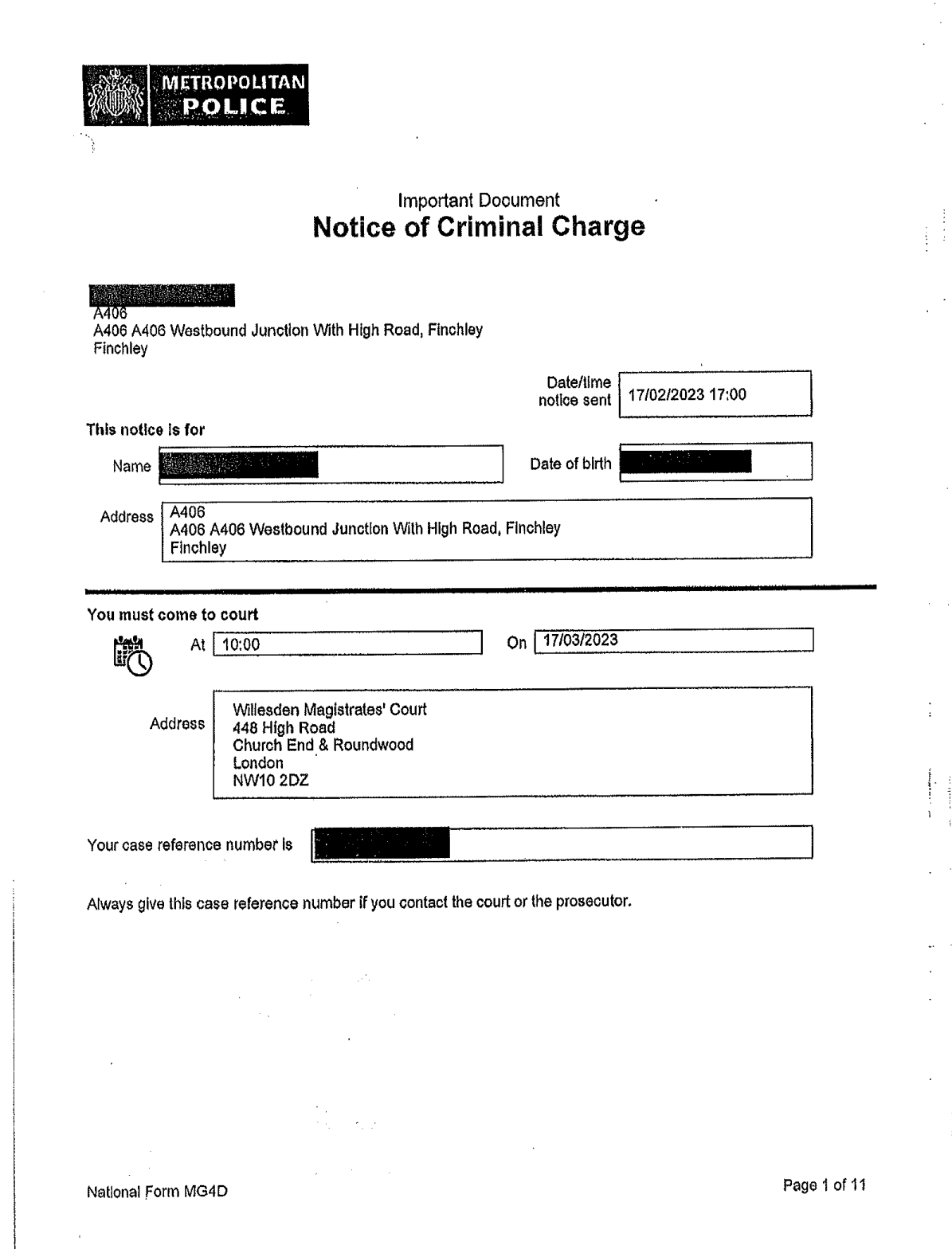









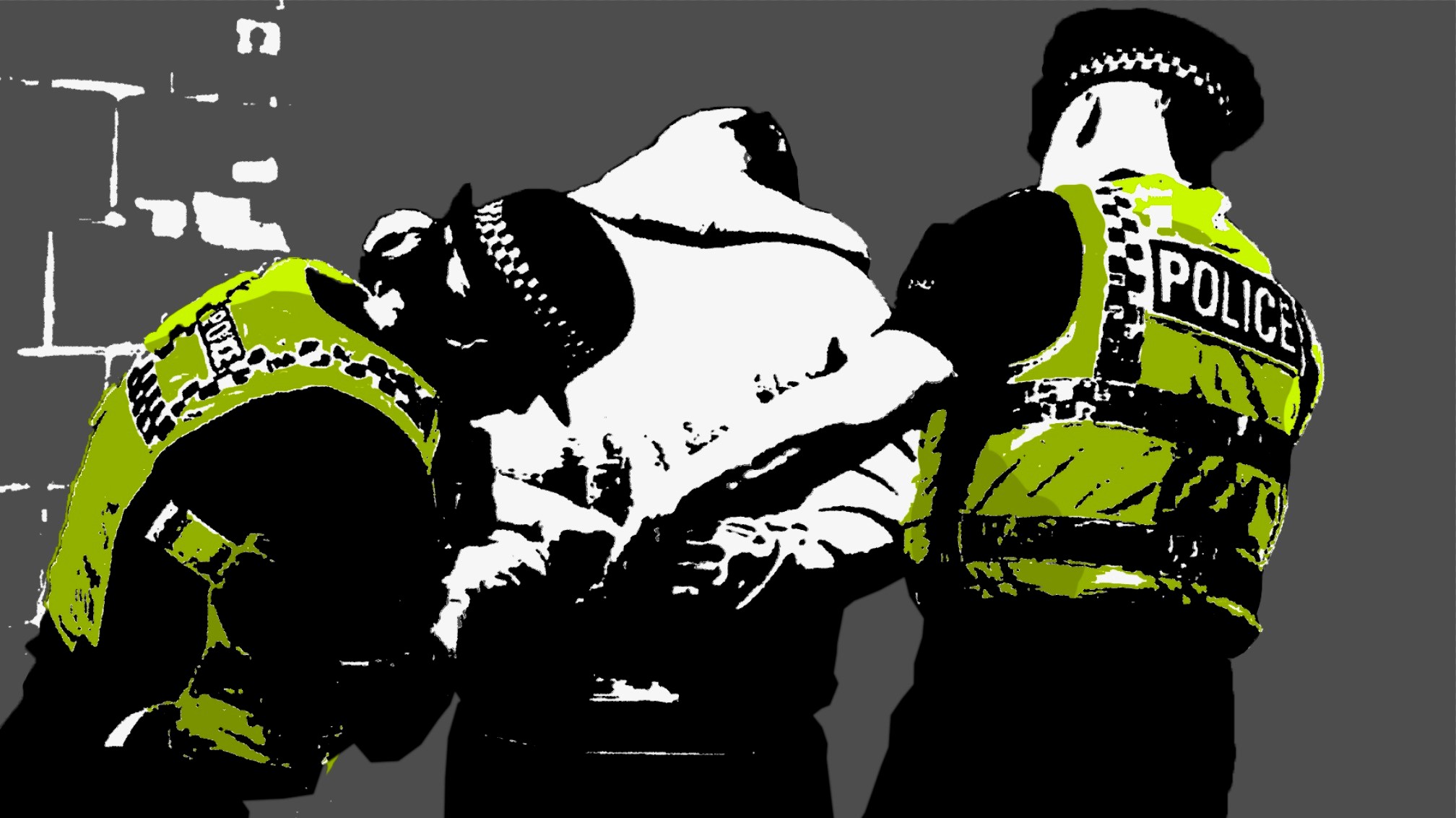







You must be logged in to post a comment.