

Each time I read another Police Complaint Outcome Report displaying naked bias in favour of the Police, and adopting a tone of either passive aggression – or indeed in some cases aggressive aggression- towards the complainant, I am left feeling angry and I reflect on what change could be implemented to Professional Standards Departments (PSD) in order to make the Police complaint system fair, effective and fit for purpose.
Increasingly, I think the problem could be identified in the third word of the title of those Police units that investigate public complaints i.e. ‘Department’.
The problem is inherent in the fact that the complaint is handled by a department or unit of the very Police Force whose Officers are the subject of the complaint. The tone which is so often adopted by PSD investigators in their communications with Officers under investigation – in the manner in which they question/interview them (even when conducting interviews under a formal caution) – and that is also displayed in the outcome report itself, so often reveals the collegiate/comradely impulses which PSD Officers have towards their fellow ‘Bobbies’. Members of the public under suspicion of an offence are ‘others’ – but Police Officers, are part of ‘us’. We are all human beings at the end of the day and none of us who are part of a tight- knit organisation ever find it easy to set aside our ‘team’ loyalties in favour of total objectivity, in the face of criticism. My experience suggests that most PSD investigators struggle to do this most of the time.
One solution would be to have Police complaints randomly allocated to another Force in England and Wales, thereby introducing a physical and emotional distance between the investigating Officers and the Officers under investigation in each complaint e.g. have West Yorkshire Police PSD investigate a complaint made against the Metropolitan Police Service, rather than by those who drink their coffee in the same canteen…
An even more radical solution, but one which certainly would shake things up in terms of Policing culture and mentality, would be to abolish the in-house Professional Standards Departments of each Force and replace them with one, national Super- Police Force whose sole role would be to handle all complaints made against Officers of the regional Forces. A kind of ‘Professional Standards Bureau of Investigation’ whose motto would be We Watch the Watchmen.
Until that day comes, I feel it remains especially incumbent upon those lawyers such as myself who specialise in representing the victims of Police misconduct, to continue to shine a spotlight on the current, inadequate system of ‘policing the police.’
A case in point is that of my client Patrick, a student who was on a night out with friends in a busy city- centre environment when he was approached by several Police Officers, including one whom I shall identify as PC Trumpton.
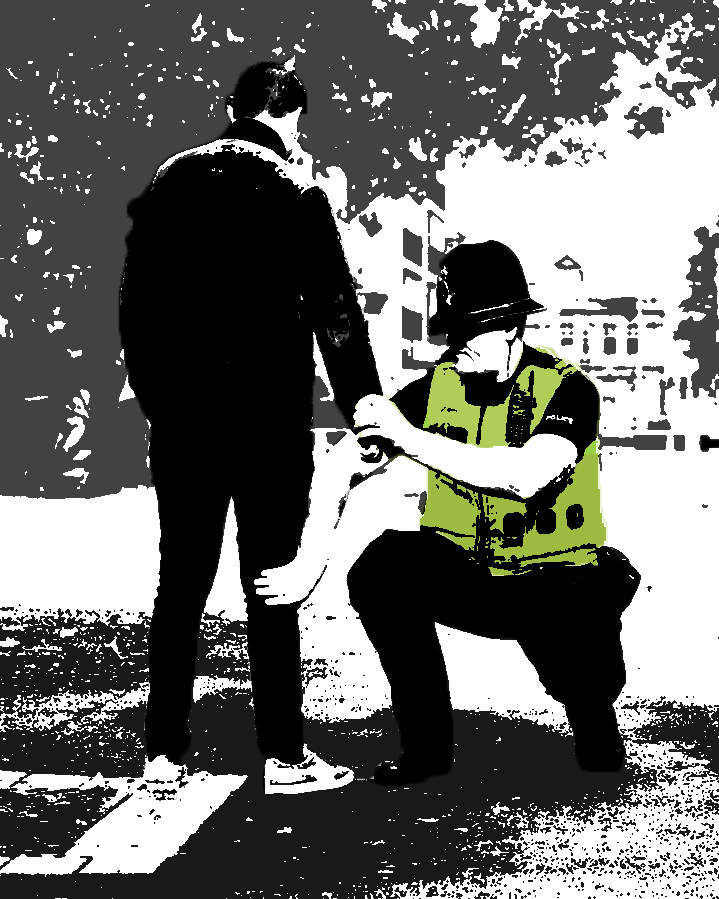
Patrick was advised that he was to be searched for drugs; he fully complied with the search and nothing was found. He had not been taking and nor was he in the possession of any illegal drugs. All Patrick was guilty of was being a little ‘merry’ after consuming several pints of alcohol.
Despite the negative search result, the Officers continued to detain my client, with PC Trumpton seeking to establish Patrick’s name and address – information to which he actually wasn’t entitled.
Patrick questioned why he was still being detained and explained that he hoped to secure a job in national security and that PC Trumpton’s actions could “fuck up” his career.
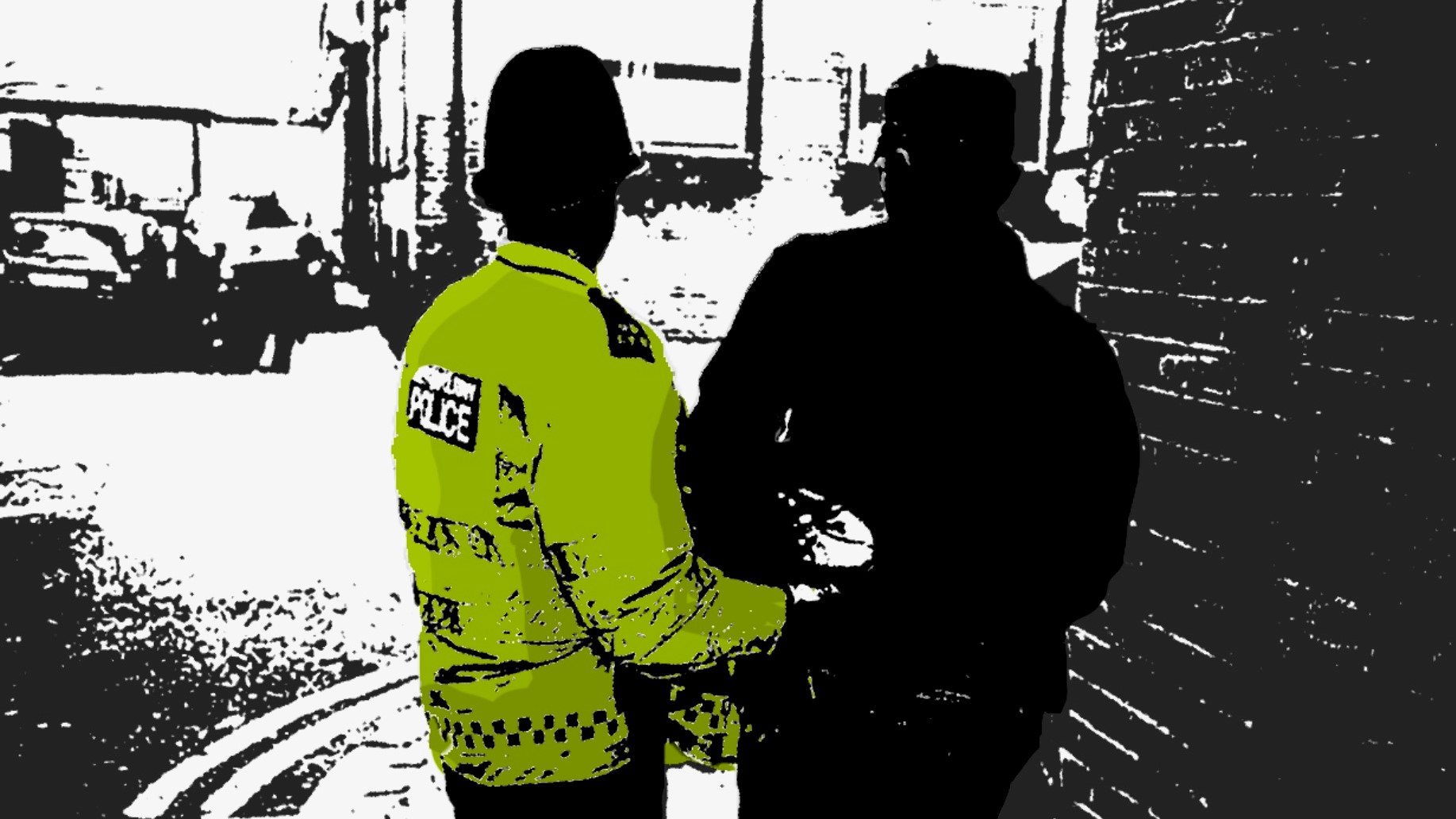
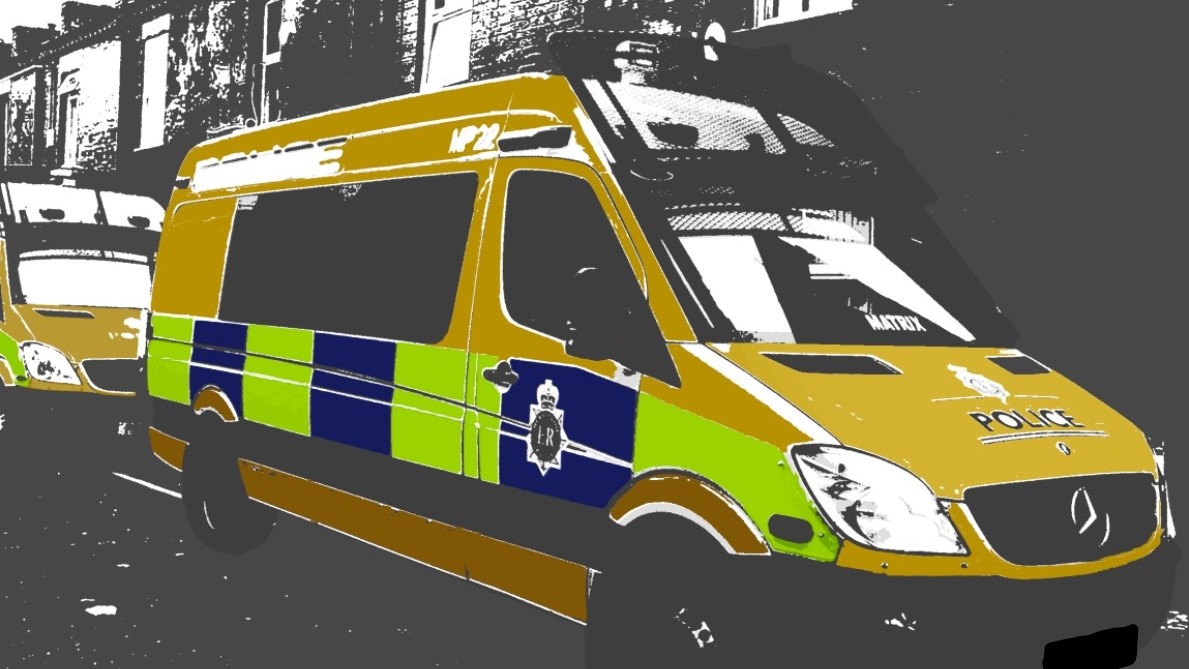
PC Trumpton now announced that Patrick was under arrest for “drunk and disorderly behaviour” whereupon Patrick, in a state of shock, was handcuffed, marched away to a Police van and then transported to the Wirral Custody Centre where he was detained overnight.
The following morning, Patrick was obliged to provide his fingerprints and a DNA sample, and be photographed, and was then issued with a Community Resolution Order. This is essentially an offer of a low-level quasi-caution, and no further legal action, in return for an ‘admission’ of the alleged offence.
I was subsequently instructed by Patrick and on hearing his story I agreed that this sounded like a gross abuse of Police power and an unlawful arrest – almost certainly not born out of a legitimate suspicion by the Officer that Patrick had committed any offence, but rather out of the Officer’s offence at being given a minor bit of ‘lip’ by Patrick.
Definition of Drunk & Disorderly Behaviour
The offence of drunk and disorderly behaviour, as defined by s.91 of the Criminal Justice Act 1967, requires that three essential elements be satisfied –
- the person is drunk AND
- is behaving in a disorderly way AND
- their conduct occurs in a public place.
To be very clear, ‘disorderly conduct’ is defined as relatively high level anti-social behaviour such as –
- engaging in fighting or ‘tumultuous’ conduct.
- making unreasonable noise and continuing to do so after being asked to stop.
- disrupting a lawful assembly of people.
What it absolutely does not encompass is low-level use of swear words, arguing with or questioning a Police Officer’s decisions or behaviour or merely being intoxicated.
Patrick had already made the decision not to accept the Community Resolution Order, and I now assisted him with the filing of a complaint against the Police.
How To Overturn a Complaint ‘Whitewash’
The ‘Finalisation Report’ produced by the Professional Standards Department was a typical piece of pro-police propaganda which displayed an almost cheerleader- like enthusiasm for the Officer who was the central subject of the complaint. All of PC Trumpton’s actions that night were deemed to be ‘acceptable’.
“No learning has been identified” concluded the report – well, I certainly agreed with that! I had no hesitation in advising Patrick to appeal the outcome to the appropriate review body (the Office of the regional Police and Crime Commissioner – the OPCC – not to be confused with the Independent Office for Police conduct – the IOPC – which has review oversight over higher level complaints).
Amidst the points of appeal which I raised on Patrick’s behalf were the following –
- Although Police body camera footage was not released to my client – the Police always keep their cards close to their chest when dealing with complaints – we did have access to a mobile phone recording of Patrick’s interactions with PC Trumpton (I have written before about the benefits of Big Brother being watched by all his Little Brothers and Sisters) and this footage demonstrated how unreasonable it was for the PSD investigator to purport to conclude that Patrick was “acting in a disorderly manner” or “repeatedly swearing at PC [Trumpton]”. In fact, the only time that Patrick could be heard swearing was when, immediately prior to PC Trumpton arresting him, my client asserted that the Officer’s behaviour towards him was “fucking up” his hopes for a career in national security. The use of a swear word in this context could, on no reasonable analysis, be deemed to constitute ‘disorderly’ behaviour, especially given that my client’s protest about his continued detention (following the negative search) and his questioning of the Officer’s continued, intrusive demands for his personal details were entirely legitimate – as PC Trumpton had no power to continue my client’s detention once the search was complete and no power to require my client to provide his personal details.
- Indeed, on the mobile phone footage available to us, the only aggressive/targeting swearing which could be heard was from one of the other Police Officers who could be heard shouting at a bystander “Stop being a fucking dickhead, now fuck off!”.
- In asserting that PC Trumpton “Patiently gave [Patrick] several opportunities to provide his details and reassured [Patrick] giving him clarification as to why he was in this situation” the PSD investigator was demonstrating either that he failed to understand the true legal framework of Police powers applicable in this situation, or else was deliberately misrepresenting the same – as he had completely failed to comment on the fact that Patrick was simply not obliged to ‘provide his details’ and hence that it was unlawful for PC Trumpton to continue to detain my client following the completion of his search.
- The PSD report also failed to engage with the fact that PC Trumpton apparently had no intention of arresting Patrick until he swore, mildly, in the manner described above, whilst expressing frustration about the effect this Police interaction could have on his future career prospects in this modern world where ‘data prints’ matter more than finger prints.
- My submission was that a reasonable, proportionate and unbiased outcome for the complaint investigation would have been for PSD to conclude that PC Trumpton had exercised his powers unlawfully by choosing to punish Patrick for what the Officer apparently perceived as a lack of respect for Police power/status and/or to rub salt into the wound about which my client was at that moment complaining (i.e. the creation of Police records which might effect his future employment) – rather than out of any reasonable belief that Patrick’s behaviour was ‘disorderly.’
I am pleased to confirm that the Police Complaints Adjudicator at the OPCC upheld significant parts of our appeal and directed the PSD to reconsider its original conclusions.
This time – and apparently solely because of my push back on behalf of my client, because the underlying evidence had not changed – another PSD investigator now concluded as follows –
“Whilst [Patrick] accepts that he is intoxicated and he is in a public place, I do not believe, from what is shown on body worn footage that his conduct amounted or met the definition of behaving in a disorderly manner and discretion could have been afforded to avoid an arrest. It is further noted that the behaviour of an individual that can be seen in the background of the footage is far more problematic and displaying further signs of disorderly behaviour than [Patrick], and yet [the other individual] is not stopped or questioned further regarding his behaviour… in summary, the grounds to conduct a search were sufficient, however any subsequent actions including the detention and arrest were unreasonable”.
In a complete reversal of the position expressed in the original PSD report, it was now conceded that PC Trumpton’s actions were ‘not acceptable’ and the Police offered an apology to my client “for the disruption and upset” caused by this incident and announced that it was now necessary for PC Trumpton to “receive learning” in relation to his powers of arrest, and specifically in regards to the grounds for an arrest for the offence of drunk and disorderly behaviour, in order to “improve any potential knowledge gaps”.
The PSD report went on to conclude with several paragraphs of ‘mantra’ regarding how ‘all complaints are taken seriously’ and how one of the ‘most important functions’ of the Police Complaint system is to support individuals and to learn from complaints and incidents where Policing standards have fallen below the expected level, which was described as “a vital source of information to help drive improvements in Policing”.
Yet further, the new complaint outcome report went on to acknowledge that “a strong learning culture… reflecting on experience and actively seeking feedback from stakeholders, including the communities we serve” was ‘extremely important’ to maintaining public confidence in the Police service.
I strongly agree with those words – but I also think that my strength of belief and investment in them is far greater than that of most PSD staff who ‘copy and paste’ such pious paragraphs into their reports (like the rote- prayers of which might ‘top and tail’ a sermon) whilst actually conducting the investigation in the opposite spirit – as demonstrated by the outcome of this particular Complaint investigation the first time around, before a lawyer got involved on behalf of this particular ‘stakeholder’.
An organisation’s ‘learning culture’ is not that strong if it depends so often on third party advocates to point out the necessary learning, is it?
A Police Complaint culture bristling with pro-police bias and an often visible antagonism towards complainants, will render the opposite results from all those polite and pious ‘mission statement’ phrases which I have quoted above and will continue to down-grade public confidence in the Police service.
Indeed, this ‘toxic’ and ultimately self-defeating element of pro-police prejudice in complaints handling was still evident in PSD’s second ‘Finalisation Report’, notwithstanding the positive conclusions which I have highlighted above.
The investigator went on to plead a bizarre form of ‘mitigation’ on behalf of PC Trumpton arguing that – despite the finding that there were no grounds to justify an arrest of my client –
“[Patrick’s] presence and/or behaviour may have resulted in an occurrence of anti-social behaviour or a public safety concern…[Patrick’s] behaviour may well have escalated again…without seeing [Patrick’s] prior behaviours, I am unable to say whether an incident may have occurred later in the evening requiring Police contact”.
I find these comments deeply disappointing, and indicative of an almost breathtaking degree of arrogance and pride on behalf of PSD – despite being led to the water trough and made to drink they are still ‘bridling’ against the admissions they have now had to make.
In doing so, the PSD investigator here appears to be day-dreaming himself into the kind of dystopian Police state in which people can be arrested for ‘pre-crimes’, not because they have committed any offence but because the whim of an Officer determines that they ‘may’. On this sort of an analysis, any partygoer who had consumed more than a few pints of alcohol and was encountered by a Police Officer in the centre of any of our vibrant student- and stag- night- centric cityscapes would be fair game for being rounded up to cool their heels in the cells overnight because of what ‘might’ happen later…
It is that form of sermonising by PSD which is indicative of “learning” that goes in one ear and out the other.
Which is why things have to change.
Names have been changed.














You must be logged in to post a comment.