Should the police use tasers on children?

This is a guest post by my colleague John Hagan. Like me, John is a solicitor who specialises in civil actions against the police.

Reflecting on my participation in a debate on the use of police tasers against children on the Jonathan Vernon Smith show (BBC Radio Three Counties, listen here) earlier this week, I am reminded of the famous words of Franklin Roosevelt – is it not the case that so often “the only thing we have to fear, is fear itself”?

Paedophobia

Mr Vernon Smith was advocating the increased use of tasers by the police (items which he described as “wonderfully useful tools” but which I might describe as “guns for electrocuting people”) as necessary to stem what he appears to believe is a rising tide of violent crime, lawless behaviour and societal breakdown particularly in urban areas blighted by poverty and people who, in his words, “have not gone to school”. He seemed to me to be painting a picture of inner- city Luton as something akin to the apocalytpic gang land of New York in the movie “Escape from New York”, and seemed to have a particular concern that the current generation of children, particularly teenagers, was more violent and out of control than 20-30 years ago. He spoke of his belief that there were ever more cases of “extreme violence where youngsters are involved.” This is in fact a common human misconception known as “paedophobia”, or fear of children, which can be found throughout the annals of recorded history. Perhaps because we know ourselves to be growing older we become fearful of the young who will supplant us; perhaps because we know nothing fundamentally bad happened to us in the past, but of course we do not know what the future holds, the present naturally seems more dangerous; perhaps because the news media thrives on the “excitement” of bad news rather than the general mundane civilities of life, it is very common for people to think they are living in a ‘worse’ time than their parents or grandparents did. Such sentiments are found being loudly expressed in every human generation.

Crime Statistics

But that does not mean they are true. The latest UK official crime statistics show, as they have shown in a continuous trend for several years now, that crime generally is falling and that violent crime in particular in at its lowest level since 1981. The April 2014 Crime Survey of England and Wales, prepared by the Office for National Statistics, shows that in 2013 on a proportional level, 2 in every 100 adults were victims of violent crime, compared with 5 in every 100 in 1995. This directly contradicts the basis on which Vernon Smith and others want to roll out ‘armament’ of the police. Violent crime is not rising; they are afraid of phantoms. And such a fear is not, in my opinion, any kind of sound basis for fundamentally changing the nature of policing in this country by replacing an unarmed constabulary with one which is armed with firearms as a matter of course.

I consider this to be the thin end of the wedge of militarisation of the police, leading inexorably towards the American model where every cop has a gun, and the population as a whole has 300 million guns, which is statistically almost one per person. Is that where we want to go ? Escalation – an ‘arms race’ between the cops and the robbers will ensue, and it is simply not necessary. We live in a more peaceful and gentle society than we did 20 years ago. And perhaps, I might have said to Mr Vernon Smith, there are other ways we should deal with the problems of the poverty and lack of education than shooting the children of the poor with taser guns.

Police Taser Abuse

My firm has represented numerous adult individuals who have suffered at the hands of police missuse of tasers. Such situations of “trigger happy” cops, overreacting with use of a taser in situations where it is not justified (such as this case about shooting a man  with a taser who has turned his back on them in his own home, or shooting a drunken man in the back, causing him to fall and knock his front teeth out) will increase as deployment of tasers proliferate and police officers carrying such weapons becomes the norm.

So I certainly do not think we should be using tasers on children, save in the most extreme examples involving older teenagers and real threats to life and limb. The fact that the host of a BBC show can quote with apparent approval statistics showing the increased use of tasers against children as young as 11-14 is I think a warning sign that we must guard our civil liberties against this type of ‘mission creep’ lest we suddenly find ourselves living in a world where such firearms proliferate , and rather than a stern word, misbehaving children are regularly dealt with by electrocution.

Red Tape

Indeed, Mr Vernon Smith who repeatedly accused me of “not living in the real world ” and being “irresponsible” and “very disrespectful” to the police, showed that his sympathy appeared to be with the person who pulled the trigger on the taser gun, rather than the person on the receiving end of it, on the basis that, to paraphrase slightly, there’s a lot of paperwork to fill in if you shoot people. Red tape, eh? An interesting perspective with which I can do nothing but disagree in the strongest possible terms.

Mr Vernon Smith put it to me that if the police wanted tasers was that not a reason to give them tasers? Absolutely not. For all the fantastic and often very brave work that police officers do, let us not forget that giving the police unquestioningly what they ask for is living in a police state. Our society preserves its liberty and happiness by checks and balances. If the police ask for something, I think it is ok to say “No”.

And to expect not to get shot down for it.


Why the New Police Code of Ethics is a Waste of Paper

Picture of Iain Gould, Solicitor (lawyer) and specialist in actions against the police claims.
Iain Gould, Solicitor (lawyer)

By Iain Gould, Solicitor

I was interviewed for BBC Breakfast today about the new Police Code of Ethics.

The Code, which you can read on the College of Policing website, serves as a reminder to police officers to fulfil duties that seem basic and obvious.

Described by Chief Constable Alex Marshall as ‘a first for everyone who works in policing in England and Wales’, it applies to all those who work in policing, including volunteers and contractors.

The Police Code of Ethics applies the ‘Nolan’ Principles, which originate from the 1995 report prepared by the Committee on Standards in Public Life, and holds at its core the following principles:

  • Accountability
  • Fairness
  • Honesty
  • Integrity
  • Leadership
  • Objectivity
  • Openness
  • Respect
  • Selflessness

In addition, the Police Code of Ethics incorporates the existing Standards of Professional behaviour which covers the following:

  • Honesty and Integrity
  •  Authority, Respect and Courtesy
  • Equality and Diversity
  • Use of Force
  • Orders and Instructions
  • Duties and Responsibilities
  • Confidentiality
  • Fitness for Duty
  • Discreditable Conduct
  • Challenging and Reporting Improper Conduct

Despite referring to the Nolan Principles, I am struck by how little attention they are afforded. In the whole 32 page document only one page sets out the Principles and how they apply to policing in the UK.

As police officers are already obliged to respect and behave in accordance with Standards of Professional behaviour, which take up the vast majority of the new Code, this is merely a re-branding exercise.

What’s required is real reform.

Police Misconduct to Continue

Last year I wrote about why the existing system for dealing with police misconduct, which has been carried over into the new Police Code of Ethics, fails the public.

Then I found myself in the unusual position of agreeing with Sir Hugh Orde, Chairman of the Association of Chief Police Officers, when he said that it is ‘critical’ that there now be a fully independent police investigation system.

At the heart of any reform must be the introduction of a robust and objective disciplinary system.

The greatest encouragement to police corruption is a disciplinary system which makes no adequate effort to detect and punish corruption or misconduct.

The Independent Police Complaints Commission has proved useful but is woefully under-resourced and by reason of the Police Reform and Social Responsibility Act (2011), the majority of complaints against the police are dealt with in-house by the same Police Force.

As a result, investigations are often simply a whitewash.

Consider, for example, the experience of my client Pamela Boxford-White. She complained to Wiltshire Police following her (unlawful) arrest for Breach of the Peace using the internal police complaints procedure. Unsurprisingly, her complaint was rejected. She was told by a Chief Inspector in Wiltshire Police that the officers who arrested her had no case to answer and that no further action would be taken.

I had to issue civil court proceedings on her behalf to get the apology and compensation she deserved.

Only when government and the police make genuine and robust efforts to tackle corruption and misconduct in their ranks will it stop.

The introduction of a new Police Code of Ethics, while good for media coverage, changes nothing.

If you have suffered as a result of police misconduct and want help to sue the police, contact me using the online form below, on 0151 933 5525, or via my firm’s website.


Will the Metropolitan Police Abuse their Body Cameras?

By Iain Gould, Solicitor

I was interviewed on BBC Radio 5Live today about the Metropolitan Police’s decision to pilot a scheme in which 500 front line officers will wear body cameras.

You can hear the interview here:

Body camera debate

There is considerable debate about the use of body cameras, which is not surprising given that the trial, if extended, will ultimately result in 10,000 to 20,000 Metropolitan Police officers using the cameras, with many more around the UK following suit.

In my opinion, such cameras have the potential to be crucial in re-establishing public confidence in the police. They can help members of the public in their fight against police misconduct and at the same time help the police reduce the number of complaints and police abuse claims made against them.

But the Metropolitan Police Commissioner, Sir Bernard Hogan-Howe, has said that such cameras will not be permanently switched on and that officers will be able to turn them on and off as they choose.

If this is allowed the body cameras’ role in providing a much-needed check and balance against abuse of police powers will be lost.

Picture of a police officer wearing a body camera.
Police officer wearing a body camera.

Many reasons why continuous recording will never happen have been put forward (Human Rights, employment regulations, and so on) but unless the deployment of such cameras is not subject to stringent guidelines, their effectiveness will be limited.

I would suggest a mandatory rule that such cameras must be turned on during any interaction with the public. If an officer fails to do so, not only should disciplinary action be taken when it is established that the camera was not deployed, but any footage obtained should be excluded from being used as evidence. This would have the desired effect of putting pressure on the police officers on the beat (and their superiors) to ensure that the cameras are routinely used.

As with any new habit, a ‘carrot and stick’ approach would help. The ‘carrot’ is ensuring that the difficult job of being a front line police officer is supported by impartial and contemporary evidence from a video camera. The ‘stick’ reminder of the threat of disciplinary action or a failed prosecution will help to ensure compliance.

Political motive for body cameras?

Unless and until such guidance is issued, the deployment of these cameras is little more than a political quick fix to try to restore public confidence.

What is really required is a change of culture where all police forces adopt a robust complaints system that is open and transparent and where police officers are held to account. The use of body cameras would go some way to providing the transparency required, but without a system of continuous use when interacting with the public, the Metropolitan Police’s motives could be seen as suspiciously self-serving.

If you have a police abuse claim and want legal help, contact me, Iain Gould, using the online form below, on 0151 933 5525, or via my firm’s website.


Image credit: West Midlands Police on flickr.

‘Can We Trust the Police?’- ITV ‘Tonight’ Programme

Picture of Iain Gould, Solicitor (lawyer) and specialist in actions against the police claims.
Iain Gould, Solicitor (lawyer)

By Iain Gould, Solicitor

Recently I was interviewed for an ITV ‘Tonight’ programme about trust in the police.

The programme, which deals with police misconduct, will be broadcast on ITV at 7.30p.m. tonight, Thursday 13 February 2014.

As a solicitor who specialises in police misconduct claims the producers sought my input on a number of issues relating to the question of public confidence in the police. They also interviewed one of my clients who had suffered as a result of police misconduct.

The reporters commissioned a survey of 2,000 people. 1 in 5 of those surveyed felt that the police were not on their side. Almost 2 in 5 considered that corruption was a problem within the police.

Police Misconduct Compensation Claims

My clients Peter Garrigan and Karim Allison would agree with the people surveyed who were concerned about perceived police corruption.

Both of them had to fight all the way to civil jury trials to clear their names after they were prosecuted in criminal courts using false evidence submitted by the police.

In my experience, the police fabricate evidence. But they would have the public believe that the police misconduct cases I deal with are rare, and that things are improving. Indeed, David Crompton, the Chief Constable of South Yorkshire Police, sought to assure the public that his force was now a ‘very different place in 2012’ compared to the Hillsborough era.

And yet I am contacted on a regular basis by people like Peter Garrigan and Karim Allison. Ordinary men and women who have suffered as a result of police misconduct.

Despite promises that things have changed since:

  • Hillsborough;
  • Stephen Lawrence;
  • Jean Charles de Menezes;
  • Andrew Mitchell‘s ‘plebgate’ affair; and
  • countless other scandals,

I am not convinced by the police’s platitudes.

In the past I have supported calls for a Royal Commission (see here). I repeat that call again. It is time that the police account for their actions. It is the only way to restore public confidence.

If you have suffered as a result of police misconduct contact me using the online form below, on 0151 933 5525, or via my firm’s website.

Update

The programme can be seen via the ITV player for a short time by clicking here.


How False Imprisonment Claims Can Be Made Against Private Security Companies.

Picture of Iain Gould, Solicitor (lawyer) and specialist in actions against the police claims.
Iain Gould, Solicitor (lawyer)

By Iain Gould, Solicitor

I recently settled an assault and false imprisonment claim for my client, Mark Holt. (He has agreed to me giving his details.)

Mark, 53, is a prominent local businessman and peace campaigner who has never been in trouble with the police before.

You can read his case report here.

False Imprisonment at a Train Station

On Tuesday 10 January 2012, Mark Holt (pictured below) was returning home from a day out in Liverpool with his wife. He attempted to pass through the ticket barriers at Liverpool Central Train Station but was prevented from doing so by a ticket inspector, and was then assaulted by a private security guard.

The guard was employed by Carlisle Security, a sub-contractor of Merseyrail, the station operators.

Photo of Mark Holt, who made a false imprisonment claim against a private security company.
Mark Holt, who made a false imprisonment claim against a private security company.

Mark, who was not misbehaving, was put in a headlock and forced to the ground by the guard, smashing his right front tooth and cutting his lip. He also injured his neck, shoulders, and back in the assault. He suffered psychologically and needed medical treatment.

Another Carlisle Security guard came to assist in pinning Mark to the ground while British Transport Police Officers were called.

To (literally) add insult to injury, the first security guard gave a false statement to the police who attended saying that Mark:

  • had thrown a punch, which missed;
  • that he was abusive and disorderly; and
  • that the guard restrained him out of fear for his own safety.

The police accepted this (false) version of events and arrested Mark for a breach of section 4 of the Public Order Act.

Mark was kept overnight in a police cell before being released twelve hours later on police bail.

The police later dropped the case.

Claim for Assault and False Imprisonment Against a Private Security Company

Private security companies will understandably be liable if their employees assault or imprison members of the public unlawfully but what about when a third-party, in this case the Police, imprison the individual? Who, if anyone, is liable?

Upon arrival, the Police Officers were given a version of events by the security guard. Although never challenged, I expect that the officers would say that they quickly formed a reasonable suspicion that a Public Order offence had been committed by Mark, so they were justified in arresting and detaining him.

The 12 hour detention would also be justified by the Police. They would say that as Mark had had a drink it was reasonable for his rights to be delayed at the Police station while he was ‘bedded down’ for the night. The next morning, he was interviewed and then released on Police bail.

So, on the face of it, the Police had acted lawfully.

But could the security company be liable instead for Mark’s arrest and imprisonment by the Police? Could they be liable for the officers’ actions even though the Police themselves had acted lawfully?

According to Lord Bingham in the case of Davidson v North Wales Police (1994), if a person merely gives information upon which a Police Officer decides to make an arrest, that person would not be liable. If on the other hand, that person’s conduct amounted ‘to some direction, or procuring, or direct request, or direct encouragement, that they (the police) should ….arrest’ that individual would be liable to an action for false imprisonment.

Here, I was of the opinion that the security guard had procured the Police Officers to act as they did and therefore the security company would be liable for both assault and false imprisonment.

CCTV Footage Helps Prove the False Imprisonment Claim

I obtained CCTV footage which proved that the security guard had assaulted Mark. It also showed the police attending and Mark being handed over to them by Carlisle Security’s guards.

In the circumstances, I claimed damages for Mark against Carlisle Security Ltd.

After I submitted the claim, Carlisle Security’s Head of Legal also reviewed the CCTV footage and responded by explaining that the company provide ‘byelaw enforcement officers’ who have the power to arrest and detain or issue penalties to passengers breaking Merseyrail’s byelaws.

He felt that his company’s security guards were acting correctly as they were assisting Merseyrail staff in enforcing byelaws, as they felt that Mark was not in a fit condition to travel. So he denied liability for Carlisle Security.

Following review by the company’s insurers, this denial of liability was retracted and liability admitted.

However, the insurers refused to settle at a reasonable amount so I issued proceedings for Mark Holt’s claim for assault and false imprisonment and eventually settled it for four times more than their original offer. This meant that Mark received a five-figure sum plus legal costs.

Private security guards, or ‘byelaw enforcement officers’, may seem like a cost-effective way for public transport operators to enforce their laws.

But, without the proper training, and recognition that their guards are acting with police-like powers, private security companies are at risk of more false imprisonment claims.

If you have a false imprisonment claim and want compensation contact me using the online form below, on 0151 933 5525, or via my firm’s website.


Why must Court Proceedings be issued in a Compensation Claim Against the Police?

Actions against the police solicitor Iain Gould

By Iain Gould, Solicitor

Sometimes I get frustrated when helping my clients bring a compensation claim against the police.

What appears to be a perfectly straightforward case against the police where compensation should be paid can often result in a hard-fought battle.

When this happens I have no alternative but to issue court proceedings and fight for my clients all the way to a Court hearing.

This is expensive, time-consuming, and stressful for all involved, including the police officers themselves who, like my clients, must endure cross-examination at Court.

I had to take another compensation claim against the police to trial last week because the Metropolitan Police refused to settle.

My client, Luke Appleyard, 21, a student at the University of London, will shortly receive £13,250 from the Metropolitan Police after being attacked by a police dog.

(You can read the full case report here.)

So, taking his compensation claim against the police all the way to a jury trial was worthwhile. But was it really necessary?

Compensation Claim Against the Police for Defenceless Student

Photo of my client Luke Appleyard, who I represented in his compensation claim against the police
Luke Appleyard

Shortly after midnight on Friday 9 October 2009, Luke (pictured and details used with permission), of Carshalton, Surrey, was walking with a friend through Carshalton Park.

The park was dark and quiet.

Suddenly, an Alsatian dog appeared running quickly towards them. Without warning, the dog jumped up and bit Luke on his right forearm, which he had instinctively raised to protect his face.

The dog hung on for what Luke estimates was three minutes before Metropolitan Police officers arrived and released it.

Luke’s arm (shown below after the wounds had been cleaned) was bleeding heavily but the police insisted on searching him before getting medical help.

Photo of Luke Appleyard's arm after he had been attacked by a police dog.
Luke Appleyard’s arm after the police dog attack.

He was later told that the dog had been set on him as a result of mistaken identity, and that the police were searching for two robbery suspects.

Mr. Appleyard was taken by ambulance to hospital where his bite wounds were treated. He has since been left with about 20 scars on his right arm which makes him uncomfortable wearing short sleeves in public.

Luke Appleyard had never been in trouble with the police before. After the unprovoked attack, he:

  • was injured;
  • was upset;
  • suffered nightmares;
  • developed a fear of large dogs; and
  • lost confidence in the police.

As he received no apology or offer of compensation from the police, he decided to take matters further.

He found my details online and asked me to represent him in his compensation claim against the police.

After discussing it with him, I decided to take his claim. I initially represented Luke as a legal aid lawyer but later, when funding was withdrawn, acted on a ‘no win no fee’ basis.

I submitted details of Luke’s claim but the Metropolitan Police denied liability, saying that the police dog handler acted within the police’s guidelines when deploying the dog, ‘Storm’.

They claimed that Luke was running away, that the officer shouted a warning before releasing Storm, and that the force used was reasonable and necessary.

As this was a very different version of events to the one Luke had told me, I had no alternative but to take Luke’s compensation claim against the police to a full jury trial.

Compensation Claim Against the Police Wins at Jury Trial

On Wednesday 11 December, at the conclusion of the three-day trial at the Central London Civil Justice Centre, the jury returned a verdict indicating that they did not believe the Metropolitan Police officers’ account.

They heard evidence that the police officer in control of Storm was 110 metres away from Luke and his friend when the dog was released. The police dog handler claimed that he:

  • was able to make a positive identification from this distance;
  • shouted an audible command to Luke to stop running; then
  • released Storm.

I had seen the police officer’s statement long before the trial and was sure that this was impossible.

Manchester United’s football pitch is 105 metres from goal to goal.

Photo of Manchester United's football pitch.
View of Manchester United’s football pitch.

The officer claimed that he could see further than that distance in the dark and positively identify Luke and his friend as the people they were searching for.

The jury disagreed with the police’s version of events. They were not satisfied that Luke and his friend were running, or that the decision to release Storm was necessary or reasonable.

Paying for a Compensation Claim Against the Police

Instead of apologising and offering fair compensation, the Metropolitan Police fought Luke’s genuine claim so that he had no alternative but to go to an expensive, and unnecessary, jury trial.

The legal costs on both sides in Luke’s case will be many times more than the compensation he is paid. Because he won, all costs will be paid by the Metropolitan Police, who in turn are funded by taxpayers.

At a time when the Metropolitan Police’s funding is being closely examined, I hope those responsible will think long and hard about their conduct.

If you want to make a compensation claim against the police contact me, Iain Gould, using the online form below, on 0151 933 5525, or via my firm’s website.

Image credit: cc licensed ( BY ) flickr photo by Paul: http://flickr.com/photos/vegaseddie/6160401568/


British Transport Police ordered to pay compensation after police fabricated evidence

Picture of Iain Gould, Solicitor (lawyer) and specialist in actions against the police claims.
Iain Gould, Solicitor (lawyer)

By Iain Gould, Solicitor

Yesterday, British Transport Police (‘BTP’) were ordered to pay £13,000 plus legal costs to my client Peter Garrigan after serving police fabricated evidence.

Peter, a 26-year-old Liverpool man, was awarded compensation after a unanimous jury verdict following a four-day trial at Liverpool County Court.

The jury found that:

  • PC Paul Quest of British Transport Police unlawfully assaulted Mr Garrigan;
  • the police unlawfully arrested him, issued him with a Fixed Penalty Notice for breach of s.5 of the Public Order Act and, most shockingly of all;
  • one or two serving officers of British Transport Police fabricated evidence against my client ‘in order to cause him to be punished for  something they knew he had not done or to escape punishment for their own misconduct’.

Compensation claim against the police after fabricated evidence

Peter (shown below and details used with permission) instructed me as I specialise in civil compensation claims against the police. You can read more about me and the work I do by clicking on the link.

Picture of Peter Garrigan, a man who won a claim against the police after they fabricated evidence against him.
Peter Garrigan, showing a black eye caused after a police assault.

I previously wrote about his case as it involved a jury trial, where unfortunately a jury failed to reach a verdict. After another jury heard the evidence, they all agreed that the allegations of police assault, misconduct and police fabricated evidence were proven.

Mr Garrigan bravely took on the police, endured three trials where his evidence was tested under cross-examination, and waited four years for justice. He had never been in trouble with the police before, or since. His impeccable character has been confirmed by this significant court judgment.

His case has parallels with the Andrew Mitchell ‘plebgate’ story, which I have written about here. Mr Mitchell is currently dealing with his own case where the police allegedly fabricated evidence.

This is yet another example of abuse by serving police officers that proves that the experience of Andrew Mitchell is not unique.

Both my client and I hope that the negative publicity and judicial criticism British Transport Police have received will make serving police officers think twice before fabricating evidence in future.

You can read a full case report by clicking on the link.

If you believe that the police fabricated evidence to prosecute you and want to claim compensation, contact me using the online form below, on 0151 933 5525, or via my firm’s website. Alternatively, read more by clicking the home page link.


Can the Police be trusted to Police themselves?

(NOTE: 10 June 2015. This post has been updated to reflect that two of the police officers involved in the Taser story below were subsequently re-instated to Merseyside Police following their dismissal. My thanks to Jeremy Clarke-Williams of Slater and Gordon for bringing this to my attention.)

 By Iain Gould, Solicitor

Picture of Iain Gould, Solicitor (lawyer) and specialist in actions against the police claims.
Iain Gould, Solicitor (lawyer)

A man was forced to pursue numerous appeals to ensure that his police complaint was upheld.

At first blush, this would appear to be entirely unrelated to the Andrew Mitchell story, which I have previously written about.

In fact, they are linked by a common thread:

  • the mis-handling of complaint investigations by senior police officers, and
  • whether police can be trusted to police themselves.

Police Complaint after Taser assault in Liverpool

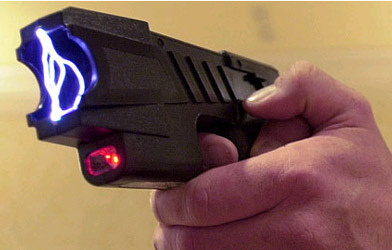
Picture of a Taser being discharged.In December 2009 PCs Simon Jones and Joanne Kelly, were on patrol in Liverpool with a Sergeant (who has since been dismissed for an unrelated matter), when they arrested Kyle McArdle for urinating in a street.

Mr McArdle was put in the back of a police van and shot with Tasers five times. (You can read my thoughts on the increase in Taser use by clicking on the link.)

The Taser barbs, metal hooks which attach to the body to transmit the electric current, were removed by an officer rather than a medical professional, contrary to guidelines (unless there is an ‘operational necessity’).

To add insult to injury, Mr McArdle was prosecuted for assaulting two of the officers. He was found not guilty at the Magistrates’ Court, and pursued a formal complaint.

Mr McArdle’s initial complaint was made to Merseyside Police themselves. He argued that the use of Taser force in the back of the police van was disproportionate. The police accepted that their officers should receive guidance on the use of their powers only and rejected the rest of his complaint.

So Mr McArdle was forced to appeal to the IPCC. They returned the complaint to the Force to consider whether the use of Tasers would have been considered proportionate if he had been lawfully arrested.

Merseyside Police’s leading Taser instructor said that the Taser assault was ‘necessary, proportionate, reasonable and in line with the officers’ training and Association of Chief Police Officers guidance’.

Given this opinion, the Force maintained their denial.

Mr McArdle again appealed to the IPCC. They re-considered the case and decided that, contrary to Merseyside Police’s internal investigation, the officers involved should have been served with notices for gross misconduct and interviewed under caution. PCs Jones and Kelly were then subsequently dismissed following the misconduct hearing.

UPDATE: I have since been informed that PCs Jones and Kelly appealed their dismissal to the Police Appeals Tribunal (“PAT”) and were re-instated to Merseyside Police following a hearing on 28 June 2014, in which their solicitor states that “the PAT unequivocally rejected the determination of the misconduct tribunal in the clearest possible terms”. Their reinstatement is confirmed in the IPCC’s updated press release which can be read on their website here.

Aside from the officers’ dismissal and subsequent re-instatement, the IPCC Commissioner criticised Merseyside Police’s investigation of the incident. In particular, he said, ‘it is a concern that Merseyside’s lead Taser instructor lacked objectivity and presented as fact the officers’ version of events without challenge’.

Andrew Mitchell’s ‘plebgate’ saga

Picture of Andrew Mitchell, 'plebgate politician' involved in a police misconduct matter.
Andrew Mitchell, ‘plebgate’ politician

The Andrew Mitchell affair (which I have commented about on numerous occasions but most recently here) revealed that the four police officers and their associates initially involved in the saga fabricated evidence about the incident at Downing Street on 19 September 2012.

At a subsequent meeting on 12 October involving three senior members of the police officer’s union, the Police Federation, Mr Mitchell sought to explain his comments and re-iterated that he had not used the word ‘pleb’, which is short for ‘plebeian’, or commoner.

Immediately after the meeting, Inspector Mackaill, one of the officers at the meeting, told waiting journalists that Mr Mitchell had not provided an account of the incident and called for his resignation.

Unfortunately for the officers at both the initial incident, which was caught on CCTV and can be seen here, and the subsequent meeting, which Mr Mitchell secretly recorded, the evidence showed that they had not told the truth.

West Mercia Police carried out an internal investigation into claims the three officers had been trying to discredit Mr Mitchell. It concluded that there was no case to answer for misconduct or gross misconduct and found that there was no deliberate intention to lie to journalists.

The IPCC, which oversaw the West Mercia investigation, said West Mercia Police had been wrong to conclude the three police officers had no case to answer for misconduct.

Deborah Glass, the IPCC deputy chair, said in her statement that the false account of the meeting provided by the police officers involved ‘indicates an issue of honesty and integrity, not merely naïve or poor professional judgment (sic)’.

She has called for a misconduct panel to be held to establish whether the three officers gave a false account in a deliberate attempt to discredit Mr Mitchell in pursuit of a wider agenda.

Home Secretary Theresa May said the IPCC’s report “made troubling reading”.

Police complaints procedure

Only serious complaints against the Police are directly referred to the independent Police watchdog, the IPCC, for investigation. These include cases involving:

  • death in custody,
  • serious injury,
  • matters involving sexual assault or sexual offences,
  • serious corruption, and
  • certain criminal offences.

All other cases are dealt with internally, by the appropriate police force’s complaints department (also known as the professional standards department (‘PSD’).

Up until May 2012, when the Police Reform and Social Responsibility Act (2011) came into force, all complainants had a right of appeal following local and supervised investigations by a PSD to the IPCC.

Now that right of appeal to an independent body is restricted to only the most serious of cases, so that there is less opportunity to hold the police to account.

In both the McArdle and Mitchell cases described above, serious issues meant that the IPCC were involved. The IPCC allowed the individual police forces to investigate and decide whether there was wrongdoing or not. Following internal investigations, the complaints investigators said that there had been no misconduct that required sanction.

On appeal/review by the IPCC however, it was found that such findings were seriously flawed.

So, can the Police be trusted to investigate themselves?

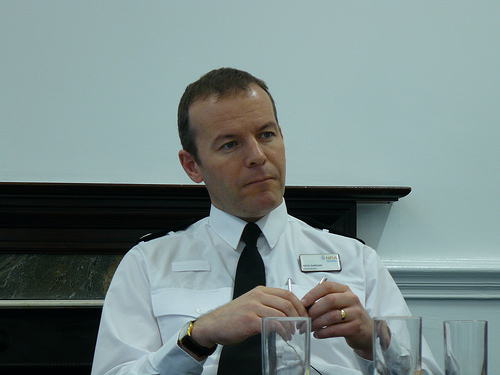
Photo of Sir Hugh Orde, Chairman of ACPO
Sir Hugh Orde, Chairman of ACPO

Speaking on BBC Radio, Sir Hugh Orde, the Chairman of the Association of Chief Police Officers and a former Chief Constable, said that it is ‘critical’ that there now be a fully independent police investigation system. (You can listen to the interview by clicking here).

I agree. The current system where the police investigate themselves is deeply flawed and, to restore public confidence in the police and the police complaints process, independent investigations in each and every case need to be conducted.

But is it enough simply to point the finger at the IPCC, who would no doubt say that the Mitchell and McArdle cases described above did not fit within the criteria, so that they had no authority to conduct investigations from the beginning?

Don’t the police have some responsibility too?

It strikes me that blaming the investigations process merely deflects attention away from the core issue: trust.

Public trust is damaged when we routinely hear about police misconduct at the rank and file level which is then covered up by their superiors or force complaints departments.

It is made worse when, rather than apologise and accept responsibility, senior police officers and their representatives blame everyone but themselves.

At today’s House of Commons Home Affairs Select Committee meeting, the Chief Constables of West Mercia, West Midlands, and Warwickshire Police, will explain why they declined to pursue misconduct charges against the three officers involved in the October meeting.

It is hoped that the meeting will be productive and not merely a repeat of the blame game played out in the media since September last year.

The Chief Constables should be reminded of Robert Peel’s principles to define an ethical police force, and in particular, this quote attributed to him: 

‘The police are the public and the public are the police; the police being only members of the public who are paid to give full time attention to duties which are incumbent on every citizen in the interests of community welfare and existence.’

For more information on pursuing a civil action against the police go to www.iaingould.co.uk. Contact me using the form below or via my firm’s website.

Sir Hugh Orde: cc licensed ( BY ND ) flickr photo by Liberal Democrats: http://flickr.com/photos/libdems/3940872401/


Why it’s time for the Police to face the music

Picture of Iain Gould, Solicitor (lawyer) and specialist in actions against the police claims.
Iain Gould, Solicitor (lawyer)

By Iain Gould, Solicitor and specialist in actions against the police

Peter Oborne’s article in The Telegraph today (click on the link to access it) makes a number of interesting points about police misconduct in the aftermath of the Andrew Mitchell ‘plebgate’ scandal.

I have previously blogged about the Mitchell case here, where I make the point that the police routinely fabricate and exaggerate evidence, and in this blog post where I question whether an ordinary citizen would receive the same treatment as a government minister.

Mr. Oborne says that, when first hearing about the Andrew Mitchell affair, his initial sympathies were with the police. As The Telegraph’s Chief Political Commentator he frequently sees senior politicians behave in a rude or overbearing manner to people they consider beneath them. With this in mind, it was not hard for him to believe the police’s claim that Mr. Mitchell used the word ‘pleb’ while insulting them.

But his views changed when, after a Channel 4 investigation produced CCTV footage which contradicted the police’s version of events, officers involved in the initial incident were arrested on suspicion of misconduct.

Picture of Andrew Mitchell, 'plebgate politician' involved in a police misconduct matter.
Andrew Mitchell, ‘plebgate’ politician

Further, Deborah Glass, the Deputy Chair of the IPCC, recently stated that a ‘clear the air’ meeting between Mr. Mitchell and serving police officers in the Police Federation resulted in more police misconduct.

She asserts that the three police officers concerned gave a false account of the meeting in order to add more political pressure on Mr. Mitchell, and questions the police’s own investigation which found that those officers had no case to answer for misconduct or gross misconduct.

As the internal report by the IPCC initially proposed disciplinary action, the matter is continuing with Home Affairs Committee Chairman Keith Vaz demanding an explanation.

Royal Commission into Police Misconduct

Mr. Oborne argues for a Royal Commission to restore confidence in the police who have been rocked by this scandal, Hillsborough, the Jean Charles de Menezes affair, the Stephen Lawrence enquiry, and many others.

One such case he refers to was that of my client Karim Allison. (You can read the case report on my website by clicking on the link.)

Karim Allison was prosecuted after making a complaint about a police officer.

Like Andrew Mitchell, he was the subject of a police conspiracy in that police officers joined together to fabricate evidence against him. Unlike Mr. Mitchell, Karim had to endure the stress and upset of a lengthy criminal prosecution which only ended on appeal at the Crown Court.

It was at that point that he instructed me as a solicitor who specialises in actions against the police.

Despite the high risks involved in accusing the police of misconduct, I pursued Karim’s case all the way to trial.

The police fought hard, denied liability and any wrongdoing, but after the trial a jury found that the officers involved had fabricated evidence. The finding, which was not appealed, confirms on the court record that the police lied to secure a conviction of an innocent man.

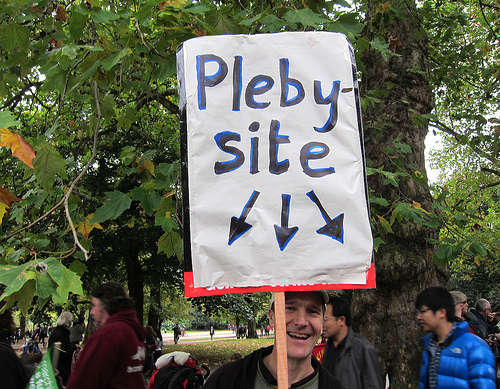
Picture of a protester holding a sign referencing Andrew Mitchell, involved in the 'plebgate' police misconduct case.
Protester holding a placard referencing Andrew Mitchell.

Police Misconduct investigation

I support Mr. Oborne’s call for a Royal Commission. There has to be an in-depth and impartial enquiry into at least:

  • police conduct at the lower level, where prosecutions are started and stories fabricated, and
  • at the higher level, where police officers who are guilty of misconduct, fabrication etc. are treated leniently by their superiors in the Police.

There can be no more easy rides for the police. Penalties must be harsher to act as a deterrent to future misconduct.

The option of early retirement must be removed for those in the Police who are found guilty of misconduct, and, where appropriate, they should be prosecuted in the criminal courts to the full extent of the law.

If ordinary citizens like Karim Allison are expected to defend themselves in court when charged with criminal offences, then why shouldn’t their accusers?

If you have been prosecuted for an offence where you suspect the police fabricated or exaggerated evidence, contact me, Iain Gould, using the online form below, on 0151 933 5525, or via my firm’s website.

Images:

Andrew Mitchell: cc licensed ( BY ) flickr photo by DFID – UK Department for…: http://flickr.com/photos/dfid/4603106939/

Protester: cc licensed ( BY SA ) flickr photo by Alan Stanton: http://flickr.com/photos/alanstanton/8110650330/

Why did Christopher Jeffries’ false imprisonment claim fail?

Picture of Iain Gould, Solicitor (lawyer) and specialist in actions against the police claims.
Iain Gould, Solicitor (lawyer)

By Iain Gould, Solicitor

I read on the BBC website today that Christopher Jeffries, the man wrongfully accused of the murder of Joanne Yeates in December 2010, has accepted a written apology and a small amount of compensation for damage to his home following the police search.

Nick Gargan, the Chief Constable of Avon & Somerset Police (shown below) has written to Mr. Jeffries and was interviewed on camera confirming that:

  1. Mr. Jeffries is no longer a suspect in the case, and
  2. that the police regret the suffering he experienced as a result of them not making it clear that Mr. Jeffries was no longer a suspect on his release from bail on 5 March 2011, and
  3. inviting Mr. Jeffries to meet with him to ‘discuss any lessons’ the police could learn from his treatment and experience.
Picture of Nick Gargan, Chief Constable
Nick Gargan, Chief Constable of Avon & Somerset Police

However, no compensation has been paid for Christopher Jeffries’ claimed ‘false imprisonment, breach of human rights, and trespass to person and property’.

False imprisonment and reasonable suspicion

As I outlined in a blog post I wrote for Charon QC last year, Mr. Jeffries’ case for false imprisonment was on thin ice from the beginning due to the very low threshold the police need to meet to justify an arrest. Having a ‘reasonable suspicion’ to arrest means merely something more than a hunch, but less than formal proof.

It would appear that, nearly three years on, Mr. Jeffries has accepted the strength of the police’s defence to his false imprisonment claim. No doubt this will be very disappointing for him.

Alternatives to compensation in an actions against the police claim

The failure of such a high-profile claim for false imprisonment shows how difficult actions against the police claims can be. Despite this, as a solicitor who specialises in actions against the police, I have successfully recovered compensation for many people against police forces throughout England & Wales, and continue to represent numerous clients in their false imprisonment claims. You can read some case reports of police claims I have successfully pursued here.

But these cases cannot be measured purely in financial terms. Often my clients seek not only compensation, but like Mr. Jeffries, they also seek an apology and assurance that lessons will be learned.

Despite the failure of his false imprisonment claim, Christopher Jeffries has had his name cleared. He has received a very public apology from the Chief Constable, libel damages from eight newspapers, and public sympathy and support from Lord Chief Justice Judge, who described his treatment at the hands of the tabloid newspapers as ‘vilification’.

No doubt he also feels that, after three years in which his life changed immeasurably, enough is enough.

If you believe you have a false imprisonment claim and want help, contact me, Iain Gould, using the online form below, on 0151 933 5525, or via my firm’s website. Alternatively, please read more about me here.

Image: cc licensed ( BY ) flickr photo by Policy Exchange: http://flickr.com/photos/policyexchange/6760509047/

Why has Taser use more than doubled in two years?

By Iain Gould, Solicitor

Picture of Iain Gould, Solicitor (lawyer) and specialist in actions against the police claims.
Iain Gould, Solicitor (lawyer)

A Home Office report which was published yesterday confirms that Taser use more than doubled between 2009-2001, following the issue of 10,000 more Tasers to the police once the initial testing period ended in 2008.

The latest figures which cover the period 2009-2011, unsurprisingly show that as the police have been issued with more Tasers, the ‘stun-guns’ have been more extensively used. Figures for 2011-2013 are expected to show a further increase.

In 2011, 25.7% of the time the Taser was discharged, causing injury to the victim. 

Police assault using a Taser

Naturally, the public should be concerned especially as the Independent Police Complaints Commission is currently investigating three deaths where Tasers were used.

On numerous occasions I have written about the police’s seemingly uncontrolled use of these potentially lethal weapons (you can read my previous posts here, here, here, and here).

I am being contacted on a regular basis by potential clients who have suffered a police assault by officers using their Tasers. We should not forget that these ‘statistics’ are actually people, some of whom have had their lives irreparably changed as a result.

Picture of a Taser being discharged.

Police assault by Taser causes serious injuries

In itself, 50,000 volts being shot through a person’s body is enough to cause serious injury, heart problems, and psychological upset. But for some unfortunate victims, the more serious injuries arise from the secondary impact caused by being Tasered.

Having been Tasered, the body freezes in temporary paralysis, causing the victim to become imbalanced and fall forward, giving rise to a risk of serious head injuries, including brain damage.

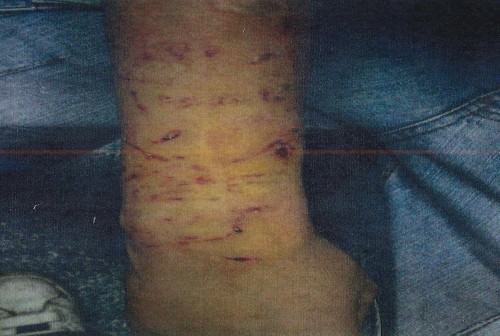
A client I am currently representing was shot in the back by the police with a Taser as he ran away. This caused him to fall forward and land, face-first, on the concrete ground below. He was unable to protect himself because he could not raise his arms due to the paralysis, and lost or damaged 5 teeth as well as sustaining facial and other injuries.

His injuries have already cost him thousands of pounds in dental treatment, he is now facially disfigured, and feels that his life will never be the same.

Today’s BBC Radio interview about Taser use

I was interviewed today by BBC Radio Merseyside to provide my thoughts.

You can hear the BBC Radio interview in full by clicking on the ‘play’ arrow below:

While I readily accept that, in certain situations, the use of a Taser may be appropriate, I am concerned that the training police officers receive should stress more strongly that Tasers should be a weapon of last resort, and should be used in extreme circumstances only.

The Association of Chief Police Officer’s guidelines state that a Taser can only be used where officers face violence or when the police are in a situation where the threat of violence is so severe they need to use force to protect the public, themselves, and/ or the person they are dealing with.

Certainly in many of my clients’ cases I would argue that:

  • they present no threat whatsoever, and
  • that the police have acted with undue haste, and
  • in some cases I have dealt with, the police have exaggerated the threat and fabricated an account to justify Taser use and excuse the police assault.

Hopefully the figures presented today will generate further public awareness and debate as to whether police officers should be routinely equipped with a Taser and in what circumstances such a weapon should be used.

If you have been injured as a result of a police assault using a Taser, contact me using the online form below, on 0151 933 5525, or via my firm’s website. Alternatively, read more about me, my website or blog for more information about actions against the police claims.

Image of Taser cc licensed ( BY ) flickr photo by Marcelo Freixo 50123: http://flickr.com/photos/marcelofreixo/8188041975/

Why do police assaults continue eight years after Azelle Rodney’s death?

Iain Gould, Actions Against the Police SolicitorBy Iain Gould, solicitor

On 30 April 2005 an armed police officer of the London Metropolitan Police fatally shot Azelle Rodney (shown below), a passenger in a car believed to have armed criminals inside, in a bungled ‘hard stop’.  Although weapons were subsequently found in the vehicle, Mr. Rodney was not holding a gun when killed by the police.

Investigations by both the Independent Police Complaints Commission and the Crown Prosecution Service found no reason to criticise the police’s conduct. No inquest was held, and eventually political pressure persuaded the Lord Chancellor to establish a Parliamentary Inquiry on 10 June 2010.


cc licensed ( BY ) flickr photo shared by 4WardEver Campaign UK

The recently published Azelle Rodney Inquiry Report is critical of:

  • the Metropolitan Police’s planning procedures,
  • the execution of the ‘hard stop’,
  • their handling of the aftermath of the shooting, and
  • concluded that there was no lawful justification for shooting Mr. Rodney so as to kill him.

Specifically, the report criticised the conduct of the ‘hard stop’, a tactic used by the police to ‘box in’ a suspect vehicle and use overwhelming force to shock the occupants into compliance. The report’s authors considered this ‘hard stop’ fell short of Police standards.

They found fault with:

  • the decision to ‘box in’ the vehicle directly outside a pub when better opportunities for the manoeuvre had previously presented themselves,
  • the deliberate ramming of the suspect vehicle on two separate occasions,
  • the officers who alighted from the police vehicles failed to wear caps so identifying themselves as police officers,
  • the officers fired a shotgun into the suspect vehicle’s tyres after it had been rammed and hemmed in when there was no likelihood of the vehicle escaping
  • the disproportionate force used by the police officer who shot Azelle Rodney, who opened fire only 0.06 seconds after his car stopped alongside the suspect vehicle with first six bullets, then followed up with two more shots. Shots 5-8 were found to have been directly to the head.
  • the evidence given by that officer was unreliable. The report found that the officer could not have seen or believed that Azelle Rodney had picked up a gun and was about to use it, despite his earlier statements. It considered that the policeman would be liable in civil and criminal law for the killing as there was no basis for firing the fatal fifth to eighth shots
  • the post-assault procedures, in which Mr. Rodney’s body was left on the pavement for more than 16 hours, his blood was not cleaned away prior to his family attending the scene, and unauthorised press reports were released.

The report recommends that the Metropolitan Police conduct a thorough review of their procedures.


cc licensed ( BY SA ) flickr photo shared by West Midlands Police

Police assaults as a result of ‘hard stop’ action

Our modern police force has evolved to deal with changing threats. In particular, the risks caused by firearms and weapons means that the police have developed a tactic to create ‘shock and awe’ in the minds of their suspects. The police will now use the ‘hard stop’, expletives, physical force, ‘boxing in’ (where police vehicles are used to corner a suspect’s vehicle), and other aggressive behaviour to dominate and intimidate. They justify this by stating that they may have to deal with the threat of lethal force from potentially armed suspects.

The bungled ‘hard stop’ which tragically resulted in Azelle Rodney’s death was over eight years ago. Have the police learned from their mistakes? As two of my cases involving the London Metropolitan Police show, a pattern of unjustifiable police assaults is emerging that may suggest not.

Police assault, hard stops and ‘verbal stunning’

My clients Claire Clarke, James Barber, Nicholas Fairbairn and Ruth Fairbairn were on the receiving end of aggressive police assault tactics, described in an official response to their complaint as ‘verbal stunning’, when they were driving home from visiting friends on 19 April 2010. (You can read a case report here.)

The four friends in their late twenties were driving in Harrow when their car was boxed in by three marked Police cars while executing a ‘hard stop’.

A number of armed police officers surrounded them and trained their weapons on the car. James (the driver) had his car window was smashed, was roughly pulled out, thrown to the glass-covered ground and handcuffed. The armed police officers screamed expletives and contradictory instructions at the terrified friends. Nick and Ruth were also forcibly removed and handcuffed. The friends were separated. After 20 minutes the police explained they had made a mistake, and that they had stopped the wrong car.

All suffered physical and emotional distress as a result. As with Azelle Rodney’s case, the Independent Police Complaints Commission rejected their complaint saying there was no evidence of misconduct. I disagreed and instigated a civil action on their behalf and ultimately recovered compensation for my clients for this police assault on the basis that the police failed to conduct basic checks before executing the ‘hard stop’ on the friends’ car.


cc licensed ( BY SA ) flickr photo shared by Dave Crosby

Police assault with gun during a ‘hard stop’

My client Mr. A had just walked into an underground car park on 04 September 2009 when he was set upon by five or six armed men, all dressed in plain clothes. One of the men approached him and without warning smashed the butt of his gun into the side of Mr. A’s right temple, causing him to fall to the ground.

Mr. A was dragged away from the car park doorway by his attacker.

When Mr. A asked ‘why are you beating me?’ the man said ‘keep your f**king mouth shut’ and struck Mr. A with the butt of his gun again in the right temple.

Mr. A adopted a foetal position on the ground. While defenceless he felt people pulling at his limbs, kicking his heels, ribs and left hip. He was stamped on by the men. Then he was struck with the butt of the gun a third time to the head by the same man, who shouted ‘F**king c*nt, move!’

Mr. A, who was bleeding heavily and in great pain by this time had no idea who was attacking him, or why.

The man with the gun was told to ‘back off’ by a colleague, who came over and said ‘it’s not even f**king him’. Despite this, Mr. A was told that he was being arrested.

It then dawned on Mr. A that he had been repeatedly assaulted by police officers, not gangland thugs. As with Azelle Rodney’s case, the officers had failed to wear caps or other identifying clothing.

Mr. A was arrested (even though the officers would not tell him why), taken to hospital and thereafter a London police station where he was held for over 24 hours before being released, even though the police had clearly arrested the wrong man.

Ultimately, no action was taken against him.

He has suffered serious  injuries which have left him with permanent scars to his face and scalp, and emotional trauma. I am now pursuing an actions against the police claim for his police assault, wrongful arrest & false imprisonment. Mr. A seeks additional compensation for the police’s arbitrary, oppressive and unconstitutional conduct.

The police have denied liability and refused to apologise for their conduct. I have issued court proceedings on his behalf and the case is ongoing.

Police assault failures

There are chilling similarities between my clients’ cases and that of Azelle Rodney.

Eight years on, when faced with a potentially lethal threat, police officers are still failing to comply with proper procedures, using unnecessary force and mishandling the aftermath, knowing that they will be protected by the IPCC and their solicitors. We can only hope that the criticism of all involved in the Azelle Rodney case will convince the police to clean up their act.

If you are a victim of police assault and want to make a claim for compensation against the police, contact me using the online form below, on 0151 933 5525, or via the www.dpp-law.com website.