Yesterday, British Transport Police (‘BTP’) were ordered to pay £13,000 plus legal costs to my client Peter Garrigan after serving policefabricated evidence.
Peter, a 26-year-old Liverpool man, was awarded compensation after a unanimous jury verdict following a four-day trial at Liverpool County Court.
The jury found that:
PC Paul Quest of British Transport Police unlawfully assaulted Mr Garrigan;
the police unlawfully arrested him, issued him with a Fixed Penalty Notice for breach of s.5 of the Public Order Act and, most shockingly of all;
one or two serving officers of British Transport Police fabricated evidence against my client ‘in order to cause him to be punished for something they knew he had not done or to escape punishment for their own misconduct’.
Compensation claim against the police after fabricated evidence
Peter (shown below and details used with permission) instructed me as I specialise in civil compensation claims against the police. You can read more about me and the work I do by clicking on the link.
Peter Garrigan, showing a black eye caused after a police assault.
I previously wrote about his case as it involved a jury trial, where unfortunately a jury failed to reach a verdict. After another jury heard the evidence, they all agreed that the allegations of police assault, misconduct and police fabricated evidence were proven.
Mr Garrigan bravely took on the police, endured three trials where his evidence was tested under cross-examination, and waited four years for justice. He had never been in trouble with the police before, or since. His impeccable character has been confirmed by this significant court judgment.
His case has parallels with the Andrew Mitchell ‘plebgate’ story, which I have written about here. Mr Mitchell is currently dealing with his own case where the police allegedly fabricated evidence.
This is yet another example of abuse by serving police officers that proves that the experience of Andrew Mitchell is not unique.
Both my client and I hope that the negative publicity and judicial criticism British Transport Police have received will make serving police officers think twice before fabricating evidence in future.
You can read a full case report by clicking on the link.
If you believe that the police fabricated evidence to prosecute you and want to claim compensation, contact me using the online form below, on 0151 933 5525, or via my firm’s website. Alternatively, read more by clicking the home page link.
(NOTE: 10 June 2015. This post has been updated to reflect that two of the police officers involved in the Taser story below were subsequently re-instated to Merseyside Police following their dismissal. My thanks to Jeremy Clarke-Williams of Slater and Gordon for bringing this to my attention.)
A man was forced to pursue numerous appeals to ensure that his police complaint was upheld.
At first blush, this would appear to be entirely unrelated to the Andrew Mitchell story, which I have previously written about.
In fact, they are linked by a common thread:
the mis-handling of complaint investigations by senior police officers, and
whether police can be trusted to police themselves.
Police Complaint after Taser assault in Liverpool
In December 2009 PCs Simon Jones and Joanne Kelly, were on patrol in Liverpool with a Sergeant (who has since been dismissed for an unrelated matter), when they arrested Kyle McArdle for urinating in a street.
Mr McArdle was put in the back of a police van and shot with Tasers five times. (You can read my thoughts on the increase in Taser use by clicking on the link.)
The Taser barbs, metal hooks which attach to the body to transmit the electric current, were removed by an officer rather than a medical professional, contrary to guidelines (unless there is an ‘operational necessity’).
To add insult to injury, Mr McArdle was prosecuted for assaulting two of the officers. He was found not guilty at the Magistrates’ Court, and pursued a formal complaint.
Mr McArdle’s initial complaint was made to Merseyside Police themselves. He argued that the use of Taser force in the back of the police van was disproportionate. The police accepted that their officers should receive guidance on the use of their powers only and rejected the rest of his complaint.
So Mr McArdle was forced to appeal to the IPCC. They returned the complaint to the Force to consider whether the use of Tasers would have been considered proportionate if he had been lawfully arrested.
Merseyside Police’s leading Taser instructor said that the Taser assault was ‘necessary, proportionate, reasonable and in line with the officers’ training and Association of Chief Police Officers guidance’.
Given this opinion, the Force maintained their denial.
Mr McArdle again appealed to the IPCC. They re-considered the case and decided that, contrary to Merseyside Police’s internal investigation, the officers involved should have been served with notices for gross misconduct and interviewed under caution. PCs Jones and Kelly were then subsequently dismissed following the misconduct hearing.
UPDATE: I have since been informed that PCs Jones and Kelly appealed their dismissal to the Police Appeals Tribunal (“PAT”) and were re-instated to Merseyside Police following a hearing on 28 June 2014, in which their solicitor states that “the PAT unequivocally rejected the determination of the misconduct tribunal in the clearest possible terms”. Their reinstatement is confirmed in the IPCC’s updated press release which can be read on their website here.
Aside from the officers’ dismissal and subsequent re-instatement, the IPCC Commissioner criticised Merseyside Police’s investigation of the incident. In particular, he said, ‘it is a concern that Merseyside’s lead Taser instructor lacked objectivity and presented as fact the officers’ version of events without challenge’.
Andrew Mitchell’s ‘plebgate’ saga
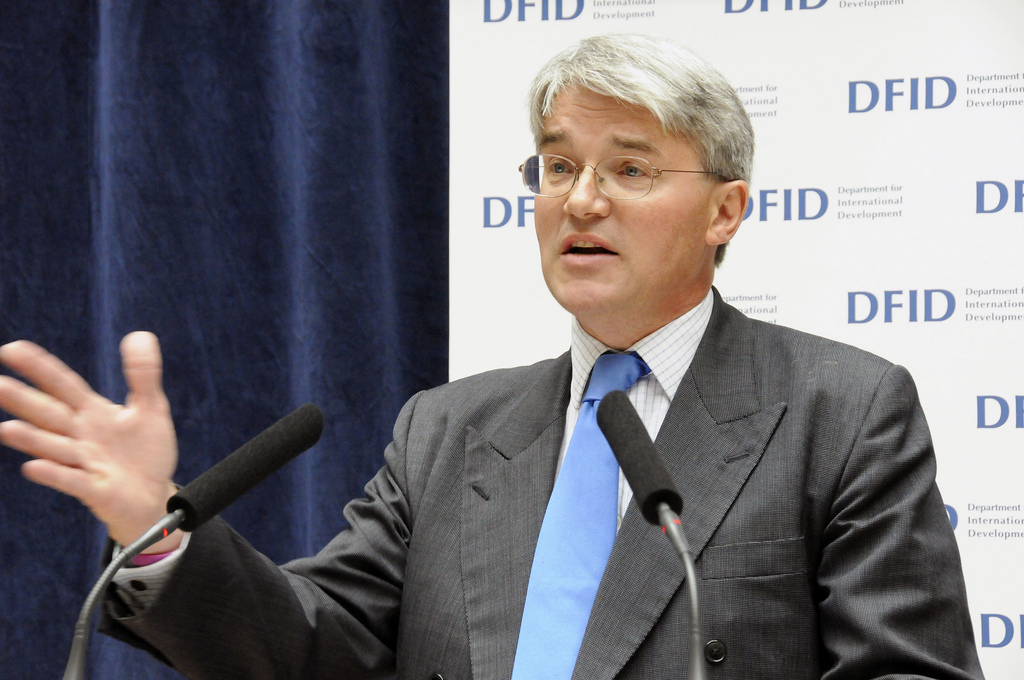
Andrew Mitchell, ‘plebgate’ politician
The Andrew Mitchell affair (which I have commented about on numerous occasions but most recently here) revealed that the four police officers and their associates initially involved in the saga fabricated evidence about the incident at Downing Street on 19 September 2012.
At a subsequent meeting on 12 October involving three senior members of the police officer’s union, the Police Federation, Mr Mitchell sought to explain his comments and re-iterated that he had not used the word ‘pleb’, which is short for ‘plebeian’, or commoner.
Immediately after the meeting, Inspector Mackaill, one of the officers at the meeting, told waiting journalists that Mr Mitchell had not provided an account of the incident and called for his resignation.
Unfortunately for the officers at both the initial incident, which was caught on CCTV and can be seen here, and the subsequent meeting, which Mr Mitchell secretly recorded, the evidence showed that they had not told the truth.
West Mercia Police carried out an internal investigation into claims the three officers had been trying to discredit Mr Mitchell. It concluded that there was no case to answer for misconduct or gross misconduct and found that there was no deliberate intention to lie to journalists.
The IPCC, which oversaw the West Mercia investigation, said West Mercia Police had been wrong to conclude the three police officers had no case to answer for misconduct.
Deborah Glass, the IPCC deputy chair, said in her statement that the false account of the meeting provided by the police officers involved ‘indicates an issue of honesty and integrity, not merely naïve or poor professional judgment (sic)’.
She has called for a misconduct panel to be held to establish whether the three officers gave a false account in a deliberate attempt to discredit Mr Mitchell in pursuit of a wider agenda.
Home Secretary Theresa May said the IPCC’s report “made troubling reading”.
Police complaints procedure
Only serious complaints against the Police are directly referred to the independent Police watchdog, the IPCC, for investigation. These include cases involving:
death in custody,
serious injury,
matters involving sexual assault or sexual offences,
serious corruption, and
certain criminal offences.
All other cases are dealt with internally, by the appropriate police force’s complaints department (also known as the professional standards department (‘PSD’).
Up until May 2012, when the Police Reform and Social Responsibility Act (2011) came into force, all complainants had a right of appeal following local and supervised investigations by a PSD to the IPCC.
Now that right of appeal to an independent body is restricted to only the most serious of cases, so that there is less opportunity to hold the police to account.
In both the McArdle and Mitchell cases described above, serious issues meant that the IPCC were involved. The IPCC allowed the individual police forces to investigate and decide whether there was wrongdoing or not. Following internal investigations, the complaints investigators said that there had been no misconduct that required sanction.
On appeal/review by the IPCC however, it was found that such findings were seriously flawed.
So, can the Police be trusted to investigate themselves?
Sir Hugh Orde, Chairman of ACPO
Speaking on BBC Radio, Sir Hugh Orde, the Chairman of the Association of Chief Police Officers and a former Chief Constable, said that it is ‘critical’ that there now be a fully independent police investigation system. (You can listen to the interview by clicking here).
I agree. The current system where the police investigate themselves is deeply flawed and, to restore public confidence in the police and the police complaints process, independent investigations in each and every case need to be conducted.
But is it enough simply to point the finger at the IPCC, who would no doubt say that the Mitchell and McArdle cases described above did not fit within the criteria, so that they had no authority to conduct investigations from the beginning?
Don’t the police have some responsibility too?
It strikes me that blaming the investigations process merely deflects attention away from the core issue: trust.
Public trust is damaged when we routinely hear about police misconduct at the rank and file level which is then covered up by their superiors or force complaints departments.
It is made worse when, rather than apologise and accept responsibility, senior police officers and their representatives blame everyone but themselves.
At today’s House of Commons Home Affairs Select Committee meeting, the Chief Constables of West Mercia, West Midlands, and Warwickshire Police, will explain why they declined to pursue misconduct charges against the three officers involved in the October meeting.
It is hoped that the meeting will be productive and not merely a repeat of the blame game played out in the media since September last year.
The Chief Constables should be reminded of Robert Peel’s principles to define an ethical police force, and in particular, this quote attributed to him:
‘The police are the public and the public are the police; the police being only members of the public who are paid to give full time attention to duties which are incumbent on every citizen in the interests of community welfare and existence.’
For more information on pursuing a civil action against the police go to www.iaingould.co.uk. Contact me using the form below or via my firm’s website.
Peter Oborne’s article in The Telegraph today (click on the link to access it) makes a number of interesting points about police misconduct in the aftermath of the Andrew Mitchell ‘plebgate’ scandal.
I have previously blogged about the Mitchell case here, where I make the point that the police routinely fabricate and exaggerate evidence, and in this blog post where I question whether an ordinary citizen would receive the same treatment as a government minister.
Mr. Oborne says that, when first hearing about the Andrew Mitchell affair, his initial sympathies were with the police. As The Telegraph’s Chief Political Commentator he frequently sees senior politicians behave in a rude or overbearing manner to people they consider beneath them. With this in mind, it was not hard for him to believe the police’s claim that Mr. Mitchell used the word ‘pleb’ while insulting them.
But his views changed when, after a Channel 4 investigation produced CCTV footage which contradicted the police’s version of events, officers involved in the initial incident were arrested on suspicion of misconduct.
Andrew Mitchell, ‘plebgate’ politician
Further, Deborah Glass, the Deputy Chair of the IPCC, recently stated that a ‘clear the air’ meeting between Mr. Mitchell and serving police officers in the Police Federation resulted in more police misconduct.
She asserts that the three police officers concerned gave a false account of the meeting in order to add more political pressure on Mr. Mitchell, and questions the police’s own investigation which found that those officers had no case to answer for misconduct or gross misconduct.
As the internal report by the IPCC initially proposed disciplinary action, the matter is continuing with Home Affairs Committee Chairman Keith Vaz demanding an explanation.
Royal Commission into Police Misconduct
Mr. Oborne argues for a Royal Commission to restore confidence in the police who have been rocked by this scandal, Hillsborough, the Jean Charles de Menezes affair, the Stephen Lawrence enquiry, and many others.
One such case he refers to was that of my client Karim Allison. (You can read the case report on my website by clicking on the link.)
Karim Allison was prosecuted after making a complaint about a police officer.
Like Andrew Mitchell, he was the subject of a police conspiracy in that police officers joined together to fabricate evidence against him. Unlike Mr. Mitchell, Karim had to endure the stress and upset of a lengthy criminal prosecution which only ended on appeal at the Crown Court.
Despite the high risks involved in accusing the police of misconduct, I pursued Karim’s case all the way to trial.
The police fought hard, denied liability and any wrongdoing, but after the trial a jury found that the officers involved had fabricated evidence. The finding, which was not appealed, confirms on the court record that the police lied to secure a conviction of an innocent man.
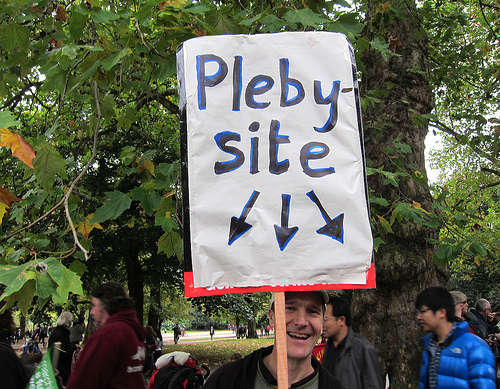
Protester holding a placard referencing Andrew Mitchell.
Police Misconduct investigation
I support Mr. Oborne’s call for a Royal Commission. There has to be an in-depth and impartial enquiry into at least:
police conduct at the lower level, where prosecutions are started and stories fabricated, and
at the higher level, where police officers who are guilty of misconduct, fabrication etc. are treated leniently by their superiors in the Police.
There can be no more easy rides for the police. Penalties must be harsher to act as a deterrent to future misconduct.
The option of early retirement must be removed for those in the Police who are found guilty of misconduct, and, where appropriate, they should be prosecuted in the criminal courts to the full extent of the law.
If ordinary citizens like Karim Allison are expected to defend themselves in court when charged with criminal offences, then why shouldn’t their accusers?
If you have been prosecuted for an offence where you suspect the police fabricated or exaggerated evidence, contact me, Iain Gould, using the online form below, on 0151 933 5525, or via my firm’s website.
In tonight’s edition of the Newsroom, the fictional HBO drama currently airing on Sky Atlantic, Neal Sampat is subjected to a police assault and wrongfully arrested at a New York protest rally.
His character, played by Englishman Dev Patel, is seen filming the protest and telling the police that he is a journalist, only to be assaulted by a police officer, arrested and held in a police cell. He is freed after an hour when anchorman Will McAvoy (a former lawyer) shows the custody sergeant Neal’s footage of the protest, including proof of the police assault and unlawful arrest.
Aside from being a good story, I am glad that the often- harsh treatment of protesters exercising their legitimate right to freedom of expression is now being shown in popular media.
Police assault at a peaceful protest
As a solicitor who specialises in actions against the police I am frequently asked to represent clients who have been subject to a police assault, unlawful arrest and detention and, on occasion, malicious prosecution, simply because they exercised their right to peaceful protest and freedom of expression.
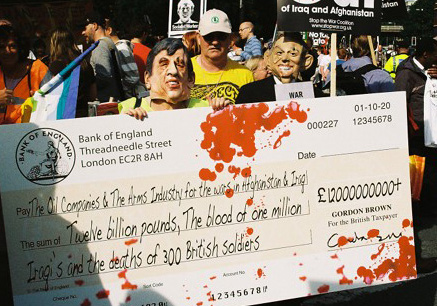
My former client Audrey White (name and details used with permission) received compensation following a police assault when she was protesting at a ‘Stop the War’ rally in Manchester. Mrs. White, who was 56 at the time, is an articulate, successful businesswoman, who was well-known to the police as an organiser and steward at these events.
To get publicity, for much of the day she wore a Gordon Brown facemask while carrying a banner-sized mock cheque which was payable to the ‘Oil Companies and Arms Industry for the wars in Afghanistan and Iraq- the sum of 12 billion pounds, the blood of one million Iraqis and the deaths of 300 British soldiers’ and ‘signed’ by Gordon Brown (see photograph below).
Police assault Stop the War campaigner wearing a Gordon Brown mask
The protest went off without incident, but near the end, a female police officer and colleague told Mrs. White to remove the mask. When Audrey asked why, they had no answer. Mrs. White refused, so the police officers forcibly removed the mask, dragging her to the ground.
Audrey White suffers from low bone density and was injured in the police assault. She was in pain, upset and humiliated by the police’s shocking and unjustified treatment.
Later, Audrey filed a police complaint about the assault, but as is often the case, the police rejected her complaint saying that their action was reasonable, necessary and proportionate.
Compensation claim after a police assault
Mrs. White instructed me to pursue a civil action against the police. Again, the police denied that they had done anything wrong, arguing that they had the power to remove disguises under Section 60 of the Criminal Justice and Public Order Act. This Section is meant to prevent people from hiding their identity to the police.
I obtained the police officer’s notebooks, which showed that they did not believe that the mask was being worn to conceal her identity, so that they had no right to remove it.
As such, the police assault was unlawful and breached Audrey’s legal right to freedom of expression.
Following negotiations, I recovered compensation for the police assault, a formal apology, and full legal costs for my satisfied client.
I am glad that The Newsroom highlighted the importance of the civil right to protest, and the police’s often overly- aggressive approach to dealing with protesters. Even though it is fiction set in New York, my client’s experience is remarkably similar, showing that civil liberties are under threat no matter where we are.
If you have been subject to a police assault, unlawful arrest and/or detention at a protest rally and want to claim compensation, contact me using the online form below, on 0151 933 5525, or via my firm’s website. Alternatively, read more about me, or more blog posts, by clicking on the links.
It is a little-known fact that some actions against the police compensation claims (specifically cases involving claims for false imprisonment and/or malicious prosecution) can be decided by a jury.
The right to trial by jury in such cases was preserved for such claims against the police after it was abolished for most other civil actions in 1933.
Putting such a case before a Jury does not, however, come without complications.
I am currently representing Peter Garrigan who is suing British Transport Police for false imprisonment, assault, misfeasance in public office, and malicious prosecution. Although, there is some limited CCTV footage, Mr. Garrigan’s actions against the police compensation claim essentially rests on his word against two Police Officers. Last week, his case went to trial before a Jury.
On the fourth day, having heard the evidence, the jury of eight retired.
After a long and stressful week in court, Peter hoped for Judgment in his favour in his police compensation claim.
Unfortunately, the jury were unable to reach unanimity.
In the County Court (as in this case) after a reasonable period of deliberation, the Court can accept a majority verdict of 7-1.
In Mr. Garrigan’s case, after several hours, it was clear that the jury were unable to agree to that and, in the circumstances, the Judge ordered a re-trial.
As it now stands, he must ready himself for another week in court sometime in the next year, and I will have to prepare his case for trial yet again.
So why bother having a Jury?
Judicial guidance in police claims
By s.69 of the Supreme Courts Act 1981, a party wishing to claim the right to have their case heard before a jury has to apply for it within 28 days of the service of the Defence.
Should either party fail to make such an application, the case must be tried by a Judge alone unless the Court in its discretion orders trial by jury. As May LJ noted in Times Newspapers Ltd v Armstrong (2006),
‘the discretion is now rarely exercised, reflecting contemporary practice. Contemporary practice has an eye, among other things, to proportionality; the greater predictability of the decision of a professional Judge; and the fact that a Judge gives decisions.’
Reasons to keep jury trials in police abuse claims
Given ‘contemporary practice’, why then encourage (as I routinely do) a victim of police abuse to elect jury trial?
Because an individual’s belief in the rule of law is shaken when they are a victim of wrongdoing by the police.
The police are agents of the state. The courts can be considered the same way, and I often hear scepticism of judicial independence and the need to avoid the ‘involuntary bias towards those of their own rank and dignity’ (Frank Cook v Telegraph Media Group Ltd (2011)).
Some might query whether my faith and confidence in jury trials in cases involving police abuse has been knocked.
My answer is an unequivocal ‘no’.
Having taken many civil actions against the police to trial with a jury, I remain convinced that, win or lose, my clients are far more accepting of a judgment given by their peers rather than by a Judge who may be perceived as solitary, conservative and out of touch.
Certainly, Mr. Garrigan is un-phased and is keen to have his actions against the police case heard again, confident that a new jury will find in his favour.
For all of us, but especially those making actions against the police claims, it is important that this basic right is preserved.
If you have been a victim of police abuse and want to claim compensation, please click here to read more or contact me, Iain Gould, using the online form below, on 0151 933 5525, or via the contact form at dpp-law.com.
Update
I am pleased to confirm that following a 4 day trial before Judge and Jury, British Transport Police were ordered to pay my client £13,000 together with his legal fees. You can read about it here.
I was recently interviewed in my firm’s London offices by Mike Semple-Piggott for the Charon QC law tour. We discussed civil actions against the police and police misconduct.
Mike is a popular and experienced blogger who uses the pseudonym ‘Charon QC’ on his many websites. He is touring the country interviewing lawyers, academics and others involved in the legal profession.
The interview was wide-ranging and interesting to do. I described some of the practical issues of pursuing claims against the police using case studies and current examples. We also addressed public interest issues in the widest sense.
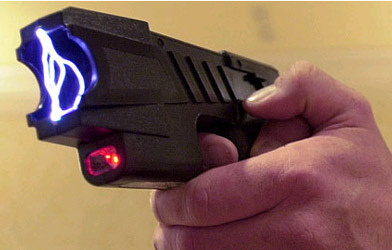
A taser is the latest weapon in a police officer’s armoury. It is a stun-gun which when applied causes 50,000 volts of electricity to go through a victim’s body, side effects of which include temporary paralysis, nausea, amnesia, loss of bowel/bladder control, vomiting and in extreme cases, the heart can stop, occasionally resulting in death.
The police can use force (and therefore the taser) when affecting an arrest provided it is reasonable and proportionate.
It is in the public interest to establish whether the police have been given proper training and are applying their powers correctly. Can an 82 year old man be said to pose such a threat requiring the use of such excessive force?
I am currently pursuing a similar actions against the police claim for a 50 year old man. The police visited him late at night looking for his son. My client, a heavy set, bald, black man bears no resemblance to his 32 year old mixed race, curly haired son. The police, who had seen a picture and read a description of my client’s son, forced their way into my client’s home and indiscriminately tasered him in the back when he was retreating into his kitchen. At the time, he was entirely defenceless and posed no threat.
As well as the physical evidence in front of them, a simple ID check which they performed minutes later proved that my client was not the person they were looking for. Nevertheless, he was arrested for obstruction and assaulting a constable- this is being cited to justify their over zealous behaviour. I am now working with my client to pursue his claim against the police.
I consider that both cases raise serious questions regarding the deployment of taser guns in arrest circumstances.






You must be logged in to post a comment.