This post warns about the risks of police retaining custody photographs on the Police National Database (PND), particularly as facial recognition technology can now search millions of stored images. It highlights the case of Alvi Choudhury, who was wrongly arrested after facial recognition matched him to a suspect using a photo taken from a previous arrest where he faced no charges. Unlike DNA and fingerprints, which are strictly regulated under the Protection of Freedoms Act 2012, custody photographs can be kept indefinitely, despite being used as biometric identifiers.
Content Authenticity Statement
100% of this week’s blog post was generated by me, the human.
Facial Recognition Misidentification: The Case of Alvi Choudhury
In Alvi’s case, the image of a man wanted for a burglary was compared by Thames Valley Police with faces stored on the Police National Database (PND), using Cognitec “facial recognition” software.
The PND is not the equivalent of the FBI’s most wanted list…it comprises literally millions of Custody ‘mugshots’ taken of individuals arrested for even the lowest level of crime – and retained on the system even if they are never charged with any offence. Such was the case with Alvi, who, as he explained to the Guardian, fell prey to this Police harvesting of facial data in the following circumstances –
“Choudhury’s mugshot was held on the police system only because he had been wrongly arrested in 2021 when he had been attacked on a night out while at university in Portsmouth. The police released him with no further action.”
Millions of Innocent People’s Images Stored on the PND
The retention of these people’s images, and their being considered “fair game” for the approximately 25,000 searches currently carried out by UK Police each month, is ethically dubious, and seems to fly in the face of the great British legal traditions of presumption of innocence and respect for individual privacy. It is also an example of how the pace of technological change has outpaced the cognitive wheels in law- maker’s brains – leaving behind legislation that’s no longer fit for purpose.
The Protection of Freedoms Act 2012 and Biometric Data Retention
The Protection of Freedoms Act 2012 laid down strict time-limits for Police retention of what was then considered to be the extent of sensitive biometric data i.e DNA and fingerprints, but custody photographs fell into what we can only now, with bitter irony, acknowledge to be a “policy blind spot” – legislators failing to anticipate the rapid development and deployment of facial recognition programmes over the ensuing decade.
If a person is charged, but not convicted, of a serious offence, their DNA profile and fingerprints must be automatically deleted after 3 years (or a maximum of 5 years, if an extension is granted by a District Judge).
If a person is arrested for, but not charged, with a serious offence, their DNA profile and fingerprints must be automatically deleted by the Police after their release (except that the Police can apply to the Biometrics Commissioner for permission to retain for up to 3 years, and can make a further application to a Judge for a maximum of 5 years).
If a person is arrested, but not convicted of a minor offence, their DNA profile and fingerprints must be destroyed on their being refused charge, or not convicted, and there is no discretion for that data to be retained.
Why Custody Photographs Can Be Retained Indefinitely
Facial photographs, on the other hand, are subject to no such laws, and can potentially be retained “indefinitely”.
The Police retention of facial images seemed less intrusive and harmful when large-scale Facial Recognition software was still a glint in a tech bro’s eye. In 2012, DNA and fingerprints were readily acknowledged to be sensitive biometric identifiers, as they could be scientifically calibrated, but photographs were outside the scope of widespread ‘machine’ testing, and hence considered to be forms of ‘unplugged’ evidence, records not searchable in the way DNA and fingerprint profiles were.
How Facial Recognition Turned Custody Photos Into Biometric Data
The science changed when, in recent years, the Police unleashed facial- matching algorithms over the Police National Database, converting old- school custody photographs into biometric identifiers – “Faceprints” if you like – but without any comparable change in the law.
Now the fact that Facial Recognition programs can search, compare and report “facial matches” in the blink of an AI, makes a person’s face accessible to Police investigators in a way they never were before; but because facial snapshots, unlike fingerprints, are not “unique” and the technology for comparing them still has significant error rates and evidence of racial bias (as I highlighted in last week’s blog) this is going to endanger the freedom of many innocent people (like Alvi).
Police Use of Facial Recognition and the Risk to Innocent People
In other words, the Police have, through technological ‘mission creep’, weaponised the Police National Database in the fight against crime, without the Government updating legislative safeguards to defend the liberty of innocent individuals.
The Legal Right to Request Deletion of Custody Images
But there absolutely is something you can do about this, if your photograph is on the Police National Database. In the landmark case of RMC and FJ v Commissioner of Police for the Metropolis and Secretary of State for the Home Department [2012] EWHC 1681 (Admin)R (RMC FJ) Metropolitan Police Commissioner – 22 June 2012
Policing practices were censured by the High Court and in 2017 Home Office rules were introduced custody images review to allow for the deletion of custody images, on request, in set circumstances.
How Unconvicted Individuals Can Apply to Delete Their Police Custody Photo
Of most relevance, for our purposes, is the right of unconvicted individuals to apply, in writing, to the Force which arrested them for deletion of their custody image, following the conclusion of any investigation or prosecution against them. In such a scenario, the Home Office stipulates that the Police must adopt a presumption in favour of deletion of the image, subject to certain specified “exceptional reasons” (e.g arrests for sexual offences or terrorism/ organised crime matters).
Why Deleting Your Police Image Matters: Lessons From the Alvi Case
Had Alvi been made aware of his rights, and applied to the Police for deletion of his custody image once he received a decision of “no further action”, then the simple fact of the matter is that he would never have been arrested, over 4 years later. The only thing (incorrectly) linking him to the alleged crime was that redundant custody photo, and there was no basis for its retention. But because he didn’t ask, he didn’t get.
How to Request Deletion of Your Image From the Police National Database
So, I urge you to act now, if your face is on the Police National Database and you fit the criteria above – exercise your rights and contact the relevant Police Force (i.e the Force which arrested you) and get your image wiped. This should be a straightforward process – all you are required to do is email the Force with your name, address, DOB, and an explanation detailing when the image was taken, what offence it relates to and the outcome of the arrest.
Protecting Privacy in the Age of Police Facial Recognition Technology
The Police are taking advantage of people’s ignorance of the law to retain images of the innocent by default, whilst using fallible and biased facial recognition technology. This does not have to be tolerated. Our particular version of “Big Brother” currently has 19 million eyes: together, let’s blind as many of them as possible.
How you can help
Every post on this blog is grounded in real cases, real experience, and a commitment to holding abuses of power to account. If you’ve taken something useful from this article, or if you wish to support that broader aim, I would be grateful if you could leave a 5-star review. Each review strengthens this work and helps others in need of straightforward, specialist expertise find their way here. Thank you.
Alvi Choudhury was wrongfully arrested as a result of the police’s misuse of facial recognition technology. He is pursuing a civil action against the police. Iain Gould is his solicitor.
This blog post describes how Alvi Choudhury was wrongfully arrested after police relied too heavily on a flawed facial recognition “match,” despite official guidance that such matches are only investigative leads. The technology is known to produce higher false positives for Asian men and younger people, and officers allegedly ignored clear red flags, including Choudhury living 100 miles from the crime scene and having no criminal record. He was detained for nearly 10 hours before being released, highlighting the risks of treating AI as decisive proof rather than using proper human judgment.
Content Authenticity Statement
100% of this week’s blog post was generated by me, the human.
The Growing Use of Police Facial Recognition Technology in the UK
I have written before on this blog about how there is neither sense nor purpose in being “Luddites” about technology in general, and specifically about the increasing use by the Police of “Facial Recognition” software. What is of overriding importance, however, is that we ensure that Artificial Intelligence is not substituted for human intelligence and common sense; AI algorithms can be useful tools, but at the end of the day they are just that – tools, not brains.
Or in other words: Fools rush in, where AI learns to tread…
College of Policing Guidance: Facial Recognition Matches Are “Investigative Leads Only”
Police Facial Recognition technology is accepted to be flawed, and the College of Policing Authorised Professional Practice guidelines make it absolutely clear that purported “matches” between faces in database A (wanted individuals) and faces in database B (individuals who for one reason or another have had a Police ‘mugshot’ taken, which is stored in the Police National Database or PND) are to be treated as ‘investigative leads only’. The algorithm’s identification of a possible match is supposed to be a starting point for critical thinking, not an end- point and not a substitute for it.
This is, not least, because of the indisputable fact that the technology demonstrates striking imbalances in the degree of “false positives” i.e mis-identifications which it produces for individuals of certain demographic groups, compared with others.
The latest overview of facial recognition technology, published by the Home Office in December 2025 has failed to assuage concerns about significant racial and gender imbalances in accuracy. In Retrospective Facial Recognition (RFR) searches results were reported which demonstrated that the “false positive” results for Asian males were 5.3% compared with 0% for White males, whilst the false positives for people aged between 21 – 29 was 5.2% compared with 0.1% for those aged 41 – 76.
APCC Warning on Built-In Bias in the Police National Database (PND) Facial Recognition Tool
“The report from the National Physical Laboratory evaluating the accuracy and equitability of the Police National Database’s (PND) retrospective facial recognition technology tool sheds light on a concerning in-built bias. This has meant that, in some circumstances, it is more likely to incorrectly match black and Asian people than their white counterparts. The language is technical but, behind the detail, it seems clear that technology has been deployed into operational policing without adequate safeguards in place.”
The APCC statement went on to give thanks that –
“there is no evidence of adverse impact in any individual case, that is more by luck than design.”
The Wrongful Arrest of Alvi Choudhury Following a Facial Recognition “Match”
Well, as the case of my client Alvi Choudhury demonstrates that ‘luck’ has now run out – and it was Alvi who had to pay the shocking price for the same: the degradation and humiliation of a wrongful arrest for burglary.
Thames Valley Police and Hampshire Police’s Role in the Misidentification Case
I am proud to be representing Alvi and bringing my skills and expertise in this area of law to bear on the Police Forces responsible for his incarceration – both Thames Valley Police, who wrongfully requested his arrest on the basis of an alleged Facial Recognition “match”, and Hampshire Police, who carried it out. I also hope that by publicising Alvi’s story, he and I can bring pressure to bear on the Police to make them use this technology with far greater care and caution – and hopefully prevent others suffering the same fate in the future, particularly those from the most ‘at risk’ ethnic and age groups. Alvi, it will be noted, is in a cohort both in terms of his skin colour and his age which makes a false positive far more likely in his case than it would with an older, White male.
Why Policing by Consent Requires Critical Thinking, Not Blind Reliance on AI
This isn’t just a case of “racial bias” in the algorithm, however. It comes down to the problem that I highlighted at in the opening of this blog post – Policing by consent requires common sense and critical thinking, not the ‘short-cut’ of letting a computer programme do your thinking for you.
Key Red Flags Ignored in the Police Facial Recognition Identification
Sadly, I believe that is exactly what happened in Alvi’s case. The reported “match” between Alvi’s image on the PND and the CCTV still of a man wanted for burglary was taken as if it was an undisputable truth, rather than an algorithm’s ‘best guess’, and disregarded the following ‘red flags’ –
Alvi lives over 100 miles (in Southampton) from the location of the crime (in Milton Keynes).
Alvi is a man of exemplary character with no criminal convictions whatsoever (his image was in the Police Database only because of a previous wrongful arrest).
Alvi’s image was taken well over 4 years before the crime – and no allowance appears to have been made for the obvious fact of almost half-a-decade of aging since then.
The officers initially reviewing the match report appear to have only ‘seen’ the very broad racial similarities between Alvi and the wanted male (both are of Asian appearance) rather than clear disparities between them; in other words, they saw the generic, not the individual.
The Human Cost of Facial Recognition Errors and Wrongful Arrest
As Alvi told the Guardian – “I just assumed that the investigative officer saw that I was a brown person with curly hair and decided to arrest me.” Alvi was released after the Officers who came to interview him saw him – and rapidly agreed that he was clearly not the suspect in the picture; but in the meantime, he had been deprived of his liberty for almost 10 hours in Police custody.
Holding Police Accountable for Improper Use of Facial Recognition Technology
To my mind, Alvi’s arrest was as a result of the Police playing “AI lottery” with people’s lives, and I intend to make them pay the price for that – and in doing so, help to drag improper uses of this technology into the full light of day.
How you can help
This blog exists to inform, empower, and reassure people who may otherwise feel overwhelmed when dealing with unlawful police conduct. If you’ve found this article helpful or informative, I would be very grateful if you could leave a 5-star review. Your support helps me continue this work and, just as importantly, helps others find reliable, specialist advice when they need it most. Thank you.
This article examines the unlawful use of Section 19 PACE by police officers to seize mobile phones from people filming them, focusing on the case of Natalie, who was arrested, handcuffed, detained for 47 minutes and had her phone confiscated while recording her sister’s arrest in the street. It explains that filming police in public is lawful and that Section 19—an evidence-seizure power tied to officers being lawfully on “premises”—does not justify taking a phone on a public highway or stopping someone from recording. The case resulted in an admission of liability and a £25,000 settlement for unlawful arrest, detention and injury.
Content Authenticity Statement
100% of this week’s blog post was generated by me, the human.
Early this month, I blogged about how Police misuse legislation in order to claim that they have power over ordinary citizens in situations where no power exists. In that article I was specifically commenting on Police misuse of Section 17 of the Police & Criminal Evidence, very often claimed to be the legal basis for them bashing in a front door to “save life or limb” when in reality they know that there is no ‘life or death’ emergency.
Police Misuse of Section 19 PACE: Can Officers Seize Your Phone for Filming?
In this week’s blog post I will address another endemic Police misuse of legislation: Officers purporting to use Section 19 of PACE to seize mobile phones which are being used to film them.
Is It Legal to Film Police in Public? Your Rights Explained
Through the lens of the recently settled case of one of my clients I will answer the following questions –
Is it legal to film Police Officers?
Can the Police use Section 19 of PACE to seize mobile phones?
– and demonstrate the level of compensation that can be recovered when the supposed guardians of the law, fail to heed it.
Case Study: Unlawful Police Arrest and Illegal Seizure of a Mobile Phone
In June 2023 my client Natalie, a Civil Service manager of exemplary character, was at her home in Merseyside, when she saw her sister being arrested by the Police in the road outside, following her sister having been involved in a dispute with a neighbour.
My client went outside to investigate and began recording events on her phone, whilst keeping her distance from the Officers. She did not attempt to interfere with the arrest, or obstruct officers, she was merely cataloguing what was happening to her sister: every citizen’s right in the digital “Phone Age” in which we now live.
Suddenly and without warning, a male Police Officer grabbed Natalie’s left wrist and left upper arm and said “I’m seizing that phone under Section 19 of PACE, I believe its got evidence of an offence, pass me the phone”.
Shocked, my client resisted this ‘Police mugging’, whereupon the Officer told her that she was “under arrest for resisting arrest”.
A bystander asked if filming in public was not allowed, to which one of the male Officers asserted, “We seize any mobile device that’s being used to record, it’s capturing evidence, an offence”. My client quite reasonably responded to this by telling the first Officer that she could have sent him the video, pointing out “All you had to do was ask”.
Natalie complained to one of the Officers about the pain she was in from the handcuffs, which she told him were “really cutting into me”. The Officer callously replied: “They’re not designed to be comfortable – because you’ve been actively resisting, I can’t risk loosening them.” This is the very definition of adding insult to injury.
Only after Natalie continued to report that she was experiencing “burning” and that her arm was “going dead”, in the context of her having previously had ulnar nerve surgery to her right arm, did the Police condescend to remove and adjust her handcuffs – re-handcuffing Natalie in the somewhat less degrading position of her hands being in front of her.
Natalie was then escorted to a Police carrier van, where the first Officer asked her if she understood why she had been arrested. My client told him that she did not at all understand, and again asserted that if the Officer wanted her phone footage, he could have just asked for it. The Officer threateningly replied “If you’re going to be difficult, I’ll take you to Custody”.
Unsurprisingly, however (because in reality, no offence had been committed), Natalie was now advised that she was being de-arrested and her handcuffs were removed. She had been unlawfully detained for approximately 47 minutes, although owing to the pain and public humiliation the Police had subjected her to, it felt a lot longer than that.
When my client then asked for her phone back, the Officer who had arrested her replied “It’s ours now” and said that she might get it back in six months. The Officer showed no compassion or concern at all for the significant disruption this would cause to my client’s work and personal life.
It was not until the following month, and after Natalie had proactively raised a number of complaints, that she was ‘allowed’ to come and collect her phone from a local Police Station.
Upon collection of the phone, Natalie noted that she had over 30 voice messages, one of which was from a local Walk-in-Centre where she had attended for treatment following her being assaulted by the Officers as described above. The message was now several days old. When my client belatedly made contact, she was advised that following a review of an x-ray which had been taken of her left wrist a week after this incident, and which had initially been thought to be clear, a fracture had in fact been identified and she now needed to go to hospital for further advice.
Did Police Have Legal Power Under Section 19 PACE to Stop Filming, or to Seize Her Phone?
The short answer to both of these questions is “no.”
There is no law that prevents you from filming the Police (in exactly the same way that they will habitually film you, body worn cameras now being a daily part of Police kit), and nor should there ever be as long as we uphold our democratic tradition of Police Officers as citizens-in-uniform.
The Police can claim to be using the power granted to them by Section 19 of the Police & Criminal Evidence Act 1984 (PACE) to seize your phone – as they did to Natalie – but such a use of that power is almost certainly illegitimate, as I will explain below. As in the case of Police misuse of Section 17 powers for forced entry to homes, I strongly suspect that a lot of Officers know that Section 19 does not encompass the seizure that they want to make – but do it anyway, thinking that many of the public will, understandably, be brow-beaten by the combined threat of legislative chapter-and-verse and real violence (bureaucracy and brutality, we might say).
Section 19 PACE Explained: General Power of Seizure and Its Legal Limits
Section 19 PACE provides as follows-
19 General power of seizure
(1)The powers conferred by subsections (2), (3) and (4) below are exercisable by a constable who is lawfully on any premises.
(2)The constable may seize anything which is on the premises if he has reasonable grounds for believing—
(a)that it has been obtained in consequence of the commission of an offence; and
(b)that it is necessary to seize it in order to prevent it being concealed, lost, damaged, altered or destroyed.
(3)The constable may seize anything which is on the premises if he has reasonable grounds for believing—
(a)that it is evidence in relation to an offence which he is investigating or any other offence; and
(b)that it is necessary to seize it in order to prevent the evidence being concealed, lost, altered or destroyed.
(4)The constable may require any information which is [stored in any electronic form] and is accessible from the premises to be produced in a form in which it can be taken away and in which it is visible and legible [or from which it can readily be produced in a visible and legible form] if he has reasonable grounds for believing—
(a)that—
(i)it is evidence in relation to an offence which he is investigating or any other offence; or
(ii)it has been obtained in consequence of the commission of an offence; and
(b)that it is necessary to do so in order to prevent it being concealed, lost, tampered with or destroyed.
Why Section 19 PACE Does Not Apply to Filming Police in the Street
Section 19 is in a part of PACE which is specifically designated “Powers of Entry, Search & Seizure” and the proceeding sections are all about Police powers of entry into premises either with or without search warrants, in certain defined circumstances. It is a piece of legislation (first drafted 40 years ago) which is designed to allow Officers investigating a crime to gather evidence of the crime, or the presumed proceeds of crime (such as stolen goods) whilst they are searching premises.
“Section 19” therefore does not give Police Officers the power to confiscate mobile phones in order to prevent filming. It was never intended to be used in this way, and Officers purporting to use it in this manner are doing so illegally. This becomes even clearer when the specific wording of the legislation is analysed-
“Exercisable by a Constable who is lawfully on any premises” – Although ‘premises’ is a word which is not necessarily confined in its meaning to ‘indoors’- it can include a place in the open air – that place must be a distinct piece of land in single occupation/ ownership. The middle of the street (where Natalie’s encounter with the Police took place) can clearly not be defined as “premises.” If you are on a public highway, you are not “on premises” and thus Section 19 is irrelevant and inapplicable.
Even if the encounter took place “on premises”, the Constable can still only seize “evidence in relation to an offence.” Filming in public is not itself an offence. Filming an officer talking to you is not an offence. Filming an officer searching or arresting somebody else is also not an offence (and would not constitute evidence of whatever offence the arrestee is being accused of, that naturally having already occurred).
Even if a Constable can clear the above statutory hurdles, and does have legitimate grounds for believing that an offence has been ‘captured’ on your mobile phone, and you and he are currently “on premises” where Section 19 is exercisable, note the crucial caveat – “that it is necessary to seize it in order to prevent the evidence being concealed, lost, altered or destroyed.” In encounters of this nature, the person recording the Police is doing so precisely in order to preserve a record of what is happening, and it is nonsense to assert that there is an imminent danger of that evidence being destroyed.
Indeed, what the Police really want to do through their intervention in this manner is not to preserve existing evidence, but to prevent the accumulation of further evidence – for the first thing they will do is to switch off/ put down the phone. They know this, and so do we, and it is a travesty of the law for them to pretend otherwise. Even if the Officer genuinely wanted to see, rather than stop, the recording – then the correct and lawful first port of call is simply to ask the person filming to send the officer a copy of the recording, as indeed my client pointed out to the Police in the incident described above: “All you had to do was ask…”
So, on multiple grounds, my analysis of the law showed that everything the Police did to Natalie on this occasion was wrong – they had no power to stop her filming; to take her phone; to brutalise, humiliate, handcuff and imprison her at the roadside.
Claiming Compensation for Unlawful Arrest, False Imprisonment and Assault by Police – How I Helped Natalie Turn 47 minutes of Detention into £25,000 Damages
By writing a detailed and effective letter of claim on behalf of Natalie, I swiftly obtained from Merseyside Police an admission of liability and I was able to bring them to the negotiating table without the need for Court proceedings.
Although Natalie’s unlawful arrest thankfully lasted less than an hour, there were much more long- lasted consequences from the Police brutality she had experienced, and I helped her to evidence and quantify them as follows –
Obtaining a report from an orthopaedic expert in relation to her left wrist injury (which proved to be a tendon inflammation).
Obtaining a report from a psychiatric expert in relation to the shock/ psychological impact of these distressing events, including anxiety and sleep disruption.
As well as her injuries, the trespass to goods she had suffered as a result of the Police illegally holding her phone for over 2 weeks.
I am pleased to confirm that on the basis of this evidence, I was able to get Merseyside Police to increase from their original offer, which was only £3,000, and agree to pay £25,000 damages for Natalie,plus her legal costs. It was no less than she deserved.
5-Star Client Review: Unlawful Arrest and Police Misconduct Claim Success
Natalie wrote the following 5 star review of my handling of her case, here on Trustpilot –
Natalie Mclachlan gave iaingould.co.uk 5 stars. Check out the full review…
“I done my research before choosing Iain to reach out too about my case and I was not disappointed! From my very first conversation with Iain I knew I had made the right choice. In a nutshell I was unlawfully arrested and detained with my phone unlawfully taken from me, during this I suffered a serious injury. Iain has been honest, consistent and supportive throughout my dealings with him. If you need someone who is as passionate and honest as they claim when it comes to justice involving police, then he is 100% your guy! Everyone claims to have your best interest at heart and he truly does. We have just settled after a bit of back and forth and I am satisfied with the outcome of the case and completely satisfied with the service provided by Iain and his team.”
How I Can Help You
No matter how much they might not wish it to be the case, when it comes to filming in the street police officers have no special power to prevent you filming them, or to confiscate phones from the public. If the Police try to bully or blag you into believing the opposite, contact me to seek expert advice and representation on a no win, no fee basis. If they use “might” to overwhelm you, let’s show them that it doesn’t make “right” – just pick up the phone.
This blog post exposes a particularly dangerous form of police misconduct: officers claiming powers they do not lawfully possess, especially the misuse of Section 17 of the Police and Criminal Evidence Act (PACE) to force entry into private homes. It explains that while police do have limited powers to enter premises without a warrant in strictly defined emergency circumstances, these powers are frequently exaggerated or abused to justify unlawful intrusions, routine “welfare checks,” and intimidation of occupants. Such behaviour, if left unchecked, represents a serious erosion of civil liberties and privacy, normalised within police culture and often misunderstood by the public.
Content Authenticity Statement
100% of this week’s blog post was generated by me, the human.
Police Forcing Entry Without a Warrant: When It’s Legal – And When It’s an Abuse of Power
“The nine most terrifying words in the English language are: I’m from the Government, and I’m here to help.”
Ronald Regan, US President, 1986
Police Abuse of Power and the Hidden Dangers of Fake Legal Authority
The primary purpose of this blog post is to highlight Police abuse of power and to show how it can be combatted and its victims compensated.
The Most Insidious Form of Police Misconduct: Claiming Powers That Don’t Exist
Perhaps the most egregious, and certainly the most insidious, form of Police misconduct relates not to Police abusing the powers that they actually possess – but committing a kind of knowing fraud upon the public by purporting to have powers which do not in fact exist at all.
I describe this as perhaps the worst misconduct, because it is so widespread and tolerated, even deliberately encouraged, in Policing culture. Such malpractices would, if they were allowed to stand unchallenged/unchecked would constitute a disastrous encroachment upon our civil liberties, both in terms of our personal freedom and the privacy of our homes.
Common Examples of Police Overreach and Misuse of Legal Powers
Examples of this form of overreach of Police power include –
Misuse of Section 17 PACE and Illegal ‘Welfare Check’ Raids
It is the latter of those two forms of almost ‘daily’ Police misconduct which I will be addressing in this blog post.
Can the Police enter your home without a warrant?
Many people at first assume, incorrectly, that the answer to this question is “no”. When Police Officers bang at their front door, the resident demands to see the judicial warrant which they presume the Police require in order to enter to either search the property or arrest someone on the premises.
But actually, Police raids carried out under Court warrants are in the minority; the majority of times that Police turn up at houses demanding entry and threatening ‘the big red key’ – i.e. a battering ram – they are using or purporting to use free- standing powers granted to them by the Police and Criminal Evidence Act.
Section 17 and Section 18 PACE Explained: When Forced Entry Is Lawful
Police Officers are granted powers under Sections 17 and 18 of PACE in order to allow them to enter premises without a warrant and without the owner’s consent, in certain specified circumstances, as follows –
The Police do not need judicial authority, they do not need a Court warrant to exercise those powers – but what they do need, in order to exercise any of the Section 17 powers, is an honest and objectively reasonable suspicion that the condition relied upon pertains i.e that they will find the person they are looking for, or that somebody really is at risk of imminent death or serious injury.
When Section 17 Becomes a Fake Power Used to Invade Private Lives
It is therefore a power that should only be invoked in extremis – but time and time again in my career I have seen the Police claiming to be able to use Section 17 in the most banal of circumstances – in order to ‘investigate’ an argument or domestic dispute, or to carry out a non- specific ‘welfare check’ on the occupants.
In other words, it becomes a fake power which the Police claim to have when they want to stick their boots through people’s front doors and noses into people’s private lives.
I have been called upon on many occasions to assist those who have suffered from unlawful Police intrusions into their house under purported Section 17 powers of entry, and I will set out below a case study about one such claim which I have very recently concluded.
Case study of an Illegal Section 17 Police Raid
On an ordinary morning in July 2021, my clients Michael and Danielle were home together at Danielle’s house in Birmingham – rented only in her name but where Michael commonly resides, the couple being in a long-term relationship and having a number of young children together.
An Officer of West Midlands Police, PC Slepertas, attended at the premises in order to carry out a ‘welfare check’ on the couple’s young daughter.
Danielle answered the door to the Officer, but did not open it fully and did not grant him entry into the house, as she had just come out of the shower and was only in a bathrobe. She therefore explained to PC Slepertas that this was a bad time and asked if he could come back later that day.
However, PC Slepertas refused to leave, causing Michael, who had overheard the conversation between his partner and the Officer to intervene. Michael approached the front door and said to the Officer “Are you deaf – can’t you hear what she said? Can’t you see she isn’t dressed?” Michael then swiftly shut the front door and a brief exchange of words took place between Michael and Danielle.
Neither Michael nor Danielle wanted the Officer to enter the house at that time and nor did he have any power to force entry – as a generic welfare check (borne as it happens, on this occasion, out of misplaced concerns by the child’s school, logged a week earlier after the girl had been late for school “and this was out of character”) does not constitute a ‘life or limb’ emergency.
Rather than leaving, however, PC Slepertas hung around outside the house, and once Danielle had got dressed and left the premises with her daughter PC Slepertas approached and attempted to engage with Danielle. Danielle again explained that this was a bad time, as she and her daughter were running late, and she did not want to speak to the Officer. Danielle and her daughter therefore continued on their journey.
PC Slepertas subsequently made a statement of events in which he recorded the following information, describing his encounter with Danielle and her daughter outside the house –
“I made an assessment of the child’s appearance and wellbeing as that was the initial reason for me to be at the location. [She] looks very happy, well dressed, clean and well fed”.
But PC Slepertas was not prepared to let matters rest there, and returned to the station. As it was made clear by his subsequent actions, recorded in his statement and on his own body camera, PC Slepertas was clearly unhappy about Michael’s attitude and wanted to enter the house to speak to him – I presume to challenge him, tell him off, or otherwise interrogate him – despite not actually having any power to do so.
How Police Manufactured a ‘Life or Limb’ Emergency
PC Slepertas therefore, when he called for back up from his Police colleagues, framed the situation in the following terms – he sought to argue that the ‘raised voices’ he had heard between Michael and Danielle, immediately after the door was shut in his face, and the fact that he had not subsequently seen Michael emerging from the house, had given rise to a concern on his part that Michael had somehow been injured.
This argument was indeed as ropy and threadbare as it sounds. PC Slepertas’ alleged concern for Michael’s ‘life or limb’ was entirely based on the fact that in the relatively brief time that had passed since the initial incident, he had not seen or heard from Michael– hardly surprising, of course, as the man clearly didn’t want anything to do with the Officer loitering outside the house.
However, PC Slepertas and his colleagues now effectively manufactured a situation in which they were purporting to have concern that Michael was either dead or seriously injured in order to justify using Section 17 powers to smash open the family’s front door.
This was a gross misrepresentation of the facts, and a gross distortion of the power that the Police actually have in such a situation.
Clearly, however, PC Slepertas was determined not to have his authority infringed – and called upon the considerable force of West Midlands Police to “lay siege” to Michael’s castle; for what was, at its highest, a little bit of intemperate rudeness on Michael’s part.
Battering Rams & Taser Guns: But Are You Feeling Safe & Well?
Approximately 10 minutes after she had left the house, Danielle received a phone call from the Police asking that she return home, as it was said that the Police were concerned about the welfare of Michael. Danielle was totally confused by this sudden change of tack, the Police having originally told her they were there for a welfare check on her daughter – and replied that Michael was fine.
Michael was indeed fine, he had gone into the back garden of the premises and was talking to a neighbour over the garden fence.
Michael then returned inside the house, and was upstairs when he heard loud banging noises coming from the front of the property. He came to the top of the stairs in a state of semi-undress (wearing only boxer shorts and a t-shirt) and to his shock witnessed the front door of the house being smashed in by a battering ram, and numerous Police Officers, including PC Slepertas, storming into the house and shouting aggressively at him.
One of the Officers, who was holding a drawn taser gun, immediately issued taser threats and shouted at Michael to put his hands behind his back.
Another Officer then raced up the stairs to where Michael was standing and pushed him down into a sitting position on the stairs. The Officer with the taser gun then ‘red dotted’ Michael’s chest i.e targeted him with the weapon’s laser sights, the last precursor to firing – whilst the other Officer commenced handcuffing him.
PC Slepertas then announced that he was going to“do” (i.e. search) “the house”. During this search – which was entirely unlawful and had no defined object or purpose, but which included the Officers going into bedrooms and looking in cupboards, PC Slepertas telephoned his Sergeant (who was back at the Police Station) and confirmed that the reason for “putting the door in” was to carry out a “safe and well” check on Michael.
Meanwhile, two Officers led Michael down the stairs, holding his arms, and completed handcuffing his arms behind his back.
In response to Michael’s question as to what the “problem” was, the taser armed Officer replied-
“The problem is you haven’t come to the door, have you sir, and spoke to us”.
Michael quite fairly queried whether this was a crime, and the taser Officer, falsely and shamelessly, asserted that it was.
Unlawful Search, Detention, and Intimidation Without Arrest
Multiple Officers then commenced a search of the house, upstairs and downstairs, whilst Michael was kept captive in handcuffs upon the stairs. The Officers refused Michael’s reasonable request to be allowed to finish dressing (put his trousers on) and repeatedly berated him for ‘not answering the door’.
Having completed his illegal search of the house (remember, that even on the Police’s version of events, they were only here to save Michael’s life and limb, not to arrest anyone or search for anything), PC Slepertas returned to speak to the ‘prisoner.’
Whilst another Officer held Michael’s shoulder (despite the fact that Michael was offering absolutely no resistance to the Officers, and was already handcuffed) PC Slepertas lectured him as follows, asserting that the reason why his door had “been kicked in” was as follows –
“For all I know, you two have had an argument, and you could be at the bottom of the stairs not breathing… We need to know you’re alive. You after 20 minutes of trying didn’t give us any response. Therefore we’ve used Section 17 of PACE to know that you are alive and well”.
After approximately 15 minutes, the Officers removed Michael’s handcuffs and exited the premises. At no point did the Officers purport to arrest Michael for any offence, despite the fact that they were manifestly detaining him in handcuffs.
In Summary: When it Comes to Police Trespass, Section 17 is the Last Refuge of the Scoundrel
The Police can force entry to houses, without a court warrant, in the specific circumstances defined by Sections 17 and 18 of PACE, but what they cannot do is –
Force entry because you are refusing to speak to them.
Assume you are dead because you have had an argument with your wife.
Force entry to carry out a “safe and well”/ welfare/ general “wellbeing” check.
Imprison you and search your house, after entering in order to “save” you.
That will not, however, stop a lot of Police Officers doing exactly that, and then shouting about “Section 17” in order to browbeat and bamboozle the public, and disguise their illegal actions.
Know your rights, and seek legal advice if this happens to you.
How I Was Able to Help Michael and Danielle & What You Can Do If This Happens To You
Unfortunately, the Officers had not finished with Danielle and Michael that day. They later returned, as Danielle was returning to the house with the couple’s daughter, and re-entered, although they did not need to force entry this time – the door still hanging off its hinges from the first time.
The Officers, led by PC Slepertas now announced that they had decided that Michael needed to leave the house because of what they called his earlier ‘domestic’ with Danielle – the argument at the door – and although Danielle made it clear that she did not support this, they then arrested Michael for “breach of the peace” when he refused to leave.
Thus did an incident which began with an unlawful Police trespass, culminate in an unlawful arrest.
Michael and Danielle both brought Police complaints about how they had been treated, and both complaints were investigated and rejected by West Midlands Police Professional Standards Department (PSD). In particular, PSD wrote to Danielle asserting that “entry was lawfully forced [to your house] under Section 17 of the Police and Criminal Evidence Act.”
As Police PSD units habitually act, not as open-minded arbiters of public complaints, but as the ‘first line of defence’ against claims, this came as no surprise to me; and was an illustration of how admissions of Police wrongdoing are hard to come by, even in the face of glaring evidence, and why it is always best if you instruct an expert Police claims solicitor to represent you, if this happens.
Holding the Police to Account: Compensation for Illegal Police Raids
Thankfully, Michael and Danielle had me, acting on their behalf by way of a no win, no fee agreement. In response to the detailed letters of claim which I sent on their behalf, West Midlands Police Legal Services department now admitted that the first entry into the couple’s home (when the door had been forced) –
“was not a lawful exercise of Section 17 PACE powers and hence constituted a breach of Article 8 ECHR [i.e the right to private and family life under the European Convention on Human Rights] and trespass to land.”
They also admitted that the handcuffing of Michael, and pointing of tasers at him during that first entry constituted acts of unlawful assault/ battery, although they disputed other aspects of the claim.
West Midlands Police then offered my clients combined damages of £2,500 (without legal costs). This is another fine example of why in a claim like this you should always seek specialist legal representation. I confidently advised Michael and Danielle to reject this offer, and after bringing Court proceedings, was able to conclude the couples’ claim for combined damages of £19,000 plus legal costs.
Know Your Rights and Challenge Police Trespass
So, returning to the quotation with which I began this blog post, remember what the nine most terrifying words in the language are for English Police Forces –
“I’m Iain Gould, and I’m here to sue you.”
My clients’ names have been changed.
How you can help
Every post on this blog is grounded in real cases, real experience, and a commitment to holding abuses of power to account. If you’ve taken something useful from this article, or if you wish to support that broader aim, I’d be grateful if you could leave a 5, yes 5-star review. Each review strengthens this work and helps others in need of straightforward, specialist expertise find their way here. Thank you.
This blog post recounts the case of Dimitri, a black man who was seriously injured after being unlawfully tasered by Nottinghamshire Police while attempting to flee an aggressive and racially charged confrontation during the Covid restrictions in 2021.
Despite having committed no offence and posing no threat, Dimitri was pursued by officers, tasered from behind while climbing a six-foot gate, and left with multiple fractures to his spine after falling unconscious. His ordeal was compounded by his premature removal from hospital, humiliating treatment in police custody, and criminal charges for public order and resisting arrest that were later discontinued by the CPS.
The post examines the systemic failures that followed, including a biased police complaints investigation, missing evidence, and a hollow apology that carried no meaningful consequences for the officers involved. It then explains how a wide-ranging civil claim for assault, false imprisonment and malicious prosecution was pursued on Dimitri’s behalf, ultimately forcing the police to settle the case for £30,000 shortly before trial. The outcome demonstrates how civil litigation can succeed in delivering accountability and compensation for victims of police taser misuse where internal complaint processes so often fail.
Content Authenticity Statement
100% of this week’s blog post was generated by me, the human.
Use of Weapons: Holding the Police To Account for Taser Injuries
But that is the state of affairs in the criminal courts; in the civil justice system, in which I am an expert practitioner, very different outcomes can be achieved from very similar circumstances.
For also in January 2026, I concluded a claim for one of my clients, tasered whilst climbing a gate, winning him no less than £30,000 damages from Nottinghamshire Police.
Dimitri’s Story: A Case Study in Police Taser Misuse
Dimitri’s story takes us back to the Summer of 2021, when the Covid lockdown had been relaxed, but social distancing rules were still in place. Dimitri, a black man, was at a bar in Nottingham city centre with a male and a female friend. They had been having a good time, but were unfortunately asked to leave because it was deemed that Dimitri’s male friend was breaching the Covid laws by ‘dancing’ away from his table. Remember, this was back during that strange period when the health emergency had led to the most anodyne of activities becoming ‘criminalised.’
Racially Charged Policing and Escalation Outside a Nottingham Bar
Dimitri acted to successfully defuse a confrontation between his friend and the club bouncers, but, outside, a number of Police officers on patrol, honed in on the situation and then inflamed matters by badgering the three friends – in particular, repeatedly using the racially loaded word “boy” towards Dimitri (in fact a man in his mid- 30s).
When Dimitri remonstrated with the Officers over their use of that word, one of them, PC Butler, assaulted my client by pushing him across the street and threatening him with the words “I’ll give you a count of 10 to leave”.
Unlawful Assault, Threats and the Failure to De-Escalate
In response, Dimitri started to count 1-10 by way of mocking the Officer’s authoritarian pomposity; unfortunately, this just provoked PC Butler to lunge at my client.
Not wanting the Officer to manhandle him any further, Dimitri began to back away, but he was now pursued by all 3 of the Officers, (Butler, Wilde and McClintock). The Officers took hold of Dimitri’s arms and PC Butler attempted to handcuff him with the words, “I’ve had enough of you, I’m taking you in”.
Fleeing an Unlawful Arrest and Police Use of Force
Dimitri was convinced that he had done nothing to justify the Officer’s existing aggression towards him, and he was genuinely concerned, especially in light of what he already perceived as their racist attitude towards him, about how much further they were willing to go.
Furthermore, he had not been formally arrested for any offence and so, in the context of what he saw as an unlawful assault by the Officers (and I would certainly agree with him), Dimitri pulled free of their grasp and fled.
The Officers could have just let him go. Indeed, just moments before that was what PC Butler had been ordering – for Dimitri to leave. No one had accused Dimitri of any criminal behaviour whatsoever – not even, at this stage, the Officers themselves.
Police Ego, Adrenaline and the Decision to Give Chase
As is so often the case in this sort of situation, however, anger, ego and adrenalin seems to have flooded the Officers’ decision making faculties, and they all gave chase to my client as if he was a red-handed culprit escaping from the scene of a serious crime.
After being pursued by the Officers for some distance, Dimitri was aware of one Officer running behind him and could hear that Officer, now known to be PC McClintock, shouting that he had a taser gun.
What Are Police Taser Weapons and When Are They Lawfully Used?
Use of taser weapons by the Police are at all times subject to the tests of reasonableness and proportionality which govern all deployments of force, in accordance with the Police “National Decision Model” (NDM). Proportionality is a very significant factor here, given the risks posed by these “less lethal weapons”, and which include in Police training materials the following –
• Head injuries from unsupported falls
• Use of taser on people who are running
• Injuries from taser-induced falls
• Cardiac damage
• Respiratory harm, including positional asphyxia
• Triggering of epileptic seizures.
Shot in the Back: Taser Use Against a Fleeing Suspect
Tasering a Man at Height: A Recipe for Catastrophic Injury
It was in that context, that Dimitri attempted to climb over a metal gate, approximately 6 feet high. Using a yellow grit box to give himself elevation, Dimitri began clambering over the top of the gate. As he did so, he suddenly felt a spasm of agonising electrical pain throughout his whole body, lost control of his arms and legs and fell helplessly to the ground on the other side of the gate, losing consciousness on impact.
The gate where Dmitri was tasered by the police.
Broken Back, Hospitalisation and Police Custody
Dimitri now knows that what had happened was that he had been tasered by PC McClintock, who in his desperation to apprehend my client for an unspecified offence – but one which seems to, in essence, to have been ‘disrespecting’ PC Butler – the Officer had risked either killing him or inflicting catastrophic injuries.
As it happened, Dimitri’s outcome was a far luckier one than that of the man with whose story we began this blog – but that, of course, was no thanks to PC McClintock whose actions were in fact just as reckless as those of PC Newman. Once a person has been tasered neither the Officer nor the person themselves has any control over how they fall, or what they might hit on the way down.
Tasers must only be used proportionately – but time and time again, as I have shown in the many such cases that I have won for clients who are the victims of Police taser misuse, they are used not proportionately to deal with severe threats or apprehend the most serious criminals, but rather out of some combination of anger, laziness, error, or authoritarianism.
When Dimitri regained consciousness, he found that his clothing had been removed and he was wearing a hospital gown. He was immediately aware of an intense pain and discomfort in his lower back and could not feel his legs…he was terrified he was paralysed. He also had multiple other aches and bruises, less severe, to other parts of his body. A doctor informed Dimitri that he had suffered three fractured lumbar vertebrae in his back.
Regrettably, Dimitri did not just have medical staff at his bedside; also present were two Police Officers who informed him that he was now going to be taken to the Police Station. To his relief, Dimitri found that he could move his toes, but he still had no sensation in his legs and was in a lot of pain. Nevertheless, the Police Officers began to ‘help’ him out of the bed. He got the impression that the Police had pressured the hospital staff to discharge him early.
After initially collapsing back onto the bed, Dimitri was again ‘helped’ to his feet and then escorted out of the hospital to a Police car, suffering further intense pain in his back as he had to bend down to get into the car. He remained dressed only in his hospital gown, making him feel exposed and half naked.
A more literal example of adding insult and humiliation to injury, it would be hard to imagine.
On arrival at Central Nottingham Police Station, Dimitri was led before the Custody Sergeant, in great pain and discomfort, asking himself “What did I do to deserve this?”
Only one of the emergency services, the NHS, should have been attending upon Dimitri that night, and I consider it to be travesty that he had been ripped out of his hospital bed in order to be processed on the Police Custody conveyor belt and then incarcerated in a cell in the state that he was in.
Dimitri was told that he was under arrest for a Section 5 public order offence. He denied any wrongdoing and requested to be allowed to speak to a solicitor. He was then carried by Officers and put into a cell as he was unable to walk properly – lest we forget, not because of any alcohol he had consumed that night, but because the Police had fractured his back.
Whilst in his cell, Dimitri continued to be tormented by the pain in his back and the shock and confusion of everything that had happened to him. He felt nauseous, faint and clammy and his vision was blurred. He asked to see a doctor, but was first taken to an interview room to see the duty solicitor.
He also made it clear that he wanted to register an official complaint about what had been done to him.
Dimitri was now told that he was going to be charged with both a public order offence and resisting arrest. He felt that this was because he had had the temerity to complain.
Finally, he was seen by a nurse who deemed him unfit for Custody, issued him with painkillers and advised that he should be returned to A&E for further assessment.
Accordingly, Dimitri was now driven back to Nottingham Hospital – in a Police van not an ambulance – where the Officer collected a wheelchair, wheeled Dimitri back into A&E and abandoned him there, along with the clothes he had been wearing the night before – most of which had been damaged as they had been cut off Dimitri by medical staff attending upon him whilst he was still unconscious. One of his friends came to collect him from the hospital later that day, following his official discharge.
For months afterwards. Dimitri was unable to work or to exercise, and required considerable personal care and help around the home with the ordinary tasks of day-to-day living, most of this care provided by his ex-partner who let him move back in with her given the terrible state that he was initially in.
Thankfully, after 3-4 months, Dimitri was able to return to work and by the Spring of the following year, 2022, he had returned to running and exercising in the gym, and was feeling around 80% better.
What turned out, therefore, to be relatively minor spinal fractures, from which Dimitri was able to eventually make a good recovery, was purely a matter of good fortune; PC McClintock’s gross recklessness in tasering Dimitri as he was climbing could easily have cost him the use of his legs – if not worse.
Criminal Charges Collapse as CPS Discontinues Prosecution
As for the criminal charges which Dimitri had faced – and which PC McClintock had apparently thought it was worthwhile death, brain damage or paralysis to apprehend Dimitri for – they very rapidly vanished in a puff of smoke. Dimitri had pleaded not guilty at Nottingham Magistrates Court in late July 2021, and then just over a month later, in September 2021, was advised that the CPS had discontinued the prosecution (on both charges).
Police Complaints Process: Institutional Bias and Lost Evidence
Just as it is very difficult for the victims of Police taser misuse to achieve justice in the criminal courts, so it is to achieve justice through the Police complaints system; both being presumptively hostile environments for those who allege Police brutality.
The investigation by Nottinghamshire Police Professional Standards Department showcased many of the ‘usual suspects’ of a Police complaint enquiry –
The accounts of the officers were given preferential treatment, whilst Dimitri’s was confined to an unsigned statement taken from him whilst he was still in custody, in considerable pain and discomfort and under the effects of heavy painkilling medication; no attempt had been made to take a fuller statement from him when he was better, or to properly explore and understand his perspective. This is reflective of an unpalatable truth, but one I have had to write about on so many occasions: those who complain to the Police about other members of the public are treated as victims, whilst those who complain to the Police about other Police officers, are treated as vandals.
The complaint investigation relied upon key pieces of evidence which the Force subsequently managed to lose, such that they were not available to be used in evidence in Dimitri’s civil claim: Custody CCTV footage, some body camera footage filmed after Dimitri’s tasering, email correspondence and the photographs of Dimitri’s injuries taken whilst he was in Custody.
My client found that catalogue of errors by the Police to be astonishing; I found it to be appalling, but at the same time, almost to be expected.
No particular criticism was levelled at the main culprit, PC McClintock despite what I would describe as misleading inaccuracies and mendacious omissions from his statement of events, most glaringly the fact that he failed to reference the fact that Dimitri was 6 feet off the ground, on top of a gate, when McClintock “red- dotted” and shot him with the taser – instead presenting an account which made it seem as though Dimitri was at ground level whilst tasered.
The complaint investigation was concluded in November 2021 and reached the following key findings –
PC McClintock’s use of the taser upon Dimitri was conceded to be “not acceptable” as being “not in line with training and best practice”.
Dimitri’s arrest for a public order offence was deemed “not unlawful” but it was conceded, in similar mealy- mouthed middle-management fashion that “it may have been possible to progress that investigation without the need to detain you in custody.”
An apology was also offered for PC Wilde’s admitted use of the word “boy” towards Dimitri, although it was argued that the Officer did not intend a “racist connotation.”
The overall conclusion was as follows –
“On behalf of Nottinghamshire Police, I would like to apologise for the manner in which you sustained your injury. Nottinghamshire Police do take pride in providing a quality service to the public. Whilst the Officers were responding to the events outside the bar, they have clearly not provided you with the quality of service we expect.”
Or, I might add, the public deserve.
But what were the consequences of these findings? Nothing of any significance. The whole matter was treated as if it were a workplace appraisal rather than an investigation into a misuse of power and weapons, a brutal assault that (literally) broke a man’s back.
“Sorry, Not Sorry”: Police Apologies Without Accountability
East Midlands Police Legal Services, representing Nottinghamshire Police, were even more obstructive and antagonistic in their approach – they thought they could deny liability outright, and in all aspects, notwithstanding the findings of their complaint department. They argued not only that Dimitri’s arrest was lawful, but that PC McClintock’s use of the taser was reasonable and proportionate, contending that –
“Opinions and conclusions of a complaint and disciplinary investigation are immaterial to the question of civil liability. Such an investigation relates to different issues, for a different purpose and subject to a different legal framework.”
“In the context of police complaints, the Defendant maintains her apology to the Claimant. That should not be undermined by denial of liability in the context of civil litigation.”
In terms of excusing the taser use, the Police in their Defence contended that –
Dimitri “had already shown himself to be violent towards officers” (Despite the fact that he was notably not arrested for assaulting a police constable).
PC McClintock was “scared for his own safety” (Despite the fact that he was the pursuer, and his ‘quarry’ was actively trying to put a metal gate in between the two of them).
“The officers gave him ample opportunity to walk away…He failed to do so and ran from the scene.” (Which would seem to be something of a non- sequitur).
It was concerning that “the Claimant would go to such lengths to escape a relatively minor incident.”
Civil Action Against Nottinghamshire Police. How I Helped My Client Turn a Half-Hearted Apology into a £30K Settlement
Surely a ‘minor incident’ – in the Police’s own words – could not justify tasering somebody in such a vulnerable position as Dimitri, could it? Yet that was what the Police sought to argue, fighting the civil proceedings which I brought against them on behalf of Dimitri almost all the way to trial.
As far as Dimitri was concerned PCs Butler, Wilde & McClintock had not been behaving like officers, but members of a street gang. He had fled from them out a genuine concern for his safety, in the face of their totally unnecessary aggression, and they had only doubled- down on this by hunting him down, and, to all intents and purposes, throwing him off a wall. Police failures to de- escalate and respond with professional proportionality rather than egotism and emotion are what leads to so many similar situations in my experience, from those resulting in relatively minor but still avoidable injuries to the tragic or near- tragic such as this.
Dimitri did not accept that he had been committing any “public order” offences and I very much agreed with him. Therefore, after giving him access to justice via a “no win, no fee” agreement, I helped him to present a litigated claim which was not just confined to his injuries.
We sued the Police on multiple fronts –
For assault and battery
For false imprisonment (aka wrongful arrest)
For malicious prosecution (aka bringing the initial charges as a “smokescreen” designed to hide the actual wrongdoing of the officers, and in particular PC McClintock).
So, the claim was not just about brutality and physical injury, but deprivation of a law-abiding citizen’s liberty and active Police malice, an attempt at criminalising an innocent person in order to deflect from Police wrongdoing. Bringing the claim on such a broad front would entitle Dimitri to significantly higher damages than it would have done if confined to the ‘bones and bruises’ of personal injury only, and I had the confidence to know that the findings of a civil court were likely to go much further than the admissions of the Police complaint system.
£30,000 Damages for Police Taser Misuse and Malicious Prosecution
After all statements of case, evidential disclosure, expert evidence and witness statements had been served and finalised, with the case listed for a 6 day trial at Nottingham County Court commencing 23 February 2026, the Police and their solicitors caved in on 5 January 2026 and accepted Dimitri’s offer – made over a year earlier – to settle his claim for £30,000 damages. In addition, they will pay the legal costs incurred in this 5-year battle for justice.
Final Thoughts: Police Taser Misuse and the Fight for Accountability
I was very proud to represent Dimitri, and he wrote the following in his 5 star review of my services afterwards:
“From the very beginning, Iain was professional, knowledgeable and approachable. He took the time to clearly explain the legal process, kept me informed throughout, and showed genuine care and commitment to my case. During an extremely stressful and difficult period in my life, Iain’s support, expertise and reassurance gave me real confidence. I would not hesitate to recommend Iain Gould to anyone who needs strong, reliable and dedicated legal representation.”
Thank you for that review, Dimitri. One thing, however, is for certain – Dimitri will not be the last victim of almost criminally-reckless use of taser weapons by the Police, as ever-increasing numbers of officers are authorised to carry them. Until the day that Police vetting, training and decision making is what it should be, I will be here to help those who have suffered from their violence.
How you can help
Week after week, I post on this blog, in order to share my knowledge and experience so that people can better understand their rights and options. If this blog has helped you, or if you believe in the general importance of holding the police to account, please take a moment to leave a 5 star review. Your review is more than just feedback – it is a way to guide others towards expert representation when they need it most. Thank you!
CAUTION: THIS BLOG POST CONTAINS DISTRESSING VIDEO AND IMAGES.
In this powerful and disturbing post, I expose the unlawful detention and serious injury of a 15-year-old boy, Rocco Kirkpatrick, who was violently impaled on a metal fence by Suffolk Police officers. Yet, in a deeply troubling response, Suffolk Police’s Professional Standards Department have initially cleared the officers of wrongdoing, characterising the incident as “acceptable service” and attempting to downplay the gravity of what was plainly a Death or Serious Injury (DSI) event involving a child.
The blog post provides a forensic critique of the police complaints process, highlighting systemic bias, investigative failures, and a culture of institutional self-protection. Key failings include the refusal to interview officers under caution, the failure to take a statement from the injured child, and a reliance on implausible police narratives contradicted by CCTV evidence. After legal challenge, the case has now been escalated to the Independent Office for Police Conduct (IOPC), where an independent review is underway.
Content Authenticity Statement
100% of this week’s blog post was generated by me, the human.
Police Clear Themselves of Wrongdoing After Impaling Teenager on a Metal Fence
“No child should be deprived of his or her liberty unlawfully or arbitrarily. The arrest, detention or imprisonment of a child shall be in conformity with the law and should be used only as a measure of last resort and for the shortest appropriate period of time”
– UN Convention on the Rights of the Child
Shocking Police Use of Force Against a 15-Year-Old Child
The video below shows the shocking moment on 21 June 2025 when my client Rocco had his head impaled upon a metal fence post by Suffolk Police Officers who were attempting to handcuff him. What is even more shocking is that Rocco was only 15 years at the time, and the officers had neither lawfully arrested him and nor were they using stop and search powers. Rocco’s only ‘offence’ it seems was to have ‘talked back’ to an imperious officer who was attempting to disperse a much larger group of youths.
Police Professional Standards Department Clears Officers of Wrongdoing
What is not shocking, to one who has been battling the Police complaints system on behalf of clients for as many decades as I have, is that the initial investigation into this matter by the Professional Standards Department (PSD) purported to wholly exonerate the officers involved in Rocco’s injury – an injury which has left him with scarring, mental trauma and which could have proved fatal.
Attempted Deflection of a Death or Serious Injury Complaint
To compound their failings, Suffolk Police initially attempted to deflect the complaint appeal to their local Police and Crime Commissioner – despite the fact that it was clearly a Death or Serious Injury (DSI) event. I am pleased to confirm that after I challenged Suffolk PSD on this point, they have backed down and the case is now in the hands of the IOPC.
Why This Blog Has Been Published
Rocco’s mother has instructed me to publish this blog to bring urgent attention to the disgraceful conduct of the Police – whose fundamental purpose of impartially and fearlessly investigating wrongdoing, when it comes to their own Officers, is so often reversed into the polar opposite: cover-up, cowardice and excuse-mongering.
What Happened to Rocco?
The incident involving Rocco took place on the evening of 21 June 2025, during the First Light arts and music festival in Lowestoft. Rocco was attending the festival along with hundreds of other young people, and as often happens in such circumstances, the Police were called upon to deal with various outbreaks of anti-social behaviour. However, at the time of Rocco’s detention the general mood of the crowd was peaceable; indeed this is plain to see in the background of the CCTV footage – large numbers of young people are milling around amidst a Police presence but the scene is relatively calm, and there are no signs of obvious disorder.
Police Investigation Report Misrepresents the Incident
The Investigating Officer’s Report blandly records: “At 21.48 hours an ambulance is requested due to Rocco becoming impaled on a metal fence” – but nestles this brief description of the incident amongst a list of public order offences and acts of violence which had nothing at all to do with Rocco and most of which had occurred either hours earlier or hours later.
I was struck by the way in which the Investigating Officer appeared to be attempting to paint a general scene of depravity and violence and to tar Rocco with the same – ‘guilt by association’ – such as referencing an incident at 22.11 hours, when a young male sustained a deep chest wound, prompting ambulance attendance – and which occurred at the very time that Rocco was himself being rushed by ambulance to the Emergency Department. Why, we may well ask, would the Investigating Officer include this list of completely unrelated offences, if not to attempt to distract the reader of the report from the wrongdoing of the Officers involved and to obscure Rocco’s blood beneath the blood of the victims of non-Police violence?
Initial Police Confrontation With a Minor
Rocco came to the attention of the Police when he protested about the treatment of one of his friends, who was aged only 14 and who was tackled to the floor by several Officers. Police Sergeant Smy confronted Rocco, grabbing, pushing and aggressively threatening him with arrest. Rocco was then further confronted by PC Palmer, a female officer, and Inspector Freeman, a male officer, who were ordering the young people in the area to disperse, for unspecified reasons. Rocco pointed out that he and his friends were not standing in the road, and that there was no reason for them to have to move. During this conversation Rocco used the adjective “fucking” a few times – which is absolutely not a crime – and the senior Officer (Inspector Freeman) rounded on Rocco, telling him to “grow up”.
Unlawful Detention Without Arrest or Stop and Search Powers
The Officers then started to walk away, but Inspector Freeman suddenly turned back – pulling Rocco out of the crowd, after the boy made a further comment about the Police’s highhanded attitude.
Inspector Freeman and PC Palmer, then ‘escorted’ Rocco away from his group of friends, and made him stand by a metal fence, whereupon the Inspector started to demand Rocco’s personal details and stated that he was going to call Rocco’s parents to collect him.
At this point, Rocco had not been formally arrested for any definable offence, or placed under ‘stop and search’ powers, and his detention was therefore entirely unlawful. It appears to have been no more than an exercise of authoritarianism and ‘might makes right’ policing by an Officer whose ego had been infringed, by having been talked back to by a child. Mere swearing is not and never has been a breach of the peace.
Police Admit Rocco Was Not Under Arrest
The Police subsequently stated in open correspondence that Rocco was not under arrest at the time of the incident. What then, were these officers doing to him, other than assaulting him from the moment they laid hands upon him until the moment they impaled him on a fence? (In which case, all and any uses of force upon him would in any event be unlawful and amount to acts of battery).
Whilst Rocco argued with Inspector Freeman about the Officer’s assertion that his parents needed to be called, another male Officer, PC Dilks joined the group.
Escalation Rather Than De-Escalation by Police Officers
Matters then took the tragic turn of events that can be seen on the video. Rather than de-escalating the situation, Inspector Freeman appears to have ordered PC Dilks to handcuff Rocco – an entirely illegitimate use of force against a child who was not under lawful arrest – and as the male Officers attempted to do this, the force that they were using caused Rocco to stumble/fall forward and impale his chin upon the metal fence.
Failure to Provide Immediate Medical Assistance
Rather than being given immediate first aid treatment, Rocco was marched around 100 yards away and made to sit down in a shop doorway, before an ambulance was called to address the gaping wound in his chin. Rocco was then rushed to hospital for emergency surgery.
Graphic Evidence of Serious Injury
The horrendous nature of the injury which Rocco can be seen in the following, gruesome photograph.
Police Complaint Outcome: “Service Was Acceptable”
Nevertheless, the determination of the Investigating Officer (IO) and Appropriate Authority (AA) handling the complaint brought by Rocco’s mother was that, in the weasely and bureaucratic language of the Police Complaint system, “the service received was acceptable”.
Key Failings of the Police Complaint Investigation
It is accepted by Suffolk Police that this incident was undisputedly a Death or Serious Injury occurrence (DSI), and hence was mandatorily referred to the IOPC in the first instance (and thereafter returned for local investigation).
The following catalogue of errors then occurred –
1. Special procedures should have been applied as it was clear that the allegations of unlawful detention and excessive force against a minor could potentially justify criminal and/or misconduct proceedings against the Officers concerned. Each of the Officers involved in the key events (PC Palmer, PC Dilks and Inspector Freeman) should have been interviewed under caution, but were not. This led to a total failure to properly interrogate their accounts and undue reliance being placed upon the Officers’ written statements, which appear to have been accepted without question by both the Investigating Officer (complaint hander) and the Appropriate Authority (complaint outcome determinator).
2. Equally, the Investigating Officer failed to take a direct account/statement from Rocco himself, which no doubt contributed to the one-sided tone of the Investigation Report. I would observe that if this were a criminal investigation relating to allegations that individuals who were not Police Officers had caused a 15 year old’s head to become impaled on a metal fence, whilst they were undeniably in the process of pushing and shoving him around, then the Investigating Officer would surely have made the victim’s account an essential piece of the evidential jigsaw – and yet here it was completely disregarded.
3. The AA wrongly determined that “Evidence shows the injury occurred when the Complainant’s son suddenly dropped his body weight and impaled his chin on a metal fence post, while resisting lawful restraint” –
a. In the first place there was no evidence that Rocco was “resisting lawful restraint”. The high point of Rocco’s ‘resistance’, according to the witness statement of Inspector Freeman (quoted in the report) appears to be an assertion that Rocco was “verbally resistant”. This is a common phrase of ‘Police Speech’ which is intended to give a misleading impression of resistance, and which can more honestly be translated as meaning that the subject was complaining, maybe even swearing – but was not physically fighting back.
b. There was no proper discussion within the report, nor justification provided, as to why it was alleged to be necessary to apply handcuffs to a child.
c. In my opinion, it is crystal clear from the CCTV that the Officers were using force upon Rocco from behind, when Rocco suddenly collapsed down and forwards, with his head becoming impaled on the fence post. Rocco’s bodily motion is exactly the sort of dramatic and involuntary movement one would expect from hostile force being applied to a person, and the severity of the penetration injury that he suffered from the fence post (which had a rounded, not pointed top) is consistent with that.
d. The suggestion that my client, of his own volition “dropped his body weight”, and effectively impaled himself on the fence post, is utterly disingenuous and would frankly be laughable if it was not so offensive. The Investigating Officer appears to be wilfully blind to the likelihood that what she ‘diplomatically’ describes as Rocco’s “sudden downward movement” was in fact caused by the force being exerted upon him by the Officers.
Indeed, the entire tone of the report displays pro- Police bias, a lack of desire to question the Police narrative even when it beggars belief, a total lack of interest in Rocco’s perspective and experience, and a failure to conduct the type of objective assessment of the evidence that would surely be undertaken if those being investigated were not Police Officers. The Investigating Officer is selective in her commentary upon the evidence, apparently designing it to fit a preconceived pro- Police agenda, and the Appropriate Authority shows no interest in challenging this obvious bias.
What Does This Tell Us About the Police Complaint System?
I have had recourse to write, time and time again on this blog, about the structural and cultural defects in the Police Complaints system, which render it unfit for purpose; Rocco’s case is yet another distressing example of what we might call the “passive corruption” of that system, to add to such as this and this and which frequently produces the following results –
1. Pro- Police bias and lack of objectivity (“Us v Them” mentality)
2. Hectoring, lecturing and hostility towards complainants (Victim blaming)
3. Massive delays in responding (Lack of transparency/ accountability)
4. Selective use of the evidence to fit a pre- conceived agenda: Exoneration of the officers.
5. Use of bureaucratic jargon in an apparent attempt to bamboozle complainants.
6. Misdirection of complainants to the wrong appeal body (e.g the Police & Crime Commissioner rather than the IOPC)
7. Even when there is a finding of “unacceptable service” a tendency to opt for minor/ slap-on-the-wrist punishments.
Until our Police Professional Standards departments exorcise the “Trade Union” ethos which pervades them, and which turns most of their investigators into advocates for the officers under complaint, rather than champions of the public, these problems are bound to persist.
In the meantime, experienced actions against the Police solicitors such as myself, can highlight the most egregious examples of this corruption – and help our clients to overturn it.
What Can Be Done About It / What Happens Next?
The IOPC are now required to live up to their name and conduct an independent review of the evidence. I have already urged them to quash the findings of this report and direct a fresh investigation into this matter.
The Police will undoubtedly be resistant to that, but I have a track- record of success in getting the IOPC to engage their powers to override local Police decision making in such matters, as evidenced by the cases of my clients Shane Price and Scott Barratt, whose cases you can read about by clicking on the links.
Public faith and confidence in the Police is grievously undermined by self- serving “white-washes” such as this investigation. We can only trust that with the IOPC’s intervention, this will be put right, but in the meantime, I will be bringing a separate civil claim on behalf of Rocco against the Chief Constable, seeking substantial damages for the brutal injuries inflicted upon him.
Watch this space.
How you can help
My aim with this blog is to provide clarity, guidance, and reassurance to those who may feel powerless in the face of unlawful police conduct. If you’ve found this article useful, please consider leaving a 5 star review. Your support not only greatly encourages me to continue writing, but also helps ensure that others in need of specialist advice can find their way here. Every 5 star review makes a real difference. Thank you!
Unlawful arrest claims often turn on a critical question that many people do not think to ask at the moment they are detained: were the Police legally entitled to arrest me in the first place? In this blog post, I explain why a Police officer’s failure to provide sufficient information at the time of arrest can render that arrest unlawful, even where the officer otherwise had reasonable suspicion. As a solicitor specialising in actions against the Police, I regularly encounter cases where this basic legal safeguard has been ignored.
Contrary to popular belief, an arrest is not invalid simply because an officer fails to “read you your rights” or give the standard Police caution. Instead, the true legal requirement is found in Section 28 of the Police and Criminal Evidence Act 1984 (PACE), which mandates that a person must be told both that they are under arrest and the specific grounds for that arrest. As this post explains, “grounds” means more than naming the offence—it requires clear, non-technical details such as when and where the alleged offence occurred, so that the arrested person can understand why their liberty is being taken and respond immediately if there is a mistake.
This article demonstrates how breaches of Section 28 PACE can form the basis of a successful claim for wrongful arrest and false imprisonment. If you or someone you know has been arrested without being properly informed of the legal and factual grounds, this post explains why that failure matters—and how, in both ancient common law and modern statute, the remedy remains the same: to sue.
Content Authenticity Statement
100% of this week’s blog post was generated by me, the human.
Can the Police Lawfully Arrest You Without Properly Explaining Why?
The answer is that they’re not – but that you may well be best advised to await the complaint outcome before proceeding, in any event. My role as an expert in suing the Police is to help you make the wisest decision, on the individual facts of your case.
This week, I will address one of those questions which I think people don’t ask themselves enough, when they are arrested – have the Police given me sufficient information to make my arrest, and the deprivation of my liberty, legal?
Do the Police Have to “Read You Your Rights” for an Arrest to Be Legal?
Miranda Rights vs the UK Police Caution: A Common and Costly Misconception
It is a common misconception amongst the public on both sides of the Atlantic (probably because of TV dramas causing the hybridisation of British and American law in the popular imagination) that a Police arrest can be invalidated if the Officer does not read the suspect their “rights”; what are known as “Miranda” rights in the US and what, here, is the statutory “Police caution” in the form of words set down in the Police & Criminal Evidence Act 1984 (PACE) Code C (para 10.5)
“You do not have to say anything. But, it may harm your defence if you do not mention when questioned something which you later rely on in court. Anything you do say may be given in evidence.”
Why Failing to Give the Police Caution Does Not Invalidate an Arrest
The important thing to be aware of is that this ‘caution’ is the notification of your right to silence (in subsequent interview), and although a failure to say it to you might have implications for any future criminal proceedings, that failure would not invalidate your arrest.
The Real Legal Requirement for a Lawful Arrest: Section 28 of PACE Explained
What Information Must the Police Give You at the Moment of Arrest?
However, there is crucial information which must be given in UK law to those being arrested, immediately upon arrest unless extreme circumstances (such as an immediate escape attempt!) prevent this, and without which the arrest is invalid, your detention unlawful, and you can sue for damages.
The provision of this information to the arrestee is mandated by Section 28 of PACE in the following terms:
Information to be given on arrest
(1) Subject to subsection (5) below, where a person is arrested, otherwise than by being informed that he is under arrest, the arrest is not lawful unless the person arrested is informed that he is under arrest as soon as is practicable after his arrest.
(2) Where a person is arrested by a constable, subsection (1) above applies regardless of whether the fact of the arrest is obvious.
(3) Subject to subsection (5) below, no arrest is lawful unless the person arrested is informed of the ground for the arrest at the time of, or as soon as is practicable after, the arrest.
(4) Where a person is arrested by a constable, subsection (3) above applies regardless of whether the ground for the arrest is obvious.
(5) Nothing in this section is to be taken to require a person to be informed—
(a) that he is under arrest; or
(b) of the ground for the arrest,
if it was not reasonably practicable for him to be so informed by reason of his having escaped from arrest before the information could be given.
Why “Grounds for Arrest” Means More Than Naming the Offence
Legal and Factual Grounds for Arrest: What the Law Actually Requires
“Ground of Arrest” is not just the name of the offence for which you are being “nicked”. It is short but specific details which would, for example, allow a person being arrested for an assault to know who it was he was alleged to have assaulted and when.
This is not only so as to enable the arrestee to understand why they are being deprived of their liberty, it also serves the very practical purpose of allowing them the immediate opportunity to assert their innocence and/or to spontaneously offer any alibi which they might have.
Taylor v Thames Valley Police: The Leading Case on Grounds of Arrest
• The underlying rationale of this approach is that a person is entitled to know why he is being arrested… “the arrested man is entitled to be told what is the act for which he is arrested.” (Paragraph 21)
• The question is whether, having regard to all the circumstances of the particular case, the person arrested was told in simple, non-technical language that he could understand, the essential legal and factual grounds for his arrest. (Paragraph 26)
When Vague Arrest Grounds Make Detention Unlawful
In Taylor itself, simply telling the Claimant that he was under arrest for violent disorder would not have been lawful. The arrest was only lawful because the officer specified the location (Hillgrove Farm) and the date (18 April).
This was contrasted with Murphy v Oxford (CA, 15 February 1985), where an arrest was held unlawful because the individual was only told he was suspected of burglary in “Newquay”, without being told which premises or when the offence was alleged to have occurred.
Using Section 28 PACE to Win a Claim for Wrongful Arrest
A Real Case Study: Compensation for Arrest Without Proper Grounds
Whilst his innocence was established in due course, my client could not succeed in a claim for wrongful arrest on the basis that the Police initially had reasonable suspicion, owing to the witness identification. His actual innocence did not retrospectively invalidate that suspicion.
However, it became clear that upon his arrest, my client had only been informed of the type of offence – “rape” – and no details as to when, where or against whom it was said to have been committed.
This breach of Section 28 of PACE allowed me to secure a substantial award of damages and costs. The judge acknowledged that my client was “denied the opportunity to give his account straight away.”
To my mind, this was no exploitation of a loophole, but fair restitution and a moral victory for a man who had endured the ordeal of being arrested for a rape he had not committed.
An Ancient Common Law Right Reinforced by Modern Statute
The rules governing arrest in Section 28 of PACE are no exception. I leave the final word to Viscount Simon in Christie v Leachinsky [1947] AC 573, quoted with approval in Taylor:
“A citizen is entitled to know on what charge or on suspicion of what crime he is seized… The matter is one of substance… a person is, prima facie, entitled to his freedom.”
In Old Times and New: When the Police Get It Wrong, the Answer Is to Sue
How you can help
Behind each of my blog posts are countless hours of experience, research, and reflection on real cases. If you’ve benefited from reading this, or if you simply want to support the fight for accountability and justice in the crucial arena of civil rights and Police abuse of power, I would ask you to post a 5 star review. Each review not only supports me, but also makes it easier for others in need of no- nonsense expertise to find this site. Thank you for taking part in that effort.
Contact the Expert Police Misconduct Solicitor
Iain Gould is a solicitor specialising in complaints, claims and civil actions against the Police. With over 30 years of experience and a national reputation, he has successfully sued all 43 police forces in England and Wales challenging abuse of power and securing rightful compensation.
Many victims of police misconduct ask the same question: can you sue the police while a police complaint is still ongoing? As a solicitor specialising in actions against the police, I regularly advise clients who are frustrated by the slow, complex and often protracted police complaints process.
In this blog post, I explain that there is no legal rule preventing civil claims against the police from running alongside an ongoing misconduct investigation. Despite what police lawyers frequently assert, there is no statute, case law or Civil Procedure Rule that imposes an absolute bar. Civil proceedings can lawfully proceed in tandem with police complaints, unless the police can demonstrate real prejudice—which is rare.
That said, in many cases, waiting for the complaint outcome can strengthen a civil claim. Police investigations often force early disclosure of evidence, and the rejection of a legitimate complaint can support a claim for additional damages.
Content Authenticity Statement
100% of this week’s blog post was generated by me, the human.
Can You Bring a Civil Claim against the Police While a Police Complaint Is Ongoing?
As this is one of the questions which I am most frequently asked as an expert in actions against the Police, I thought it would be helpful to post the answer here, for the benefit of all readers – whether prospective clients or not.
I therefore fully understand why people who have suffered from Police misconduct are keen to get on with suing them, when the complaint process is dragging on (and on, and on).
Why Police Complaints Can Take Years to Resolve
Police complaints can, quite literally, last for years – especially if either the complainant or the officer complained about exercises their ‘rights of appeal’ at the initial end of the process (what we might call the “Misconduct Merry-Go-Round”).
The Myth: “You Cannot Bring a Civil Claim While a Complaint Is Ongoing”
Lawyers representing Police Forces will assert very frequently, as if it were a legal commandment chiselled on tablets of stone, that they cannot respond to civil claims whilst a complaint investigation is ongoing, so as not to prejudice the outcome of the complaint process or any potential disciplinary or criminal proceedings against the officer(s) arising therefrom.
There Is No Legal Bar to Parallel Civil Proceedings
However, those same Police lawyers are never able to produce a case citation to back up this position, because, quite simply, none exists.
There is also no rule in the Civil Procedure Rules or law on the statute books which would prevent civil proceedings running in tandem with misconduct proceedings – and potentially being concluded first.
The Police could apply to “stay” civil proceedings pending resolution of the complaint process – but would have to show that they or the officer(s) concerned would suffer real prejudice in the alternative, which I strongly suspect they would fail to do. Most of the time, the arguments of prejudice to the complaint or misconduct process that they raise are purely hypothetical.
Misconduct Panels Are Not “Biased” by Civil Claims
Yet further, any misconduct panel should be quite capable of insulating itself from any alleged ‘bias’ arising from the civil claim.
The professionals who constitute that panel will be fully aware of their obligation to reach an independent decision, uninfluenced by the outcome of any adjacent or related civil claim.
Criminal Proceedings and Civil Claims: The Limited Exception
There is authority that criminal proceedings should take primacy over civil proceedings where both are on course for an imminent trial, and it would generally not be appropriate for the same evidence to first be heard in a civil court (Jefferson v Bhetcha 1979 1 WLR 898) but even then, proceedings can still run “in tandem” up to the point of trial – and the criminal proceedings have to be actual or imminent, not merely a future potentiality.
In short, therefore, the answer to the question is “Yes, you can bring a civil claim against the Police whilst a Police complaint arising out of the same incident is ongoing”. There is no legal bar to doing so; certainly not an absolute bar.
The Strategic Answer: Waiting May Strengthen Your Claim
However, the longer, and more nuanced answer, which I generally give to my clients is this: allowing the Police to complete their complaint investigation before presenting your civil claim can be tactically advantageous not least because the investigation report will often require the Police to place a lot of their cards on the table, in terms of statements and other evidence, before you have to show your own hand.
Furthermore, until the outcome of the complaint process is known, you might well take the view that the insult and injury you have suffered as a result of the complained about acts of Police misconduct – and until you know whether the officers involved are going to be punished or get off scot-free, it may be premature to value your claim or consider settlement terms.
Just Because You Can Commence a Claim Against the Police, Doesn’t Mean You Should
In other words, just because you can push on with a civil claim whilst your Police complaint is being investigated does not mean that you should.
Playing the waiting game, allowing the Police to state their case first, and taking a fuller view of the long-term impact of the Police’s wrongdoing is often the best and preferred option – although I will always tailor my advice to the specific facts of each individual case and the needs of my clients.
How you can help
For many years, I have relied on the strength of this blog, my case results, and the recommendation of my clients – not expensive advertising designed to ‘game’ search results – to build awareness of my work. If you believe this site provides valuable information and an insightful perspective, please help me continue by leaving a 5 star review. Your review plays a vital role in ensuring that those in need can find the right solicitor for their case. Thank you!
Contact the Expert Police Misconduct Solicitor
Iain Gould is a solicitor specialising in complaints, claims and civil actions against the Police. With over 30 years of experience and a national reputation, he has successfully sued all 43 police forces in England and Wales challenging abuse of power and securing rightful compensation.
This blog post explains how I won significant compensation for a man who was arrested by West Midlands Police under a Crown Court Warrant which had already been dealt with.
After this particularly depressing form of ‘déjà vu’ occurred, I was able to use a combination of laws both ancient and modern – the common Law doctrine of false imprisonment and the modern provisions of the Human Rights Act – to help him recover £9,000 compensation, together with his legal costs, despite the fact that his detention did not last for more than 15 minutes.
Content Authenticity Statement
100% of this week’s blog post was generated by me, the human.
What powers of arrest do the Police have?
Police Constables in England and Wales have three main powers of arrest-
An arrest for “Breach of the Peace” – deriving from the traditions of the Common Law, this is the ‘oldest’ Police power and it allows for a person to be temporarily deprived of liberty in order to stop ongoing violence (or the threat of such violence in the immediate future).
An arrest based on the individual Officer’s own personal suspicion that you have committed a statutory criminal offence, utilising the powers granted to them by Section 24 of the Police and Criminal Evidence Act 1984 (abbreviated as PACE).
An arrest in compliance with a Court Order, such as a Crown Court Warrant. See below an image of such a Warrant (with my client’s personal details redacted).
It is generally harder to sue the Police for wrongful arrest if they have arrested you under a Court Warrant, rather than under the common law or PACE. If they arrest you using their own powers under S.24 PACE they have to be able to justify your arrest on the grounds of –
I have explained the basis of both of those ‘limbs’ of a lawful arrest at length in previous blog posts, which you can read by following the links above.
Similar provisions of objectively reasonable suspicion and necessity (to prevent a renewed breach) also apply to the common law power to arrest for a breach of the peace.
When it comes to an arrest under a Court Warrant, however, the Police are, quite literally, able to claim that they are “just following orders”.
The Constable’s Protection Act of 1750 provides that Officers cannot be found liable for enforcing an Arrest Warrant issued by the Court. In such circumstances they do not need to provide evidence of reasonable suspicion or necessity to arrest – they can simply rely upon the warrant to do their thinking for them.
The Constables Protection Actis therefore a shield which has been relied upon by the Police down the centuries to defeat claims for wrongful arrest.
What neither the principals of the traditional English Common Law, nor the modern provisions of the European Convention on Human Rights (which was enshrined in UK Law in 1998 by means of the Human Rights Act,) allow is for the same Warrant to be used to arrest the same person twice.
When the Police are themselves the source of the problem, the Constables Protection Act can be circumvented. You can read here about one of the previous occasions when I have been able to help a client successfully sue the Police after a Warrant arrest, utilising my many decades of legal experience and expertise.
My latest case study of this type of claim, follows below.
How A Failure to Update Police Records Led to Wrongful Warrant Arrest
My client Michael is a French citizen living in the UK. He is of Afro-Caribbean ethnicity.
On 6 September 2023, Michael failed to attend Birmingham Crown Court and a Warrant was issued for his arrest.
On 10 June 2024, Michael surrendered to Birmingham Crown Court and was bailed.
Thereafter, on 13 June 2024 the Court emailed West Midlands Police (WMP) to state that the Warrant could now be removed from the Police National Computer system (PNC). Police Sergeant Allin of West Midlands Police replied on the same date to state
“The PNC marker will have been removed when [Michael was] arrested”.
Evidently, however, Sergeant Allin was wrong. The PNC had not been updated and the direct result of the Police’s failure to update their records, combined with Allin’s incorrect assumption, was the wrongful arrest of my client 3 days later.
On the afternoon of Sunday 16 June 2024, PC Lake and PC Rashid of West Midlands Police gained entry to my client’s home via the back door.
My client emerged from the bathroom, to be shocked by the sight of PC Lake ascending the stairs with his taser gun drawn. The Officer, having reached the landing at the top of the stairs, trained his weapon directly at Michael.
Michael queried why he was still “wanted”, and when PC Lake explained it was for failing to attend Court in September, Michael explained that he had emails on his phone which would prove that the matter had now been dealt with.
Initially disregarding this information, the Officers led Michael outside and detained him in a Police car, before returning inside and subjecting his house to an extensive search for unspecified reasons.
After the house had been searched, PC Lake returned to the Police car and carried out radio checks which established that the Warrant had indeed been withdrawn because it had already been dealt with. Michael was then released from the handcuffs, but not before his wrists had become sore.
Further distress and humiliation was caused to Michael by the fact that both during and after his detention the Officers questioned whether the ‘nice’ detached house that he had been found in, was really his own – and then actually decided that they needed to prolong his detention on the basis that he could not be allowed to return into a property which “might not” be his.
PC Lake’s intrusive questioning continued with the Officer asking Michael if he could prove occupancy of the premises by reference to a ‘Landlord’s’ details or a ‘bill’.
Michael was extremely aggrieved, suspecting that he was being treated this way because he was a black man with a foreign accent.
The Officers eventually conceded that they had no power to detain him and, somewhat reluctantly it seems, let Michael go. Michael was also conscious that a large part of his ordeal had taken place in the sight of several of his neighbours.
Why I was able to help Michael win £9,000 for 15 minutes detention
Following a referral from his criminal defence solicitors the Johnson Partnership, recognising my expertise in this type of matter, Michael instructed me to recover damages for his unlawful arrest on a no win, no fee basis.
I was able to help him in the following ways –
Firstly, I analysed the evidence in order to establish whether blame for Michael’s wrongful arrest and false imprisonment lay with the Court or the Police.
Secondly, having identified that it was the Police, I presented a detailed letter of claim, seeking damages for false imprisonment, trespass to land, assault and for violation of Michael’s right to private and family life (as enshrined under Article 8 of the ECHR) – and in response to which the Police admitted liability.
Thirdly, I advised Michael how his claim for damages could be maximised, notwithstanding the presumption set by the leading case law authority of Thompson and Hsu v The Commission of Police of the Metropolis [1997] EWCA Civ 3083 that compensation for unlawful detention lasting less than an hour should not exceed £1,000 (updated for inflation).
In particular, in Michael’s case I was able to identify the following factors which could entitle him to receive a significantly higher award of compensation –
The threat of the taser constituting an assault upon him (even though it was not fired – he was entitled to compensation for the fear that it would be).
The interference with his bodily integrity caused by his handcuffing – even if the bruising to his wrists was only transitory.
The extent of the psychological impact upon him, utilising medical expert evidence to establish the long term ramifications of this gross invasion of his privacy.
The Officers’ unlawful search of his property whilst he was being detained in the Police car.
As a result of all of these factors, I was ultimately able to secure for Michael a highly satisfactory settlement of £9,000 plus legal costs, despite the fact that, looked at purely from a ‘stopwatch’ point of view, the whole incident had only lasted 15 minutes.
As a solicitor who has represented thousands of clients like Michael down the years, I fully appreciate how distressing the aftermath of even a short period of wrongful arrest can be and how destabilising of a person’s general happiness and wellbeing is that feeling of one’s liberty and home being carelessly or callously trodden on by the Police.
If the long arm of the law has overreached against you – whether, like Michael, you have suffered an unlawful arrest for a warrant that has already been dealt with, or for any of the other multitude of “Police abuse of power” sins which I have over the course of 15 years been addressing on this blog, please don’t hesitate to contact me for expert advice and assistance.
At the start of this year, I vow to keep on fighting for my client’s rights as I have for all those years gone by; in that respect, I can promise the Police their own, unpleasant, form of déjà vu – when I come knocking on their door.
My client’s name has been changed.
How you can help
I write this blog because I believe passionately in justice and in making specialist legal knowledge freely available. If you value and support that mission, I would be very grateful if you could take a few minutes to leave a 5-star review. Every positive review helps those searching for the right advice to find this site and hence the help they deserve. Thank you for supporting this work.
Contact the Expert Police Misconduct Solicitor
Iain Gould is a solicitor specialising in complaints, claims and civil actions against the Police. With over 30 years of experience and a national reputation, he has successfully sued all 43 police forces in England and Wales challenging abuse of power and securing rightful compensation.
Wrongful arrest due to administrative error remains a serious and under-reported problem within the criminal justice system. In this blog post, I explain how something as simple—and avoidable—as a postal summons being sent to the wrong address can lead to an entirely innocent person being arrested. As a solicitor specialising in wrongful arrest and police misconduct claims, I highlight why accurate postal delivery of court documents is not a minor procedural issue, but a fundamental safeguard of personal liberty and due process.
The case concerns my client Gaynor, who was wrongly arrested after police acted on a court summons that had been sent to an incorrect address. Despite her immediate protestations of innocence, she was searched, detained and taken to court cells, where she remained for several hours before the error was finally acknowledged. The experience was particularly distressing given the serious intrusion into her home, dignity and private life.
In the final section of the blog, I explain how I secured £12,000 compensation plus costs for Gaynor, after rejecting the police’s initial attempts to under-settle the claim. I outline why compensation for wrongful arrest is not assessed purely by the length of detention, but also by psychological harm arising from vulnerability and humiliation. This case stands as a clear warning that “admin accidents” by the police and courts can have devastating consequences—and as reassurance that with robust legal representation, victims of wrongful arrest can hold public authorities to account and obtain meaningful redress.
Content Authenticity Statement
100% of this week’s blog post was generated by me, the human.
Wrongful Arrest Caused by Court Summons Sent to the Wrong Address
At this time of year, thoughts often turn to the importance of correct postal delivery – of purchases, presents, correspondence and cards reaching their correct destinations in time for Christmas. Whilst other countries, in this increasingly electronic age, are beginning to end their national postal services for letters, the Royal Mail remains an important artery of communication in our society – and never more crucial than when the messages it is conveying relate to criminal justice matters.
As a solicitor with decades of experience in claims for wrongful arrest and false imprisonment, I know how crucial it is for the Police to have systems in place to ensure that letters conveying Court summons are sent to the correct address – and how frequently basic human error allows the ‘wrong address’ to slip through the net, and a person to be subject to the ordeal of arrest through no fault of their own.
Case Study: Wrongfully Arrested After a Court Summons Was Sent to the Wrong Address
My client Gaynor lives at Number 25 Christmas Close in Barnsley.One morning in April 2024 she was awoken by the sound of Police Officers banging loudly on her front door. Dressed in her pyjamas, Gaynor answered the door and allowed the officers in – having no idea what they were there for. Within seconds, she was informed that she was under arrest for failing to attend court.
Gaynor’s pleas that she knew nothing about any court summons were ignored; her phone was seized, she was searched and then allowed to dress before being taken straight to Doncaster Magistrates Court, where she was detained in the Court cells.
After several miserable and confusing hours in the cells, Gaynor, who has mobility problems and uses a walking stick, was made to walk up two flights of stairs from the cells into the Court room, with difficulty and discomfort – only to be told that it was all a mistake: the Court Summons had been sent to an incorrect address (23 Christmas Close) and it was accepted that Gaynor had known nothing about it. She was released – 20 miles from home – her liberty restored, but understandably incensed by what had been done to her.
Why the Arrest Was Unlawful: Failures Before and After the Arrest
I accepted instructions to act on behalf of Gaynor on a no win, no fee basis. It was clear to me that fault lay with the Police twice over – in the issuing of the original letter to the wrong address, and then failing to do due diligence before intruding into Gaynor’s life and arresting her, i.e by first checking that the letter on which they were relying for the arrest had indeed been correctly posted.
Liability for Detention in Court Cells Following a Wrongful Arrest
In response to the letter of claim which I submitted on behalf of Gaynor, South Yorkshire Police quickly admitted liability – but that is, however, only half of the battle. What is crucial is to ensure that an appropriate amount of compensation is paid to the victim of a wrongful arrest: too many Police Forces try to under-settle such claims, and too many lawyers let them get away with it. Indeed, in this case the initial offer which the Police made was a paltry £1,000. I had absolutely no hesitation in advising Gaynor to reject this. Even when the Police subsequently increased their offer of damages to £5,000, I knew it was far from enough.
How Compensation for Wrongful Arrest Is Properly Assessed
My promise to my clients is that big or small, I will always fight their claims to the last penny of appropriate compensation.
As I have written about before, the duration of a person’s loss of liberty is not the only measure of the impact a wrongful arrest has upon their lives. Gaynor may ‘only’ have been detained for 3- 4 hours, but she had suffered a violation of her home and the humiliation of being ‘pat down’ searched – which are injuries to the mind, if not to the body. Respect for our personal integrity and the sanctity of our homes is enshrined in both the English Common Law and the European Convention on Human Rights (ECHR).
The Police sought to minimise the amount of damages they had to pay to my client by arguing that they were not liable for the duration of time she spent in the Court cells: I strongly pushed back against their argument. Had Gaynor received the postal requisition correctly, she would have attended Court freely at the appointed time, and would not have been banished to the ‘cell block.’ That detention flowed directly from the Police’s error, even if they were not the ones actively detaining her at that time.
I was also able to pursue on Gaynor’s behalf a claim for breach of the Data Protection Act by the Police (given that they had sent her Summons to another person’s address) which would entitle her to additional damages, and I commissioned a report from an expert psychologist to provide evidence of the impact of the whole incident upon Gaynor’s mental health.
Finally, I also set out a detailed case for aggravated damages on the following basis –
The treatment that Gaynor received was a gross affront to her personal dignity and liberty. Not only was the original letter mistakenly sent to her next door neighbour, but she was acutely conscious that her neighbours generally would have witnessed her being taken away under arrest – and perhaps assumed that there was no smoke without fire.
My client was vulnerable and was caused additional suffering due to her physical/mobility limitations.
She experienced the degradation of being imprisoned in a cell; as a person of entirely good character, this incarceration was entirely alien to her.
Had the Court not noticed the police’s error, Gaynor could have been wrongly convicted of an offence that she did not commit (failing to attend Court) a thought which haunted her afterwards, and caused her significant distress and anxiety.
Outcome
I am pleased to confirm that I and my team, including solicitor Alex Nelmes, have recently settled Gaynor’s wrongful arrest claim for £12,000, plus legal costs.
Sadly, postal errors like this are going to continue to occur, and if they happen to you, contact me for the best representation and advice. No one’s liberty should be at the mercy of such “admin accidents.”
(NB My client’s address has been changed – but you might have spotted that!)
Client Testimonial About Iain Gould, Actions Against the Police Solicitor
I will leave you with the words of the review which Gaynor kindly wrote at the conclusion of her case, but before I go – let me wish all readers of this blog all the very best for the festive period: and I hope all your letters to Santa reached their destination!
“Brilliant firm
Court summons sent to wrong address, police turned up approximately 09 30 arrested me transported me to Doncaster police station where I was detained for about 3 hours before appearing in Doncaster crown court, After viewing all CCTV footage the judge decided there was no case to answer and I was released without charge 20 miles from home, prior this i attempted to contact the investigating officer for almost 4 months with no response, I have never been in trouble nor have a conviction of any sort the whole episode was extremely traumatic, I am also registered disabled and had my partner (who works nights) not been at home I don’t know what I would have done. Thanks again lain for everything you have done and Alex as well.”
How you can help
Week after week, I post on this blog, in order to share my knowledge and experience so that people can better understand their rights and options. If this blog has helped you, or if you believe in the general importance of holding the police to account, please take a moment to leave a 5 star review. Your review is more than just feedback – it is a way to guide others towards expert representation when they need it most. Thank you!
Contact the Expert Police Misconduct Solicitor
Iain Gould is a solicitor specialising in complaints, claims and civil actions against the Police. With over 30 years of experience and a national reputation, he has successfully sued all 43 police forces in England and Wales challenging abuse of power and securing rightful compensation.
Wrongful arrests for alleged breaches of bail conditions continue to expose serious failings within the criminal justice system. As a solicitor specialising in police misconduct, unlawful arrest and false imprisonment claims, I regularly represent individuals whose liberty has been wrongly interfered with due to inaccurate court records, electronic monitoring failures and police delay. In this case study, I explain how my client Lauren was unlawfully arrested and detained despite her bail having lawfully ended following sentence at Nottingham Crown Court.
This blog post details how bureaucratic errors by the Court Service, the Electronic Monitoring Service and Derbyshire Constabulary combined to deprive Lauren of her freedom for 17 hours. Although her bail conditions had automatically ceased at the conclusion of her trial, failures to process court paperwork, update EMS systems and amend Police National Computer records resulted in an entirely unjustified arrest for an alleged breach of bail. Drawing on my extensive experience in actions against the police and public authorities, I unravel how these systemic failures occurred and why they amount to unlawful detention.
I also explain how I successfully secured £10,000 compensation plus costs for Lauren on a no win no fee basis, holding Derbyshire Constabulary accountable for their role in this wrongful arrest.
This case highlights the importance of specialist legal representation in police misconduct and false imprisonment claims, particularly where state bodies seek to dismiss such incidents as mere “mistakes”. If you or someone you know has been wrongly arrested, falsely imprisoned or accused of breaching bail conditions, this case demonstrates how expert legal action can restore accountability—and vindicate the fundamental right to liberty.
The Background: Conditional Bail and Electronic Tagging
In June 2023, my client Lauren was remanded in prison for 2 months in relation to a charge of assault against her ex-partner. In August she was released from prison having been granted conditional bail by Nottingham Crown Court. As a condition of her bail, Lauren was required to observe a night time curfew at her mother’s address, the curfew being monitored by an electronic tag which she had to wear.
On 26 September 2023, Lauren’s case came to trial. She was found guilty, but receiving only a suspended sentence, was not required to return to prison. Naturally, Lauren’s bail conditions also automatically ceased upon the conclusion of the trial.
Wrongful Arrest for Alleged Breach of Bail
Nevertheless, on 1 October 2023 PC Gibson of Derbyshire Constabulary arrested my client for an alleged ‘breach of bail’, said to have occurred on 26 September 2023.
As Lauren’s bail conditions had been a night time curfew, as oppose to a geographical exclusion zone, this arrest was manifestly incorrect – but deaf to Lauren’s pleas, the Officer took her to a nearby custody suite, where she was detained overnight.
“A Mistake”: How the System Fails the Wrongly Arrested
The following morning Lauren was escorted by the Police to Derby Magistrates Court, but was advised by her solicitor outside the Court room that there had been a ‘mistake’ and that she was going to be immediately released. She had, however, been unlawfully detained for the previous 17 hours.
I have written many times before about how the slow-moving wheels of Court Service and Police bureaucracy can combine to unnecessarily endanger people’s liberty.
What never ceases to surprise me, however, is the lack of interest which the key agencies of the criminal justice system show in upholding civil justice. The Court will blandly inform a wrongly arrested person in this scenario that there has been a mistake – but will offer no explanation as to where the blame lies or how proper compensation can be obtained for what is one of the most serious wrongs that can be committed against any person in a democratic society – the unlawful deprivation of their liberty by the blundering or overreaching power of the State.
Effectively, the wrongfully detained person is kicked out by the Court onto the kerb side and left to figure out for themselves what went wrong and who should pay for it. This is where the assistance of an expert solicitor such as myself can prove invaluable.
Who Is Responsible for Wrongful Arrests and Detention?
I took Lauren’s case on a ‘no win no fee’ basis and presented claims on her behalf against the Ministry of Justice (which is responsible for the actions of the Court Service), Capita Plc (operators of the Electronic Monitoring Service), and Derbyshire Constabulary. Initial pursuit of claims against all three was necessary in the face of the wall of silence which otherwise confronted Lauren, and in order to obtain the various evidential records which would allow us to piece together exactly what had happened.
It turned out that what had happened was the following –
‘Order End’ paperwork was received by EMS from the Crown Court at 3.12pm on 26 September 2023. However, it was the policy of Capita Plc not to process any orders or amendments received after 3pm until the following day. Note that Capita have now been replaced by Serco as the operators of the EMS system – but I am not holding my breath in anticipation of anything changing on the front of accuracy/urgency.
Accordingly, when at 9pm on 26 September the system registered Lauren as being “out past curfew” (because, following the conclusion of the trial she had returned to her own home address), EMS responded by issuing a “Breach Notification” to Derbyshire Police at 10.20pm.
The following day, 27 September, the EMS system was finally updated to show that Lauren’s bail conditions had been cancelled. Evidently, however, this did not prompt EMS to rescind the Breach Notification issued the night before.
Nevertheless, Lauren would still have avoided her unlawful arrest, had Derbyshire Police updated their own records correctly. The Court had sent notification of the sentence and cancellation of the bail conditions to the Police via email on 26 September.
‘Unfortunately’ – a descriptor chosen by the Police themselves – the Police National Computer (PNC) was not updated to show that Lauren had been sentenced until 5 October 2023 – a completely unacceptable 9 day delay.
The combined result of the EMS delay and the Police delay in updating their records was PC Gibson’s erroneous arrest of my client on 1 October.
Compensation for Wrongful Arrest and Unlawful Detention
I am pleased to confirm that I was ultimately able to win Lauren ample compensation in the sum of £10,000 damages, plus her legal costs, from Derbyshire Constabulary.
Sadly, however, given the frequency with which I am consulted by people who have suffered exactly this form of wrongful arrest, there seems to be no structural change in sight to the frequently lackadaisical approach to liberty adopted by the agents of our criminal justice system.
Nobody’s right to freedom, should end up in somebody else’s ‘to do’ pile.
My client’s name has been changed.
My Client’s Testimonial
Once again, my client had been left to deal with the fallout of serious institutional failure, bounced between agencies who were quick to acknowledge a “mistake” but slow to accept responsibility. What turned Lauren’s case around was her resolve to challenge what had happened to her, and her trust in me to pursue accountability where none was being offered. Despite the familiar resistance from the authorities, persistence and careful review of the evidence led to a clear admission of liability and a substantial settlement. I was proud to secure justice for Lauren after such a needless deprivation of her liberty, and I am pleased to let her have the final word of this post through the Trustpilot testimonial she kindly wrote following the conclusion of her case.
Iain has been absolutely amazing in my compensation journey, always keeping me updated on everything and always having the best communication. Would definitely recommend to everyone. 10/10. Very happy :)
How You Can Help
My aim with this blog is to provide clarity, guidance, and reassurance to those who may feel powerless in the face of unlawful police conduct. If you’ve found this article useful, please submit a 5, yes 5 star review. Your support not only greatly encourages me to continue writing, but also helps ensure that others in need of specialist advice can find their way here. Every 5 star review makes a real difference. Thank you!
Wrongful arrests for alleged breaches of bail conditions are alarmingly common. As a solicitor who specialises in actions against the police, unlawful detention and claims against the Ministry of Justice, I regularly act for clients who are wrongly arrested because State bodies fail to update or accurately record bail conditions.
In this blog post, I explain how I secured £13,000 compensation (plus costs) for my client after he was wrongly arrested and detained for over 52 hours—not due to police misconduct or EMS error, but because the Crown Court itself failed to update his curfew variation. This case highlights a troubling pattern of Ministry of Justice negligence, bureaucratic delay and breaches of personal liberty that I believe the public needs to understand.
If you or someone you know has experienced a wrongful arrest, false imprisonment, an Electronic Monitoring Service error, or an unlawful bail breach allegation, this case study shows how such injustices can be challenged—and rectified.
My Mission as a Personal Liberty Solicitor
Most people know what a Personal Injury solicitor is. Far fewer realise that there is a specialist branch of civil litigation dedicated to defending the rights of individuals who have been wrongly arrested, unlawfully detained, or mistreated by the police, courts or other State authorities.
After three decades specialising in actions against the police and claims against the Ministry of Justice, I have come to describe my role not simply as a lawyer, but as a Personal Liberty Solicitor. My work both builds upon and strives to support the two fundamental pillars of any democratic society:
Autonomy of the individual; and
Accountability of State authorities.
My commitment is simple: I will always fight to obtain the maximum compensation for my clients, however long or complex the case may be.
Unlike many other lawyers who are, frankly, less passionate about their work and/or less confident due to their not having my wealth of experience, I am not looking for a ‘quick buck’ or a too- easy win. I don’t see my clients as commodities, but each and every one as deserving individuals – as I think the cases I have now been reporting on this blog for over 15 years, amply demonstrate.
One of the individuals who I have most recently been able to help was my client, Paul Jones. Paul had suffered one of those all too common wrongful arrests for breach of bail about which I have blogged on many previous occasions – although on this occasion the culprit was not the Police or the Electronic Monitoring Service (EMS) – but the Crown Court itself (to be sued in the name of the Government Department which controls it, the Ministry of Justice).
The Ministry of Injustice: How A Crown Court Error Led to A Wrongful Arrest
Prior to the events in question, Paul was under criminal investigation and was on conditional bail, which included a tagged 7pm – 7am curfew, operated by the Electronic Monitoring Service. However, this condition was varied by the Crown Court on 28 June 2021 to become a 7pm – 3.15am curfew, to accommodate a change in my client’s employment commitments.
Notwithstanding the Court Order, Paul was then reported for breach of bail by EMS on both the 1st and 2nd July 2021, as if his old bail conditions were still in place.
On the basis of those reports, on the morning of Saturday 3 July 2021, Officers of the Metropolitan Police came knocking on Paul’s door and arrested him for breach of bail. He was handcuffed and taken into custody, with the Officers’ deaf to his pleas as to the true circumstances and detained (over the weekend) until the morning of Monday 5 July 2021, when he was conveyed, again in handcuffs to the local Magistrates Court.
Shortly after lunchtime, it was determined that Paul was not in fact in breach of his bail conditions, and he was at last released from custody.
Thus did Paul experience, as so many before him have, who have been caught up in the slow moving wheels of incompetent Court bureaucracy, that ‘evil twin’ of the Long Weekend; wrongfully arrested on a Friday or Saturday they have to cool their heels in a Police cell for several days, waiting for the lights to come back on (both literally and metaphorically) in the Court on Monday.
Building the Case
After Paul instructed me, on a no win, no fee basis, I quickly identified that the Crown Court was at fault for failing to immediately update EMS as to the change in my client’s bail conditions. They had two clear working days in which to ensure that the relevant databases were updated following the decision on 28th June 2021, but failed to do so, leaving EMS in the dark as to the change of conditions and thereby causing EMS to issue a ‘breach’ notification to the Police. Neither EMS nor the Police could have known that my client’s conditions had been varied, owing to the Court’s tardiness in updating records which should be of the highest priority, pertaining as they do to a person’s liberty – and valuable Police time.
Owing to the Court’s negligence, Paul suffered a galling loss of liberty of over 52 hours.
In response to the letter of claim which I advanced on behalf of Paul, the Ministry of Justice (MOJ) put forwards – without any admission of liability – an offer of settlement in the sum of £6,560. I had no hesitation in advising Paul to reject this offer, as being far too low.
When the Ministry of Justice failed to increase this offer, I brought civil Court proceedings on behalf of my client. You might have thought this would be enough to get the MOJ to ‘pay up’, but common- sense does not always dictate the actions of Government departments, which frequently fail to shy at throwing public money away in an attempt to frustrate legitimate claims by other members of the public. The MOJ’s Defence to our claim consisted of 146 paragraphs of substantial pleading, prepared by a highly experienced (and no- doubt highly expensive) barrister of 30 years call, Mr Timothy Holloway.
Breaking-Down the MOJ’s Defence
Rather than admitting the fault that was plainly theirs, the MOJ ran a vast raft of arguments against the claim, including the following –
Cited case law in support of its position (particularly the interplay and relationship between judicial and administrative actions), including the case of Quinland v Governor of HM Prison Belmarsh and Others [2002] EWCA Civ 174;
i. Denied that they were a ‘controller’ or ‘processor’ of data in the circumstances of this case;
ii. Denied that a Court Order is ‘data’;
iii. Denied that my client was a ‘data subject’ in any relevant sense;
iv. Asserted that even if they were a controller or processor of relevant data in the circumstances then it would not be liable;
v. Placed reliance upon the exemptions provided by Schedule 2 to the DPA 2018 for those acting in a judicial capacity, averring that ‘judicial’ should be interpreted as including the administration of the Orders of the Court.
Denied that any duty of care of common law was owed to my client,
Denied any assumption of responsibility by the Court to ensure that the records within its possession/control were accurate/up to date, or to take reasonable steps to ensure my client was not exposed to an unnecessary risk of unlawful arrest
Denied that my client’s alleged losses were foreseeable or proximate to the alleged breaches of duty
Averred that it would not be fair, just or reasonable to impose the duties of care alleged in the circumstances in that –
i. The imposition of a duty of care in the circumstances would conflict with the Court’s public duty and/or have a tendency to discourage the due performance of the Court’s functions;
ii. That the imposition of such a duty of care would probably lead to a diversion of public servants from their duties, contrary to the interests of the general public;
iii. The imposition of a duty of care in the circumstances would have unforeseen consequences and repercussions in “limitless different scenarios”;
Averred that the claim for aggravated and exemplary damages should be struck out;
Disputed the statement of value and sought to limit my client’s claim to damages not exceeding £5,000.
Owing to my expertise in this field of litigation I was confidently able to advise my client that the MOJ’s claim of “judicial immunity” did not in fact apply to administrative errors by Court staff, and that the case law fully supported our definition of the matter as a breach of the Data Protection Act, as well as a violation of Paul’s right to liberty, as protected by Article 5 of the European Convention on Human Rights and enshrined in UK law under the Human Rights Act 1998.
Delivering Damages
A less experienced solicitor or a litigant in person might have quailed at the complexity of the Defence, and perhaps cashed in their chips when the MOJ’s next offer of £9,500 (inclusive of legal costs, so in reality worth far less than its face value to my client) was made, after several months of further litigation, but I did not. Instead, I utilised my litigation skills to ensure that the case was allocated to the multi- track (reserved for the most important civil cases) and continued the claim until the MOJ finally agreed to pay Paul fair compensation of £13,000 plus his legal costs to be paid separately.
My Client’s Testimonial
The MOJ had tried to throw their weight around, but my client and I had punched back with equal weight. It was Paul’s patience, determination and trust in me that allowed me to carry the case through to such a successful resolution. I was proud to get this result for him, and I am proud to let him have the last word of this blog in the terms of the Trustpilot review which he wrote of me afterwards:
“The process of my case was complex. I was offered 3 offers, all 3 offers was rejected with the guidance & support of Iain & the 4th was accepted at court because of the professionalism & knowledge Iain has. As a result he was success in receiving the maximum amount in court. My whole journey has been 5* I’ve been contacted / updated throughout the process. The passion he has for helping he’s clients is beyond words. I would highly recommend Iain Gould to any one that needs a solicitor! Thank you Iain.”
My client’s name has been changed.
How You Can Help
Behind each of my blog posts are countless hours of experience, research, and reflection on real cases. If you’ve benefited from reading this, or if you simply want to support the fight for accountability and justice in the crucial arena of civil rights and Police abuse of power, I would ask you to post a 5 star review. Each review not only supports me, but also makes it easier for others in need of no- nonsense expertise to find this site. Thank you for taking part in that effort.
A recently published Court of Appeal Judgment has shone a spotlight upon an area of the civil law in which Police Forces often attempt, by commission or omission, to keep Claimants ‘in the dark’ as a result of malice, lethargy, incompetence – or some combination of those three deadly litigation sins.
The case of Nadine Buzzard-Quashie v The Chief Constable of Northamptonshire Police centred around an attempt by the Claimant, Ms Buzzard-Quashiee, to obtain all available Policy body camera footage (usually abbreviated as ‘BWV’ – Body Worn Video) of her arrest in September 2021, when she alleged that she had been assaulted by the arresting Officers, including by being thrown to the ground and having her face pushed into nettles.
Ms Buzzard-Quashie did everything quite right and by the book – making a direct request to the Police for the footage to be preserved within three days of the incident, and then following up with a Subject Access Request under the Data Protection Act – only to discover that the Police apparently felt that they did not need to play by the same rules. Her data access request was refused, and so she raised a complaint with the Information Commissioner’s Office (ICO). The ICO upheld Ms Buzzard-Quashie’s complaint and directed Northamptonshire Police to provide “comprehensive disclosure” of her personal data as soon as possible.
She was thereafter provided with some footage by the Police – but these were only “isolated video clips” which failed to show key parts of the incident, and which led her to the reasonable conclusion that the footage had been deleted, altered, or was being otherwise withheld.
Ms Buzzard-Quashie therefore issued County Court proceedings in August 2022 against the Chief Constable of Northamptonshire for breach of the Data Protection Act 2018, with the express intention of forcing the Defendant to provide her with all missing footage.
Thereafter, in April 2023, Ms Buzzard-Quashie, acting at that time in her own right as a Litigant in Person, obtained an Order from a District Judge which required the Chief Constable to, within 28 days, disclose “all and any” video footage taken on Police cameras relevant to her arrest and detention on 3 September 2021; and if any of the video evidence was no longer available, then an Officer of a rank no lower than Inspector had to provide a written statement explaining what had happened to this footage.
The terms of the Order could not have been clearer – but sadly they fell upon deaf ears as far as the Chief Constable, his officers and his legal advisors were concerned. A DVD was sent to the Claimant in May 2023, but in a format she could not access, and even so it contained only a few more ‘clips’ of the video – not the full footage. Furthermore, no explanatory witness statement accompanied it.
This was indeed a catalogue of contempt by the Chief Constable; the head of an organisation whose purpose is to uphold the law and which had first ignored the Data Protection Act, then the ICO, then the Civil Procedural Rules (CPR) and finally a direct Order of the County Court. If you get the impression from this conduct that Policing institutions often seem to think that the civil law should not apply to them with as much seriousness as it does to other parties because they are on the front lines of the criminal law, then you would not be alone. It is, frankly, a disgrace.
The undaunted Ms Buzzard-Quashie responded to this obfuscation, indifference and passive- aggression on the part of Northamptonshire Police by issuing an application for contempt of Court against the Chief Constable, which in my opinion was entirely the right course of action.
In response, the Chief Constable did, belatedly, provide two statements in relation to the issue of disclosure – both alleging that all of the video evidence which survived had been disclosed despite Ms Buzzard-Quashie’s beliefs to the contrary – although notably neither of those statements were made by Police Officers of any rank, let alone an Inspector or senior. The statements were instead provided by a civilian staff member, who described herself as a Data Protection Officer for the Force, and by one of the Solicitors working within the Police Legal Department.
The Contempt Application was eventually heard by Her Honour Judge Genn in March 2024 and was unfortunately (and incorrectly) dismissed, with a costs order actually being made against the Claimant on the following basis –
There was no penal notice on the original Order;
The Chief Constable was not personally responsible for acts performed by other members of the Police Force; and
There was no deliberate intention on the Chief Constable’s part either not to comply with the Order or to interfere with the administration of justice.
Thankfully, the determination and fortitude which had got Ms Buzzard-Quashie this far in the face of adversity, did not desert here her, and swallowing her dismay, she took her case to the Court of Appeal.
In the face of this Appeal, the Chief Constable filed yet further evidence disputing the existence of any further video footage – this time in the form of a witness statement made by a Chief Superintendent of the Force. In this statement it was claimed that the missing parts of the video footage were no longer available because they had been “automatically deleted”.
Yet Ms Buzzard-Quashie’s implacable determination continued and, finally, shortly before the Appeal Hearing in October 2025 the Defendant’s façade completely cracked.
In a new statement, the Force Solicitor explained that after permission to appeal had been granted to Ms Buzzard-Quashie, the Solicitors now representing her had requested the audit logs for the Officers involved in the arrest, which would show when and how all footage which had been filmed was uploaded.
It appears that it was only in the face of these specific requests, in the context of the overall persistence of the Claimant’s campaign for justice, that the Chief Constable’s legal team actually bothered to carry out the thorough and diligent search for disclosure material which they should have done in the first place. By the very basic method of actually searching against the arresting Officers’ names they rapidly discovered no less than three video files containing BWV footage which had never before been disclosed to the Claimant, and, indeed, the existence of which had been repeatedly denied by the Chief Constable’s staff and lawyers.
Contempt of Court was therefore admitted by the Chief Constable, who issued an apology to the Claimant and the Court and agreed various Orders relating to statements of explanation and further investigations, about which the Court of Appeal, with withering sarcasm, observed (in paragraph 38 of the Judgment of Lord Justice Fraser) “Compliance with those Orders by the Chief Constable is not, for the avoidance of doubt, in any way optional”.
Joking aside, however, that is precisely the problem. Long experience as a solicitor who has successfully sued every Police Force in England & Wales, has shown to me that all too many Chief Constables do see full compliance with civil Court Orders – particularly those requiring a diligent and comprehensive search for all relevant evidence – to be optional, or at least not a priority.
Behind the Curtain: Police Incompetence, Indifference and Obstruction of Civil Justice
The simple, plain truth of this matter was that proper searches for the videos had never been carried out by the Police, no doubt because it did not suit them to do so and borne along by the smug complacency which arises when a large organisation is allowed to conduct its affairs with a lack of transparency and accountability – which is habitually the case with the Police in civil litigation matters.
It is a sad but true state of affairs, that the Police very rarely voluntarily provide disclosure of all relevant evidence in response to a civil claim. Very frequently I have had to fight tooth and nail on behalf of my clients, often obtaining Court Orders and sanctions against a Defendant Police Force, in order to force them to hand over material which is critical to the case. It should not be, but is in fact the case, that it is Claimants and their solicitors who have to spell out the types of searches that need to be undertaken and provide spoon- fed lists of the material that the Police and their Lawyers should be looking for, in the face of an unwritten Police policy of obstructionism which I can only describe as Contempt of Claimants.
All too often, the Police are the boys who do not so much “cry wolf” – as “deny” wolf.
I suspect that Police Forces are enabled and encouraged in this particular brand of illegality by the attitude exemplified by HHJ Genn’s first instance decision in the Buzzard-Quashie case. Remember that she concluded that in Police litigation the person with whom the buck stops i.e. the Chief Constable is so far elevated above the day to day machinations surrounding any particular case, that he should not be held to blame for disclosure failings – whilst those who do have to carry out the searches and sign statements on the Chief Constable’s behalf are generally interchangeable and essentially faceless members of staff (civilian employees, fairly junior Officers, in-house Lawyers etc) who are themselves neither the Officers whose actions have given rise to the claim, nor the named Defendant (the Chief Constable) and who are very often allowed by the Court to get away with broad statements that “searches have been carried out, which have not revealed anything” – without any requirement for them to meticulously and properly define what searches have been made – by whom, when and of which types of records/ databases, and nor are they generally expected to provide an audit trail (hiding behind a hybrid of legal professional privilege and misplaced ‘deference’ to the Police).
In civil cases, one generally gets the impression that the Police do not go looking for material that they don’t want to find. The great investigators of the criminal law are seemingly allergic to the concept of investigating themselves, despite the fact that the very nature of the Police organisation and the training of its Officers/ Staff means that if there is any organisation which is capable of following all the leads to identify every scrap of relevant evidence – it should be them.
In this respect I am greatly encouraged by the Buzzard-Quashie Judgment, in which the Court of Appeal has finally sent a real warning shot across the bows of Police Forces (and Police Lawyers) everywhere.
The Court found that Northamptonshire Police’s conduct in failing to comply with the April 2023 disclosure Order was “wilfully disobedient” and that it was quite correct in the circumstances for a finding of contempt to be made against the Chief Constable who is “the legal personality of the Police Force”, without there needing to be any proof that the Chief Constable himself was involved in the ‘contemptuous’ acts (or failures to act), or indeed had any knowledge of them until that late hour when shame- faced staff and lawyers came knocking on his door.
Quoted with approval by the Court of Appeal was the Judgment of Lord Woolf in M v Home Office [1994] UKHL 5 [1994] 1 AC377 –
“The object of the exercise is not so much to punish an individual as to vindicate the rule of law by a finding of contempt”.
Just as much as the Chief Constable will be held legally responsible for the blow of an Officer who breaks your nose – so he will be held in contempt for the actions of Officers or civilian employees which break the rules of Court.
It was in this ‘second part’ of the Judgment (the decision on Sanctions) that the most damning facts of the entire sordid affair were revealed; for as paragraph 9 of the Judgment (at point 4) makes clear –
“At least one of the new pieces of video, produced and disclosed only in October 2025, entirely vindicates Ms Buzzard-Quashie’s position regarding certain matters which occurred during her arrest. The audit log for the video files clearly shows that this was viewed by at least one Deponent, who then went on to attest a few days later in a witness statement for Court proceedings that the video did not exist”.
It was also noted that it is now accepted that there were no less than five videos that had never been provided to the Claimant, even though they clearly existed, prior to late October 2025. The Court of Appeal as well as condemning the actions of the Police Force – from top to bottom – also quite correctly praised the “tenacity and resilience” shown by the Claimant herself, without which “the false position on the facts taken by the Police Force over such a long period would never have come to light”.
The ultimate sanction in this “troubling” case was that the Chief Constable was fined £50,000. I do not expect that to be the end of the matter, however; a referral has already been made to the Independent Office for Police Conduct (IOPC) and I have no doubt that professional sanctions of the severest level will fall upon the heads of any found to be complicit in direct manipulation of the evidence (such as the Police witness referred to above). Jobs and careers are at risk, and, frankly, they need to be.
How Claimants Suing the Police Should Use This Judgment
The days of the Police being allowed, through the mouthpieces of their lawyers or insurance representatives, to report that “nothing has been found” on the basis of vaguely defined, unevidenced or entirely unexplained searches/disclosure exercises must become a thing of the past. It is of note that in the Buzzard-Quashiecase no less than 1200 pages of audit logs had to be thoroughly examined by the lawyers acting for the Claimant before the full extent of the ‘hidden’ video footage was revealed.
As a call to arms, I would urge all Lawyers and Litigants in Person involved in claims against the Police to interrogate all future disclosure statements made by their Police opponents through the lens of this Judgment. Do not let them get away with vague, broad and unevidenced assertions. Remind them of the amount of false statements and missing evidence which Northamptonshire Police’s ‘business as usual’ approach to this claim produced – leaving the Court of Appeal aghast. Use these findings as fuel for requests for further information, pursuant to CPR Part 18 and requests for specific disclosure, pursuant to CPR Part 31. Unsheathe the sword of “contempt of court” when required. Remind them of the financial, professional and criminal consequences – contempt of court, contempt of Claimants.
The Police system will have been given a salutary shock by this result: now we need to keep them on their toes.
Request
For many years, I have relied on the strength of this blog, my case results, and the recommendation of my clients – not expensive advertising designed to ‘game’ search results – to build awareness of my work. If you believe this site provides valuable information and an insightful perspective, please help me continue by leaving a 5 star review. Your review plays a vital role in ensuring that those in need can find the right solicitor for their case. Thank you!
“Iain Gould and his growing team, bringing Actions Against the Police are undoubtedly one of the best AAP Solicitors in this country. They have represented me on several occasions with a 100% success rate. Claims against the police need specialist Solicitors due to the technicality of the claims and the often ‘money no option’ defence police will put up”
Adding Value: this is a blog post about how I was able to assist the victim of an unlawful Police home intrusion to substantially increase her damages after she had initially started off pursuing the claim without legal representation.
When Natalie first consulted my firm in August 2024 she eloquently summed up her experience of trying to claim compensation from South Wales Police (SWP) as one of “going round and round in circles”. The Police had first offered Natalie £105 and had then increased this to £400 – still an entirely derisory amount, and an example of how Police lawyers will try to take advantage of the naivety of the general public: our adversarial justice system puts no obligation on them to play fair. Thankfully, Natalie then turned to me for advice.
Natalie and her partner Sarah were asleep in bed when they were awoken by the horrendous sound of their front door being smashed open by a battering ram, shouting and men running up the stairs towards their bedroom (the first one to come in sight being in ‘plain clothes’ and thus not obviously an Officer); the burglars turned out to be the Police, executing a search warrant – at the wrong address.
After reviewing the facts of the case and agreeing to represent Natalie and her partner on a “no win, no fee” basis, I added significant value to their claims by identifying the following breaches of the law for which compensation could and should be sought over and above the ‘property damage’ and distress which Natalie had claimed thus far –
Trespass to land.
Breach of Article 8 of the European Convention on Human Rights (i.e. the right to private and family life).
False imprisonment (i.e. the loss of liberty which falls upon any individual during a Police search, when the Officers assume ‘command’ not only over the land, but also the people within it by giving them orders/restricting their freedom of movement – in the case of Natalie and her partner they were required to ‘move’ from their bedroom into the downstairs living room.
Assault (which is not restricted to physical contact alone, but which includes the apprehension of force – and few of us would fail to have a visceral reaction to the sight and sound of strangers in our home).
Within minutes, the Officers involved in the raid had clearly realised their mistake, and indeed had started apologising to Natalie and Sarah, but that did not assuage the impact of those initial terrifying moments, which had left Sarah hyperventilating.
The Police did board up the hole where Natalie’s front door had been that day, but it was several months before the door was properly replaced by her landlord. A smashed door, lying on the ground completely off its hinges, as Natalie’s was, is the physical tip of the psychological iceberg in cases like this; a symbol that can be captured on camera of all the damage that can’t be – the mental trauma and violation of the sanctity and safety of the home, every person’s most intimate refuge. Nails and plywood don’t come close to fixing it.
Just as much as an Englishman’s, a Welsh woman’s home is her castle. It was confirmed that South Wales Police Professional Standards Department had deemed the incident “Not acceptable” and were providing “Individual and team learning”to the Officers involved “In an attempt to avoid future incidents of a similar nature”; but any satisfactory conclusion of this matter would also involve acceptable compensation – which is something the Police were far from offering at this stage.
Even after my firm became involved, SWP sought to buy off Natalie’s claim for £750 and Sarah’s claim for £1,000, offers which I advised my clients to reject without hesitation.
To further bolster Natalie’s claim, arrangements were made for her to be examined by an independent medical expert in order to prove the extent of the psychological impact of the incident. SWP were being extremely combative about that aspect of the claim, maintaining that Natalie and Sarah had not been ‘detained’ when they manifestly had been – and suggesting that because one of my clients could be heard on the Police body camera footage laughing and joking with the Officers at the end of the incident that meant it was all really ‘no big deal’, completely overlooking the fact that a woman might well use laughter and apparent bonhomie to mask her own fears and deflect the threat posed to her by the squad of strange men who had violently entered her home in such circumstances.
When South Wales Police failed to provide a timely response after Natalie’s medical evidence had been submitted, I further escalated matters by authorising the institution of civil Court proceedings on behalf of Sarah and Natalie.
In response, the Police admitted liability for all aspects of the claim, save for assault.
I am pleased to report that not long after the first Case Management Hearing was listed in the Court proceedings, I was able to conclude Natalie’s claim for £10,000 damages and Sarah’s claim for £4,000 damages, plus their legal costs. Natalie was very happy to be able to conclude the matter on these terms, reflecting on how the Police’s initial offer to her had been a mere £400 and therefore that the combined settlement I had achieved for her and her partner represented a 3,500% increase in damages. That hugely increased sum of money also represents for my clients, most importantly, the emotional riches of empowerment, accountability and ‘taking back control’ of your life.
That is what I am proud to call, adding value.
The name of my client here identified as “Sarah” has been changed.
I write this blog because I believe passionately in justice and in making specialist legal knowledge freely available. If you value and support that mission, I would be very grateful if you could take a few minutes to leave a 5 star review. Every positive review helps those searching for the right advice to find this site and hence the help they deserve. Thank you for supporting this work.
This week’s blog concerns my client Vincent, and another illustration of how finding the culprit who is legally liable to compensate you for a wrongful arrest can be complicated, even when the underlying facts are straightforward.
Vincent was on bail, one of the conditions of which was to not enter a specified “exclusion zone”, and this was being monitored by an electronic tag which my client had to wear at all times, and keep charged. The Electronic Monitoring Service (EMS) were responsible for reporting any breaches to the Police.
In April 2024, Vincent was arrested by the Police for allegedly breaching his bail conditions by having twice entered the exclusion zone. Whilst he was in custody, a technical third ‘breach’ occurred, because the electronic tag ran out of power – this is known as a “battery breach” although in the circumstances, Vincent clearly had a good excuse for that! He subsequently appeared before Bolton Magistrates’ Court, where all three ‘breaches’ were dealt with, and thereafter fully abided by his conditions.
My client was therefore startled to receive an early morning home visit by Police Officers, at his home address in Greater Manchester, in May 2024. The Officers arrested him for the same three “breaches of bail” as before (including the “battery breach”).
Vincent’s protests that he had already been arrested and dealt with for these breaches (and that the third had only occurred because he was in custody for the first two) were ignored, with the normal mix of disinterest and inflexibility which accompanies officers on a ‘mission’ like this.
On the Custody Record which was opened for Vincent at Bolton Police Station, the circumstances of arrest were stated to be as follows:
“WM [Wanted Male] on PNC [Police National Computer] for breach of court bail. Failed to comply with electronically monitored exclusion zone. EMS [Electronic Monitoring Service] battery not charged.”
Vincent was processed and then incarcerated in a cell for several hours before being transported to Ashton-under-Lyne Magistrates’ Court in handcuffs.
It was not until mid- afternoon that my client appeared before the court, whereupon the mistake was identified and he was immediately released.
Vincent was clearly the victim of a miscarriage of justice, but who was to blame? The Police have the power to arrest in such circumstances under Section 7(3)(b) of the Bail Act 1976 and can themselves avoid liability in such cases, if they can show they were exercising their power of arrest in regards to facts which, though mistaken, they reasonably believed to be true –
“A person who has been released on bail in criminal proceedings and is under a duty to surrender to the custody of a court may be arrested without a warrant by a constable if the constable…has reasonable grounds for suspecting that the person has broken any of those conditions.”
The potential culprits in this matter were therefore –
The Magistrates Court staff (i.e the Ministry of Justice) who had dealt with Vincent’s breach of bail hearing in April.
Greater Manchester Police, who had carried out the May arrest.
EMS, the Electronic Monitoring Service.
GMP rapidly denied liability, relying, as expected, on the provisions of the Bail Act. They stated that on the day of my client’s arrest in May, the PNC was still showing Vincent as “wanted” and there was no indication that the bail offences had been dealt with.
A further complexity was also added to the picture, as GMP revealed that they themselves knew nothing about the initial arrest in April – it turned out that the officers on that occasion had come from Lancashire Constabulary.
Remember that our system of county- based regional Police Forces (with their roots in the traditional ‘shire’ system of local government going back to the Middle Ages) means that if the Police do you wrong, there is no central government Defendant with whom the ‘buck stops’. You must identify and sue the Chief Constable of the particular Force whose Officers are at fault.
I would suggest that having a system whereby the Home Office bears ultimate responsibility for all torts and breaches of the law by Police Officers of any Force would likely lead to a considerable saving of time and legal costs – as the ‘phoney wars’ waged by Police Forces trying to blame each other, to the frustration of the Claimant in cases like this – could be simply and neatly avoided. But this blog is about the law as it is; not how we would wish it to be.
In a similar fashion to the Police, EMS is not, in itself, a central entity which can be sued – it is the name of a government franchise which is contracted out to private bidders, and it is the private company which must be sued directly. In this case, Vincent’s original arrest in April had occurred when the EMS contract was held by Capita Ltd – but by the time of his second arrest in May, the service had been transferred into the hands of Serco Ltd.
This is a case, therefore, in which letters of claim had to be presented to not one, but five potential Defendants – the Ministry of Justice, GMP, Lancashire Police, Capita and Serco.
The full picture then had to be assembled out of the ‘jigsaw pieces’ of the various documents disclosed by EMS and the Police in response to the claim, and as a result of that evidence it became clear that fault lay with the original arresting Force, Lancashire, for failing to update EMS and the PNC correctly, after the breach of bail hearing in April.
I am pleased to confirm that I have now settled Vincent’s case for a payment of £3,000 damages, plus legal costs.
If you have suffered a wrongful arrest in similar circumstances, please contact me for expert advice and representation – I will guide you through the maze of case-law, legislation, and multiple, often obstructive Defendants, to win the compensation to which you are entitled. If in breaching you for bail, they’ve breached your rights, leave it to me – I’ll find out who’s to blame.
My client’s name has been changed.
Week after week, I post on this blog, in order to share my knowledge and experience so that people can better understand their rights and options. If this blog has helped you, or if you believe in the general importance of holding the police to account, please take a moment to leave a 5 star review. Your review is more than just feedback – it is a way to guide others towards expert representation when they need it most. Thank you!
Last week I blogged about some of the many clients whom I have helped to successfully sue the Police after they were originally accused of assaulting or obstructing a Police Officer and first had to go through the trauma of a prosecution and threat of a custodial sentence.
My message was that whilst a “not guilty” verdict is an essential precursor, in such a scenario, to a claim against the Police, this does not, in itself, equate to a guarantee of victory in the civil courts, where the burden of proof is now upon the civilian as the Claimant, rather than the Police witnesses and Prosecution lawyers, and different legal tests and rules of evidence apply. I am an expert in helping people turn the ‘negative’ finding of “not guilty” in the criminal courts (negative in the sense that it is not actually a positive declaration of innocence, but rather a failure by the Prosecution to prove guilt “beyond reasonable doubt”) into a positive finding of liability in their favour in the civil courts – a declaration that personal rights have been infringed.
The Burden & Standard of Proof
The key legal principles to bear in mind in all of these cases are the following –
The Burden of Proof: The person who asserts something bears the burden of proving it. In the Criminal Courts, this is the Prosecutor on behalf of the Crown. In the Civil Courts it is the civilian Claimant, or in other words – Me on behalf of You.
The Standard of Proof: In the Civil courts the standard you must reach is not proving something “beyond reasonable doubt” (as is the case in the Criminal courts) but only that it is more likely to have happened than not happened i.e “the balance of probabilities”. Scientific certainty is not required, and here legal battles can be won not necessarily in black and white, but shades of grey.
What about when it is the Police Officer who has been Acquitted – of Assaulting You?
I am also frequently consulted by people who have suffered injustice, not through being prosecuted themselves, but in seeing a Police Officer who assaulted them found “not guilty” by judges and juries in the Magistrates or Crown Courts. I am able to show my clients how the different legal tests applied by the civil courts can be used to deliver what this time would be a reverse, rather than ‘mirror’ outcome.
The rarity of Officers being prosecuted for assaulting civilians in the course of their duties, is compounded by the frequency with which such prosecutions fail, aided and abetted by reluctant prosecutors (the Crown Prosecution Service and the Police are, of course, natural allies, not opponents), jurors mesmerized by “brass buttons”, and unsympathetic judges.
The fact that an Officer has been found “not guilty” of criminally assaulting a person offers the Police no additional defence if that person then chooses to sue them. Whilst a criminal conviction carries probative weight in civil proceedings – the absence of a conviction does not, no matter with what plaudits a “cheerleading” judge in the criminal courts might have discharged a Defendant. A not guilty verdict leaves the underlying facts untouched, for fresh consideration and assessment in the civil courts – either way.
Notable examples of my work in this type of case, include the following –
My client Owen AndrewsOwen was one of those night- time revellers who all too frequently suffer contempt and violence from aggressive Officers hyped up on their own authority. Special Constable Gillon sprayed my client in the face with PAVA gas whilst Owen was lying helplessly on his back, and Merseyside Police Professional Standards charged their officer with common assault: but the Judge at Manchester Magistrates Court apparently saw things very differently, praising SC Gillon’s “reasonable and proportionate” use of force and criticizing my client’s “attitude towards authority” – words which stung Owen more deeply than the burning PAVA spray. Unfazed by these findings, I helped Owen win justice, including a formal apology and over £22,000 damages, in a civil claim.
In the case of Shane Price, the Lincolnshire Police Inspector who assaulted my client, a man of Romany Gypsy heritage, in an apparent “road rage” attack was at first shielded and supported by his fellow officers and then, even when he was prosecuted because of the existence of independent video footage of the assault – had his naked aggression re- classified as “self- defence” by the presiding judge at Nottingham Magistrates Court. I took Shane’s case on and fought the Police almost all the way to a second, civil trial before they caved in and agreed to a £100,000 settlement.
My client Shaun Kennellywas a teenager when PC Copland drove his car over his head after a reckless pursuit. Copland was prosecuted, but the Judge at Leicester Crown Court found that “no jury, properly directed, could reach the conclusion that he was guilty of the offence [of dangerous driving].” So Copland had no case to answer in the Crown Court – but he did in the County Court, where I was able to secure a five- figure damages award for my client.
The case of Scott Barrattis ongoing, but I have already succeeded in overturning a Lincolnshire Police Professional Standards Department attempt to exonerate PC Kirkwood, who had mistaken my entirely innocent client for a bicycle thief, forced him onto his hands and knees at taser point and then deliberately kicked him in the face (breaking Scott’s nose) with the words “Fucking bastard!”. In that case, the prosecution of PC Kirkwood had floundered long before the Crown Court Judge saluted the Jury’s “not guilty” verdict with his own declaration that it had been “simply unfair” to have “dragged” the poor Officer through the Courts – for the Crown Prosecution Service had chosen not to call my client, the victim, as a witness, in a bizarre act bordering on self- sabotage. Following the Officer’s criminal acquittal, Lincolnshire PSD produced a report which endorsed Kirkwood’s actions in similarly glowing terms – but I was able to persuade the Independent Office for Police Conduct (IOPC) to intervene, and the Officer will now face a Gross Misconduct hearing.
It can be hugely demoralising to see the officer who assaulted you walking free from court, his reputation apparently not just unblemished but burnished in the eyes of some – but that doesn’t have to be the end of the story; don’t let Judicial praise of the “not guilty” Officer be the final word. Let me show you how civil justice can be used to secure a fair outcome in the final analysis, and help restore your faith in our system.
My aim with this blog is to provide clarity, guidance, and reassurance to those who may feel powerless in the face of unlawful police conduct. If you’ve found this article useful, please consider leaving a 5 star review. Your support not only greatly encourages me to continue writing, but also helps ensure that others in need of specialist advice can find their way here. Every 5 star review makes a real difference. Thank you!
The huge rush of relief which accompanies a “not guilty” verdict in the Crown or Magistrates Court, or the notice that an ongoing prosecution has been discontinued, will often leave the accused ultimately unsatisfied; after the ordeal which they have been through, many people who have been wrongly accused of a crime want, quite understandably, to seek restitution for their initial arrest and the psychological torment they have been put through in the meantime.
Acquittal does not necessarily equate to a valid claim against the Police. The test of “reasonable suspicion” of an offence, which justifies a Police Constable to arrest, being a considerably less stringent one than the test of proving it “beyond reasonable doubt”, which a Crown Prosecutor must satisfy in order to convict. Suspicion means just that – belief that lacks proof; though it should be accompanied by an honest and reasonable belief that proof could be found. In most cases, a third party allegation of an offence will provide the Police with suspicion enough to justify an arrest, and the legality of that arrest will not be undermined if ultimately sufficient proof cannot be found.
However, if your prosecution was driven, not by the malicious or mistaken assertion of a third party, but the false testimony of the Police themselves i.e a case in which it is Police Officers who are the alleged victims of the offence, and who are the primary witnesses called by the Prosecution – then the chances are that you will have a valid civil claim following a “not guilty” verdict, and you should instruct an expert in claims against the Police such as myself, to assess the evidence and advice on the best way forwards. A Police defence of “reasonable suspicion” in the face of a claim for wrongful arrest, can be defeated by proving that the arrest was based on the false testimony of one of their own.
But the abandonment of a prosecution is not an admission of wrongdoing by the Police, nor is a “not guilty” verdict a finding of liability against them. In bringing a civil claim for compensation the responsibility is now on you as the Claimant to persuade the Court that your case is the more probable one; this is what is known as the “burden of proof” and why in my opinion you need an expert solicitor at your side to shoulder that burden.
Here are some notable examples from amongst the hundreds of clients whom I have helped to secure justice in the form of compensation, following an acquittal in the criminal courts or a “dropping of the charges” prior to trial, in relation to the following types of offence –
My client John Kennedy faced the nightmare situation of a Police ‘welfare visit’ turning into a brutal assault upon him – John left with a severely fractured arm by the two Officers who were supposedly there to ensure his well- being, but he was the one who was prosecuted for assaulting them. Read here about how I was able to help John win justice in the civil courts, and £50,000 damages, following his acquittal in Liverpool Magistrates.
Likewise, my client Mark for whom I won £17,000 damages after Teeside Magistrates found him not guilty of assaulting a Police Officer who had burst into his and his young son’s hotel room.
My client Cedric brought a successful claim for £20,000 damages in the aftermath of the “not guilty” verdict delivered by a Jury at Winchester Crown Court, in relation to an alleged assault upon an emergency worker (PC Castle of Dorset Police).
My client Richard recovered £17,500 as a result of his civil claim against Humberside Police; Richard had been forced to go all the way to trial, only for the Magistrates to determine that he had “no case to answer” after hearing the evidence of the Police Officers against him.
My client Edward, a young black man won £10,000 damages. He was found by Bristol Magistrates to have “no case to answer” in respect of charges of assaulting a Police Officer; but the fact that even after this verdict, Edward’s original actions against the Police solicitors abandoned his claim – which I then took on instead – shows both that a victory in the criminal courts does not automatically equate to a victory in the civil courts, but that I have the expertise to help my clients deliver such a ‘double- whammy’ to the Police.
My client Amir had to suffer all of the stress and tension of being prosecuted and going all the way to Snaresbrook Crown Court,on charges of “assaulting an emergency worker” (PC Hussain of the Metropolitan Police) only for the Crown Prosecution Service to decide to offer no evidence against him on the very morning of the trial – leaving him not so much exhilarated as strangely deflated, denied the chance to clear his name in Court. Thankfully, I was able to take on Amir’s claim and secure damages of £22,500 for him from the Met, which gave him the sense of satisfaction he deserved.
The same experience had befallen my client Ben. Ben was arguing with his partner in her home when officers of Greater Manchester Police, who had been called to attend an entirely separate matter, unnecessarily intervened and ended by beating Ben up on the living room floor, including spraying him with CS gas at point- blank range and knocking one of his teeth loose. Ben was subsequently charged with “resisting arrest” and with assaulting three of the officers who had in fact assaulted him. The case was pursued all the way to trial at the Crown Court – only for the CPS to offer no evidence, leading to “not guilty” verdicts being entered on all three counts. Despite this ‘surrender’ at the Crown Court, the different legal tests which apply to civil claims (where as I have noted above, the burden of proof is upon the Claimant, not upon the Police) meant that GMP denied Ben’s claim for compensation, and we had to take them almost all the way to trial in the County Court before they agreed a payout of £30,000 damages for my client.
Acquittal is therefore often not the end, but the beginning of a journey to full justice. If you have had to fight to clear your name against wrongful charges brought against you for assaulting or obstructing the Police, or if you have seen an Officer who assaulted you walk free from Court, share your story with me and let’s see if together we can take the fight to them.
Behind each of my blog posts are countless hours of experience, research, and reflection on real cases. If you’ve benefited from reading this, or if you simply want to support the fight for accountability and justice in the crucial arena of civil rights and Police abuse of power, I would ask you to post a 5 star review. Each review not only supports me, but also makes it easier for others in need of no- nonsense expertise to find this site. Thank you for taking part in that effort.
The majority of the Police Officers in England and Wales are employed by one of the 43 territorial Police Forces named after the ‘shires’ into which the country was traditionally subdivided for the purposes of local government e.g. Leicestershire, Kent, Norfolk, Devon and Cornwall – along with broader entities designed to reflect the biggest urban conglomerations such as West Midlands, Greater Manchester, Merseyside – and of course the Metropolis itself. I have successfully sued every single one of these 43 Police Forces.
Despite their regional designations, the Policing powers of each Force are not geographically limited, and Forces often mount joint operations together. The powers and privileges of an Officer of Lancashire Constabulary do not disappear when he crosses the line into a different county.
The Police Constables of each specific territorial Force are all, ultimately, ‘Police Constables of England and Wales’, answerable to the Home Office. An off duty Metropolitan Police Officer, travelling on a train through Hertfordshire, can put himself on duty and exercise the full powers invested in him by the Police and Criminal Evidence Act (PACE) if he detects, or believes he has detected, a criminal offence taking place.
But this is not the case with every type of Police Officer. There are also a wide variety of ‘Special Police Forces’ whose Officers, despite the title and uniform they bear, are not full Crown Constables but – in reality – glorified security guards employed by, and answerable to, those Companies or Corporations which own/run a specific location or type of infrastructure, most commonly a transport hub. These Police Officers are invested with the powers and privileges of full Constables only for the specific purpose of policing and protecting their particular infrastructure. Generally, they are not allowed to exercise their powers beyond the geographical boundaries of that infrastructure.
For example, the Port of Dover Police, as with many other ‘Harbour Cops’, are funded by the owners of the Port and derive their powers from the Harbours, Docks and Piers Clauses Act 1847, which originally limited their jurisdiction to land owned by the Harbour Board, and extending in a one mile radius beyond.
This presented a problem when, in 2011, the Custody Suite operated by Kent Police in Dover closed, meaning that anyone arrested by the Port of Dover Police needed to be transported to the next nearest Custody Centre in Canterbury – and as this meant going further than a mile away from the Port, any such arrest became unlawful once the boundary was past. A specific piece of legislation – the Marine Navigation Act 2013 – was required in order to fix this problem, extending the jurisdiction of all Port Police Forces to the territorial area in which they were located (e.g. Kent, in the case of the Port of Dover Police) but only for the purposes of Port Policing matters, and not wider law enforcement – and no further than that one regional area.
So, if you have been subject to arrest by a Police Officer who does not work for one of the territorial Forces (all of whom are listed here) then it is always worthwhile checking the extent of their jurisdiction. For when Private Policemen conduct themselves like Public Constables, that way lies abuse of power and infringement of civil liberties.
Who are the Mersey Tunnels Police (MTP)?
If you believe you have been wronged by a ‘normal’ Police Officer, who works for one of the 43 territorial Forces of England and Wales, then the correct Defendant to name when you sue them is the Chief Constable of that particular Force (who is answerable to the Crown in the person of the Home Secretary).
Mersey Tunnels Police are responsible for the policing of the two road tunnels (“Queensway”, also known as the Birkenhead Tunnel, and “Kingsway”, also known as the Wallasey Tunnel) which connect Liverpool to the Wirral Peninsula. These tunnels were opened in 1934 and 1971 respectively and are both toll roads.
Mersey Tunnels Police Officers derive their powers from Section 105 of the County of Merseyside Act 1980 (as amended by the Local Government Act 1985) which, at paragraph 1, states as follows (my emphasis ) –
“The county council may appoint any of their officers or servants to act as law enforcement officers for the policing of the tunnels, the approaches and any marshalling area.”
Paragraph 3 of the same section clarifies that it is only when so acting that those law enforcement officers “shall have the powers and privileges of a Constable.”
The above legal framework was succinctly summarised in the following “Force Orders” document issued by Mersey Tunnels Police on 1 May 2005 –
“Officers of Mersey Tunnels Police act in the capacity of a citizen outside of jurisdiction, and if they come across an arrestable offence whilst on duty, but off jurisdiction, are required to notify Merseyside Police, who will allocate an officer to deal with the incident.”
These geographical limitations were further, explicitly, acknowledged in the Partnership Agreement dated 5 August 2014 between Mersey Tunnels Police and Merseyside Police as follows –
“The jurisdiction of Mersey Tunnels Police is limited to the Mersey Tunnels, the approach roads and Marshalling areas.”
“The officers have no right to act or to exercise powers for the purpose of dealing with any incident outside of the areas specified [above].”
Those who are given power and authority over others are naturally inclined to exercise and extend it, whether deliberately or not, pushing the boundaries of their power wider in terms of scope, types of activity, level of force, or range of operations (which can of course include geographical range): this is sometimes known as the doctrine of “Mission Creep.”
Under the County of Merseyside Act, Mersey Tunnels Police have power over those using the tunnels themselves, the marshalling areas for vehicles using or intending to use the tunnels (e.g on the Toll Plaza around the pay barriers) and their direct ‘approach roads’ – the canyon- like dual carriageways which feed traffic to/ from the tunnels and the M53 motorway and other A- roads. These approach roads are demarcated by signs stating “Start [or “End”] of Mersey Tunnel Byelaws.”
But what about the multiple ‘ordinary’ road bridges which cross over the approach roads and above the marshalling areas, on both the Liverpool and Wirral sides of the river – are these within the jurisdiction of MTP?
Mission Creeps
As a rule of thumb, you can think of the officers of the ‘Special Police Forces’ as being privately funded security guards who provide policing services in particularly defined locations and/or for particularly defined purposes. However, the uniforms that they wear, and the fact that many of their recruits are former ‘ordinary bobbies’ from one of the Home Office Police Forces, can lead these officers to behave exactly as if they were fully- empowered Police Officers, and that was at the root of the problem in the case which I will be addressing in this blog.
One day in November 2020, my client Brian was on the section of Oakdale Road which is carried by a bridge above the Kingsway Tunnel’s approach road ‘cutting’. Oakdale Road is an ordinary residential road through the suburb of Wallasey, consisting of a single carriageway and pedestrian pavements on either side. There is no public access from Oakdale Road to the tunnel, or its approach road, below. As an ordinary public road, and not part of the tunnels estate, it is naturally the case that the Mersey Tunnels byelaws do not apply to Oakdale Road, and its only association with the tunnels is that it overlooks them.
Brian had taken his car to a local garage for minor repairs and went for a walk in the area near to the garage whilst the work was being completed. He was expecting a phone call from the mechanic to notify him when the work was complete. During his walk, Brian stopped on Oakdale Road, overlooking the Kingsway Tunnel entrance, and was reading on his mobile phone, awaiting the call from the garage. This was during the time of Covid but Brian was entirely alone, there were no other people in the vicinity, and he was not conceivably causing any danger to ‘public health.’
However, a Mersey Tunnels Police vehicle now pulled up in Brian’s vicinity and an MTP Sergeant exited the vehicle, and approached Brian, demanding to know what he was doing out in “Lockdown.”
Brian informed the Sergeant that he was awaiting a phone call. The Sergeant demanded his address; my client declined to provide this and queried whether he was being detained. The Sergeant replied that he was not.
Accordingly, Brian crossed to the other side of the road and the Sergeant made no attempt to stop him, but was now joined by another vehicle containing two MTP Constables.
From across the road, Brian requested the officers’ details, as the Sergeant approached him again. My client queried why he was being bothered by the officers, and the extent of their jurisdiction. The Sergeant replied that he had approached Brian because he was “in breach of the Coronavirus Regulations” and told him to return home.
When Brian asked to simply be left alone, the Sergeant then threatened to arrest him if he refused to go home or leave the area as he was “causing a danger to public health” – despite the fact that as with so many of these ‘Coronavirus conflicts’ the danger of infection caused by close proximity of persons was solely being caused by the Officers who were surrounding, intimidating – and threatening to lay hands on a harassed member of the public.
Brian now walked away along Oakdale Road, whilst the Sergeant radioed to his control room, stating that if Brian returned he would “lock him up”. When asked by control what offence the Claimant was suspected of committing, the Sergeant replied “Section 24 breach of Public Health”.
Shortly afterwards, Brian, who was exasperated by the ongoing attentions of the officers, walked back down Oakdale Road, on the other side of the road, and when challenged by the officers called over that he was taking exercise.
Then, as Brian continued to walk away from the officers along Oakdale Road, the Sergeant chased after my client and, coming up from behind him, took hold of his left arm.
Brian was placed in a state of shock by this sudden assault; and although he was in no way fighting back, the two Mersey Tunnels constables ran over to ‘follow the leader.’ The three officers handcuffed Brian, applying considerable force to his arms as they did so, causing him pain. The Sergeant told Brian to “stop resisting” but had not at this point actually told Brian that he was under arrest, or for what offence – making this a prima facie unlawful arrest – even if it had been carried out by Police Officers within their proper jurisdiction. But remember – Officers of Mersey Tunnels Police act in the capacity of a citizen outside of jurisdiction.
Brian felt his arms being twisted and pulled by the officers, and one of them bending his left middle finger, causing him acute pain. Whilst this was ongoing, the Sergeant belatedly informed Brian that he was being arrested for “breaching Coronavirus Regulations”. With both of his hands now in handcuffs, Brian complained that the cuffs were hurting him, to which the Sergeant threatened to take Brian to the ground “if you resist.”
Alarmed by the officers completely over-the-top behaviour, Brian tried to explain that his car was being repaired, that he was awaiting a phone call from the garage, and that it was too far to walk home. However, the Sergeant interrupted this explanation and said that Brian had been back to the bridge two or three times “recording down” and that they were aware that there was a “demonstration” on that day. My client had no knowledge of any ‘demonstration’ and offered to show the officers his phone, to prove that the only recording he had taken was of his initial interaction with the Sergeant.
With a calmer head now perhaps beginning to prevail on his shoulders, the Sergeant began to de- escalate matters. He used his Body Worn Camera (which had captured the above events) to document an injury to Brian’s wrist, caused by the cuffs, and then released my client from those cuffs. Unfortunately, this did not free Brian from the pain which was now spreading down his hand into his fingers.
Brian was then taken to the Sergeant’s car – still under arrest – and made to sit in the rear seat. At this moment, Brian’s phone rang – it was the call from the garage he had been waiting for all along.
The Sergeant now informed Brian that if he provided his details he would be released. Just wanting to go, Brian reluctantly did so and was then “de-arrested” and allowed to leave – walking off in the direction in which he had been heading when the Sergeant had accosted him.
Brian had been detained against his will by the Officers for approximately 15 minutes, and the force used upon him left him feeling physically and mentally shaken.
Furthermore, throughout the length of the interaction between my client and the officers, as described above, several other members of the public passed along Oakdale Road on foot, but none of these people were approached or challenged by any of the three officers as to what their business being ‘out’ might be.
Following the Incident, one of the MTP Constables involved completed a Conflict Management Monitoring form, which contained the following outline of the incident –
“We were asked … to attend Oakdale Road bridge as a male was loitering on the top of the bridge. On arrival SGT was already at scene speaking to the male. The male was refusing to listen to SGT. After a number of attempts to ask the male to leave the area, SGT told the male he was under arrest, and attempted to put handcuffs on his left wrist. The male was asked numerous times to stop resisting. The male eventually stopped when he was told that he was going to be taken to the floor. He was then put into the back of SGT’s police vehicle. The male then agreed to leave the area if he was de-arrested.”
The Sergeant also completed a Conflict Monitoring form in which he admitted that my client was “not assaultive outwardly towards us”.
Advice and Analysis
When Brian consulted my firm for legal advice, we quickly agreed to represent him on a no win, no fee basis.
Leaving aside for a moment the nature of these officers (Mersey Tunnels Police – not Home Office constables), there were obviously strong grounds for a claim for unlawful arrest to be brought on behalf of Brian –
There were no reasonable grounds to suspect that Brian had committed, or was about to commit, an offence contrary to the Health Protection (Coronavirus) Regulations 2020 (“Covid Regulations”) or any other laws relating to the COVID-19 pandemic.
Brian’s conduct did not pose any discernible risk to public health such as warranted his arrest. He was standing quietly, alone, outside, minding his own business and even wearing a face covering when he was approached by the officers.
As it happened, however, Brian was already aware of the limited jurisdiction of MTP, and having reviewed the evidence I agreed with his initial belief that the Officers had no power to police this bridge in the first place, whether to enforce Coronavirus regulations or any other law – this was not land that formed part of the Tunnels, approaches or marshalling areas. Accordingly, absent jurisdiction, my client’s arrest was ipso facto unlawful.
What had happened here, to cause the Officers oppressive and excessive conduct, was in my opinion, a ‘perfect storm’ of mission-creep policing caused by the twin elements of the ‘Coronavirus curfew’ (which had enabled the authoritarian impulses of many Police Officers) and the natural (though unlawful) impulses of a “Special Police Force” to push at the limitations of its power, and to try and extend the physical remits of its jurisdiction.
It subsequently transpired that MTP were, on the day in question, on the lookout for “anti- Lockdown” protestors believed to be intending to travel through the tunnels in order to assemble in Liverpool city centre. That seems to be what drew them to my client on the bridge – perhaps they had a fanciful notion that Brian was there to film a convoy of protestors? This was the very definition of “ultra vires” mission creep. Stopping a busload of potential protestors who were actually attempting to drive through the tunnel would have been one thing – interfering with the lawful business of a solitary citizen on an adjacent but ‘out of jurisdiction’ road, was quite another.
What Did Mersey Tunnels Police Try to Argue?
In response to the claim which we presented on behalf of Brian, Mersey Tunnels Police initially strongly stood their ground, arguing that the proximity of Oakdale Road bridge to the tunnels themselves, including the fact that their officers regularly used the bridge when entering/ leaving the tunnels estate (there is a private road from the bridge which connects to the Toll Plaza below, but to which public access is forbidden), meant that their officers had a “reasonable belief” that the bridge lay within their jurisdiction and that it would be “impractical” for them to fulfil their function of maintaining the safety and integrity of the tunnels if they could not operate as police officers on a bridge that passed directly over the tunnel approaches.
Quite rightly, however, the law does not allow the statutorily defined powers of any Police Force to expand on the basis of the “beliefs” of its rank-and-file or wishes of its leadership; Police jurisdiction is not equivalent to “right of way” arguments based on years of usage, nor is it a variant of the arrest powers prescribed by PACE which can be legally deployed when there are ‘honest and reasonable’ (but mistaken) beliefs by an Officer as to the commission of an offence.
The jurisdiction of Mersey Tunnels Police was a black and white matter – for all the attempts of these particular boys in blue to turn it into a ‘grey area.’ Ironically, the case I was arguing on behalf of my client had the support of Merseyside Police themselves in the Partnership Agreement – which jealously preserved the ‘real’ Police Forces prerogative over the rest of Merseyside – including those bridges which happen to run over the tunnel approaches.
If Mersey Tunnels Police want to change that, they will need an Act of Parliament – and it ill- became them to attempt to short-circuit the law by bamboozling the civil courts, in the context of this claim, though that, for a long time, was what they attempted to do – pleading a lengthy Defence, refusing to settle and serving statements from numerous officers, including the Chief Inspector of the Force (the highest ranking MTP Officer – equivalent to a Chief Constable elsewhere, though his bailiwick is considerably smaller).
Why Didn’t They Back Down?
Despite the fact that Brian clearly had a very strong case, MTP declined the opportunity to settle the matter amicably, outside of court, and instead we had to issue court proceedings on behalf of Brian. MTP certainly seemed very happy to blow the public’s toll money on fighting a case they should have agreed to ‘shake hands on’ at the earliest opportunity … but when it comes to civil litigation, Police Forces of all sizes often seem to let their hearts rule their heads. This seems to be born out of an almost “Trollish” animosity towards that very public they are supposed to be serving – should the public claim or complain about them.
Brian’s case was listed for trial, when only days before the Pre- Trial Review, MTP finally agreed to settle his claim for substantial damagesplus legal costs.
When it comes to Special Police Forces, with special jurisdictions, take special care – in the form of expert advice from myself or my colleagues.
My client’s name has been changed.
For many years, I have relied on the strength of this blog, my case results, and the recommendation of my clients – not expensive advertising designed to ‘game’ search results – to build awareness of my work. If you believe this site provides valuable information and an insightful perspective, please help me continue by leaving a 5 star review. Your review plays a vital role in ensuring that those in need can find the right solicitor for their case. Thank you!
When, as an expert in civil claims and actions against the Police, I was first approached by my client Jon earlier this year, he very neatly summarised his problem as follows –
“I was arrested and locked up overnight for a breach of bail, namely a curfew. I did not have a curfew included in my bail. So, Northumbria Police falsely imprisoned me. My solicitor at the time spoke to the Judge in the morning and both confirmed that I had not breached any bail conditions whatsoever. I was released. Northumbria Police have refused my initial request for compensation and I don’t know what to do next.”
I was very happy to assist Jon in his predicament. Jon’s bail conditions were that he had to wear an electronic tag – with the purpose of the tag to ensure that he did not enter an ‘exclusion zone’, he was not subject to a night-time curfew. In other words, his movements were geographically but not time restricted.
As Jon had stated in his initial enquiry, he had pursued matters in his own right, by way of a letter of claim to Northumbria Police – but they had denied liability.
Everything Jon had told me in his initial approach was correct – in April 2023, whilst he was subject to Court bail with an electronic GPS tag, he was visited at his home one evening by officers of Northumbria Police who arrested him for allegedly failing to abide by a curfew – deaf to my client’s remonstrations that he was not under any curfew. Jon was then detained overnight in police custody before being transported to South Tyneside Magistrates Court in handcuffs – only to be released almost immediately upon the morning session of the Court being convened, when it was quickly confirmed that his bail conditions did indeed have no curfew attached.
Whilst it was understandable that Jon should have sought compensation for his loss of liberty from those who had arrested and detained him – Northumbria Police – my experience in such cases taught me to look for another culprit, namely EMS, the Electronic Monitoring Service who were responsible for fitting Jon’s tag, monitoring its data and reporting any breaches to the police for follow up/enforcement.
Who are EMS?
As at June 2024, according to Government statistics, over 20,893 individuals in the UK were subject to one form of ‘electronic monitoring’ or another.
Electronic monitoring tags are worn by individuals subject to various criminal justice orders e.g as a condition of bail, probation, a suspended sentence or community order, or immigration bail. They use a variant of the same GPS technology which powers a ‘Find my iPhone app’ or an air-tag in your luggage, so as to allow the Electronic Monitoring Service to check a person’s location at any given time or even, in some cases, monitor for the presence of alcohol in their bloodstream.
The EMS contract is ‘franchised’ out by the government to private suppliers.
Prior to May 2024, the Electronic Monitoring Service was outsourced to the well-known private venture company Capita. Since that date EMS has been operated by Serco Limited who are involved in similar public-private partnerships in the Criminal Justice sector including running a number of private prisons and providing prisoner transport on what we might call ‘the Court run.’
How I Was Able To Help
Here, and not for the first time in my experience, EMS seemed to have ‘hallucinated’ a breach of Jon’s bail conditions, which did not in fact exist. They were responsible for then raising a false breach report to the police, which the police followed up in good faith. The police, by arresting and detaining Jon, might be able to hide behind the “reasonable belief” of an offence which underpins their arrest powers under Section 24 of the Police and Criminal Evidence Act 1984 (PACE) and which was based on the incorrect information fed to them by EMS.
As Northumbria Police Legal Services put it in their letter rejecting Jon’s claim – “Northumbria Police were entitled to believe that the information provided to them by the EMS service was accurate.” Meanwhile, EMS themselves had not detained my client, and so could not be sued for wrongful arrest/false imprisonment.
I advised Jon that EMS could, however, be pursued under Article 5 on the European Convention on Human Rights (ECHR), as enshrined in UK law under the Human Rights Act 1998, as it was their actions which had caused Jon to be improperly deprived of his liberty (through the unwitting agency of Northumbria Police).
My investigations revealed that there had been a temporary curfew imposed upon my client requiring him to remain in his residence between the hours of 5pm and midnight for the first two days of his bail, in order to allow for his tag to be fitted – in other words, to ensure he would be home when the EMS operative arrived with the equipment. Once the tag was fitted, however, there was no continuing curfew – yet several days later Jon was arrested in the circumstances described above. What should have been blindingly obvious to EMS was that if they were relying on tag data (as they were) to claim that Jon was breaching his curfew – that in itself showed that the curfew was no longer effective, because the tag was in place. Instead, too much data, combined with too little common sense, led to Jon being wrongfully deprived of his liberty.
Jon had been seeking justice for his wrongful arrest for over 2 years when he first approached me; I am pleased to confirm that just over 3 months later, I was able to secure a full admission of liability from Capita/EMS for him, and I have recently settled his claim for damages in the sum of £5,750 plus his legal fees.
I am sure Jon would be the first to agree that his is a perfect example of how even the most apparently straightforward claims can prove to be anything but – and that all those who have suffered infringement of their civil rights and liberty can benefit from the right advice and the right representation – from the right solicitor.
In fact, I will give Jon the last word in this blog post, from the review that he kindly posted on Trustpilot-
“I searched for a solicitor but found that the solicitors in my area showed little interest in my situation. I then came across Iain on a Google search. This man was incredible from the very start. He replied very quickly to my initial message. I cannot recommend this man highly enough. I hope I’m never in this situation ever again but if I am Iain is the man I will call. He is honest, transparent, fair, trustworthy, professional and empathetic. He doesn’t judge and takes immense pride in fighting for justice and accountability. If Iain gets to see this, I want to publicly thank him for helping me with my case. I would recommend Iain without hesitation to anyone who has been unfortunate enough to have been treated unfairly by police etc.”
My client’s name has been changed.
I write this blog because I believe passionately in justice and in making specialist legal knowledge freely available. If you value and support that mission, I would be very grateful if you could take a few minutes to leave a 5 star review. Every positive review helps those searching for the right advice to find this site and hence the help they deserve. Thank you for supporting this work.
Aidan Walley, solicitor and specialist in civil actions against the police.
This week’s blog post is by my colleague and fellow actions against the police solicitor, Aidan Walley.
What should you do if your Police complaint is rejected? The answer is don’t be surprised, and don’t give up – consult an expert solicitor for advice on the next steps. Iain Gould has on many, many occasions on this blog highlighted what are not merely the gross inadequacies of the Police complaints system but its active antipathy and obstructiveness towards members of the public raising legitimate concerns. In this week’s blog post I will be adding to that roster of complaint stories – and demonstrating the silver lining: justice can certainly be done, through the civil claims system, when the complaints system lets you down.
At the time of these events, in September 2020, my client Ann was in her 60s, vulnerable by means of various health conditions, including a heart problem, and was residing in a block of supported accommodation in Birmingham.
One day in the early hours of the morning, Ann was at home asleep when she was suddenly awoken by the noise of a commotion in the communal corridor outside her flat. Alarmed, dressed only in her night clothes and barefoot, Ann went to investigate what was happening.
On opening the door of her flat, Ann saw three West Midlands Police officers, along with members of an ambulance crew and building security, restraining her neighbour “Peter”. One officer present was Police Sergeant Shafiq, who was standing on the opposite side of the corridor. On seeing Ann, PS Shafiq ordered that she return inside her flat.
Ann was acutely aware that Peter was a highly vulnerable individual who suffers from a number of physical and mental health issues. At this stage, Peter had been handcuffed and was being restrained on the floor, and appeared to be highly distressed. Ann knelt down next to him and placed her hand on his shoulder to comfort/ reassure him. She then stood up, but remained in the doorway to her flat, observing.
Ann then witnessed PS Shafiq pull Peter’s arms further up his back, causing him to cry out in pain. Ann verbally remonstrated with PS Shafiq for what she saw as an unnecessary use of force. PS Shafiq approached my client and again ordered her to go into her flat, to which Ann refused.
PS Shafiq then repeatedly pushed Ann on her left shoulder. The final push forced Ann backwards into her flat, and she fell to the floor. As she fell, one of her legs involuntarily made contact with PS Shafiq.
On hitting the floor, Ann was immediately aware of pain in her back and neck. PS Shafiq entered my client’s flat and stood over her, leaving Ann extremely fearful as to what he might do to her next. Thankfully he did not assault her further. She requested his name and collar number, but he ignored this request and left the flat.
Feeling at once shaken and outraged at what had been done to her, Ann picked herself up and followed the officers as they escorted Paul out of the building to an awaiting ambulance. In the presence of the building’s security guard, Ann again requested PS Shafiq’s name and collar number. In response, PS Shafiq muttered something inaudible to my client and then in a much louder voice said “Remember that”.
Ann returned to her flat and called 101 to report the actions of PS Shafiq. The following day she received a return call from an officer at the local Station. This officer informed Ann that he had viewed the Body Worn Video footage of the incident and asked her as to whether she recalled “kicking” PS Shafiq. Somewhat nonplussed, Ann confirmed that her foot had made contact with PS Shafiq while she had fallen (after he had pushed her). Shockingly, the officer then replied that Ann would now be arrested for assaulting a police officer.
A splendid example of customer focused and sensitive complaint handling, I’m sure we can all agree…
Ann was naturally extremely concerned at the suggestion that she was to be arrested, and later the same day attended the Police Station. There she spoke to a different Sergeant who said that he had also viewed the footage and that Ann would not be arrested. My client informed this Sergeant that she wished to make a formal complaint and thereafter the matter was referred to West Midlands Police’s Professional Standards Department.
The same day Ann attended her GP in relation to the injuries she had suffered as a result of PS Shafiq’s assault upon her.
The following month, October 2020, Ann received a response from the Professional Standards Department. Although her complaint was not upheld, and it was deemed that the Officer’s behaviour was “acceptable” it was proposed that –
“PS Shafiq engages in a debrief with his supervisor, who will be of at least the rank of Inspector, to reflect on the incident. This process facilitates the officer to be able to consider the actions he took, reflect upon them and take the opportunity to consider if more tactical verbal communication could have resulted in a less physical outcome”.
What a delicate way of saying that perhaps angry, testosterone- fuelled men on a power- trip shouldn’t push elderly women around?
Thankfully, Ann did not let matters rest there but instructed my firm to pursue a civil claim for compensation for the assault upon her and its psychological aftermath – including, of course, the menacing manner in which her first telephone complaint was met with an apparent attempt to ‘scare her off’ from pursuing the complaint, and the dissatisfaction she was left with when the final outcome was reached. All too often in these types of matter, the Police add emotional insult to the injuries inflicted, arising from their knee- jerk reaction which is to regard complainants not in the way they would victims of crime, but as hostile, anti- police actors who need to be ‘defeated’ or deflected.
The first response Ann received on the telephone – the threat of arrest – was just a more ‘naked’ version of this brand of anti-complainant Police mentality; the final written report was, in my opinion, simply a more politely dressed-up version of the same problem.
With my assistance, Ann pursued full blown litigation against West Midlands Police.
We rejected the Police’s first offer of settlement in the sum of £3,250 – a derisory amount for the physical and mental suffering they had caused to Ann – and, after I had obtained expert evidence to support her claim for both physical and psychological injury and issued Court proceedings, I was ultimately able to bring the claim to settlement for £20,000 damages, plus Ann’s legal costs.
Having your legitimate complaint rejected by the Police can be a frustrating and upsetting experience – but if you instruct the right solicitor, such as Iain Gould, John Hagan, or myself, justice can be done and the Police made to pay the price for all those acts of misconduct they’re not prepared to own up to.
Note from Iain Gould: Week after week, I share my knowledge and experience so that people can better understand their rights and options. If this blog has helped you, or if you believe in the importance of holding the police to account, please take a moment to leave a 5 star review. Your review is more than just feedback – it is a way to guide others towards expert representation when they need it most. Thank you!







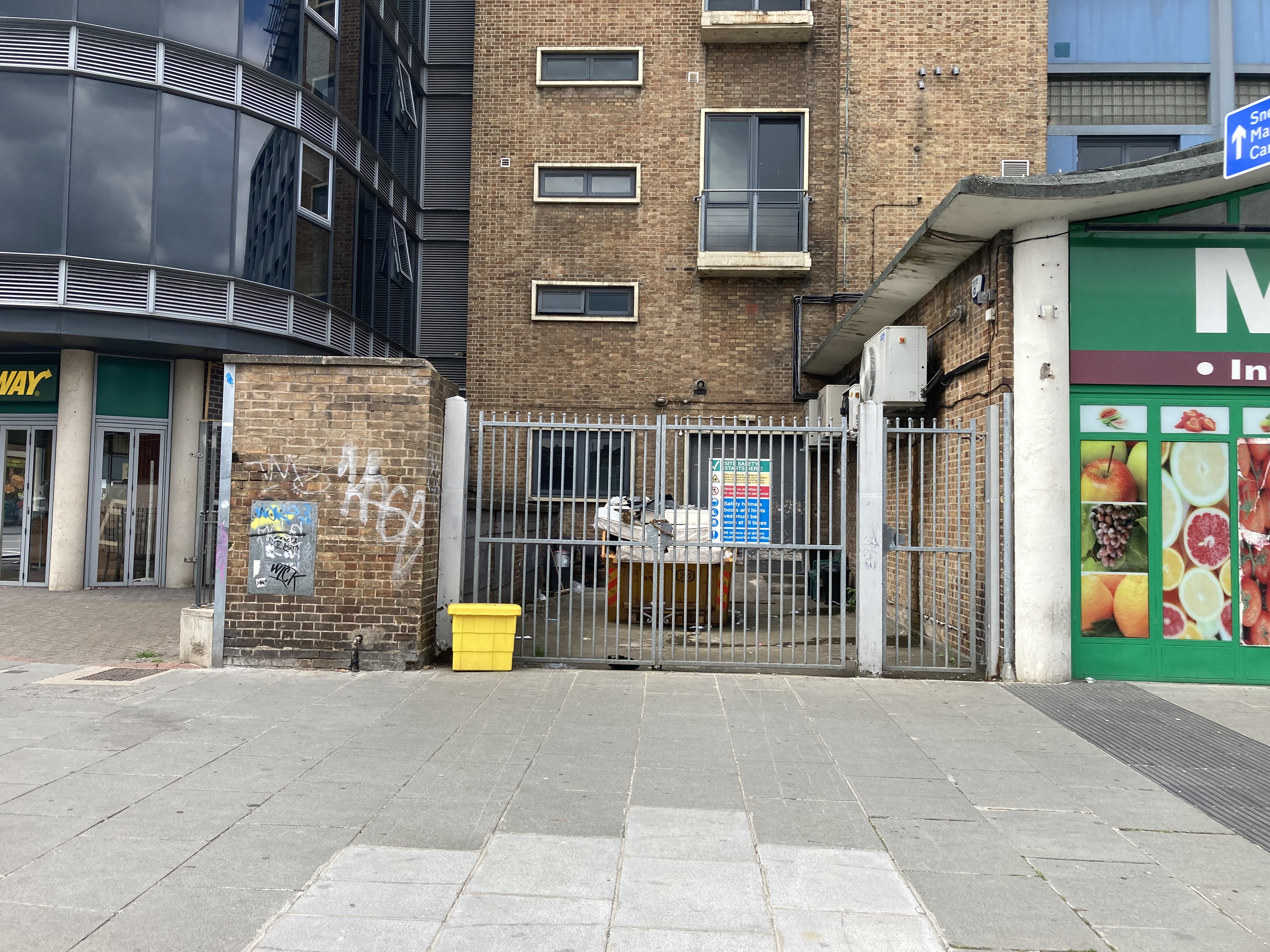


















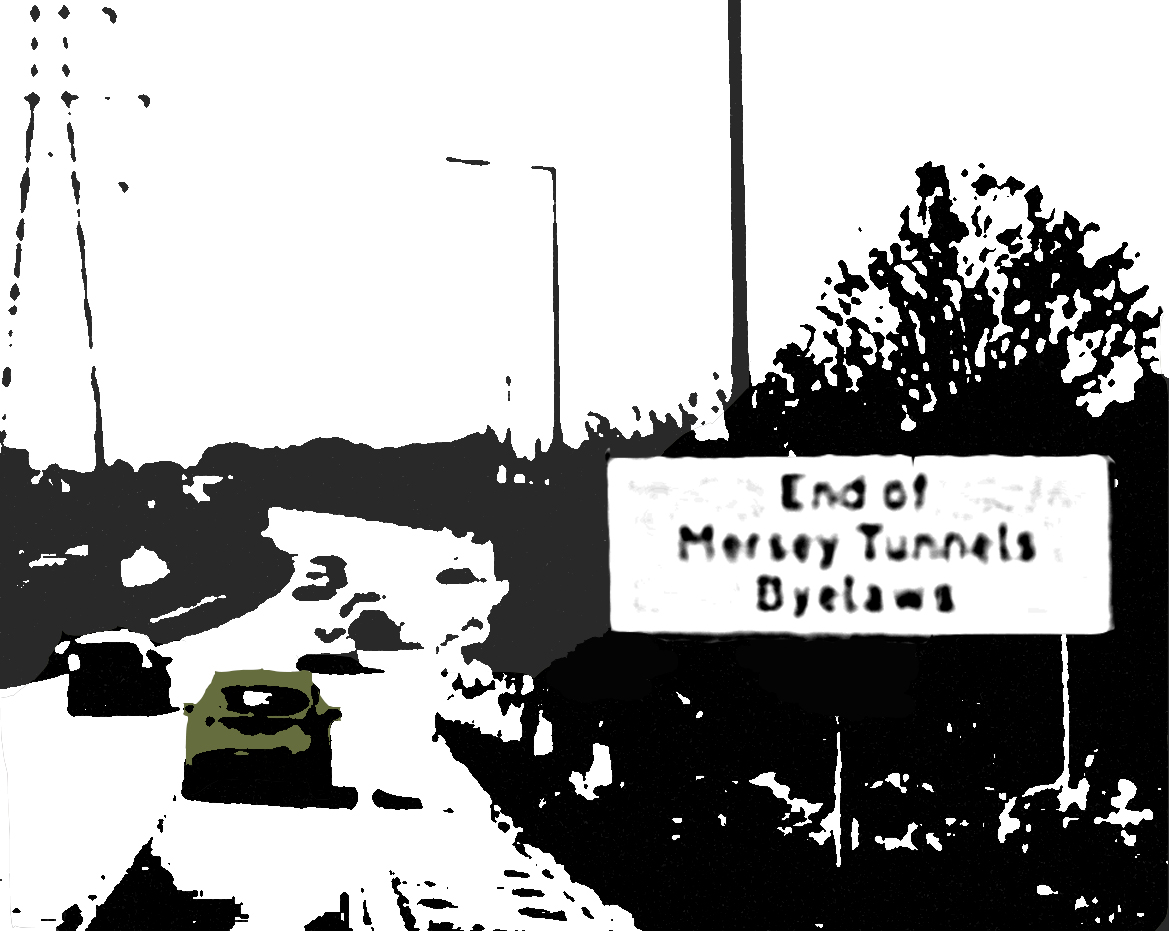


You must be logged in to post a comment.