I was not shocked, if you’ll excuse the pun, to read the news this week that two Sussex Police Officers who tasered a wheelchair- bound 92-year-old amputee had escaped criminal conviction. A common theme of this blog is how often the criminal courts seem to hold Police officers committing acts of violence to a lower standard than those of members of the public; either out of inherent pro- police bias or because the judge and/or jury think that the misconduct charges which will follow afterwards, and the potential loss of a Police career is ‘punishment enough.’ We can only speculate, but there certainly is evidence that a Police uniform is armour against the criminal convictions that would settle upon a civilian who perpetrated the same level of force.
In this particular case, PCs Stephen Smith and Rachel Comotto attended at a care home in June 2022, in response to reports that Donald Burgess, a 92-year-old wheelchair user with only one leg, had picked up a food knife and was threatening to ‘stab’ staff members. It is now known that Burgess was delirious owing to a urinary tract infection. PC Smith used PAVA spray and his baton against Burgess, whilst PC Comotto fired her taser gun at him, all within 1 minute 23 seconds of the officers entering the old man’s room. Burgess was taken to hospital after the incident, where he contracted Covid, and died 22 days later.
The officers will now face a gross misconduct hearing, which I expect will result in their being dismissed without notice. I also expect that, notwithstanding the ‘not guilty’ verdicts, Sussex Police will move swiftly to settle any claim for damages being brought on behalf of Mr Burgess’s estate.
The really concerning feature of this incident, as far as I am concerned, is the speed with which the Police violence escalated – and particularly the use of taser after only a minute and a half. All too many Officers armed with tasers deploy the weapon as if it were a toy gun, and they were playing a game of ‘cops and robbers.’ To my mind, there was no justification for such an obviously vulnerable and extremely elderly person to be tasered in circumstances like this. Taser must not be used as a short-cut to resolve a conflict, when other options are reasonable alternatives (such as negotiation and hand-to-hand restraint techniques, in which Police Officers are well- schooled).
Not every knife- wielding suspect is Jack the Ripper. Mr Burgess deserved help and compassion, not harm.
Read here about some of the cases I have brought for clients who are the victims of unjustified taser use –
I hope that you have enjoyed reading this week’s blog post and the many others available on this website. If you have, then I would like to ask you a favour – in a world in which large and non-specialist law firms (generally from a personal injury background) are increasingly throwing huge marketing budgets into online advertising in order to ‘capture’ Actions Against the Police clients – I need your help to ensure that those in need of real expert advice come to the best place for representation. If you value the insights and expertise which I share on this blog, and the results which I have achieved for the people whose stories are recounted here, please post a positive review on Trustpilot to get the word out. Every 5 star review I receive makes a big difference in helping those who need the right advice to come to the right place. Thank you!
PC Kevin Markowski, aged 47, has been dismissed from the force without notice after a misconduct panel found he had used “unnecessary and disproportionate” force during an incident in Arnold, Nottinghamshire, in August 2022. That forensic phrase – ‘unnecessary and disproportionate’ – is a bloodless and bureaucratic piece of jargon, which disguises shocking details. According to findings from the Independent Office for Police Conduct (IOPC), the officer banged the teenage girl’s head against a police vehicle and placed his hands on her throat—not once, but twice—while restraining her in the back of the car.
The incident began after the girl became involved in what has been described as a verbal altercation in the street. She was detained on suspicion of breaching the peace and placed in a police vehicle. Despite being only 16 years old and clearly vulnerable, she was later handcuffed, and the situation escalated in a manner that is deeply concerning.
Body-worn video evidence showed PC Markowski with his hands on the girl’s neck or upper chest area. She later told investigators she had been strangled and reported struggling to breathe. Markowski claimed his hands were positioned on her ‘upper chest’ and denied impeding her breathing. He also argued that the force used was reasonable in the circumstances.
However, the disciplinary panel disagreed, and the outcome of the misconduct hearing was unequivocal: PC Markowski had significantly breached professional standards relating to duties and responsibilities, use of force, and discreditable conduct. He was also found to have behaved in a “disrespectful and discourteous” manner when he refused to give his collar number to a concerned member of the public during the same incident. Markowski has now been placed on the police barred list, effectively, and correctly, ending his career in law enforcement.
Nottinghamshire Police issued an apology to the girl and her family, acknowledging the distress caused and affirming the force’s commitment to public accountability. Temporary Deputy Chief Constable Rob Griffin stated:
“The panel found that Markowski’s actions were unnecessary and disproportionate and that his dismissal is necessary for maintaining public trust and confidence in policing.”
This is yet another case which demonstrates how helpful body worn video footage is, not only in assisting the legitimate actions of the Police, but also in furthering the societal good of “policing the police.” How many times, in the analogue- era before the existence of body cameras, would the predecessors of PC Markowski been able to get away with this type of brutality, hiding behind the protection of “he said, she said” with no objective way of favouring the teenager’s word against that of a sworn constable?
It is also worth noting that PC Markowski was acquitted in a separate criminal trial at Lincoln Crown Court in June 2023, where a jury found him not guilty of strangulation. However, the threshold for criminal conviction is understandably high – the case must be proven beyond reasonable doubt – and Police officers charged with crimes of violence often find themselves in front of highly sympathetic courts. Misconduct proceedings apply a different standard—based on the balance of probabilities—as, of course, do civil claims for compensation; and quite rightfully so: justice can be achieved via alternative routes.
Whilst issues surrounding the proper regulation of immigration to the UK are understandably the top of the political agenda we must never let such concerns derogate the rule of law; due process, accountability and the restraint of police power being, after all, one of the beacons that draws other people to this country, and why we are proud to live in it.
In this week’s blog post I will recount the story of my client Cedric, an American citizen, who suffered assault and wrongful arrest at the hands of Dorset Police, after being accused of “immigration offences”.
Cedric is a US citizen of African American decent and was a vulnerable individual, with a history of mental ill health, in particular anxiety.
Between 2017- 2019, Cedric was living in the UK, with his English partner and their daughter. He played basketball for a semi- pro team but was not allowed to work.
Then, in 2019, Cedric’s relationship with his partner came to an end. Thereafter, Cedric agreed with the Home Office’s Voluntary Returns Service that he would voluntarily return to the US, as although he had entered the UK lawfully, he had now overstayed his visa. It will be remembered, however, that as 2020 began the Covid Pandemic was beginning to grip the world, and massively restrict domestic, let alone international, travel.
In October 2020, Cedric’s sister assisted him in booking a flight to return to the US via Canada, due to depart from London Gatwick on 11 November 2020. At this time, Cedric was living in Bournemouth, Dorset.
On 31 October 2020, Cedric was arrested whilst smoking a joint of cannabis by officers of Dorset Police, including PC Castle, and taken to Bournemouth Police Station. Whilst he was in police custody, Cedric explained that he was due to leave the UK on 11 November. He was thereafter given a conditional caution for the drugs offence and released.
However, following Cedric’s release from custody, PC Castle attended his home address on a further three occasions, and Cedric began to see the Officer’s actions as amounting to harassment.
Unfortunately, Cedric’s 11 November flight was then cancelled due to restrictions relating to Covid 19, temporarily preventing transit into Canada.
Accordingly, on 11 November 2020, Cedric emailed the Voluntary Returns Service notifying them about the cancelation of his flight, and that he was waiting to find out what the next available flight out would be.
Later that same day, PC Castle and a PCSO once again attended at my client’s home address.
PC Castle asked Cedric if he was not flying out that day – Cedric explained that his flight had been cancelled and offered to show the Officer his emails in proof of this (from his phone).
As the conversation about Cedric’s departure from the UK continued, PC Castle stated that he needed to speak “Right now” to the member of staff at the Voluntary Returns Service with whom Cedric was dealing (Charlie).
Cedric was becoming increasingly anxious about PC Castle’s conduct and protested that he had done “Nothing wrong” – the situation with the cancelled flight of course being entirely out of his control, and perfectly understandable in the context of the ongoing global pandemic.
Cedric continued to cooperate with PC Castle – by showing him his emails, including the contact telephone number for Charlie – but at the same time was becoming increasingly anxious and distressed and his distress was only heightened when PC Castle announced “In a moment I’m going to have to arrest you”.
PC Castle then stepped into the building, grabbed hold of my client and told him that he was under arrest “on suspicion of immigration offences”.
PC Castle then pushed Cedric backwards and began to take him down to the ground. A struggle ensued as Cedric tried to get away from the Officer, but PC Castle tripped my client with a ‘leg sweep’ and pinned him face- down on the floor. In the course of his fall, my client banged his head on the floor, and would later be diagnosed with post- concussion syndrome.
Underneath the Officer’s body weight, Cedric was struggling to breathe and told PC Castle this, but the Officer’s reply was simply to inform my client that he was further under arrest “on suspicion of assault police”.
PC Castle then began to handcuff Cedric, causing Cedric considerable pain by pulling on his arm at which Cedric protested that the Officer was breaking his arm.
Aggressively shouting at my client to “stop resisting”, PC Castle then punched Cedric several times to his head and body, causing him further injury.
Cedric asked for an ambulance, repeating that he was struggling to breathe to which PC Castle commented “Your lungs are open”.
With his hands now handcuffed, and still on the ground, Cedric was in considerable pain, and briefly lost consciousness.
Other Officers arrived at the address, and Cedric was brought to his feet in handcuffs, in a state of real physical and mental distress. Indeed, owing to Cedric’s injuries the Officers’ first port of call with him was not a Police Station, but rather the Royal Bournemouth Hospital.
When Cedric was eventually taken to Bournemouth Custody Suite, the circumstances of his arrest were recorded in the custody record as follows –
“DP [detained person] was at an address being checked by police for lawful purposes. The arresting Officer had knowledge that the DP was due to leave the UK due to overstaying and should have left the country during the early hours. While the Officer was establishing the full circumstances, it is alleged that the DP became violent and assaulted the arresting Officer…”.
Cedric was in pain all over his body, especially from his wrists which were ‘raw’ where the handcuffs had been, and was feeling very anxious and dizzy. He felt further humiliated and degraded by being required to remove his clothing and submit to a ‘strip search’ examination, before being taken to a cell.
Whilst my client was detained in the cell, PC Castle wrote a statement of events in which he wrongly alleged that, on being told he was under arrest for immigration offences, Cedric had pushed PC Castle in the chest, with both hands, in an attempt to escape. He went on to paint a false picture of Cedric as a violent aggressor, and the initiator of the violence, rather than its recipient.
When Cedric was brought out of his cell for interview he gave his own side of the story, explaining that PC Castle had “Beat [him] up for nothing”.
The following day, Cedric attended Poole Hospital, for treatment for the injuries he had sustained in this incident and had to return to hospital again 4 days later.
In January 2021, Cedric appeared at Poole Magistrates Court where he pleaded ‘not guilty’ to all of the charges that had been made against him.
The trial was originally listed for July 2021, with a time estimate of 2-3 days, but it did not go ahead – another cancellation almost certainly attributable to the ongoing effects of the Covid pandemic.
In December 2021, with Cedric still awaiting the re-listing of his trial, PC Castle completed a further witness statement in which he expanded significantly upon his original account, including making a number of references to his being aware of and relying upon the law as laid down in “Section 24 of the Immigration Act”, purporting that his knowledge and understanding of that Act had governed his interactions with my client on 11 November, and arguing the legality of his arrest of Cedric by reference to that legislation – despite the fact that he had made no mention of it whatsoever in the witness statement he had written on the actual day of the incident. PC Castle’s contemporaneous statement had referred only to his arresting Cedric for “immigration offences” – a suspiciously vague phrase, almost tantamount to telling someone that they are being arrested “for crime.”
Whether this was an act of supreme recollection, or retrospective fabrication, on the Officer’s part I will leave it to you to decide. What is crucial, however, is the very fact that this statement was written reflects the recognition by the Police that the law of our land requires Officers to specifically identify the power of arrest that they are using, and the grounds for it, and to have an honest belief that offence has been committed – because otherwise society is on the slide to the kind of authoritarianism in which Police fit the law to their actions, rather than their actions to the law.
Cedric’s trial eventually took place at Winchester Crown Court in March/April 2022 over the course of 3 days, during which PC Castle and other Officers gave evidence against my client – but he was nevertheless acquitted by the jury of all of the charges against him.
Cedric ultimately returned to the US in July 2022 – the duration of my client’s stay in the UK having been effectively extended for the best part of two years as a result of the Criminal Justice process put in motion by PC Castle’s wrongful arrest of him.
None of this had been necessary from an immigration point of view – my client had been cooperating with the Voluntary Removals Service and if it wasn’t for the intervention of first Covid and then PC Castle, would have returned to the US long before July 2022.
What a perverse scenario Cedric had found himself in, and had to suffer through during those years – he was a victim of police violence, but was accused of being the aggressor; he was told he was an immigration ‘overstayer’, but was then detained against his will in the UK, in order to answer charges which the police had trumped up against him.
After Cedric consulted me, I assisted him in bringing Court proceedings against the Chief Constable of Dorset Police, seeking damages for wrongful arrest, assault and battery and malicious prosecution.
Through my evidence gathering, detailed analysis of that evidence, and legal arguments, I was able to build a case for Cedric which ultimately resulted in the police throwing in the towel before having another round with my client in the courtroom – despite the fact that in the civil Courts it is far easier for the police to justify an arrest and prosecution than securing a conviction in the criminal Courts because the two cases are judged by very different standards and criteria. This is why I will always explain to my clients that an acquittal in the Magistrates Court or the Crown Court of offences which they say the police have falsely brought against them, is very much only a first step to winning civil damages – not a foregone conclusion.
I am very pleased to confirm that I have recently settled Cedric’s claim for damages from Dorset Police in the sum of £20,000, plus legal costs. The level of damages reflects the significant Police wrongdoing in this case. My client’s injuries and loss of liberty were made all the worse by the dishonesty which had corrupted the whole process against him from start to finish.
As I said at the start of this post – I think we can all agree that the UK needs a proper, fair and robustly policed immigration system; however, that cannot excuse misconduct on the part of Police Officers who commit those acts of misrepresentation and bullying authoritarianism which are – or should be – foreign to the principles of UK democracy and Peelian “policing by consent”.
How you can help me
I hope that you have enjoyed reading this week’s blog post and the many others available on this website. If you have, then I would like to ask you a favour – in a world in which large and non-specialist law firms (generally from a personal injury background) are increasingly throwing huge marketing budgets into online advertising in order to ‘capture’ Actions Against the Police clients – I need your help to ensure that those in need of real expert advice come to the best place for representation. If you value the insights and expertise which I share on this blog, and the results which I have achieved for the people whose stories are recounted here, please post a positive review on Trustpilot to get the word out. Every 5 star review I receive makes a big difference in helping those who need the right advice to come to the right place. Thank you!
In the innocent days of the 1990s, when we imagined the apocalypse humanity might face at the hands of that Frankenstein’s monster known as Artificial Intelligence, we thought our end would come at the gun-barrels of gleaming metallic robot Terminators…but it now looks more likely that “AI” will instead end civilisation by drowning us in a blizzard of fake news, fake history – and fake legal cases.
If we are to avoid this fate, salutary lessons can be drawn from the recent public law case of Ayinde, R (On the Application Of) v The London Borough of Haringey [2025] EWHC 1040 (Admin) (03 April 2025) which contains this startling narrative of events at paragraphs 57 – 66 of the judgement-
Moving to the second ground for judicial review, failure to consider relevant evidence, I accept that there was a lot of substance in that ground because, having read the medical evidence, I had taken a preliminary view that the judicial review had quite strong legs to show that the Claimant had a priority need and was seriously at risk, and the Claimant’s medical evidence had been overlooked, ignored or irrationally not taken into account. I do not make that finding, I just set out here that this was my preliminary view. However, I do not need to make that finding and I had not heard any of the evidence by the time the parties actually came to settle the substantive issues and the Defendant had provided accommodation to the Claimant after the order made by the Deputy High Court Judge last October. However, although ground 2 had substance to it the case cited in paragraph 20 did not exist. The text was drafted as follows by Ms Forey:
“Moreover, in R (on the application of Ibrahim) v Waltham Forest LBC [2019] EWHC 1873 (Admin), the court quashed the local authority decision due to its failure to properly consider the applicant’s medical needs, underscoring for necessity the careful evaluation of such evidence in homelessness determinations. The respondent’s failure to consider the appellant’s medical conditions in their entirety, despite being presented with comprehensive medical documentation, renders their decision procedurally improper and irrational”.
The problem with that paragraph was not the submission that was made, which seems to me to be wholly logical, reasonable and fair in law, it was that the case of Ibrahim does not exist, it was a fake. I find this extremely troubling. I do not accept Ms Forey’s explanation for how these fake cases arose. I do not accept that she photocopied a fake case, put it in a box, tabulated it and then put it into her submissions. The only other explanation that has been provided before me, by Mr Mold, was to point the finger at Ms Forey using Artificial Intelligence. I do not know whether that is true, and I cannot make a finding on it because Ms Forey was not sworn and was not cross examined. However, the finding which I can make and do make is that Ms Forey put a completely fake case in her submissions. That much was admitted. It is such a professional shame. The submission was a good one. The medical evidence was strong. The ground was potentially good. Why put a fake case in?
Ground 3, unreasonableness and irrationality. Various submissions were set out there in paragraphs 21 and 22 including based on Wednesbury and then in paragraph 23 a case which is not attacked by the Defendant. However, in paragraph 24, Ms Forey wrote this:
“The appellant’s situation mirrors the facts in R (on the application of H) v Ealing London Borough Council [2021] EWHC 939 (Admin) where the court found the local authority’s failure to provide interim accommodation irrational in light of the appellant’s vulnerability and the potential consequences of homelessness. The respondent’s conduct in this case similarly lacks a rational basis and demonstrates a failure to properly exercise its discretion”.
This was yet another fake case. It does not exist. Therefore, the description of what it is in the case was fake and untrue.
Finally in relation to ground 4, breach of duty to act fairly, Ms Forey herself breached her duty to act fairly and not to mislead the court by paragraphs 27 and 28. In 27 she wrote: “The respondent’s failure to provide a timely response and its refusal to offer interim accommodation have denied the appellant a fair opportunity to secure his rights under the homelessness legislation. This breach is further highlighted in R (on the application of KN) v Barnet LBC [2020] EWHC 1066 (Admin) where the court held that procedural fairness includes timely decision-making and the provision of necessary accommodation during the review process. The respondent’s failure to adhere to these principles constitutes a breach of the duty to act fairly”. That sounds fine. The trouble is, the case does not exist, it was a fake.
Worse still, in paragraph 28, Ms Forey wrote:
“The appellant’s case further aligns with the principles set out in R (on the application of Balogun) v London Borough of Lambeth [2020] EWCA Civ 1442 — where the Court of Appeal emphasise that local authorities must ensure fair treatment of applicants in the homelessness review process. The respondent’s conduct in failing to provide interim accommodation or a timely decision breaches the standard of fairness”.
Ms Forey had moved on from fake High Court cases to fake Court of Appeal cases. I have no difficulty with the submission that the Respondent local authority had to ensure fair treatment of applicants in the homelessness review process, but I do have a substantial difficulty with members of the Bar who put fake cases in statements of facts and grounds.
I now come to the relevant test. Has the behaviour of Ms Forey and the Claimant’s solicitors been improper, unreasonable or negligent? I consider that it has been all three. It is wholly improper to put fake cases in a pleading. It was unreasonable, when it was pointed out, to say that these fake cases were “minor citation errors” or to use the phrase of the solicitors, “Cosmetic errors”. I should say it is the responsibility of the legal team, including the solicitors, to see that the statement of facts and grounds are correct. They should have been shocked when they were told that the citations did not exist. Ms Forey should have reported herself to the Bar Council. I think also that the solicitors should have reported themselves to the Solicitors Regulation Authority. I consider that providing a fake description of five fake cases, including a Court of Appeal case, qualifies quite clearly as professional misconduct.
On the balance of probabilities, I consider that it would have been negligent for this barrister, if she used AI and did not check it, to put that text into her pleading. However, I am not in a position to determine whether she did use AI. I find as a fact that Ms Forey intentionally put these cases into her statement of facts and grounds, not caring whether they existed or not, because she had got them from a source which I do not know but certainly was not photocopying cases, putting them in a box and tabulating them, and certainly not from any law report. I do not accept that it is possible to photocopy a non-existent case and tabulate it. Improper and unreasonable conduct are finding about which I am sure. In relation to negligence I am unsure but I consider that it would fall into that category if Ms Forey obtained the text from AI and failed to check it.
…These were not cosmetic errors, they were substantive fakes and no proper explanation has been given for putting them into a pleading…
Handle AI With Care
Do Androids Dream of Electric Sheep?, asked science fiction author emeritus Phillip K Dick, in his novel of that title, which went on to become the ‘80s movie classic “Blade Runner.” The answer is apparently, yes – and then they make up a High Court case about them.
The consequences that the lawyers involved in the Ayinde case, who were responsible for putting forwards what seem to have been fake cases dreamt up by an AI ‘Large Language Model’ (such as Chat GPT) will not be light, and nor should they be. It is a warning to all who seek to research the law online that they need to be careful about trusting the information put in front of them, particularly if it is an AI generated summary or article. Certainly, at this stage of their development, these programmes should not have the ‘Intelligence’, but the ‘Artificial’ half of their name repeatedly stressed. A ‘shortcut’ to knowledge can easily prove to be a trapdoor.
Look beyond the “AI Overview” box and seek out a flesh-and-blood lawyer who does his own research, who knows the case law inside out, and whose track- record of success is vouched for by hundreds of word-of-mouth recommendations and organic reviews, rather than silicon- manipulation – in other words, an expert, like me.
How you can help me
I hope that you have enjoyed reading this week’s blog post and the many others available on this website. If you have, then I would like to ask you a favour – in a world in which large and non-specialist law firms (generally from a personal injury background) are increasingly throwing huge marketing budgets into online advertising in order to ‘capture’ Actions Against the Police clients – I need your help to ensure that those in need of real expert advice come to the best place for representation. If you value the insights and expertise which I share on this blog, and the results which I have achieved for the people whose stories are recounted here, please post a positive review on Trustpilot to get the word out. Every 5 star review I receive makes a big difference in helping those who need the right advice to come to the right place. Thank you!
While Martin is no longer a serving officer — having resigned three days before a misconduct panel formally dismissed him, his name added to that roster of shame known as the “Police Barred List” – his actions remain a clear example of how power can be misused in the most egregious way.
A Disturbing Abuse of Trust
As someone who has represented many victims of police misconduct, I find this case sadly familiar. When a police officer uses their position not to protect a vulnerable person, but to exploit them, the betrayal of trust is profound — not only for the individual concerned but also for public confidence in policing as a whole.
Police officers are given considerable authority: to detain, to investigate, to access sensitive information, and to enter into the most intimate spaces of people’s lives, often at their lowest moments. With that authority must come a higher standard of behaviour — not just lawful conduct, but moral integrity.
In this case, the victim was someone already identified as vulnerable. Martin’s behaviour was not a one-off lapse but a pattern of sexualised communication over two weeks. That’s calculated exploitation.
Consequences — But Are They Sufficient?
The suspended sentence has already raised eyebrows; the fact that Martin will not spend a single night in prison may be seen as an insufficiently “chilling” deterrence to other officers tempted to transgress.
Women who have dialled “999” for help from the Police, should not have to fear that they may have also dialled “666” and invited a devil into their lives.
Systemic Questions Remain
Detective Chief Inspector James Ansell, of Surrey Police’s anti-corruption unit, has said that crimes committed by officers “simply cannot be condoned”.
That is a welcome sentiment. But words alone won’t prevent future abuse. What mechanisms failed that allowed Martin’s conduct to go undetected for two weeks? Were there missed red flags or failures in supervision? Were the recruitment and vetting procedures which let him into the Police in the first place sufficiently robust and thorough?
Most police officers serve with dedication and integrity. But it only takes a few — as I’ve seen too often in my legal practice — to inflict lasting damage on victims and erode public confidence.
Legal Recourse for Victims
For victims of police misconduct, the criminal process is just one part of the story. Civil claims against the police — for misfeasance in public office, breach of Article 3 of the European Convention on Human Rights (inhuman or degrading treatment), or breaches of data protection and privacy — may offer a route to compensation and formal acknowledgement of wrongdoing in cases of this nature.
No one should be victimised by the very people they turn to for protection.
Please read here the anonymised stories of some of the women whom I have helped after they suffered this form of abuse:
Nicola, who won £17,000 from West Yorkshire Police after a Crime Scene Investigator called Daniel Cordwell, attending her home after a burglary, kissed her without her consent;
Kate, who won £25,000 from Merseyside Police, after she had reported a man who was sexually exploiting young women and girls, and was then herself subject to a campaign of sexual harassment by text message from the investigating Officer, DS Stubbs;
If you believe you have suffered abuse or misconduct at the hands of a police officer, you are not alone — and you are not without recourse. I specialise in representing victims of police wrongdoing. Please get in touch for a confidential discussion.
How you can help me
I hope that you have enjoyed reading this week’s blog post and the many others available on this website. If you have, then I would like to ask you a favour – in a world in which large and non-specialist law firms (generally from a personal injury background) are increasingly throwing huge marketing budgets into online advertising in order to ‘capture’ Actions Against the Police clients – I need your help to ensure that those in need of real expert advice come to the best place for representation. If you value the insights and expertise which I share on this blog, and the results which I have achieved for the people whose stories are recounted here, please post a positive review on Trustpilot to get the word out. Every 5 star review I receive makes a big difference in helping those who need the right advice to come to the right place. Thank you!
This week’s blog post concerns a strange and concerning circumstance: a person arrested purely so that her DNA could be ‘harvested’ for the Police biometrics database – after she had previously provided a DNA sample, but the sample had subsequently ‘failed’ the Police lab test.
In August 2022, my client Alice was arrested by Nottinghamshire Police on suspicion of driving under the influence of alcohol. She was taken to a Police Station.
This was the first and only time Alice had had any dealings with the Police, let alone been arrested and she was naturally very embarrassed and distressed.
During her time in Custody, Alice was obliged to provide her fingerprints and a DNA sample, which is a routine process governed by Section 63 of the Police and Criminal Evidence Act 1984 (PACE), and with which Alice fully co- operated.
Thereafter, Alice was released from custody and tried to put this unpleasant experience behind her. In May 2023, Alice moved house, and as many of us do, set up a postal re-direct from her old address with Royal Mail.
Then, one evening in mid- August 2023, over a year after Alice’s initial arrest, two Police Officers turned up unannounced at Alice’s home and, to her absolute shock, arrested her. The Officers were vague as to the reason for arrest other than it related to the DNA sample which my client had provided in August 2022.
Alice was devastated; she was led outside of her home and ushered into a marked Police car in view of her neighbours – an extremely shameful ‘no smoke without fire’ experience. She was transported back to the Police Station where she had been dealt with the previous year.
According to the Custody Record, Alice had been arrested for alleged failure “to comply with request of a Police Officer or other authorised persons for fingerprints/photographs/both”.
The circumstances of arrest were described as “DP [Detained Person] circulated to obtain DNA”. And the arrest necessity reason was stated to be: “Prevent the disappearance of the person”.
A little while later, it was further recorded that “Detention is authorised for the purpose of S37(3) PACE – secure/preserve evidence; S63A PACE re-sampling”.
Alice was incarcerated in a holding cell and then later obliged to (again) give her fingerprints and DNA sample and to be photographed. Only then was she released and allowed to return home, understandably traumatised by an event which I consider was nothing less than the trampling of her liberty and individuality under the boot-heel of Police biometric bureaucracy.
Several days later, Alice received a letter from Nottinghamshire Police dated the day before her arrest, sent to her previous address and which had been redirected. The letter stated as follows:
“I am contacting you in regard to an incident that you were involved in whereby you were involved in an RTC and subsequently were found to be over the prescribed limit for alcohol.
During your time in custody, you would have had your DNA taken which is standard procedure for any person who is arrested and taken to custody.
This DNA has failed, therefore you are required to attend your nearest Nottinghamshire Police Custody Suite.
This requirement for DNA forms part of PACE which is the Police and Criminal Evidence Act 1984 and falls under Code G.
I must remind you that due to this DNA requirement I have circulated you on the Police National Computer, therefore it is recommended that you attend Mansfield Custody Suite as soon as possible, where your DNA will be re taken and this matter will be closed”.
This was the first and only time that Alice had received any correspondence suggesting that the sample taken in August 2022 had “failed”. It later transpired that the reason for this failure was not a scientific fluke or computer glitch, but good old fashioned Police incompetence – they had failed to seal the bag containing the sample properly.
In response, Alice wrote to request clarification as regards the circumstances of her arrest. She received a reply from Nottinghamshire Police’s Professional Standards Department, which suggested that a letter advising of the failure of the DNA sample had first been sent to her in June 2023 – but she had not received that letter, and nor was there any explanation at all as to why it had taken over 10 months for the letter to be sent, after the initial sample was taken. The Police also admitted that they were unable to produce that alleged June letter as “no copy was saved.”
It was also asserted that the Officer who wrote the letter which Alice did receive in August 2023 had at the same time circulated an arrest request for Alice, without giving her a chance to respond “he didn’t expect officers to act on the circulation for arrest as quick as they did…”
In a later account, Nottinghamshire Police also sought to defend their officer’s decision to arrest Alice at her home by seeking to argue that although Alice asserted that she had not received the June 2023 letter – “as she could not confirm whether this was the case…the arrest was necessary to prevent [Alice’s] disappearance.” How on Earth, one may ask, is one supposed to ‘confirm’ the non- receipt of a letter? (A letter, lest we not forget, which the Police apparently had no copy of either).
The Keystone Cops, it seems, are still alive and well, even in this age of DNA databases and word processing…
Had Alice actually received the Police letter before her arrest, she would of course have attended a local Police Station on a voluntary basis to provide a further sample. Yet further, even on the night itself there was no need to arrest Alice – although she was shocked and confused, she would have accompanied the Officers to the Police Station on a voluntarily basis – arrest was simply not required.
Sadly,
the Officer who circulated the arrest request,
the pair of Officers who attended Alice’s home and arrested her, and
the Custody Sergeant who approved her detention,
were all guilty of block-headed, insensitive and ‘robotic’ Policing – apparently acting not for the ‘Greater good’ but for the ‘Data good.’
It was clear to me, when I reviewed Alice’s case that there was absolutely no necessity to arrest her in August 2023 – no reasonable basis for presuming that she would not voluntarily co- operate – and that therefore her arrest was unlawful as being in violation of Section 24 and Code G of PACE (the Necessity test).
I am pleased to confirm that in response to my detailed arguments and presentation of her claim, Nottinghamshire Police admitted that they unlawfully arrested Alice and have recently agreed to pay her significant compensation, plus her legal costs.
The original offence for which Alice was arrested was a relatively low-level one, and why the Police deemed it necessary to ensure that they had Alice’s DNA on their database is beyond me; the building up of a library of the most intimate building blocks of our bodies should not become a goal in itself for our Police Forces – especially not at the cost of a person’s liberty in such outrageous circumstances as these.
As ever, sometimes the most important thing you can do with power, is not use it.
My client’s name has been changed.
How you can help me
I hope that you have enjoyed reading this week’s blog post and the many others available on this website. If you have, then I would like to ask you a favour – in a world in which large and non-specialist law firms (generally from a personal injury background) are increasingly throwing huge marketing budgets into online advertising in order to ‘capture’ Actions Against the Police clients – I need your help to ensure that those in need of real expert advice come to the best place for representation. If you value the insights and expertise which I share on this blog, and the results which I have achieved for the people whose stories are recounted here, please post a positive review on Trustpilot to get the word out. Every 5 star review I receive makes a big difference in helping those who need the right advice to come to the right place. Thank you!
This week’s blog post comes from my colleague and fellow actions against the police solicitor, John Hagan.
There is a reason why the phrase “An Englishman’s home is his castle” is such a resonant one; it sums up a principle which underpins the liberal and democratic traditions of British society and we infringe upon it at our peril.
I therefore feel compelled to add my voice to the chorus of those who have expressed concern about section 93 of the Crime and Policing Bill, which is currently at committee stage at the House of Commons, and which provides as follows –
93 Electronically tracked stolen goods: search without warrant
(1) In the Theft Act 1968, in the heading of section 26 after “goods” insert “with warrant”.
(2) In the Theft Act 1968, after section 26 insert—
“26A Electronically tracked stolen goods: search without warrant
(1) A constable whose rank is at least that of inspector (a “senior officer”) may authorise a constable to—
(a) enter specified premises, and
(b) search the specified premises for specified items.
(2) A senior officer may give an authorisation under subsection (1) only if satisfied that—
(a) there are reasonable grounds to believe that—
(i) the specified items are stolen goods,
(ii) the specified items are on the specified premises, and
(iii) it is not reasonably practicable to obtain a warrant for the entry and search (under section 26 or another enactment) without frustrating or seriously prejudicing its purpose, and
(b) there is electronic tracking data indicating that the specified items (or any of them) are, or have at some time since they are believed to have been stolen been, on the specified premises.
(3) An authorisation may be given orally or in writing.
This clause, if enacted as currently drafted into law, would grant the Police yet further powers to intrude into the ‘inner sanctum’ of our private lives, without the prior oversight of the Court i.e. a new power of entry into a person’s home, without the need for Court approval in the form of a warrant. Also note the vague definition of “electronic tracking data” – any “information as to the location, determined by electronic means, of an item.”
Rob Warner has produced an excellent recent video surveying this problem which I would recommend everyone to watch, on his Crimebodge YouTube channel below:
And for those of you who haven’t read his equally excellent “Copper Stopper” handbook, read about it here.
Not every change is for the best, and sometimes politically expedient amendments to the law risk fixing a system that isn’t broken – or that already has the necessary tools to deal with the problem, provided they are used properly – and risk fuelling authoritarian ‘mission creep’ amongst the agents of the state, infringing fundamental personal liberties and enabling new forms of abuse and exploitation of Policing power.
The best laws are not those which are apparently designed for ‘headline grabbing’ – especially when the problem they purport to address could be fixed without changing the law, and instead by better management and application of existing resources. Section 93 of the new Bill appears to have been drafted to address news reports about Police being unwilling to act upon tracking data showing the location of people’s stolen mobile phones or other easily moveable computing devices; but we should be careful about throwing away our personal freedoms just for the sake of our personal phones – and, in reality, the power which already exists for the Police to apply for a Court warrant to search premises is what should, more efficiently and pro-actively, be utilised in appropriate cases of reported theft. That way, the Court oversight – the guardrails around State intrusion into our family homes which our forebears erected, would be maintained – rather than being further dismantled. Bear in mind that the Police already have wide powers under the Police & Criminal Evidence Act 1984 (PACE) to force entry into premises without Court permission –
Under Section 17 of PACE – to arrest wanted persons for serious offences, or if there is an immediate threat to the life or threat of serious injury of an occupant of the premises (“saving life or limb”).
Under Section 18 of PACE – to search premises at which an already arrested person resides.
I personally do not think that we should allow those powers – those gaps in the guardrails – to get any wider.
When I look at the proposed legislation I think of all the ways it could be abused by reckless, authoritarian or negligent Police Officers and the deep harm such abuse of power could cause, not only to the personal lives of those individuals whose homes are violated by a Police intrusion under this law, but also its wider implications in further diluting the principal of the sanctity of our ‘castles’ and injuring society as a whole; wearing down people’s expectations of privacy beneath the tramping feet of Police trespassers as the Police gain evermore ‘rights of way’ over the threshold of our homes. The more wedged the Police Officer’s boot becomes in the door, the more society may, in the long term, come to forget that we ever had a right to close it in their face.
John Hagan, solicitor and specialist in civil actions against the police.
Contemplating these themes, reflect on the following –
The rapidity with which the ill- thought-out emergency legislation brought in to address the Coronavirus pandemic was exploited by Police Officers, some of whom seemed gleeful to have their inner authoritarian enabled, as if they were living in the ‘papers please’ curfew- state of their dreams
The existing exploitation of Police powers of entry into the home – particularly under Section 17 of PACE – the supposed power of entry to “save life or limb” which is, very often, invoked by Officers when in fact nobody’s life or limb is in danger, but the Officer just has a twitchy nose
Big Brother does not have all the answers, and I caution that we should be very wary about giving his foot-soldiers another excuse to come into our homes, especially one which is going to be based on notoriously imprecise location data, in a country whose cities have a very high population density, often sharing terraced streets or apartment blocks.
Not all change is for the best and the strongest wisdom often has age-old roots. Let us hope that modern day legislators take a proper look before they leap, and come to the same realisation which led to the abolition of the “Smoke Money” Act during the reign of King William and Queen Mary (1688 – 94), which had previously imposed a tax payable to the Monarch on the basis of how many hearths, or fire-places, a house possessed. The preamble to the Act repealing this imposition decried it as contrary to the institutions of English justice, in the following strident terms, which I am tempted to adopt for our present purpose –
“Not only a great oppression to the poorer sort, but a badge of slavery upon the whole people, exposing every man’s house to be entered into and searched at pleasure by persons unknown to him.”
How you can help me
I hope that you have enjoyed reading this week’s blog post and the many others available on this website. If you have, then I would like to ask you a favour – in a world in which large and non-specialist law firms (generally from a personal injury background) are increasingly throwing huge marketing budgets into online advertising in order to ‘capture’ Actions Against the Police clients – I need your help to ensure that those in need of real expert advice come to the best place for representation. If you value the insights and expertise which I share on this blog, and the results which I have achieved for the people whose stories are recounted here, please post a positive review on Trustpilot to get the word out. Every 5 star review I receive makes a big difference in helping those who need the right advice to come to the right place. Thank you!
The College of Policing’s National decision model for professional practice enjoins Police Officers to put the Code of Ethics at the heart and centre of their decision making and quite correctly highlights respect and empathy as core principals – “Encouraging, listening to and understanding the views of others and seeking to recognise and respond to the physical, mental and emotional challenges that we and other people may face”.
Autism, or Autism Spectrum Disorder, is a condition now understood to be widespread amongst the population and which can affect people to a greater or lesser degree; it is not an impairment of intellectual function but rather of communicative ability, body-language cues and ease of social interaction. As a result, autistic people often seem to be on a different ‘wavelength’ than others and have to cope as ‘outsiders’ in social situations, particularly stressful public ones, and should be accorded the time, space and compassion to allow them to do so on their own terms. The National Autistic Society offer guidance for Police officers dealing with autistic people, which includes the following key recommendations –
Allowing the person time to process information, and not demanding an immediate response to instructions;
Being sensible and sensitive about the reasons someone may be avoiding ‘normal’ eye contact – not jumping to a conclusion of guilt or ‘obstructiveness’;
Not shouting at the person;
Not subjecting them to emergency lights and sirens;
Avoiding physical contact if at all possible.
That is surely what the National decision model would also require of the ‘platonic ideal’ of a Police Officer; unfortunately, the treatment that my client Daniel received from an Officer of Lancashire Constabulary in the incident which is the subject of today’s blog post, was very far from ideal because those vices which so often underpin what we might call the ‘Nasty Decision Model’ of policing – egotism, anger and insensitivity – caused this Officer to treat my client as though autism itself was some sort of crime.
One afternoon in the autumn of 2021, Daniel, a middle-aged man with autism who works as a civil servant, was asked to collect his elderly mother from the Royal Preston Hospital. In accordance with instructions which he had been given, Daniel parked up outside the main entrance of the hospital, on an internal road. He waited several minutes, but his mother did not appear and so he called her on his mobile phone. Daniel’s mother explained that there had been a delay in her medicine being prepared and that he would now have to park up in the main car park whilst he waited for her.
A nurse who was with Daniel’s mother then began giving Daniel directions, over the phone, as to where to drive in order to re-enter the internal road system of the hospital so as to access the main car park. Because the road which Daniel was currently on was one way, he could not just turn around; he had to exit and re-enter the hospital grounds.
As Daniel was engaged in this conversation, he saw a male Police Officer in uniform arrive outside the hospital, and walk towards the main entrance. As he did so the Officer shouted at Daniel “Get off that fucking phone and move that fucking car now”.
Whilst it was true that Daniel was in a restricted parking zone, he was focused on the call he was participating in and on his duty to collect his mother. Daniel continued to receive instructions from the Nurse, whereupon he terminated his phone call. At this time, he saw the Officer leaving the hospital and approaching the driver’s door of his car.
Conscious of how aggressive the Officer had been before, Daniel did not want to engage with him, and now pulled away, scrupulously following the directions he had been given to navigate the internal road system of the hospital.
After a short distance, Daniel became aware of the Officer following him in an unmarked car – but which had Police lights flashing and claxons activated. He did, not at first, appreciate that those lights and siren were intended for him, rather than the Officer being on another ‘emergency call’. Furthermore, he did not want to deviate from his task of collecting his mother.
Driving in a normal manner, Daniel exited the hospital grounds, intending to circle back around on the public roads to the main entrance (so as to gain access to the car park, as instructed), but before he could do so, was obliged to stop at a zebra-crossing, whereupon the Officer drove ahead of Daniel and pulled up sharply in front of his car, boxing him in.
Matters now escalated dramatically; the Officer alighted from his car and ran towards Daniel’s car. On reaching it, without any warning or notice, he smashed Daniel’s window with his baton.
Bear in mind that the maximum that Daniel could have been suspected of at this stage was a minor motoring offence – and in driving out of the hospital grounds he had in fact been obeying the Officer’s initial instructions.
Daniel was now frozen in a state of shock and did not move as the Officer reached in, snatched his keys from the ignition, and opened the driver’s door. The Officer undid Daniel’s seatbelt and forcibly extracted my unresisting client from the car.
The Officer – disproportionality enraged with Daniel, and taking no time to draw breath, assess the situation and recognise those differences in Daniel’s demeanour which would have explained everything – now threw Daniel up against the side of his car and repeatedly shouted at him “You’re a fucking dick”.
Many people would be frozen with fear by this point, and Daniel’s autism only placed him more at the mercy of the Officer’s road- rage.
The Officer forced Daniel to the ground – which was scattered with glass from his shattered window, thereby causing Daniel to sustain cuts to his face and hands and damage to his trousers. He then pulled Daniel back up onto his feet, again pushed him against the side of the car, and handcuffed him with his hands behind his back.
The Officer then marched Daniel to the rear of his own vehicle and called for ‘back up’.
During this process, the Officer had seized Daniel’s mobile phone which was now ringing almost continuously – Daniel’s mother, and also his sister, having become anxious as to his whereabouts.
The Officer refused to allow Daniel to answer, and instead eventually answered the phone himself, speaking to Daniel’s sister, who explained that Daniel was autistic.
‘Reinforcements’ then arrived and Daniel – still unresisting and uncomplaining – was moved from the Officer’s car to a van, whereupon he was transported to Preston Police Station.
Daniel was taken before the Custody Desk, where he was searched and his handcuffs were finally removed. The Officer claimed that Daniel had been arrested for “Failing to Stop When Directed”, contrary to S.163 of the Road Traffic Act 1988.
Thankfully, the Custody Sergeant reacted appropriately to the situation in front of him – refusing to authorise Daniel’s detention and directing that he instead be provided with immediate medical attention. The Custody Record entry stated as follows –
“Detained Person [DP] presents at the custody desk with blood drips across his forehead and blood covering his hands… DP does not appear to be under the influence and is autistic with a warning card in his property outlining this. DP requires medical treatment and the matter can be dealt with another time – happy with identity and necessity no longer met.”
A decision was soon made to fully release Daniel on the basis of ‘no further action’, and the Officer who had so brutally assaulted him outside the hospital now drove him back to that very hospital so that his injuries could be treated.
The Officer then drove Daniel to his mother’s house, where in front of Daniel’s mother and several of her neighbours, the Officer conceded that he had handled matters “badly”.
Regrettably, Lancashire Police Professional Standards Department (PSD) were not of the same view. Whilst Daniel’s mother filed a complaint on his behalf within days of the incident, it was not until almost two years later that she finally received an investigation report, which not only purported to determine that the Officer’s conduct was “acceptable” but which actually praised the Officer’s “robust actions.”
Daniel had to pay a release fee to the compound where his car had been taken following his arrest, and also for his window to be replaced.
Although his physical injuries healed relatively quickly, he was understandably emotionally traumatised by what he had gone through and further distressed when, around a month after the incident, he received a letter from the DVLA stating that the Police had reported that he might be unfit to drive and might have to surrender his licence on medical grounds. Daniel was caused worry and concern about this until the Spring of 2022 when the DVLA finally wrote to inform him that their medical investigation had cleared him to keep his licence.
The Officer’s intemperance, ego and anger management issues caused him to bulldoze through the obvious signs of Daniel’s autism, which to any reasonably minded objective observer would have excused his conduct in parking outside the hospital entrance, and in failing to immediately respond to the Officer – if any such excuse was required.
Indeed, the Police received a complaint about this matter not only from my client’s mother, but from a concerned member of the public, who had witnessed the Officer dragging Daniel out of the car. This witness reported that he could hear the Officer shouting at Daniel “Fucking move again and I will break bones!”, whereas it was immediately apparent to the witness that Daniel had ‘mental health’ issues (in the witness’s words) and should have been treated with care and compassion.
The Officer assaulted and traumatised my client, but, as usual, his colleagues in PSD completely failed to hold him to account.
Likewise, Lancashire Police Legal Services could have agreed an amicable compensation package for Daniel without the need for Court proceedings, but declined to do so.
In the face of the Police denial of liability, and refusal to negotiate, Daniel courageously authorised me to issue Court proceedings on his behalf and I am pleased to confirm that after their receipt of my detailed pleading of his claim, Lancashire Constabulary agreed to settle Daniel’s claim for wrongful arrest, assault and battery, and interference with his vehicle, in the sum of £6,250 plus legal costs.
In the case of ZH v The Commissioner of Police for the Metropolis, which dealt with Police mistreatment of a young autistic man at a public swimming pool, the judge Sir Robert Nelson found that the Police had manifestly failed to make “reasonable adjustments” in their approach to him – and after cautioning that the “need for a calm assessment of the situation and the acquisition of knowledge of how to deal with the autistic man before taking any precipitate action was essential” (paragraph 139), went on to conclude that “[This] case highlights the need for there to be an awareness of the disability of autism within the public services. It is to be hoped that this sad case will help bring that about.” (164).
The Police owe an imperative duty to respect the full contours of society; not to impose a flatline approach which disrespects and victimises the vulnerable; but over a decade after the judgment in ZH, autistic people are still being victimised by blinkered, brutal, and blowhard Policing.
The name of my client has been changed.
How you can help me
I hope that you have enjoyed reading this week’s blog post and the many others available on this website. If you have, then I would like to ask you a favour – in a world in which large and non-specialist law firms (generally from a personal injury background) are increasingly throwing huge marketing budgets into online advertising in order to ‘capture’ Actions Against the Police clients – I need your help to ensure that those in need of real expert advice come to the best place for representation. If you value the insights and expertise which I share on this blog, and the results which I have achieved for the people whose stories are recounted here, please post a positive review on Trustpilot to get the word out. Every 5 star review I receive makes a big difference in helping those who need the right advice to come to the right place. Thank you!
Last week I wrote about the case of my client Mo Izhar, whose claim against Thames Valley Police was won at trial in Oxford County Court. This week I will highlight some of the Judge’s key findings, and what I consider to be the key lessons to be learned from this case, if you want to win a claim against Police.
It was notable during this Trial, how the barrister acting for the Police suggested, in the course of his cross examination of my client, that it was somehow a dirty or provocative trick by Mo to want to record the interaction on his mobile phone – as if protecting your rights to sue the Police, in an encounter which the Police have themselves initiated against you, is some subspecies of anti-social behaviour which should be frowned upon. Indeed, I suspect that a lot of barristers who conduct such a line of cross- examination at Trial are hoping that the Judge at least privately agrees with them. The barrister cast aspersions upon Mo for wanting to film the encounter, repeatedly using the word ‘sue’ as, I suspect, a dog- whistle intended for the ears of those members of the Judiciary who think that the emergency services should have special protection from “ambulance-chasers”….
The bottom line is that it is healthy for society that people make claims against the Police when they believe their constitutional rights have been infringed; no one should be abashed or ashamed about that, and indeed, I am pleased to confirm that this particular tactic by the Police barrister fell on deaf ears in this particular Court. But consider this: the Judge found that Mo was “Not confrontational, evasive or abusive” and should not be criticised for merely not being as cooperative as the Officers wished him to be; the Judge (HHJ Andrew Davies) also found that one Officer had repeatedly called Mo “a dick” in “an unfortunate exchange of words” – but how difficult would it have been for my client to prove those facts in the absence of video testimony? Would those important findings by the Court have simply fallen away through the gaps in the evidence left by the Officers’ mutual “attrition of memory” without those undeniable recordings?
If the Police have detained you, whether by actual force or by verbal ‘command’ without formally arresting you – then always challenge them as to what the basis of their detention of you is, and if it is for the purposes of a search of yourself or your vehicle, insist upon them complying with the GOWISELY rules, in terms of the information which they are duty bound to provide to you and the written record of the interaction confirming their identity, thereby ensuring that there is an appropriate ‘paper trail’ evidencing the encounter and requiring the Officers to immediately justify their actions and hindering any future ‘reframing of the narrative’.
Ask the Court to scrutinise the Officers’ actions not only through the lens of basic, compensatory damages but also aggravated and/or exemplary damages– i.e. those discretionary categories of damages which are designed to actively punish the Police for their conduct or to reflect the injury to a person’s feelings caused by the manner in which an unlawful detention or assault is carried out and also to allow the Court to reflect its disapproval of high-handed, oppressive, unprofessional and unconstitutional policing. That proved to be the case here, with the Judge making a significant award of aggravated damages in favour of my client, stressing his disapproval in particular at the Officers’ attempt to deny that a search had been carried out, and then in their apparent attempt to annoy my client by drawing out the process of producing the necessary paperwork, thereby causing Mo a “justifiable sense of outrage” at his treatment.
Remember how often Police Officers ‘jump the gun’ by treating the driver of a car whose plates have been cloned with the assumption that he is the criminal, rather than the victim of crime (which is actually the more likely scenario, on the basis that cloned vehicles used for the purposes of crime will be driven less frequently than legitimate vehicles used for lawful, everyday purposes) and can and should be criticised for that.
HHJ Davies found that the mere suspicion that my client’s vehicle might have been cloned did not in the unfolding circumstances of the encounter amount to objectively reasonable grounds for a suspicion that Mo’s car might have contained prohibited articles as defined in Section 1(7) of the Police And Criminal Evidence Act 1984 (PACE), and for which the Police, at least retrospectively, claimed they had been searching for – “an offensive weapon or an article made or adapted for use in the course of or in connection with an offence…”
And this, of course, is exactly as it should be. The Police should not be allowed to take away our liberty – even for 10 minutes – or invade our privacy – even if the trespass committed is to a car glovebox or boot rather than our bedroom or office – without a reasonable suspicion of a specific crime and certainly not on a mere whim or hunch, or even a glance taken the wrong way – borne out of an Officer’s arrogance and self-satisfaction in his own power.
Also remember how often in any Police encounter, the member of the public is handcuffed almost automatically or by default – a mentality of apply the cuffs first; think about what power we have to do so later, which is without lawful justification.
Here, the Officers of Thames Valley Police claimed reliance upon Section 3 of the Criminal Law Act 1967 – “A person may use such force as is reasonable in the circumstances in the prevention of crime…” – which the Judge dismissed on the basis that it was wholly unclear to him what crime the use of force was intended to prevent, and that this resort to the ‘general power’ conferred by Section 3 was nothing more than an “attempt to seek out a legal power” in circumstances where none existed, because there was no actual apprehension of any specific offence.
The Police also sought to rely upon a purported power under the Common Law to use force in the ‘detection of crime’, but the Judge dismissed their suggestion that the Police have any more right to manhandle people under the common law than the common citizen does, and referenced the classic judgment of Robert Goff LJ in Collins v Wilcock [1984] 3 All ER 374 –
“If a Police Officer restrains a man, for example by gripping his arm or his shoulder, then his action will also be unlawful, unless he is lawfully exercising his power of arrest. A Police Officer has no power to require a man to answer him…accepting the lawful exercise of his power of arrest, the lawfulness of a Police Officer’s conduct is judged by the same criteria as are applied to the conduct of any ordinary citizen of this Country.”
In other words: Unless there is some specific power being justifiably used, any use of force going beyond normal contact to attract attention amounts to an assault.
At the end of the day, the law outranks us all – but Police Officers do not. It is unfortunate that the hierarchical nature of policing and its tribal pride all too often spill over into precisely these forms of civil rights abuse.
As my client’s barrister, Una Morris of Garden Court Chambers, quite correctly put it at the conclusion of this case – suing the Police for violation of fundamental constitutional rights is about money, but it is also, crucially, about public vindication; and in this case, Mo has won both.
I hope that you have enjoyed reading this week’s blog post and the many others available on this website. If you have, then I would like to ask you a favour – in a world in which large and non-specialist law firms (generally from a personal injury background) are increasingly throwing huge marketing budgets into online advertising in order to ‘capture’ Actions Against the Police clients – I need your help to ensure that those in need of real expert advice come to the best place for representation. If you value the insights and expertise which I share on this blog, and the results which I have achieved for the people whose stories are recounted here, please post a positive review on Trustpilot to get the word out. Every 5 star review I receive makes a big difference in helping those who need the right advice to come to the right place. Thank you!
Justice should be blind when it comes to arbitrating impartially between the parties contesting a Court case – but justice should not be allowed to be blindfolded, however, by Police Officers who either fail to switch their body cameras on, confiscate mobile phones, or fail to retain footage which they have filmed, thereby seeking to obscure their activities, avoid accountability and control the evidential narrative.
Last month, I won a victory for my client Mo Izhar at Oxford County Court in proceedings brought against Thames Valley Police. It was a great result for my client, and there are a number of important issues arising from the case which I would like to highlight in this week’s blog post, representing the type of every-day abuses of power born out of Police ‘entitlement’, which must be recognised if they are to be stopped.
Attack of the Clones
One evening in December 2021, Mo pulled up onto the forecourt of a Petrol Station in Oxfordshire driving a BMW. This was a courtesy car given to him as his own car had been damaged in a road traffic accident.
As Mo got out of his car to go to the garage shop, two more BMWs pulled onto the forecourt, ‘boxing’ his vehicle in. Several men in Police uniform alighted from the two vehicles; Officers whom we now know to be PC Husbands, PC Wardlaw, PC Wheeler and PC Palfreyman.
One Officer told Mo not to move, and accordingly he remained by his car whilst the Officer spoke to him. The Officer stated that Mo’s vehicle had been reported as potentially being on cloned plates and that the officers wanted to establish if it was genuine. Mo explained that the vehicle was a courtesy car and that he had the relevant documents; however, as my client made to walk towards the passenger side of his car so as to access it (for the purposes of getting his vehicle paperwork/ID) he was stopped by the Officer, who took hold of Mo’s left wrist. Meanwhile, another officer opened the front passenger door of the car and leant inside, searching it.
It later transpired that Mo’s registration had ‘activated’ the Police vehicle’s ‘in car’ Automatic Number Plate Registration (ANPR) system, as it was believed to have been cloned – but the Officers had no information to suggest that Mo’s car was a clone, as opposed to being the original, legitimate vehicle.
Little Brother Is Watching You
At this point Mo wisely commenced filming his interactions with the Officers by means of his mobile phone which was held in his right hand. Mo protested that he didn’t know who the Officers were (because they had not properly identified themselves to him) and that they had assaulted him (the Officer who had grabbed hold of and was continuing to grip his left arm).
In response to this, the Officer holding Mo’s arm did not apologise, but rather escalated matters by instructing Mo to put his hands behind his back – “because we don’t know who you are” – whilst a second Officer falsely asserted that Mo kept trying to walk off. A different Officer now took hold of Mo’s right wrist and forced him to put his mobile phone down on the bonnet of the Officer’s car. This Officer then handcuffed Mo’s hands behind his back.
This is an all too common Police response to criticism: rather than attempting to explain themselves, and diffuse conflict, they ramp up the level of aggression in order to silence rather than answer the legitimate questions they are being asked.
The Officers then began to question Mo as regards the car and asked him for his ID. He answered their questions and pointed out that he could not produce his ID because they had put him in handcuffs when he was going to get it. The Officer advised that he would get it for Mo, to which Mo replied that he would get it or he would give the Officer his licence number. The Officer accused Mo of being ‘awkward’ and uncooperative, whilst Mo complained about being handcuffed for nothing.
There was no question that Mo was being subjected to both false imprisonment and assault and battery whilst these events were unfolding. Remember that unless they are invoking mental health legislation, or stopping you whilst driving, the Police cannot lawfully detain you when you are out and about in public without either arresting you or performing an official ‘stop and search’ and, even then, they must inform you what they are doing and why. The Police are not entitled to detain you whilst they determine whether or not to arrest you. However, all too often experienced officers (like this squad) will attempt to do just this, apparently banking on people not knowing their rights – or being intimidated into silence. This constitutes at best a lazy and at worse a cynical and bullying abuse of Police power, which they are attempting to exert without all the necessary safeguards which the law has put in place to ensure the proper accountability. Abuse of power abhors both a paper-trail and independent video recording, as you will see as this story continues.
Mo explained that his ID was in his bag in the back of his car whereupon the Officer located and retrieved it.
Mo’s continued detention caused him not only physical discomfort, but also embarrassment given its very public location: several members of the public were watching him as they came and went across the garage forecourt, no doubt thinking that there was no smoke without fire. He continued to remonstrate as to why he was being treated like a criminal and the Officers continued to say that there was good reason for their actions and that my client was being “awkward” and he had “attitude.” Mo was in fact displaying entirely the correct attitude, standing up for his civil liberties, which the Court proceedings we brought would ultimately uphold.
During Mo’s ongoing, unlawful detention, several Officers searched the interior of his car, including the boot. It was unclear what, if anything, they were looking for. Mo’s detention in handcuffs continued to attract the attention of passing members of the public and he again expressed his embarrassment.
In response to my client’s legitimate questions as to why the Officers were doing this and his polite protests as to their conduct, the Officers continued to berate him, telling him to “lose the attitude” and “your attitude stinks”. After Mo identified himself as a HGV driver, one of the Officers unnecessarily commented “It’s like me saying all HGV drivers are wankers…..”
An Officer also falsely asserted that Mo had attempted to walk off when the Officers first approached him, which was so patently untrue that Mo protested “Do not lie”, to which the Officer replied that he wasn’t lying.
Eventually, after approximately 10 minutes, apparently having satisfied their curiosity/ exerted their power enough, the Officers advised that they were prepared to release Mo and removed his handcuffs.
Mo now requested a stop and search record but the Officers refused on the basis that Mo himself had not personally been searched. Mo then pointed out that his vehicle had certainly been searched, to which the Officers disingenuously responded that his vehicle had not been searched, but they had simply been ‘looking for his ID’. Mo correctly asserted (as Garage CCTV footage would incontrovertibly prove, cutting through the darkness the Officers subsequently created by deleting their body camera recordings of the incident) that in fact the Officers had “went through all the car.”
As Mo held the line and asked if the Officers were refusing to give him a search record, they fell back on another ploy to avoid a paper-trail, by exaggerating the length of time it would take to produce in an apparent attempt to try and make their victim give up: “We’ll give you one if you want to wait…It’s going to be about half an hour though…I’d go and get a cup of tea if I were you because you’re going to be here a while.”
Call A Dick, A Dick?
Is the Police definition of a ‘dick’: a person who knows their rights and is prepared to stand up for them?
In response to the Officer’s rather transparent attempt at stalling, which I have transcribed above, Mo astutely called their bluff, saying the Officer himself could get a cup of tea and take as long as he wanted. A short time later (not in fact half an hour, as it turned out) Mo was given an official log number. As the Officers then began to depart, one of them warned my client that if he continued to ‘carry on’, he would put him ‘on the system’ so that he would be repeatedly stopped. The same Officer then called Mo a “knob” and then “an absolute dick” but when challenged by Mo as to his disgraceful language initially denied saying this, apparently unaware that my client had captured the Officer’s insult on his mobile phone, and then claimed that he only said that Mo was “acting like a dick”. This type of frankly smart-arsed semantic back- talk would not get members of the public very far if the positions were reversed, I am sure we can all agree.
As it was, Mo had no immediate recourse for his anger and frustration as the unrepentant Officers drove off, but thankfully he was soon able to reach out to me, and we started to put matters right by means of the civil justice system, aided by Mo’s wise decision to record the incident on his phone and to seek the garage forecourt CCTV from the owners of the petrol station. It was very well that he had done so, as the Police Officers themselves all failed to mark up their body camera recordings for preservation, thereby allowing them to be deleted, and when Thames Valley Police legal services responded to the claim they wrongly alleged –
that Mo had been immediately obstructive (rather than co-operative);
that he had attempted to walk away, rather than engaging with the Officers;
that the Officers had not searched Mo’s car;
that the last Officer had not sworn at Mo in any way.
An Unrepentant Attitude: But We Made Them Sorry
These assertions were maintained in the Defence which Thames Valley Police filed to my client’s County Court claim, but were then exposed by our disclosure of the video evidence which Mo had gathered – leading to the Police having to hastily revise their factual account. They filed an Amended Defence, hiding behind the phrase “attrition of memory” to describe what the less charitable amongst us might suspect were deliberate falsehoods by the Officers – every single one of these supposed gaps in their memory being in the Officers’ favour rather than neutral or in Mo’s. But even now the Police were only prepared to concede partial liability – admitting that Mo had been unlawfully detained and his vehicle interfered with, but seeking to deny that he had been assaulted – and in any event maintaining that Mo should receive only ‘nominal damages’ (i.e, small change).
Hence it was necessary to proceed to trial, which took place before His Honour Judge Andrew Davies on 5–6 February 2025 at Oxford County Court, and at which my client received a significant award of damages and legal costs, plus the great satisfaction of public vindication. None of the individual Officers involved in this incident may have been prepared to apologise – but we made them sorry.
I will continue my account of this case in Part 2 of this blog next week, when I will highlight some of the Judge’s key findings at trial and the lessons to be learned in how to protect yourself from Police misconduct and win claims against them.
How you can help me
I hope that you have enjoyed reading this week’s blog post and the many others available on this website. If you have, then I would like to ask you a favour – in a world in which large and non-specialist law firms (generally from a personal injury background) are increasingly throwing huge marketing budgets into online advertising in order to ‘capture’ Actions Against the Police clients – I need your help to ensure that those in need of real expert advice come to the best place for representation. If you value the insights and expertise which I share on this blog, and the results which I have achieved for the people whose stories are recounted here, please post a positive review on Trustpilot to get the word out. Every 5 star review I receive makes a big difference in helping those who need the right advice to come to the right place. Thank you!
Sometimes, the question as to whether the Police have “reasonable suspicion” to justify a person’s arrest is a highly nuanced question which needs to be the subject of intense legal debate and analysis both in and out of the Court room. On other occasions, it is a matter of blindingly obvious common sense which Officers have overlooked, as they going rushing in ‘where angels fear to tread.’
My client Richard is a 6 foot tall man, with a strong ‘northern’ accent, and who does not have any tattoos on either of his hands. As far as distinguishing features go there is also the small matter of his having a prosthetic left leg, following a serious road traffic accident some years ago.
In or around 2021, Richard moved into Flat 2 of a shared house of five flats in a town in Kent.
In September/October 2023, Richard was asked by his landlord to move into Flat 4 in the same building, whilst renovation works were carried out. At this time, Flat 4 had been vacant for a lengthy period of time.
Late one evening in November 2023, Richard was in bed, dressed only in his boxer shorts (and with his prosthetic limb therefore entirely visible) when he was disturbed by a loud banging on the door of his flat.
Concerned, Richard opened the door to be confronted by three Officers of Kent Police. One of the Officers, PC White, asked Richard if he was “Kevin Butler”. Richard of course replied that he was not.
It is now known that the Officers were looking for Kevin Butler so as to arrest him for failing to attend Court. Mr Butler’s PNC (Police National Computer) record confirmed that he was 5ft 8 inches tall, with a London accent and distinctive tattoos on his left hand and right wrist – other than being white and male, Richard and Mr Butler shared no identifying characteristics – and, even more notably, Mr Butler had two legs.
Nevertheless, PC White now stepped into Richard’s flat, seized hold of my client’s right wrist and told him “You are under arrest for failing to appear”. PC White applied a handcuff to Richard’s right wrist, causing him discomfort.
Richard immediately challenged this misidentification and told the Officers his name.
Another Officer now commented “We will sort it out in a minute, we think you look very much like him (i.e. Mr Butler) and you’ve got a lot of tatts so we will be able to sort it out”. Richard did have tattoos on his body, but not on his hands.
Richard, now perhaps doing the Officers’ investigative duty for them, pointed out that he only had one leg and queried if Mr Butler also only had one leg. All three Officers confirmed that they had not noted that particular detail on Mr Butler’s PNC record – which undoubtedly they would have done, had it been there.
With realisation perhaps beginning to dawn, the Officers removed the handcuff from Richard and allowed him to produce ID in the form of his bank card. Richard told the Officers that they had “scared the life” out of him.
PC White then left Richard’s flat for several minutes to check the Police National Database, during which time Richard remained, in effect under (wrongful) arrest.
When PC White returned, Richard had to allow his hands and wrists to be checked, to confirm that he did not bear the tattoos which Mr Butler did in those places, whereupon the Officers advised Richard “We will mark it up and hopefully we won’t bother you again”. As the Officers left the flat one of them flippantly remarked “Your disability has done you a favour tonight”.
Richard was understandably left shaken and upset by these events, struggled to return to sleep that night and suffered with worry and anxiety for several weeks afterwards.
Although the whole incident had not lasted more than 16 minutes, it was a gross and disturbing intrusion into Richard’s home and life and the effects of it lingered for much longer than that.
Richard was subject to wrongful arrest and detention without the least justification in his home. It was all the harder for him to bear because a modicum of common sense would have excluded him from all reasonable suspicion. His arrest was therefore a perfect – or should we say imperfect – example of high handed, arbitrary, and egregiously thoughtless use of Police power. I am pleased to report that I have recently recovered £3,000 damages, plus legal costs, on behalf of Richard from the Chief Constable. You can read here about some of the many other mistaken identity arrests in which I have recovered significant compensation for my clients, including another case in which Officers ‘overlooked’ a missing limb . If you have been subjected to this type of arrest, then please do not hesitate to contact me for advice.
My client’s name, and the name of the wanted man, have been changed.
How you can help me
I hope that you have enjoyed reading this week’s blog post and the many others available on this website. If you have, then I would like to ask you a favour – in a world in which large and non-specialist law firms (generally from a personal injury background) are increasingly throwing huge marketing budgets into online advertising in order to ‘capture’ Actions Against the Police clients – I need your help to ensure that those in need of real expert advice come to the best place for representation. If you value the insights and expertise which I share on this blog, and the results which I have achieved for the people whose stories are recounted here, please post a positive review on Trustpilot to get the word out. Every 5 star review I receive makes a big difference in helping those who need the right advice to come to the right place. Thank you!
This week’s blog post is by my colleague, and fellow actions against the police solicitor, Aidan Walley.
Aidan Walley, solicitor and specialist in civil actions against the police, explains how he helped a client win her claim against Greater Manchester Police.
Last week, the European Court of Human Rights gave its judgment in the case of X v Cyprus, a deeply disturbing case in which Ms X, a British holidaymaker, made a report of rape to the Cypriot police. The police did not believe Ms X and arrested and charged her with public mischief. She was convicted but, thankfully, acquitted on appeal.
Unfortunately, such cases occur not only abroad but also in the UK. The European Court’s judgment above closely mirrors my own concerns regarding the unnecessary arrests of victims of sexual assault, and my hope that such violations of their rights end.
In 2019, Natalia was a victim of rape, which was reported to Greater Manchester Police (GMP). However, despite the seriousness of the allegation, Natalia’s attacker was not arrested. Instead, officers invited him to attend a voluntary interview. The subsequent investigation by GMP was significantly botched and resulted in no further action being taken against Natalia’s attacker. After Natalia complained to GMP’s Professional Standards Branch, the Force and Andrew Burnham (in his role as the Greater Manchester Police and Crime Commissioner) eventually apologised to her.
As a result of her attack, Natalia was diagnosed with Post-Traumatic Stress Disorder, which was greatly exacerbated by the handling of the investigation and the subsequent complaint process. What happened next only caused Natalia further anguish.
On the morning of 15 September 2023, two male GMP officers, including PC Dalzell, attended Natalia’s home.
Understandably, Natalia was reluctant to speak to two unknown male officers given her previous trauma and on-going complaint against GMP. She partly opened the door to talk to them. The officers stated repeatedly that they needed to speak with Natalia inside the house about an ongoing case involving Twitter posts. They refused to discuss further details while standing on the street, and insisted that Natalia let them in, but without making their real intentions clear. When her partner joined her at the front door, Natalia fully opened the door, and the officers entered the premises.
Once inside Natalia’s home, the officers revealed their true intentions and PC Dalzell arrested Natalia for sending “malicious communications”, relating to an accusation that a malicious post had been made on Twitter.
Natalia was distressed and objected to her arrest, stating that she believed it was in retaliation for her complaints. Natalia and her partner then explained to the officers that she had a hospital appointment later the same day and produced a hospital letter. Eventually, the officers backed down and agreed for Natalia to attend a voluntary interview a few days later. The officers then left.
The following morning, Natalia emailed PC Dalzell to ask if the voluntary interview could be postponed. PC Dalzell responded, “for the time being we’re going to cancel the voluntary attendance interview so don’t worry about attending”.
Natalia heard nothing for several days, she began to fear that officers would come and suddenly arrest her again. On 18 September 2023 she emailed again for an update before another officer called and told her that the case was closed because the case did not meet the public interest criteria.
At no point was Natalia made aware of who her accuser was, or what the alleged tweets were. In November 2023 Natalia received a partial response to a Subject Access Request to GMP which included a redacted copy of the relevant crime report. Through this, Natalia found that the accusations against her were linked to her report of rape and complaints to GMP and that the alleged offence had taken place on 4 January 2023 but had not been reported until 27 April 2023. However, no attempt had been made to contact Natalia nor arrange a voluntary interview prior to her arrest on 15 September 2023, despite GMP long being in possession of Natalia’s contact details.
Natalia suffered distress and upset because of the incident, which served only to further undermine her confidence and trust in the police.
Following initial instruction, I was satisfied that Natalia’s arrest was wholly unnecessary. Further, the entry into Natalia’s home, her safe space after her attack, was a disproportionate violation of her rights under Article 8 of the European Convention on Human Rights (right to private and family life).
As my colleague Iain Gould hasblogged aboutmany times before, under section 24 of the Police and Criminal Evidence Act 1984 (PACE) a lawful arrest requires two elements: an officer must reasonably believe that the suspect was involved in the commission of a criminal offence, and it must be necessary to arrest for one of the reasons set out in section 24(5). In Natalia’s case, it appeared that the arresting officer would struggle to satisfy either criterion, but particularly that of necessity.
Paragraph 2F of Code G of PACE provides that the arresting officer must consider whether the suspect’s voluntary attendance is a practicable alternative to arrest, and it was clear that PC Dalzell failed to give any considerations to an alternative to arrest as:
by reason of her previous reports and complaints, GMP already had Natalia’s contact details;
prior to arrest there was no attempt to contact Natalia and interview her voluntarily;
Natalia was suspected of a minor, non-violent, offence that took place over the internet several months prior to her arrest;
Natalia was of good character with no previous convictions or arrests.
However, in clear defiance of the Pre-Action Protocols for civil claims, GMP’s solicitor actively failed to respond to a letter of claim. This left Natalia with no alternative but to authorise me to issue Court proceedings.
In response, GMP’s solicitor filed a robust Defence in which it was asserted that PC Dalzell had a genuine and reasonable belief that Natalia was guilty of an offence and that it was necessary to arrest her.
Surprisingly, it was claimed that the arresting officers were not aware that Natalia was a vulnerable victim of rape, notwithstanding the assertion that the officers had fully reviewed the victim’s statement and the crime log prior to arresting Natalia.
Despite my repeated challenges to their position, GMP refused to openly accept that Natalia had been unnecessarily arrested and refused to apologise to her, all the while making “without prejudice” offers to settle her claim. (“Without prejudice” offers are confidential offers made between the parties, which a Defendant can make whilst still maintaining an official denial of liability and which the Court cannot be informed about until the case has concluded.)
Despite the stress of proceedings, Natalia persevered, and ultimately accepted, an appropriate offer of compensation from GMP.
Following the conclusion of her claim, Natalia said:
“As a survivor of rape, I cannot begin to explain the excruciating journey I have faced since reporting it to the police. Not only did I endure a soul-crushing, inefficient police investigation and contemptuous treatment throughout the process, but I also became the target of an unlawful arrest, further highlighting the serious gaps in competence and attention to detail within the Greater Manchester Police. From reporting the rape to suing the police, my actions have all had a singular purpose: to ensure that real lessons are learned and that no further vulnerable victims of such heinous crimes are revictimised by police forces.”
Whilst Natalia’s case is not an isolated incident, I hope that the lessons learnt from this and other cases, will prevent other victims of rape being criminalised in the future.
*As Natalia is a victim of sexual assault, under Section 1(1) of the Sexual Offences (Amendment) Act 1992 she has been granted life-long anonymity and her name has been changed.
How you can help me
I hope that you have enjoyed reading this week’s blog post and the many others available on this website. If you have, then I would like to ask you a favour – in a world in which large and non-specialist law firms (generally from a personal injury background) are increasingly throwing huge marketing budgets into online advertising in order to ‘capture’ Actions Against the Police clients – I need your help to ensure that those in need of real expert advice come to the best place for representation. If you value the insights and expertise which I share on this blog, and the results which I have achieved for the people whose stories are recounted here, please post a positive review on Trustpilot to get the word out. Every 5 star review I receive makes a big difference in helping those who need the right advice to come to the right place. Thank you!
The general principle of the civil law in England and Wales is to put a successful Claimant back into the position they would have been in had the civil wrong (tort) not been committed against them by the Defendant. There is a special category of damages called “exemplary damages” which are specifically designed to punish the wrongdoer (tortfeasor) rather than make up for the losses of the Claimant – so any award of exemplary damages is a ‘windfall’ for the Claimant; as such, even in claims against the Police, exemplary damages are only rarely awarded, signalling the Court’s displeasure with the most egregious behaviour.
So, the principle most civil claims are operating under is a strictly ‘compensatory’ one – designed to ‘make up’ for financial losses, loss of liberty or any injuries sustained, but not more than that. It is a ‘re- setting of the balance.’ Furthermore, in most cases, for example accident claims, compensation cannot be awarded for ‘injury to feelings’ – the only mental/ emotional anguish which can be compensated is that arising from a recognized psychiatric injury, diagnosed by an independent medical expert.
However, awards for injury to feelings can be granted in exceptional cases which involve deliberate, as opposed to accidental, wrongdoing; such awards are known as “aggravated damages” and I am pleased to confirm that what is exceptional in most civil cases, is quite often achievable in cases in which I specialise, namely claims against the Police.
Aggravated damages give people the right to recover what the Court of Appeal in the case of Rowlands v Chief Constable of Merseyside [2006] EWCA Civ 1773 called the “intangible consequences” of “humiliation, injury to pride and dignity…the hurt caused by spiteful, malicious, insulting or arrogant conduct of the Defendant.” As was cogently observed by Moore- Bick LJ in the Rowlands case, the type of harm which aggravated damages are designed to address can be clearly distinguished from psychiatric illness/ injury – it comprises those upsetting emotions of humiliation, anger and resentment which “do not ordinarily result in psychiatric harm, but are no less real for that reason.”
The applicability of aggravated damages to cases involving wrongful arrest, excessive force or other Police wrongdoing was recognized by the Court of Appeal in the seminal case of Thompson v Commissioner of Police of the Metropolis [1998] QB 498 which set the parameters for many categories of damages awards in claims against the Police, and which has stood the test of more than a quarter century of legal history –
(8) “If the case is one in which aggravated damages are claimed and could be appropriately awarded, the nature of aggravated damages should be explained to the jury. Such damages can be awarded where there are aggravating features about the case which would result in the plaintiff not receiving sufficient compensation for the injury suffered if the award were restricted to a basic award. Aggravating features can include humiliating circumstances at the time of arrest or any conduct of those responsible for the arrest or the prosecution which shows that they had behaved in a high handed, insulting, malicious or oppressive manner either in relation to the arrest or imprisonment or in conducting the prosecution. Aggravating features can also include the way the litigation and trial are conducted.”
The entitlement to aggravated damages in these cases is, quite correctly, arising because the tortfeasors are Police Officers imbued with special powers and responsibilities and hence any insulting/ malicious behaviour by them is more hurtful to the injured party than the same conduct committed by a private citizen, precisely because the wrongdoers here are agents of the law, agents of the State – and it is requisite upon them not to behave like unprofessional, undignified bullies. It is, what we might call, another method of protecting the liberty and integrity of the citizen from “high- handed oppression” – every person’s mind and body also being ‘castles’ in their own way.
How To Win Aggravated Damages
Examples of Police behaviour which can justify awards of aggravated damages include the following –
if the conduct took place in public or within the knowledge of your community (e.g being lead away in handcuffs in front of family members or neighbours);
if you were of previous good character;
if a wrongful arrest is exacerbated by Police Officers maintaining lies in an attempt to justify it;
if you were belittled, verbally abused, or otherwise humiliated;
if the Police were motivated by racial prejudice;
if the Police attempted to obstruct the investigation of any complaint you have made;
the way litigation and trial are conducted (e.g if the Police refuse to apologise and fight a meritorious claim ‘tooth and nail’, denying liability all the way, or almost all the way to trial).
How does this work in practice? Let me give you a recent example from a case of mine which went to trial at Oxford County Court last month.
My client Mohammad was unlawfully detained when Officers of Thames Valley Police wrongly targeted his car on suspicion of it being a ‘clone’, handcuffed him in full view of members of the public on a garage forecourt, demanded his ID and searched his car without justification. Thankfully, Mo’s detention was relatively short- lived, only around 10 minutes, but the way he had been treated by the Officers during that time caused him precisely the form of upset and humiliation which aggravated damages are designed to compensate, and I identified the following factors for the Court’s attention –
these events took place in the full glare of the ‘public eye’;
the Officers used abusive words to Mo, including “wanker”, “knob” and “dick” (and then tried to deny this);
the Officers attempted to frustrate Mo’s request for a written record of what they had done to him by first denying that any search had been carried out, and then admitting that it had but trying to make Mo desist in his attempts to have them create a paper-trail by exaggerating how long the process of creating the record was going to take; in my opinion this was a deeply unprofessional, if not in fact a malicious, attempt by the Officers to avoid future scrutiny of their actions and hence proper accountability;
subsequent false accounts made by the Officers in an attempt to avoid liability for their actions.
I am pleased to say that the arguments put forward by myself and Mo’s barrister, the excellentUna Morris of Garden Court Chambers won the day , with His Honour Judge Andrew Davies making a significant award of aggravated damages in favour of my client, stressing his disapproval in particular at the Officers’ “high- handed manner”, their “unprofessional and obstructive” attempt to deny that a search had been carried out, and their flippant comments to my client, thereby causing Mo a “justifiable sense of outrage” at his treatment.
Indeed, the award of aggravated damages in this case increased Mo’s total compensation by almost 90%, thereby allowing him to ‘beat’ an earlier offer of settlement which had been made by the Police and recover his full legal costs – which was as it should be. This is why aggravated damages are such an important weapon in civil claims against the Police, and the fight to uphold and vindicate our fundamental constitutional rights.
How you can help me
I hope that you have enjoyed reading this week’s blog post and the many others available on this website. If you have, then I would like to ask you a favour – in a world in which large and non-specialist law firms (generally from a personal injury background) are increasingly throwing huge marketing budgets into online advertising in order to ‘capture’ Actions Against the Police clients – I need your help to ensure that those in need of real expert advice come to the best place for representation. If you value the insights and expertise which I share on this blog, and the results which I have achieved for the people whose stories are recounted here, please post a positive review on Trustpilot to get the word out. Every 5 star review I receive makes a big difference in helping those who need the right advice to come to the right place. Thank you!
For those who doubt the existence of ‘racial profiling’ tendencies amongst Police Officers, I here offer a report on the case of my client Zac Sharif-Ali, a black man of Somalian heritage, who suffered no less than three unlawful stop-and-search events at the hands of the Metropolitan Police over an 8 year period. I have previously written about his other cases here. This week’s blog post concerns his third successful claim.
One evening in July 2020, Zac was driving home in his BMW motor car when he noticed a marked Police carrier van travelling in the opposite direction. As the two vehicles past each other, Zac noticed the Police van slow and perform a U-turn manoeuvre.
A short distance along the same road Zac reached his home address and began reversing into his normal car parking space outside. As he did so, the Police carrier suddenly pulled up sharply alongside him.
A female Officer now known to be PC Lawless and two male Officers alighted from the van and walked rapidly towards Zac’s car. He lowered his driver’s door window.
PC Lawless said “Hello mate you alright? Do you mind stopping the vehicle and getting out?” to which Zac asked “What for?” and PC Lawless replied “So we can chat with you, sir.”
Zac considered his vehicle to be in an unsafe position (halfway through an angled parking manoeuvre) and therefore decided to finish parking up before he spoke to the Officers. Before doing so, he wound up his window because it was raining. PC Lawless immediately opened the driver’s door and said to my client “Right, now I’ve asked you to get out of the vehicle, you’re detained under Section 1 Police and Criminal Evidence Act.” Zac removed his seatbelt and responded “I was just parking my vehicle, I live right here”.
Section 1 of the Police and Criminal Evidence Act 1984 (PACE) is that which allows Police Officers to detain a person for the purposes of a search of his person or his vehicle for “stolen or prohibited articles” (which includes offensive weapons) – provided, of course, that the Officer has objectively reasonable grounds for suspecting the person to be in possession of such items. For the avoidance of doubt, being a black man in possession of a BMW does not amount to grounds to suspect that you are a criminal.
PC Lawless stated – “Sir, my name is PC Lawless from Larkhall Police Station and you’re entitled to a copy of the search form afterwards. Get out of the vehicle now sir.” Zac now began to voluntarily exit his car, but PC Lawless and her colleague PC Vigneswaran nevertheless seized hold of his arms and handcuffed his hands behind his back, notwithstanding his compliance. Zac’s mobile phone and keys were also seized.
PC Lawless now continued, “As I’ve explained, I’ve asked you to get out of the vehicle, you’ve refused. You put your window up as though you’re trying to hide something and then you’ve continued to reverse back, okay”. This could not, in fact, amount to reasonable grounds for a search – for a start, what Zac was doing was not unreasonable; he had not refused to get out of the vehicle; and, most importantly, the Officers had clearly already decided to stop-and-search him before they even spoke to him.
At this point, my client recognised two of the other Officers present, PC Ngo and PS Rees, who had stopped him for a negative drugs search in May 2020, as detailed in my previous blog post.
Zac was led over to a wall, where PC Lawless said “The reason why we wanted to have a chat with you sir is that you’ve come out of the junction really quickly… right, you’ve shot out that junction really quickly. You’ve then seen us come towards you on blue lights, you’ve then spun the vehicle round and it looks as though you’ve gone to drive off. I’ve then approached you and asked you to get out of the vehicle multiple times, you’ve done the window up and continued to drive as though you might drive off. So, I’ve detained under Section 1 for weapons…”
PC Lawless then continued “The reason why I have put you in handcuffs is I suspect you having weapons on you, you could have stored them in the waistband etc, you could grab them and you could easily attack one of us …..The reason why I took your mobile phones out of your hand is because they could be used as weapons to either attack me or my colleague.”
Zac was flabbergasted by these spurious accusations, though at the same time they were depressingly familiar to him. He had no doubt that the Officers’ suspicion of him was based on his ethnicity, or, we might say, no more than skin- deep.
The Officers now informed Zac that he would now be taken into the Police carrier and searched; given his previous experience of Police violence, including being subjected to a ‘choke-hold’ by PC Bullock of the Met in the 2012 incident, Zac’s heart immediately started racing and he felt scared that the Officers were going to assault him. Accordingly, he immediately remonstrated and requested that he be searched in the street “in front of everyone” to ensure his safety.
PC Lawless replied that there were certain things that could not be done in the street such as the removal of Zac’s shoes. Again, my client requested that the search take place in public. PC Lawless responded “I’m happy to search you initially here, but then we’re going to need to do a more thorough search on the bus.”
PC Lawless then began to carry out a ‘pat down’ search of my client. PC Vigneswaran commented that Zac’s request “raised his suspicion” that Zac “had something concealed upon him.” Zac honestly replied that he was scared. He was already in pain and discomfort, owing to the tightness of the handcuffs upon his wrists.
Despite the fact that Zac now removed his shoes himself, on the street, PC Lawless continued to maintain that his shoes could not be checked here “because it needs to be out of view” – a bizarre piece of check-box bureaucratic brutality in the circumstances. Multiple Officers forced Zac into the Police carrier with PC Lawless also claiming that his reluctance to get in was raising her “suspicions.”
The response of the Police here displays both a lack of compassion and of common- sense. Officers so often fail to appreciate that their unwanted, intimidating presence is going to cause the very behaviour in people that they then claim as some kind of retrospective justification of their original decision to detain that person: such retrospective reasoning is not, of course, lawful and in any event mistakes effect for cause.
Zac was now further searched, as was his vehicle: nothing illegal, of course, was present.
Nevertheless, Zac was not free to leave. PC Arthur now informed my client that they suspected that he was under the influence of drink or drugs and would be subjected to a breath test and a drug wipe accordingly. He was told he would remain under detention whilst testing equipment was obtained. This prolonged the emotional torment Zac was already under, as he was told he could not leave the Police carrier, despite his fears. Notwithstanding that nothing had been found on my client or in his vehicle, he continued to be handcuffed.
This is another sadly common tactic deployed by Police Officers who have overstepped the mark: if at first, they don’t succeed, they will try, try again to find a reason to criminalise their victim, in order to cover their initial mistake.
PC Lawless now at last relented, and assisted Zac out of the carrier – although she still refused to remove his handcuffs, despite his compliance; another unlawful use of force upon my client.
When Zac again protested and asserted that all he had been doing was to reverse his car to park outside his home, PC Lawless at last moved his handcuffs and told him that she would complete the stop-and-search form that he was entitled to under the GOWISELY code which governs the legality of street searches.
Somewhat farcically and giving the lie to any suggestion that the Officers properly suspected that Zac was under the influence of drink/ drugs, PS Rees now requested that Zac move his vehicle (i.e finish parking it) and his keys were returned to him. He was also allowed to go into his flat to relieve himself, and then on his return was informed that as there had been a delay in the testing equipment arriving, he would not now be tested and was, at last, free to go. PC Lawless issued him with a copy of the stop- search record.
Striking Back: Zac’s Hatrick
And so, for the third time, Zac had to sue the Metropolitan Police with my assistance in order to assert his civil rights.
Given the typically combative approach of the Metropolitan Police to claims against them, I was not surprised when they denied liability, filing a Defence in which they asserted that PC Lawless had lawfully detained Zac for the purposes of a “weapons search” under Section 1 of PACE.
Denying – of course – that Zac’s ethnicity had anything to do with the decision to stop him, the Met were only able to offer the suggestion that Zac had “pulled out from a junction at speed” (whilst not providing any estimate of the alleged speed, nor having arrested Zac for any motoring offence) as a specific reason why they thought he might have weapons in his car, coupled with the highly generic assertion that there had been “an increase in gang and drug related crime” in the area. Such flimsy excuses could never amount to reasonable grounds to deprive a person of his liberty and commit trespass to his person, leaving us with the bad taste in our mouths of an unspoken, racial reason.
Apparently reluctant to have his Officers subjected to cross- examination on these issues, and notwithstanding the Defence which had been served, the Commissioner of Police backed down in the face of Zac’s determination and ultimately agreed a settlement of £7,500 damages for my client, plus his legal costs.
Of course, it never had to come to this, and Zac certainly wishes that it hadn’t, yet the Police must be held to account when they use ‘skin-deep’ reasons to interfere in an innocent person’s life. The Met should get this memo: BMW does not stand for “Black Male with Weapons.”
“Very frequently words and behaviour with which Police Officers will be wearily familiar will have little emotional impact on them save that of boredom. It may well be that, in appropriate circumstances, justices will decide as a question of fact that the words and behaviour were not likely in all the circumstances to cause harassment, alarm or distress to either of the Police Officers. That is a question of fact for the justices to be decided in all the circumstances, the time, the place, the nature of the words used, who the Police Officers are, and so on.”
This week’s blog post brings both of these recurrent themes into focus, as I explain what befell my client JackW and how I helped him to secure a court judgment against and compensation from Greater Manchester Police following an incident after the Manchester Derby in January 2023.
Jack had attended the match at Old Trafford with his brother and friends, and after the game finished was part of the large exodus of fans heading towards the local Metrolink station. Jack was carrying a can of lager and a tray of chips and gravy.
Jack accepts that as he was walking along he mischievously called out “pigs” at two Police Officers, now known to be PS Ritchie and PC Shahhet.
The Officers then rapidly approached Jack and PS Ritchie questioned him “What did you say?”, to which Jack replied “You heard”.
PS Ritchie then grabbed Jack’s wrist and pulled him from the (peaceful) crowd, whilst PC Shahhet removed the can of beer and tray of chips from Jack’s hands.
Jack was escorted towards an off- road area and pushed against a metal fence. A third Officer, now known to be PC Sharples, also closed in and together the three Officers began bending and pulling Jack’s arms, hurting his wrists and then began standing on his left foot and kicking his legs in an apparent attempt to trip him to the ground.
Bizarrely, two of the Officers then took hold of Jack’s legs (one Officer holding each leg) and lifted Jack up into the air, where my client found himself swaying precariously – above the Officers heads – as if they were cheerleaders trying to build some kind of human pyramid. The Officers then dropped Jack to the ground, whereupon one of them kneed him in the head.
You won’t be surprised to read that this manoeuvre by the Police – lifting Jack up into the air by his legs – was not a ‘Home Office approved’ use of force technique. When I saw mobile phone footage of this incident, I was frankly shocked. The Officers had placed Jack into a position of great danger, and it was only good fortune that he did not sustain potentially life changing injuries in a break-neck fall.
Even as it was, Jack did not avoid injury – the three Officers applied further force to him as he lay face down upon the ground, grinding his face into the ground as his hands were handcuffed behind his back, and causing Jack to suffer a cut above his eye which bled profusely.
Jack was brought to his feet and caged in the back of a Police van, before being driven to hospital, given the substantial gash above his eyebrow.
On arrival at the hospital, common sense at last seemed to prevail and the Officers removed Jack’s handcuffs and released him, allowing him to seek help from A&E staff for his injury without suffering the insult of being marched in as a Police prisoner.
In response to the letter of claim which I sent to Greater Manchester Police on behalf of my client, the Police flat-out denied liability, and disclosed statements from their Officers asserting that all of their uses of force upon Jack were lawful for the purposes of effecting his arrest for a Section 5 Public Order Act offence.
(a) uses threatening or abusive words or behaviour, or disorderly behaviour, or
(b) displays any writing, sign or other visible representation which is threatening or abusive,
within the hearing or sight of a person likely to be caused harassment, alarm or distress thereby.
As I am sure you will gather from my earlier comments, based on my thorough knowledge of the case law, I rejected GMP’s assertion that Jack’s act of calling the Police Officers ‘pigs’ could have constituted such an offence. Surely none of the many robust Police Officers in the vicinity, on football crowd control duty, could have possibly been caused “harassment, alarm or distress” by the use of that puerile, but also pretty inoffensive, word.
Furthermore, any suggestion that actual members of the public in the vicinity would have been alarmed by Jack’s use of this porcine pejorative was equally unlikely. The only members of the public in the area were Jack’s fellow football fans, none of whom, I am confident, would have been shocked to hear that word – and many of whom were, frankly, probably thinking it. Jack’s behaviour has to be seen in the context of his being part of a football crowd – not a convention of nuns or choir boys.
To my mind, the Officers could and should have simply ignored Jack’s run-of-the-mill insult. It was totally unnecessary for them to lay hands upon him – pushing, shoving and twisting him up. The Police Officers were wasting their own time; they were running the risk of completely unnecessarily antagonising the football crowd; and, as I have pointed out, they were also putting Jack at risk of far more serious injuries even than those that he actually sustained.
It was obvious to me that the Police were going to have real problems in justifying what they did to Jack, although that did not stop PS Ritchie having a stab at it in the statement that he wrote after the incident. This was how he described the key part of the incident, when Jack was raised up into the air by Officers holding his legs –
“At one point he lifted himself above myself and the other two Officers, saying something along the lines of “even three of you can’t get me”….we managed to coordinate our movements and take [Jack] to the floor”.
This was clearly nonsense. How does a person ‘lift himself above’ another person in a situation like this? Jack was obviously being lifted up by the Officers; unless PS Ritchie was attempting to suggest that my client was levitating?
The Officers had got themselves into a ‘Keystone Cops’ mess, and had caused real injury and harm to my client in the process. Faced with the Police denial of liability, I advised Jack about the strengths of his case and recommended that he bring Court proceedings to hold the Chief Constable to account for the behaviour of his Officers. Jack courageously accepted my advice – because even when you have a strong case and a lawyer who is an expert in this field – going to Court can still be a daunting, lengthy and stressful process.
However, I am pleased to confirm that these proceedings have been speedily concluded in Jack’s favour. I secured Judgment for him against the Chief Constable and a settlement of £10,000 plus legal costs.
I trust that those of you who are ‘season ticket’ holders to this Blog will tell any football fans you know to reach out to me, should they need advice and assistance when the Police Officers who are supposed to be the agents of public order, become its disruptors; hooligans in uniform.
In April 2024 Officers from Staffordshire Police attended the home of my client Bikram, who was then 25 years old. Bikram is a young man of unblemished character. He was not home at the time of the Officers’ visit, but his parents were and they informed him what had happened. Bikram dutifully attended his local Police Station the same day and was stunned to be arrested on suspicion of a sexual assault said to have occurred in the Thames Valley area in July 2023, and of which Bikram knew absolutely nothing.
Bikram immediately denied the offence but was fully compliant with the officers; regardless, they proceeded to handcuff him – a sadly all too common misuse of force by the Police, who often seem to treat handcuffing as if it were an essential part of even the most routine arrests of non- violent people. My client was then conveyed to a nearby custody suite. Whilst on route to custody, the arresting officer questioned Bikram as to whether he was “19 or 20”, based on the suspect’s year of birth being 2004. My client corrected her that he was aged 25, but apparently this didn’t ring any alarm bells.
On arrival at custody, Bikram was produced before the custody desk and the circumstances of his arrest were recorded.Bikram again denied the offence and pointed out that he did not have the same date of birth as the alleged suspect, which was given as 05/08/2004. Bikram was able to produce several items of ID – including his driving licence – which confirmed his actual date of birth (which was in 1999).
Despite this, Bikram’s detention was authorised “to obtain evidence by questioning” – although the date of birth discrepancy was noted, and that Staffordshire Police would now need to liaise with Thames Valley Police, who had made the arrest request.
My client was then searched, and his fingerprints, DNA and photograph were taken. A further entry on his custody record at 21:00 noted:
I have liaised with arresting officer who has spoken to a Sergeant in [Thames Valley Police] who states that the DOB for DP [Detained Person] came from intel. No further details. Explained that our DP has a different DOB.
No ETA for a Thames Valley officer to attend…
I have since spoken to Sgt Windridge at Stafford, who will chase this with arresting officer and [Thames Valley] Sergeant. I have explained that due to discrepancy between DOB on W/M [Wanted Male] report and unclear link to the Stafford address, then we may have the wrong person in custody, therefore this needs to be progressed ASAP…
Notwithstanding this, Bikram remained in custody.
Staffordshire Police then contacted Sergeant Brown of Thames Valley Police who stated that, despite the discrepancy of the date of birth, he was satisfied that the correct person had been arrested.
Bikram was held overnight and the following day, Thames Valley Police officers attended and interviewed him. During the interview Bikram again denied the offence, asserted that it was a case of mistaken identity and that he had proof he was not in Thames Valley at the time. On the instruction of the Thames Valley Police officers, my client was released on bail later the same day at 07:13.
On 25 May, Thames Valley Police confirmed that there would be no further action against Bikram, accepting that they had got the wrong man.
As a result of his arrest Bikram had suffered not only the loss of over 15 hours of his life in terms of liberty, but the mental trauma of being accused of such a serious offence, made all the worse by the torment of Bikram’s parents learning that the Police were looking for their son. You can well imagine the distress which this caused to both Bikram and his parents.
Thames Valley Police initially tried to push any blame for this incident on to Staffordshire Police, saying that as it was they who actually arrested Bikram, the onus was on them to provide the ‘reasoning behind this’. But it was upon Thames Valley Police that the finger of blame rested for my client’s wrongful arrest and false imprisonment. The victim of the crime in July 2023 had identified the perpetrator as a man with the same name as my client, but who resided in the Thames Valley area and who had a totally different date of birth. When Thames Valley Police’s attempts to locate this man proved unsuccessful – indeed, it appeared he had fled the country by purchasing a one way ticket to Qatar – the Officer investigating the case had carried out a voter registration check, which identified a man with the same first name and surname as the suspect, albeit living in a totally different area of the country i.e. my client Bikram, residing in Stafford.
Crucially, the voters’ check had been carried out without any date of birth being inputted, and so the investigating Police Officer at Thames Valley requested a Force ‘Intelligence Officer’ to carry out an Experian credit check on the Staffordshire address to confirm that the person living there not only shared the suspect’s first and last names, but also his date of birth. The Intelligence Officer reported that the Experian check matched the suspect’s details, overlooking the fact that it did not. The Experian check had in fact confirmed that the person residing at the Staffordshire address had a different date of birth to that of the suspect – but despite the fact that checking that particular detail was the whole purpose of the task, the Intelligence Officer had failed to relay this to the Investigating Officer. Accordingly, the Investigating Officer – under the impression that Bikram’s details exactly matched that of the suspect – sent an arrest request to Staffordshire Police and the rest, as they say, is history.
Thames Valley Police eventually held their hands up, accepting that “organisational learning” was required as “if the incorrect DOB had been noted at this stage, then it is unlikely that an arrest attempt would have been instigated”.
Or to translate that sentence from the tortured bureaucratic jargon in which it was written: this was a total, and easily avoidable, balls- up.
Blame was placed upon the Intelligence Officer herself who was said to be “Very young in service at the time and should have highlighted the discrepancy with the different DOB in the reports she supplied”.
Sadly, she did not, and as a result of her atrocious error my client suffered significant trauma; as Bikram later wrote “Being arrested is mentally draining, particularly when you have been arrested and had to spend the night in a cell for a crime that you never committed”.
Our modern-day Police Forces are equipped with vast resources and remits to go intrusively data- snooping into citizens’ lives; they must therefore be ready to provide compensation when they commit such acts of gross incompetency as this one during the course of their investigations.
I am pleased to confirm that after submitting a letter of claim against Thames Valley Police, I have recently secured a settlement for my client of £10,000 damages, plus legal costs.
“Organisational learning” is an opaque phrase, and those of us wearily familiar with the reluctance of the Police to implement change or show genuine contrition in the face of outside criticism, may question if it has any real meaning at all; but hopefully £10,000 will add some weight to the lessons learned on this occasion…
However, monetary damages are not the only reward of a successful claim like this, or even the most important. I am currently assisting Bikram in bringing a record deletion request to ACRO (the Criminal Records Office) in order to expunge the data – both written and biometric – which was taken from him at the time of his wrongful arrest. A successful claim for compensation is a strong precursor to a successful ACRO deletion request.
The primary duty of the Police is to keep the peace; but all too often, they break it – and today’s blog post contains a prime example of this and explains how I helped my clients Louise and Colin win compensation when they were unlawfully arrested by Officers of Nottinghamshire Police.
One evening in September 2020, Louise, a nurse, returned home from a long shift in work. Her partner Colin was waiting for her, along with her pet dogs.
Shortly afterwards, Louise and Colin noticed a Police car pull up on the road outside their home – and saw several Police Officers violently apprehending and handcuffing a young woman, whom they recognised as their neighbour. A short while later, they saw their neighbour being released by the Officers.
Louise remembered that she had left her phone charger inside her car and went out to retrieve it. As she opened the front door to leave, her dogs ran outside, and Louise and Colin had to spend a few moments shouting for the dogs to come back and ushering them back into the flat.
Once the dogs were safely back inside the flat, Louise turned and took several steps along the garden path. At this point, she saw three of the Police Officers who had been involved in the altercation with her neighbour, rapidly approaching.
Louise was apprehensive about the Officers – given how she had seen them conduct themselves with her neighbour – and she therefore decided to go back inside her flat; however as she attempted to lock her front door she was prevented from doing so by the Officers, who forced their way in shouting that they needed to enter her flat because of a “domestic incident”.
Both Louise and Colin truthfully denied that any ‘domestic’ had taken place between them, but nevertheless the Officers forced their way into the flat – barging past Louise and knocking her into the wall in the process.
The Officers then ‘swarmed’ Colin, twisting his arms behind his back painfully and announcing that he was under arrest.
The only explanation which the Officers were prepared to offer to either of my shocked clients at this point was the claim that there had been a “Domestic”.
Colin was then marched from the flat.
Louise remonstrated with the Officers about their treatment of her partner, and reiterated that no fight or argument had taken place between them, if that was what was being alleged. Unfortunately, two of the Officers – Special Constable Hotham and Special Sergeant Wagstaff then took hold of Louise, forcing her arms behind her back and announcing that she was now also under arrest for being “Drunk and disorderly”.
Louise immediately challenged the Officers, asserting that she had just returned home from work – pointing out that she was still wearing her nursing uniform – and that she was stone cold sober. To reinforce this, she offered to undergo a breathalyser test.
Apparently still wanting to arrest our client – but recalibrating his excuse for doing so – Special Constable Hotham then announced that Louise was being detained for a “Breach of the peace”.
As this incident was ongoing, Louise wisely and repeatedly asked for the Officers to activate their body worn cameras; however, they wilfully refused to do so.
Outside the flat, Officers asked Colin for his personal details, but he refused to provide them because he was incensed by their conduct and knew that he had done nothing wrong.
Shortly afterwards, Louise was also led out of the flat in handcuffs and bundled roughly into a waiting Police car – during which process, SC Hotham tried to slam the car door shut and caught Louise’s foot, injuring her.
As Colin maintained his refusal to provide his details, he was jostled by the Officers. He felt one of them grabbing and tightening his handcuffs and another one grabbing his underpants and pulling them with such force that they ripped.
Meanwhile, Louise was told by one of the Officers that if Colin agreed to return to his own home address, and she returned inside the flat then they would both be de-arrested. Although my client was outraged by the purported reason for her arrest, she agreed to this proposal as she was desperate for them both to simply be released.
Louise’s handcuffs were duly removed, and she was allowed to return into her home. Colin, however, was not released; he was told he was under arrest for breach of the peace and for being drunk and disorderly, placed into a Police car, and driven to the Bridewell Police Station in Nottingham.
The custody record stated that Colin was arrested at 23.00hrs by Special Constable Hotham and the circumstances of arrest were described as follows –
“Officers whilst dealing with a non related matter had been approached by the DP [detained person] who is drunk shouting and swearing – DP has moved away however has repeatedly come back out of his house onto front garden shouting abuse – arrested BOP [breach of peace]”.
Colin denied this – the only shouting that had come from himself or Louise was when they were calling to get the dogs back into the flat. It was also noted in the custody record that Colin had red marks on his wrists from the handcuffs – consistent with his allegations that these had been tightened/twisted to cause him pain.
A short while later, Louise arrived at the Police Station – having driven there herself – in order to establish why Colin had been arrested and to submit a complaint about the treatment that both of the couple had suffered. She subsequently received a telephone call regarding her complaint from SS Wagstaff, who did not advise her at the time that he had been one of the arresting Officers.
After spending a miserable night in the cells, Colin was released from custody without charge at 8.50am the following morning with the custody record noting that there was “insufficient evidence” to proceed against him.
A Breach of the Peace – or A Breach by the Police?
What is a ‘Breach of the Peace’?
Breach of the Peace is a famous, although also somewhat vague- sounding phrase of the English common law. A literal reading of the phrase might suggest that it could be committed by merely noisy, offensive or anti-social behaviour – but it is much more limited in scope than that. The essence of the offence is the commission of personal violence or imminently threatened violence (which can include violence to property, if done or threatened in the presence of its owner). In modern law, the key definition was provided by the Court of Appeal in R V Howell [1982] QB 416, as quoted with approval by the House of Lords in R. (Laporte) v Chief Constable of Gloucestershire Constabulary[2006] UKHL 55 –
“We are emboldened to say that there is a breach of the peace whenever harm is actually done or is likely to be done to a person or in his presence to his property or a person is in fear of being so harmed through an assault, an affray, a riot, unlawful assembly or other disturbance. It is for this breach of the peace when done in his presence or the reasonable apprehension of it taking place that a constable, or anyone else, may arrest an offender without warrant.”
Another important qualification for this arrest, is the need for the arrestee to be released as soon as the danger of any continued breach of the peace has passed – it is not an offence for which one can be detained whilst investigation/ evidence gathering is going on, because it is not an offence for which one can face subsequent prosecution and conviction. This was neatly summed up by the judgment in Chief Constable of Cleveland Police v McGrogan[2002] EWCA Civ 86:
“where a person has been arrested for breach of the peace, the power to detain to prevent a further breach of the peace is limited to circumstances where there is a real (rather than fanciful) apprehension based on all the circumstances that if released the arrestee will renew his breach of the peace within a short time; the officer making the decision for continued detention must have an honest belief that further detention is necessary to prevent a breach of the peace, and there must be reasonable grounds for such belief; continued detention cannot be justified on the ground that sooner or later the arrestee, if released, is likely to breach the peace.”
In my experience, Police officers routinely misuse or abuse the concept of breach of the peace – either arresting a person without sufficient grounds or keeping them arrested long after any such grounds are gone.
Winning Damages Against the Police
When I learned what had befallen Louise and Colin, I was happy to accept instructions to act on their behalf and I built a strong claim for compensation for them, the key points of which were as follows –
Louise had been restrained and detained by the Officers before they had even announced any intention to arrest her and thus, they lacked even purportedly lawful justification for their uses of force upon her.
There was no reasonable basis to suspect that Louise was intoxicated – her speech was clear and coherent, she was steady on her feet, she was still wearing her nursing uniform – it was in fact transparent that the arresting Officer could not have genuinely believed that Louise was drunk and disorderly, and that instead he was ‘taking the name of that offence in vain’ – as a mere pretext to assert power over her.
Likewise, there was no reasonable basis to suspect that Louise had committed or would commit any ‘breach of the peace’ – this further offence apparently being dredged up by the Officers as an excuse after the Claimant had correctly called them out on the manifest falsity of the drunk and disorderly arrest.
Colin’s arrest – a much longer detention – was equally improper. SC Hotham’s initial assertion that Colin had been arrested for “domestics” was wholly inadequate – it failed to describe any actual criminal offence.
There was no reasonable basis to suspect that Colin had committed any breach of the peace. Insofar as the Officers claimed to have heard Colin shouting shortly prior to their attendance on the premises, this was clearly directed towards Louise’s dogs.
Yet further, any assertion that the Officers genuinely believed that Colin (who had had 4 cans of beer earlier that night) was ‘drunk and disorderly’ was substantially undermined by the fact that this alleged offence was not recorded in the custody record – strongly suggesting that the arresting Officer and/or the Custody Sergeant did not believe it had been committed.
Finally, even if the Officers genuinely believed that a ‘domestic’ argument or fight amounting to a breach of the peace had been occurring between my clients, such a belief was far from giving justification for the Officers to assault and arrest my clients immediately upon their entry into the premises. Police Officers are quite correctly under a primary duty to consider and explore reasonable alternatives to violence and arrest to resolve apparent conflicts. The Officers on this occasion could have simply tried speaking to Louise and Colin in a calm manner, and if necessary, inviting them to attend a voluntary interview at the Police Station. Instead, they went charging into Louise’s flat like bulls into a china shop.
I brought claims against Nottinghamshire Police on behalf of Louise and Colin for assault and battery, wrongful arrest and trespass to land. The Police’s initial response was to deny liability – presenting a very different account of what had gone on. Of course, in the absence of any body camera footage (as noted above) this meant that it was my clients’ word against that of the officers – but my long experience of such legal battles gave me the confidence to trust my clients’ account and the knowledge to identify the weaknesses in the Police case. After issuing Court proceedings against the Chief Constable, and notwithstanding the Force filing a detailed defence in which they again robustly disputed liability, I am pleased to confirm that I have recently concluded Louse and Colin’s claims for damages totalling over £28,000 plus legal costs.
The peace that night was being broken by the Officers – not my innocent clients whom they terrorised in their own home and arrested. The Police power of arrest is supposed to be a last resort in the fight against crime – but very often, as was the case here, Officers seem to act with the aggression of an army whose objective is arrest, the biggest bullies in town.
My clients’ names have been changed.
The purpose of this site is to educate people about what I consider to be the fundamental rights which uphold our civil society. If you value what I am doing here, please show your appreciation by posting a positive review. Every 5 star review which I receive makes a big difference in helping those who need the right advice to come to the right place. Thank you!
I have blogged before about how the criminal practice of ‘cloning’ motor vehicles can give rise to unfortunate circumstances in which innocent people are arrested. Many of those arrests are unnecessary and I have been critical of Police decision making in situations where more careful enquiries could have identified the difference between the legitimate car and its cloned counterpart.
Today’s blog, however, concerns a case in which the Police themselves were entirely the authors of my client’s misfortune – misidentifying his vehicle purely on the basis of generic make/colour factors without any ‘clone’ having been involved at all.
Early one morning, in October 2023 my client Ryan was asleep at home when he was awoken by Officers knocking at the door. Answering the door wearing only his bedclothes, Ryan was arrested by PC Griffiths of Leicestershire Police on suspicion of burglary. Ryan was totally stunned and asked for further details of this alleged offence – all he was told was that it had taken place the previous evening in Narborough and that his vehicle had been involved.
Ryan was searched and handcuffed and the Officers then searched his house (where his sister also resided), claiming authority to do so under Section 32 of the Police and Criminal Evidence Act 1984 (PACE)– which is the power that allows officers to search any premises in which an arrested person was present at the time of, or immediately before his arrest. The legality of such a search is of course contingent on the arrest itself being lawful.
Still in a state of shock, Ryan was taken to a local custody suite, searched again, and had his DNA, fingerprints and photograph taken. He was obliged to remove his laces from his shoes, and was then locked in a cell.
If it wasn’t all so horribly real, my client could have been excused for thinking that he was still asleep and dreaming. He knew that he had no connection whatsoever with this alleged offence and nor did his motor vehicle – it was a complete nightmare.
After my client had been detained for over three and a half hours in Police custody, he was suddenly informed that he was going to be ‘refused charge’. He was of course relieved – but still very much in the dark about what had happened in order to cause his arrest, and why things had now changed before he had even been interviewed. A few hours after his release, Ryan was contacted by an officer called PS Moore, who informed Ryan that he was shocked by his arrest, that he would be raising an internal complaint about the matter, and he encouraged Ryan to complain as well.
Ryan was thereafter released but remained very shaken by what had happened – and was understandably apprehensive that he might be arrested again because of some suspicion attaching to his motor car. Understandably, he wondered whether a cloned vehicle was involved.
Ryan did indeed pursue a complaint to Leicestershire Police Professional Standards Department (PSD) who sent him a report in February 2024 in which they upheld his complaint and offered an apology.
It transpired that what had happened was this: following a burglary at commercial premises in Narborough, a witness had reported that an orange BMW 1 Series car had been used by the suspect, but that he had been unable to get the registration number.
As there was no registration, PC Wakeham requested a search from the Automatic Number Plate Recognition (ANPR) system for similar vehicles in the immediate area. When none were found, the area of the search was expanded to be county- wide, and Ryan’s vehicle was flagged up as possible match. Bear in mind that this was based purely on make, model and colour – not the registration plate, and the search had been stretched across a very wide- ranging geographical area.
Nevertheless, on the basis of this most tenuous of links, the decision was made to arrest my innocent client.
During the course of the complaint investigation, PS Moore provided an account in which he explained that following Ryan’s arrest, he had reviewed the ANPR data and had noted that the last ANPR ‘hit’ for Ryan’s vehicle was a considerable distance from the crime scene, and that the pattern of hits showed that it was travelling in a manner consistent with previous journeys. Furthermore, an orange BMW of a different model – with cloned plates – had been involved in several recent burglaries, and although the manufacturer had described Ryan’s vehicle as “sunset orange” it was in fact red in colour.
Indeed, in addition to PS Moore several other Officers had voiced concern regarding the legitimacy of Ryan’s arrest. PS Moore stated to the complaint investigator that when he had called the Station, the Custody Sergeant PS King had admitted that he also had misgivings regarding my client’s arrest – and had authorised his detention nonetheless.
The PSD report concluded as follows –
“Section 24 PACE states that there must be suspicion of an offence having been committed or likely to be committed before an arrest can be made; the second part of the test is that the necessity test criteria should be met also. Both elements are required to be satisfied in order for an arrest to be made. I am not minded that there was enough for part one of the test (suspicion that [Ryan] was involved) was met. Further enquiries needed to be undertaken in respect of the vehicle and indeed, when PS Moore undertook enquiries himself, he quickly established that [Ryan] lived close by to where the last ANPR camera had picked up his vehicle and that [Ryan’s] vehicle regularly undertook the same route. There was also the opportunity to speak with [Ryan] and establish some initial facts when he first [answered] the door”.
It therefore followed that both my client’s arrest/detention and the search of his home purportedly carried out under Section 32 of PACE was unlawful.
Whilst this is a case which reflects poorly on those Officers of Leicestershire Police who subjected my client to the trauma of arrest, it reflects well on the pro-active PS Moore who did his duty to begin correcting the wrong that had been done to my client and to ensure that the errors and misjudgements of his colleagues were not brushed under the carpet. Hopefully this will help prevent other innocent people suffering unnecessary arrest because of laziness and/or poor thinking on the part of Police investigators.
What it could not do, of course, was turn back time and spare my client the embarrassment, indignities and anxiety that he suffered during his unlawful arrest. Ryan’s arrest had not only caused his sister distress, but it had been witnessed by at least one of his neighbours; he had had to use the toilet whilst being observed by an Officer; he had been taken into Custody, handcuffed and dressed only in his nightclothes – and furthermore was left with real concerns about future international travel, because of visa requirements which relate to the declaration of arrests and which leave little room in their Yes/No boxes to explain the circumstances of an unlawful arrest.
All of this could have been so easily avoided had the Police done their job properly and for this Ryan deserved appropriate compensation. I am pleased to confirm that I have this month settled his claim for damages in the sum of £15,000 plus legal costs having already secured agreement from the Police to delete all records created by reason of his arrest.
But Ryan’s story is a reminder of how, to the long list of ‘risks of the road’ we must add another – the risk of Police misuse/ misunderstanding of ANPR data, leading to what can only be called a car-crash of an investigation.
My client’s name has been changed.
I hope that you have enjoyed reading this week’s blog and the many others available on this website. If you have, then I would like to ask you a favour – in a world in which large and non-specialist law firms (generally from a personal injury background) are increasingly throwing huge marketing budgets into online advertising in order to ‘capture’ Actions Against the Police clients – I need your help to ensure that those in need of real expert advice come to the best place for representation. If you value the insights and expertise which I share on this blog, and the results which I have achieved for the people whose stories are recounted here, please post a positive Google review to get the word out. Every 5 star review which I receive makes a big difference in helping those who need the right advice to come to the right place. Thank you!
A common derogatory phrase that is used about the worst Police Officers is that they are “Thugs in uniform” Such a phrase leaps to mind when we see Officers behaving like bullies or unable to control their anger when the ‘red mist’ descends. As it happens, a case which I have settled this week involves a Police Officer who offered to take off his uniform – when inviting my client for a fight in an alley way.
In April 2022, my client Mr Fazal was stopped whilst driving by PC Young and PC Parmar of West Yorkshire Police for what should have been a routine insurance check.
Whilst Mr Fazal attempted to locate his insurance documents on his phone, PC Young unnecessarily criticised and argued with my client and then put his hand on Mr Fazal’s arm. When my client protested about the officer having touched him, the two officers then combined to force him onto the ground, causing him injury. Fortunately, this injury was not more than a few scuffs and scrapes but it was nevertheless outrageous – there was no suggestion that my client had committed an offence and nor indeed did the Officers purport to arrest him.
After restraining my client on the ground, the Officers released him, and he was able to stand up. His mobile phone now had damage to its screen, but Mr Fazal was able to show the Officers his insurance details and after a few further checks the Officers returned to their car.
Mr Fazal followed the Officers in order to remonstrate with PC Young about his use of force. At this, PC Young re-exited his vehicle and said to my client “If you’d like to threaten me … I’ll gladly take the uniform off and we can go down that alleyway and we can have a fight”.
At this point – with my client flabbergasted at the officer’s attitude – PC Parmar intervened, and the Officers left.
As a result of what they had already done to Mr Fazal, he was left with cuts to his finger and his leg and bruises to his torso and right elbow. These physical injuries fortunately resolved fairly quickly – but the psychological upset which this incident has caused my client has lingered to the present day.
Mr Fazal was outraged not only by the fact that the Officers had subjected him to an unprovoked assault whilst he was trying to find his insurance details, but that when he had tried to remonstrate with them, PC Young’s response had been to menace him with threats of arrest and to try to provoke a fight.
Sadly, Mr Fazal’s grievances would only be aggravated by the manner in which West Yorkshire Police Professional Standards Department (PSD) responded to his complaint. During the course of the complaint investigation, PC Young’s body worn video recording of the incident was reviewed – however the Officer himself was not interviewed nor required to provide an account of his actions in any other way. Whilst the complaint was to some extent critical of PC Young’s actions, he was sanctioned with only the vaguest form of punishment – “To undergo learning”. We may well question what such an opaque phrase means: probably not very much – no details of any proposed ‘learning’ were provided. The whole tenor of the complaint investigation was, for myself and my client, summed up by the fact that PSD misrepresented the crucial audio from the body worn video recording in such a way as to tone down the Officer’s comments – the report misquoted Young as saying “I’ll take off this uniform and go down that alley and sort this out” rather than acknowledging that he actually said “and we can have a fight”.
My client quite rightly submitted a Request for Review to the Independent Office for Police Conduct (IOPC). The IOPC review determined that the outcome of the complaint was too lenient upon PC Young for several reasons –
When force was used against him, Mr Fazal did not present a threat and use of force was not necessary;
PC Young’s behaviour throughout the incident was not, as PSD had asserted, ‘polite and calm’ but rather, in the view of the IOPC, “frustrated and exasperated from the start” and the Officer had not made any attempt to de-escalate any tension/conflict;
The IOPC also identified the misquotation/minimisation of what PC Young had actually said at the crucial moment.
As a result it was determined that PC Young required Reflective Practice Review Process for situation de-escalation, Officer Safety Training, Conflict Management Skills (resolving conflict without force) and consideration as to whether he required a period of increased supervision.
It is quite understandable that this drawn out and difficult process did not restore Mr Fazal’s faith in West Yorkshire Police. Mr Fazal is someone who can see the wood rather than just individual trees and what he was most incensed about was West Yorkshire Police’s institutional response – the way in which they sought to obscure their Officer’s wrongdoing and to insulate both themselves and the individual Officer from legitimate criticism.
In this respect, PC Young’s misbehaviour was compounded by the failure of PSD to impose the appropriate sanction upon the Officer, and also in the ‘victim blaming’ tone of their written response to the complaint, in which (as highlighted above) they had apparently sought to minimise PC Young’s wrongdoing and had also suggested that Mr Fazal was guilty of “provocation”. Mr Fazal felt very strongly by their mishandling of his complaint, West Yorkshire PSD risked enabling this type of violence and abuse of power not only in the person of PC Young but in the wider policing population. To Mr Fazal this incident wasn’t only about the Police mistreating him, but the deep harm that this type of pro- police bias in the complaint system causes to our society in general. In this respect, the unprofessionalism and apparent sense of impunity displayed by PC Young during this incident are indicative of the dysfunctionality of the Police complaint system, which will not be corrected until West Yorkshire – and frankly all Police PSD Units – are seen and known to be on the side of genuine complainants rather than the Officers complained about.
It was also noticeable that PC Parmar faced no sanction for failing to challenge PC Young’s behaviour himself. Presumably he would not have been so passive if he had witnessed a member of the public apparently trying to provoke my client into an alleyway punch up.
As I have observed before, real change in policing standards will not occur until front- line Officers routinely call out unacceptable behaviour from their colleagues as and when it is occurring, as well as PSD taking a more robust and objective approach towards complaints i.e. step- changes at both street patrol and management desk level.
As for whether even the “Reflective Practice Review Process” is anything more than management- speak jargon which involves the ticking of boxes, rather than any genuine soul -searching or real learning – we can only assume that it did not lead PC Young along the path of any serious self improvement as at no point did he offer any apology to Mr Fazal – strongly suggesting that this Reflective Review did not change what he saw in the mirror.
Thankfully, some remedy for the deep disappointment and dissatisfaction of the Police Complaint process can be found through a civil claim for restitution and validation in the form of damages. When I presented a claim for assault and battery on behalf of Mr Fazal against West Yorkshire Police arising out of this incident, they admitted “excessive force” – but offered no apology and denied my client’s entitlement to aggravated damages or exemplary damages – offering a frankly insulting settlement of only £500.
That offer rejected, and my client’s claim robustly advanced, I am pleased to confirm that I have this week settled Mr Fazal’s claim in the sum of £24,500 damages plus legal costs.
The primary purpose of the Police is to uphold human rights and dignity and to keep the King’s peace. PC Young’s antagonistic and aggressive behaviour towards my client during this incident was the exact opposite. In the heat of the moment, he did not behave like a Police Officer, but like a street thug. The damages which I have won for my client, if not Police attitudes and responses to his complaint, fully reflect that.
I hope that you have enjoyed reading this week’s blog and the many others available on this website. If you have, then I would like to ask you a favour – in a world in which large and non-specialist law firms (generally from a personal injury background) are increasingly throwing huge marketing budgets into online advertising in order to ‘capture’ Actions Against the Police clients – I need your help to ensure that those in need of real expert advice come to the best place for representation. If you value the insights and expertise which I share on this blog, and the results which I have achieved for the people whose stories are recounted here, please post a positive Google review to get the word out. Every 5 star review which I receive makes a big difference in helping those who need the right advice to come to the right place. Thank you!
BBC News reported last week on the case of former Lincolnshire Police Inspector Jonathan Mellor, who, whilst he was still an officer of senior rank, severely assaulted my client Shane Price in a ‘road-rage’ incident on the A46.
During the unprovoked assault, then-Inspector Mellor pushed and punched my client, and stamped upon his already injured foot, before forcing him down and pinning him on the ground. When police back-up units subsequently arrived, it was of course my client and not Inspector Mellor who was arrested. Fortunately, Shane’s then partner had captured the road-side assault on her mobile phone, allowing my client’s innocence to be vindicated.
At the Misconduct hearing, Mellor claimed to be the ‘victim’ in this matter but also bragged, in reference to his punching my client in the face – “If I’d have punched him with my full force I would have knocked him out.”
The Misconduct Panel found Mellor guilty of gross misconduct for his unjustified assault upon Shane and noted that the unrepentant ex-officer had “demonstrated inability to control himself” or to hold himself accountable for his wrongdoing. It was found that Mellor would have been dismissed from the Police service had he not already been allowed to retire.
This was not an outcome, however, for which Lincolnshire Police should take any credit. Although I will discuss the full circumstances of this case in a longer blog once Shane’s claim for damages is settled, I can reveal here that Lincolnshire Police Professional Standards Department decided that ex- Inspector Mellor had no case to answer for misconduct, despite PSD being in full possession of the shocking footage of the incident.
Even after viewing the footage – which shows in clear detail how Mellor was the aggressor, how he grabbed and pushed my client, how he punched Shane without warning in the face, and stamped on his already injured foot and threatened to “fucking put [him] down” – the PSD investigator purported to find that Mellor’s use of force was “acceptable.”
The matter only proceeded to its correct and just result after I, on behalf of Shane, appealed the original complaint decision to the Independent Office for Police Conduct and they, the IOPC, insisted that misconduct charges be brought against Mellor. Indeed, Lincolnshire PSD initially tried to resist the IOPC’s recommendations, causing the IOPC to invoke its power under Paragraph 27(4)(a) of Schedule 3 of the Police Reform Act 2002 in order to force the Police to do so, a decision which I heartily endorsed.
So justice has – belatedly been done – but here we have yet another reminder of the ‘toxic privilege’ which protects misbehaving Police Officers through the collaboration of their colleagues, consciously or sub-consciously, as evidenced here both by the behaviour of the ‘responder’ officers who came to the scene (and formally arrested my client, whilst laughing and joking with the Inspector) and the subsequent, outrageous white-washing of the complaint by PSD officers who, unlike the first responders, had seen the damning phone footage.
It is, frankly, nothing short of a betrayal of their policing duties and the public trust when PSD look for ways to let officers off the hook, rather than to hold them accountable – and deeply dismaying how common this is. Mellor may have thought he would escape accountability and ultimately he did not – but it was no thanks to Lincolnshire Police.
I hope that you have enjoyed reading this week’s blog and the many others available on this website. If you have, then I would like to ask you a favour – in a world in which large and non-specialist law firms (generally from a personal injury background) are increasingly throwing huge marketing budgets into online advertising in order to ‘capture’ Actions Against the Police clients – I need your help to ensure that those in need of real expert advice come to the best place for representation. If you value the insights and expertise which I share on this blog, and the results which I have achieved for the people whose stories are recounted here, please post a positive Google review to get the word out. Every 5 star review which I receive makes a big difference in helping those who need the right advice to come to the right place. Thank you!





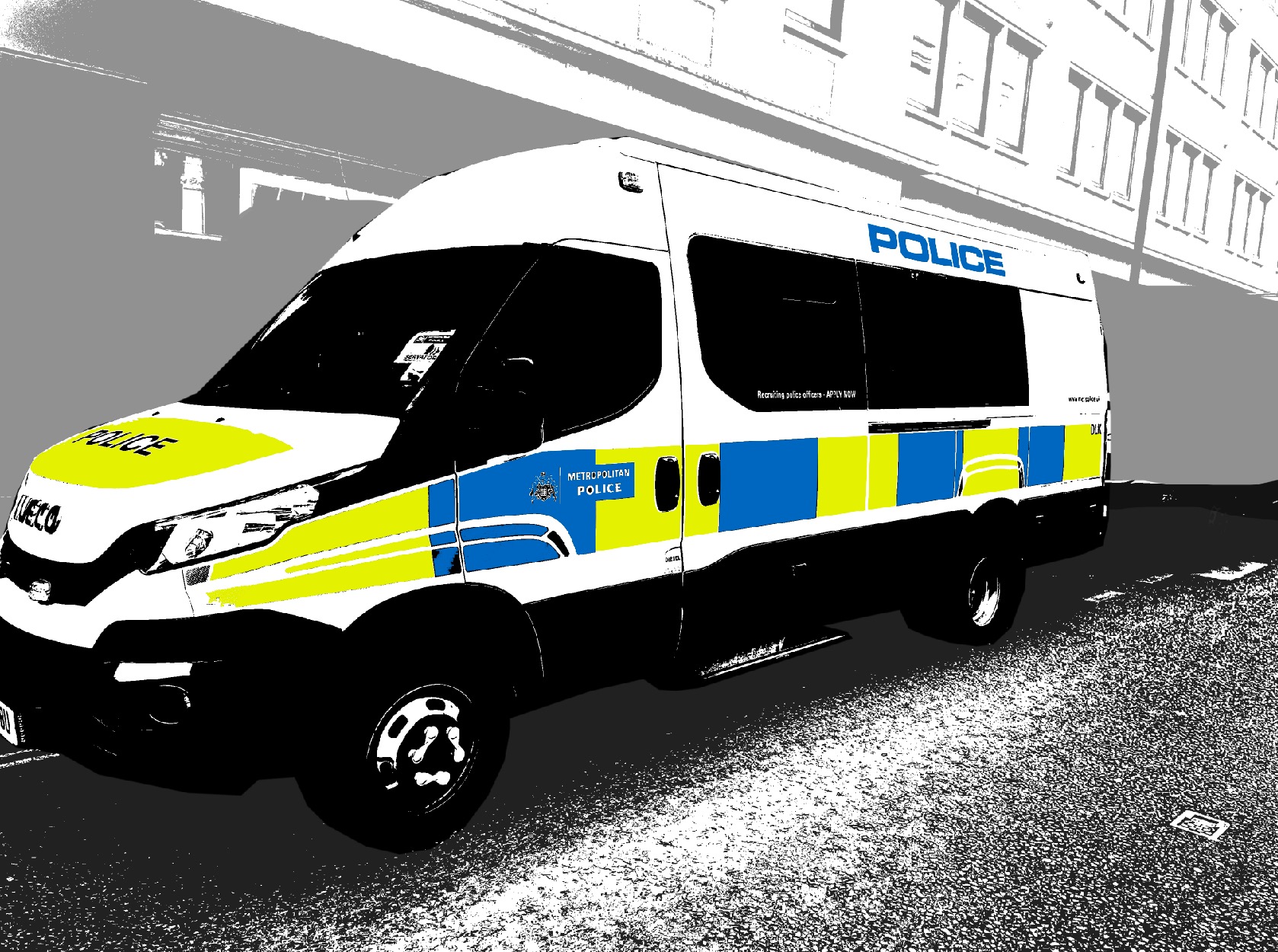




You must be logged in to post a comment.