How the police and government are misleading the public about Taser assaults

Picture of Iain Gould, Solicitor (lawyer) and specialist in actions against the police claims.
Iain Gould, Solicitor (lawyer)

By Iain Gould, Solicitor

 I was interested to read in a recent article in The Sunday Times (behind paywall) about Taser assault by the police cases. It seems that the authorities are now going on a public relations offensive. By doing so, they may be deflecting attention from the real harm caused by these deadly weapons. And they are getting help from the government to do so.

Taser assault by the police media reports

Simon Chesterman, the deputy chief constable of the Civil Nuclear Constabulary and lead on armed policing for the Association of Chief Police Officers was quoted as saying:

  • the UK police’s training in the use of Tasers is “probably the best in the world”;
  • that “we’re regularly accused of being trigger-happy, but do the maths- we’re not”; and
  • that the voltage sent into the subject’s body is “very low- less than the electricity of Christmas- tree lights.”

The charm offensive may be explained by the fact that public concern about these weapons is increasing and Taser assault by the police cases are more regularly reported in the news.

This week the BBC reported how I won £24,000 compensation for my client Richard Hagan following a Taser assault by the police, and I have previously blogged about the risks of Taser use.

(You can read my thoughts about why Taser use more than doubled in two years, if the police are using Tasers correctly, and if Merseyside Police are using Tasers with excessive force by clicking on the links.)

I am not surprised that the police are keen to defend their use of these weapons, and in certain circumstances, I agree that their use is appropriate. (You can hear my interview on BBC Radio where I explain this by clicking on the link.)

But despite voicing my concerns and the increased news coverage, overall Taser use has increased dramatically from 3,128 in 2009 to 10,380 in 2013. Of this number, there were 1,733 actual Taser shootings. Chillingly, in 2011 a Taser was deployed more than 320 times against under-18s.
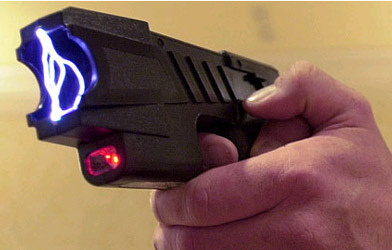
Picture of a Taser being discharged.

The problem with reports and statistics of Taser assault by the police cases

Reports often concentrate on the initial impact of the Taser. In The Sunday Times article one victim, Sean Lawless, simply said “It hurt. A lot”. This is understandable, as the shocking (pun intended) visual image of someone being shot with a Taser quickly captures the imagination.

But as the effect of a Taser assault by the police is to incapacitate, the injuries sustained after the initial Taser impact on falling are frequently more severe than if the subject had simply fallen over without being Tasered.

This is because when a person falls, the natural instinct is to raise their hands so as to break the fall. But once Tasered, the victim ‘freezes’ and their muscles are temporarily paralysed, giving them no chance to protect themselves.

In my experience as a solicitor who deals with claims against the police (read about me here) it is this secondary injury, caused when the victim falls, which causes more harm.

(A ‘secondary injury’ is a personal injury sustained by the victim after they are incapacitated by the Taser.)

Naturally, the police would prefer not to discuss these potentially devastating injuries and it seems to me that the government are helping the police to deflect attention from secondary injuries by the way they report on Taser assaults.

The official Home Office report: ‘Police use of Taser statistics, England and Wales, 2009 to 2011’ categorises only seven different types of use: from the lowest state of the Taser simply being drawn; to the highest state of the weapon being fired with the electrical probes making contact and causing the incapacitating effect.

Crucially, the official statistics fail to record the subsequent (secondary) injuries caused after the Taser is fired.

As a result secondary injuries are rarely commented on or reported in the news to the same extent.

This is a mistake. As Richard Hagan’s case (details provided with permission) shows, secondary injuries often affect the victim far more than the initial Taser impact.

Secondary injuries following Taser assault by police

On 7 March 2011, my client Richard Hagan, a bricklayer who was 26 at the time, had been at the Printhouse Pub in Prescot, watching a Liverpool game and having a few drinks.

Shortly after midnight he headed home with his partner and her father. They came upon a group of people arguing in the street. A police car, driven and solely occupied by PC Warren of Merseyside Police, pulled up. The officer told the group, including Mr.Hagan who happened to be nearby, to get on the pavement.

As the police car drove away someone shouted abuse at it. The car stopped and reversed. PC Warren got out and told Mr. Hagan to ‘come here’.

Instead, Mr. Hagan panicked and ran away.

The police officer chased him through a residential area. As Mr. Hagan ran towards a main road, PC Warren fired a Taser ‘stun gun’ into his shoulder and buttock. Mr. Hagan was paralysed by the electric shock and fell forwards onto the road surface. He sustained serious injuries, smashing his front four teeth, lower right incisor, and other facial injuries.

After the assault, which was seen by his distraught partner, Mr. Hagan was arrested, handcuffed and taken to Kirkby Police Station where he was kept in a police cell overnight.

As a result of the assault Mr. Hagan lost the four front teeth and had to have a bridge and crown fitted. He will need more dental work in the future.

You can hear Mr. Hagan describe how he needed about 10 months of painful dental treatment as a result of his Taser injuries in this BBC radio interview:

Merseyside Police denied liability and claimed that the force used was reasonable and proportionate. I disagreed. Following court proceedings, I settled Mr. Hagan’s Taser assault by the police claim for £24,000 plus legal costs.

 Unreported Secondary Taser Injuries

Public and media concern with the use of Tasers tends to focus on the 50,000 (or 1,200 if the police are to be believed) volts shot through the victim’s body and the potential cardiac issues that arise, but in my opinion the bigger risk is from secondary injuries.

As Richard Hagan’s case demonstrates, there is a significant danger of head and facial injuries when they hit the ground. These secondary injuries can be far worse than the initial electric shock from the Taser.

But the police officers who defend the use of Tasers seem to be trying to deflect the public’s attention from this.

They talk about training, how careful they are in the use of Tasers, and try to minimise the impact of Taser assaults. They refer to government statistics, which do not deal with secondary injuries, to back up their case.

But by doing so those officers, and the government officials who create the statistics on Taser use, are missing the point.

Even if the training in the UK is “the best in the world”, and the total number of Taser impacts is significantly less than the overall use figure, the weapons are still being used against civilians, including children, with potentially life-changing consequences.

And even if the amount of volts shot through a victim’s body is less than the amount used in Christmas tree lights, it is still enough to cause temporary paralysis and serious secondary injuries.

It is time that the police and government are asked about the effects of secondary injuries as well. Maybe then they will accept that the impact of a Taser assault by the police is more serious than they suggest and moderate the use of these weapons accordingly.

If you have been injured after a taser assault by the police contact me using the form below, on 0151 933 525, or via my firm’s website.


Image credit: Marcelo Freixo on flickr.

How False Imprisonment Claims Can Be Made Against Private Security Companies.

Picture of Iain Gould, Solicitor (lawyer) and specialist in actions against the police claims.
Iain Gould, Solicitor (lawyer)

By Iain Gould, Solicitor

I recently settled an assault and false imprisonment claim for my client, Mark Holt. (He has agreed to me giving his details.)

Mark, 53, is a prominent local businessman and peace campaigner who has never been in trouble with the police before.

You can read his case report here.

False Imprisonment at a Train Station

On Tuesday 10 January 2012, Mark Holt (pictured below) was returning home from a day out in Liverpool with his wife. He attempted to pass through the ticket barriers at Liverpool Central Train Station but was prevented from doing so by a ticket inspector, and was then assaulted by a private security guard.

The guard was employed by Carlisle Security, a sub-contractor of Merseyrail, the station operators.

Photo of Mark Holt, who made a false imprisonment claim against a private security company.
Mark Holt, who made a false imprisonment claim against a private security company.

Mark, who was not misbehaving, was put in a headlock and forced to the ground by the guard, smashing his right front tooth and cutting his lip. He also injured his neck, shoulders, and back in the assault. He suffered psychologically and needed medical treatment.

Another Carlisle Security guard came to assist in pinning Mark to the ground while British Transport Police Officers were called.

To (literally) add insult to injury, the first security guard gave a false statement to the police who attended saying that Mark:

  • had thrown a punch, which missed;
  • that he was abusive and disorderly; and
  • that the guard restrained him out of fear for his own safety.

The police accepted this (false) version of events and arrested Mark for a breach of section 4 of the Public Order Act.

Mark was kept overnight in a police cell before being released twelve hours later on police bail.

The police later dropped the case.

Claim for Assault and False Imprisonment Against a Private Security Company

Private security companies will understandably be liable if their employees assault or imprison members of the public unlawfully but what about when a third-party, in this case the Police, imprison the individual? Who, if anyone, is liable?

Upon arrival, the Police Officers were given a version of events by the security guard. Although never challenged, I expect that the officers would say that they quickly formed a reasonable suspicion that a Public Order offence had been committed by Mark, so they were justified in arresting and detaining him.

The 12 hour detention would also be justified by the Police. They would say that as Mark had had a drink it was reasonable for his rights to be delayed at the Police station while he was ‘bedded down’ for the night. The next morning, he was interviewed and then released on Police bail.

So, on the face of it, the Police had acted lawfully.

But could the security company be liable instead for Mark’s arrest and imprisonment by the Police? Could they be liable for the officers’ actions even though the Police themselves had acted lawfully?

According to Lord Bingham in the case of Davidson v North Wales Police (1994), if a person merely gives information upon which a Police Officer decides to make an arrest, that person would not be liable. If on the other hand, that person’s conduct amounted ‘to some direction, or procuring, or direct request, or direct encouragement, that they (the police) should ….arrest’ that individual would be liable to an action for false imprisonment.

Here, I was of the opinion that the security guard had procured the Police Officers to act as they did and therefore the security company would be liable for both assault and false imprisonment.

CCTV Footage Helps Prove the False Imprisonment Claim

I obtained CCTV footage which proved that the security guard had assaulted Mark. It also showed the police attending and Mark being handed over to them by Carlisle Security’s guards.

In the circumstances, I claimed damages for Mark against Carlisle Security Ltd.

After I submitted the claim, Carlisle Security’s Head of Legal also reviewed the CCTV footage and responded by explaining that the company provide ‘byelaw enforcement officers’ who have the power to arrest and detain or issue penalties to passengers breaking Merseyrail’s byelaws.

He felt that his company’s security guards were acting correctly as they were assisting Merseyrail staff in enforcing byelaws, as they felt that Mark was not in a fit condition to travel. So he denied liability for Carlisle Security.

Following review by the company’s insurers, this denial of liability was retracted and liability admitted.

However, the insurers refused to settle at a reasonable amount so I issued proceedings for Mark Holt’s claim for assault and false imprisonment and eventually settled it for four times more than their original offer. This meant that Mark received a five-figure sum plus legal costs.

Private security guards, or ‘byelaw enforcement officers’, may seem like a cost-effective way for public transport operators to enforce their laws.

But, without the proper training, and recognition that their guards are acting with police-like powers, private security companies are at risk of more false imprisonment claims.

If you have a false imprisonment claim and want compensation contact me using the online form below, on 0151 933 5525, or via my firm’s website.


Why must Court Proceedings be issued in a Compensation Claim Against the Police?

Actions against the police solicitor Iain Gould

By Iain Gould, Solicitor

Sometimes I get frustrated when helping my clients bring a compensation claim against the police.

What appears to be a perfectly straightforward case against the police where compensation should be paid can often result in a hard-fought battle.

When this happens I have no alternative but to issue court proceedings and fight for my clients all the way to a Court hearing.

This is expensive, time-consuming, and stressful for all involved, including the police officers themselves who, like my clients, must endure cross-examination at Court.

I had to take another compensation claim against the police to trial last week because the Metropolitan Police refused to settle.

My client, Luke Appleyard, 21, a student at the University of London, will shortly receive £13,250 from the Metropolitan Police after being attacked by a police dog.

(You can read the full case report here.)

So, taking his compensation claim against the police all the way to a jury trial was worthwhile. But was it really necessary?

Compensation Claim Against the Police for Defenceless Student

Photo of my client Luke Appleyard, who I represented in his compensation claim against the police
Luke Appleyard

Shortly after midnight on Friday 9 October 2009, Luke (pictured and details used with permission), of Carshalton, Surrey, was walking with a friend through Carshalton Park.

The park was dark and quiet.

Suddenly, an Alsatian dog appeared running quickly towards them. Without warning, the dog jumped up and bit Luke on his right forearm, which he had instinctively raised to protect his face.

The dog hung on for what Luke estimates was three minutes before Metropolitan Police officers arrived and released it.

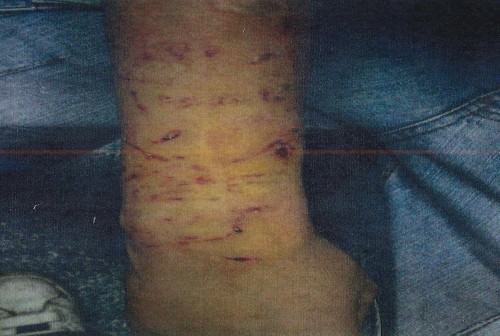
Luke’s arm (shown below after the wounds had been cleaned) was bleeding heavily but the police insisted on searching him before getting medical help.

Photo of Luke Appleyard's arm after he had been attacked by a police dog.
Luke Appleyard’s arm after the police dog attack.

He was later told that the dog had been set on him as a result of mistaken identity, and that the police were searching for two robbery suspects.

Mr. Appleyard was taken by ambulance to hospital where his bite wounds were treated. He has since been left with about 20 scars on his right arm which makes him uncomfortable wearing short sleeves in public.

Luke Appleyard had never been in trouble with the police before. After the unprovoked attack, he:

  • was injured;
  • was upset;
  • suffered nightmares;
  • developed a fear of large dogs; and
  • lost confidence in the police.

As he received no apology or offer of compensation from the police, he decided to take matters further.

He found my details online and asked me to represent him in his compensation claim against the police.

After discussing it with him, I decided to take his claim. I initially represented Luke as a legal aid lawyer but later, when funding was withdrawn, acted on a ‘no win no fee’ basis.

I submitted details of Luke’s claim but the Metropolitan Police denied liability, saying that the police dog handler acted within the police’s guidelines when deploying the dog, ‘Storm’.

They claimed that Luke was running away, that the officer shouted a warning before releasing Storm, and that the force used was reasonable and necessary.

As this was a very different version of events to the one Luke had told me, I had no alternative but to take Luke’s compensation claim against the police to a full jury trial.

Compensation Claim Against the Police Wins at Jury Trial

On Wednesday 11 December, at the conclusion of the three-day trial at the Central London Civil Justice Centre, the jury returned a verdict indicating that they did not believe the Metropolitan Police officers’ account.

They heard evidence that the police officer in control of Storm was 110 metres away from Luke and his friend when the dog was released. The police dog handler claimed that he:

  • was able to make a positive identification from this distance;
  • shouted an audible command to Luke to stop running; then
  • released Storm.

I had seen the police officer’s statement long before the trial and was sure that this was impossible.

Manchester United’s football pitch is 105 metres from goal to goal.

Photo of Manchester United's football pitch.
View of Manchester United’s football pitch.

The officer claimed that he could see further than that distance in the dark and positively identify Luke and his friend as the people they were searching for.

The jury disagreed with the police’s version of events. They were not satisfied that Luke and his friend were running, or that the decision to release Storm was necessary or reasonable.

Paying for a Compensation Claim Against the Police

Instead of apologising and offering fair compensation, the Metropolitan Police fought Luke’s genuine claim so that he had no alternative but to go to an expensive, and unnecessary, jury trial.

The legal costs on both sides in Luke’s case will be many times more than the compensation he is paid. Because he won, all costs will be paid by the Metropolitan Police, who in turn are funded by taxpayers.

At a time when the Metropolitan Police’s funding is being closely examined, I hope those responsible will think long and hard about their conduct.

If you want to make a compensation claim against the police contact me, Iain Gould, using the online form below, on 0151 933 5525, or via my firm’s website.

Image credit: cc licensed ( BY ) flickr photo by Paul: http://flickr.com/photos/vegaseddie/6160401568/


Why Andrew Mitchell got lucky

Iain Gould, Actions Against the Police SolicitorBy Iain Gould, Solicitor

Andrew Mitchell, the ‘Plebgate’ MP and former Chief Whip, appeared at a press conference yesterday in his ongoing case against the police.

Mr Mitchell, who I have previously written about here, is angry that the Crown Prosecution Service (‘CPS’) declined to prosecute PC Toby Rowland, the police officer at the centre of the story who reported the incident on 19 September 2012.

While his case continues, in my opinion, Mr Mitchell got lucky.

Andrew Mitchell’s disputed case against the police

On 19 September 2012, there was an incident at the gates of Downing Street between Mr Mitchell and PC Rowland.

The police officer declined to allow Mr Mitchell to exit on his bicycle via the main security gates, which were closed.

The officer instead directed Mr Mitchell to a nearby pedestrian gate which he opened for the politician.

In response, PC Rowland claims that Mr Mitchell said,

‘You should know your f***ing place, you don’t run this f***ing government, you’re f***ing plebs.’

Mr Mitchell, however claims that he simply said,

‘I thought you guys were supposed to f***ing help us.’

Although the exact wording of what was said is disputed, both say that the officer warned Mr Mitchell for swearing.

In the following weeks, newspapers published a story quoting the ‘plebs’ comment, Mr Mitchell resigned as Chief Whip, and a Channel 4 investigation cast doubt on the police’s version of events.

Following an expensive year-long investigation, the CPS have decided to prosecute only one police officer, PC Wallis, who claimed to have witnessed the incident in an email to his MP. All other police officers involved, including PC Rowland, will not face criminal charges.

Five police officers face gross misconduct charges, and three face lesser charges. PC Rowland is not among them.

Andrew Mitchell’s response to the CPS

At Tuesday’s press conference, Mr Mitchell explained the personal effects of the ‘Plebgate’ story.

As a result of the alleged lies of PC Toby Rowland, Mr Mitchell claims that:

  • his reputation was destroyed;
  • he was vilified relentlessly;
  • he received over 800 hate emails;
  • he and his family were driven from their home because of the press pack outside;
  • his mother in law was pursued in Swansea;
  • he was spat at in the street; and
  • he lost his job as chief whip.

In a direct challenge to both the police and the Director of Public Prosecutions, the politician said,

‘I wish now to make clear that PC Toby Rowland, who was responsible for writing those toxic phrases into his notebook, was not telling the truth.’

He intends to sue The Sun newspaper for libel. The tabloid was the first to use the ‘pleb’ remark and stands by its story. In suing the newspaper, Mr Mitchell hopes to call PC Rowland to give evidence and allow a jury to decide whose version of events is to be believed in his long-running case against the police.

How Andrew Mitchell is lucky in his case against the police

Both the police and Mr Mitchell agree the basic facts of the incident on 19 September as outlined above.

So, even after a public argument with the police in which Mr Mitchell admits swearing at an officer, all he received was a warning.

Unlike many of my clients, he was not:

  • assaulted;
  • arrested;
  • handcuffed;
  • escorted to a Police station;
  • obliged to provide his fingerprints or DNA sample;
  • required to have his details kept on the Police National Computer;
  • detained in police custody;
  • interviewed; or
  • prosecuted.

Don’t get me wrong, I sympathise with Mr Mitchell and his plight but as a specialist in actions against the police, I believe that Mr Mitchell was lucky to simply end up with a warning.

I am contacted by many clients who are not so fortunate.

Peter Garrigan’s case against the police for fabricated evidence

Picture of Peter Garrigan, a man who won a claim against the police after they fabricated evidence against him.
Peter Garrigan, showing a black eye caused after a police assault.

A few weeks ago, my client Peter Garrigan (details used with permission) was awarded £13,000 compensation after a unanimous jury verdict that police officers had fabricated evidence following a four-day trial at Liverpool County Court.

You can read the full report of his case against the police here.

Mr Garrigan was arrested and assaulted by officers of British Transport Police at Lime Street Station on 19 March 2009 as he attempted to assist his younger brother Daniel.

Daniel was detained by a ticket inspector as he had an invalid train ticket.

The inspector called the police when Mr Garrigan refused to leave his brother’s side.

British Transport Police officers appeared and told Mr Garrigan to leave.

Peter refused and attempted to explain the situation on behalf of his brother.

One officer took Peter’s arm. As Mr Garrigan broke free, telling the officer that force was unnecessary, the officer:

  • pushed Mr Garrigan against a wall;
  • kneed him in the stomach;
  • punched him;
  • forced him to the ground with a ‘leg sweep’;
  • pinned him face down on the train station floor;
  • put him in handcuffs; and
  • arrested him.

Mr Garrigan, who had never been arrested before, was taken to Wavertree Police Station.

Following an interview, Peter was issued a Fixed Penalty Notice for a breach of Section 5 of the Public Order Act for using ‘threatening, abusive or insulting words or behaviour’.

After Mr Garrigan indicated that he would appeal against the notice the police dropped the case against him ‘for procedural purposes’.

In a case against the police which has parallels with Andrew Mitchell’s story, Peter claimed that the police officers who assaulted him lied in their written accounts about how the incident had occurred to cover up the police assault and arrest, and to justify prosecuting him.

The threat of police prosecution hung over Peter for several months. He was stressed and upset as although the proposed prosecution was short-lived, it was of great significance in that a conviction could have ruined his dream of joining the army.

The police assault left Peter with visible injuries to the head, face and shoulders, as well as headaches and pains which lasted for several months.

Peter was determined to take a case against the police for the police assault, unlawful arrest, fabrication of false evidence, and misfeasance in public office.

After three civil court trials (read the case report for why) a jury found that the police officers assaulted Peter and fabricated evidence.

Peter won his case against the police, received an apology, £13,000 compensation, and legal costs.

Another case against the police after acquittal at Crown Court

I have just settled Mr. Thomas’s case against the police for substantial damages and legal costs.

Unlike Andrew Mitchell, Mr. Thomas (name changed), who used less colourful language in his encounter with the police, was prosecuted and convicted at court for a breach of Section 5 of the Public Order Act.

He had to appeal to the Crown Court to have his conviction overturned, and instruct me to pursue a civil case against the police to obtain justice.

You can read Mr. Thomas’s case report on my blog.

On 9 August 2008, Mr. Thomas was shopping in Morrisons Supermarket when he saw a uniformed police officer also doing his shopping.

He asked the officer,

‘There is a 9.2 million pound deficit forecast for the next 3 years and you are here shopping for bloody shoelaces and shoe polish.  Do you think this is acceptable?’

The officer replied that he needed shoelaces to chase criminals and warned Mr. Thomas that he considered his conduct amounted to a breach of Section 5 of the Public Order Act.

As with Peter Garrigan, the policeman said that he used ‘threatening, abusive or insulting words or behaviour’.

Mr. Thomas was shocked to hear that and advised the officer that he would lodge a complaint as he considered this an unjustified response to a legitimate question.

He visited the nearby Police Station and filed his complaint.

Two months later, Mr. Thomas was charged with breaching Section 5 of the Public Order Act and the case proceeded to trial.

The officer gave evidence to the effect that Mr. Thomas was aggressive and intimidating.

CCTV footage, which would have helped Mr. Thomas, was not disclosed by the Police or Crown Prosecution Service.

Mr. Thomas was convicted at the Magistrates’ Court and appealed to the Crown Court.

The CCTV evidence was shown at the appeal. It supported Mr. Thomas’s case that he was not aggressive or intimidating, and that the policeman himself did not seem alarmed or distressed.

Two years after the charges were brought Mr. Thomas’s appeal succeeded and his conviction was overturned.

I was contacted by Mr. Thomas in 2011 and asked to pursue a case against the police for malicious prosecution on his behalf.

I agreed to act by way of conditional fee ‘no win no fee’ agreement.

The claim was denied and I was obliged to issue Court proceedings against Leicestershire Police.

They vigorously fought the claim but shortly before trial Leicester Police agreed to negotiate.

They eventually paid my client fifteen times more than they originally offered in damages and legal costs.

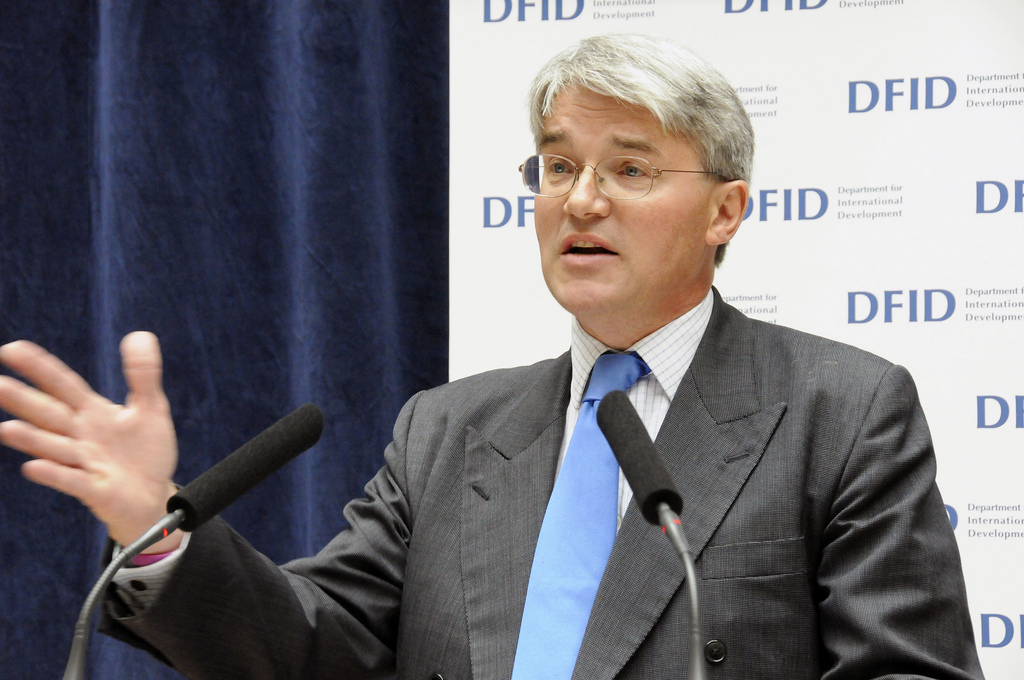
Picture of Andrew Mitchell, 'plebgate politician' involved in a police misconduct matter.
Andrew Mitchell, ‘plebgate’ politician

Lucky man

Andrew Mitchell has been harshly treated by the police, media and his political party.

For a while, he was held up as a poster boy for everything wrong with the out-of-touch Tory party, the elite ruling classes, and modern Britain in general.

He was lucky though.

He was never assaulted, arrested, or pursued in the courts.

He had access to powerful friends and media contacts that could assist him in proving his case.

Afterwards, he could use his public profile to force the authorities to thoroughly investigate. He can pursue a libel case to clear his name.

Compared to my clients above, and the vast majority of us, he remains a privileged man.

If you want to pursue a case against the police contact me below or call 0151 933 5525. Alternatively, read more on my blog www.iaingould.co.uk.


British Transport Police ordered to pay compensation after police fabricated evidence

Picture of Iain Gould, Solicitor (lawyer) and specialist in actions against the police claims.
Iain Gould, Solicitor (lawyer)

By Iain Gould, Solicitor

Yesterday, British Transport Police (‘BTP’) were ordered to pay £13,000 plus legal costs to my client Peter Garrigan after serving police fabricated evidence.

Peter, a 26-year-old Liverpool man, was awarded compensation after a unanimous jury verdict following a four-day trial at Liverpool County Court.

The jury found that:

  • PC Paul Quest of British Transport Police unlawfully assaulted Mr Garrigan;
  • the police unlawfully arrested him, issued him with a Fixed Penalty Notice for breach of s.5 of the Public Order Act and, most shockingly of all;
  • one or two serving officers of British Transport Police fabricated evidence against my client ‘in order to cause him to be punished for  something they knew he had not done or to escape punishment for their own misconduct’.

Compensation claim against the police after fabricated evidence

Peter (shown below and details used with permission) instructed me as I specialise in civil compensation claims against the police. You can read more about me and the work I do by clicking on the link.

Picture of Peter Garrigan, a man who won a claim against the police after they fabricated evidence against him.
Peter Garrigan, showing a black eye caused after a police assault.

I previously wrote about his case as it involved a jury trial, where unfortunately a jury failed to reach a verdict. After another jury heard the evidence, they all agreed that the allegations of police assault, misconduct and police fabricated evidence were proven.

Mr Garrigan bravely took on the police, endured three trials where his evidence was tested under cross-examination, and waited four years for justice. He had never been in trouble with the police before, or since. His impeccable character has been confirmed by this significant court judgment.

His case has parallels with the Andrew Mitchell ‘plebgate’ story, which I have written about here. Mr Mitchell is currently dealing with his own case where the police allegedly fabricated evidence.

This is yet another example of abuse by serving police officers that proves that the experience of Andrew Mitchell is not unique.

Both my client and I hope that the negative publicity and judicial criticism British Transport Police have received will make serving police officers think twice before fabricating evidence in future.

You can read a full case report by clicking on the link.

If you believe that the police fabricated evidence to prosecute you and want to claim compensation, contact me using the online form below, on 0151 933 5525, or via my firm’s website. Alternatively, read more by clicking the home page link.


Can the Police be trusted to Police themselves?

(NOTE: 10 June 2015. This post has been updated to reflect that two of the police officers involved in the Taser story below were subsequently re-instated to Merseyside Police following their dismissal. My thanks to Jeremy Clarke-Williams of Slater and Gordon for bringing this to my attention.)

 By Iain Gould, Solicitor

Picture of Iain Gould, Solicitor (lawyer) and specialist in actions against the police claims.
Iain Gould, Solicitor (lawyer)

A man was forced to pursue numerous appeals to ensure that his police complaint was upheld.

At first blush, this would appear to be entirely unrelated to the Andrew Mitchell story, which I have previously written about.

In fact, they are linked by a common thread:

  • the mis-handling of complaint investigations by senior police officers, and
  • whether police can be trusted to police themselves.

Police Complaint after Taser assault in Liverpool

Picture of a Taser being discharged.In December 2009 PCs Simon Jones and Joanne Kelly, were on patrol in Liverpool with a Sergeant (who has since been dismissed for an unrelated matter), when they arrested Kyle McArdle for urinating in a street.

Mr McArdle was put in the back of a police van and shot with Tasers five times. (You can read my thoughts on the increase in Taser use by clicking on the link.)

The Taser barbs, metal hooks which attach to the body to transmit the electric current, were removed by an officer rather than a medical professional, contrary to guidelines (unless there is an ‘operational necessity’).

To add insult to injury, Mr McArdle was prosecuted for assaulting two of the officers. He was found not guilty at the Magistrates’ Court, and pursued a formal complaint.

Mr McArdle’s initial complaint was made to Merseyside Police themselves. He argued that the use of Taser force in the back of the police van was disproportionate. The police accepted that their officers should receive guidance on the use of their powers only and rejected the rest of his complaint.

So Mr McArdle was forced to appeal to the IPCC. They returned the complaint to the Force to consider whether the use of Tasers would have been considered proportionate if he had been lawfully arrested.

Merseyside Police’s leading Taser instructor said that the Taser assault was ‘necessary, proportionate, reasonable and in line with the officers’ training and Association of Chief Police Officers guidance’.

Given this opinion, the Force maintained their denial.

Mr McArdle again appealed to the IPCC. They re-considered the case and decided that, contrary to Merseyside Police’s internal investigation, the officers involved should have been served with notices for gross misconduct and interviewed under caution. PCs Jones and Kelly were then subsequently dismissed following the misconduct hearing.

UPDATE: I have since been informed that PCs Jones and Kelly appealed their dismissal to the Police Appeals Tribunal (“PAT”) and were re-instated to Merseyside Police following a hearing on 28 June 2014, in which their solicitor states that “the PAT unequivocally rejected the determination of the misconduct tribunal in the clearest possible terms”. Their reinstatement is confirmed in the IPCC’s updated press release which can be read on their website here.

Aside from the officers’ dismissal and subsequent re-instatement, the IPCC Commissioner criticised Merseyside Police’s investigation of the incident. In particular, he said, ‘it is a concern that Merseyside’s lead Taser instructor lacked objectivity and presented as fact the officers’ version of events without challenge’.

Andrew Mitchell’s ‘plebgate’ saga

Picture of Andrew Mitchell, 'plebgate politician' involved in a police misconduct matter.
Andrew Mitchell, ‘plebgate’ politician

The Andrew Mitchell affair (which I have commented about on numerous occasions but most recently here) revealed that the four police officers and their associates initially involved in the saga fabricated evidence about the incident at Downing Street on 19 September 2012.

At a subsequent meeting on 12 October involving three senior members of the police officer’s union, the Police Federation, Mr Mitchell sought to explain his comments and re-iterated that he had not used the word ‘pleb’, which is short for ‘plebeian’, or commoner.

Immediately after the meeting, Inspector Mackaill, one of the officers at the meeting, told waiting journalists that Mr Mitchell had not provided an account of the incident and called for his resignation.

Unfortunately for the officers at both the initial incident, which was caught on CCTV and can be seen here, and the subsequent meeting, which Mr Mitchell secretly recorded, the evidence showed that they had not told the truth.

West Mercia Police carried out an internal investigation into claims the three officers had been trying to discredit Mr Mitchell. It concluded that there was no case to answer for misconduct or gross misconduct and found that there was no deliberate intention to lie to journalists.

The IPCC, which oversaw the West Mercia investigation, said West Mercia Police had been wrong to conclude the three police officers had no case to answer for misconduct.

Deborah Glass, the IPCC deputy chair, said in her statement that the false account of the meeting provided by the police officers involved ‘indicates an issue of honesty and integrity, not merely naïve or poor professional judgment (sic)’.

She has called for a misconduct panel to be held to establish whether the three officers gave a false account in a deliberate attempt to discredit Mr Mitchell in pursuit of a wider agenda.

Home Secretary Theresa May said the IPCC’s report “made troubling reading”.

Police complaints procedure

Only serious complaints against the Police are directly referred to the independent Police watchdog, the IPCC, for investigation. These include cases involving:

  • death in custody,
  • serious injury,
  • matters involving sexual assault or sexual offences,
  • serious corruption, and
  • certain criminal offences.

All other cases are dealt with internally, by the appropriate police force’s complaints department (also known as the professional standards department (‘PSD’).

Up until May 2012, when the Police Reform and Social Responsibility Act (2011) came into force, all complainants had a right of appeal following local and supervised investigations by a PSD to the IPCC.

Now that right of appeal to an independent body is restricted to only the most serious of cases, so that there is less opportunity to hold the police to account.

In both the McArdle and Mitchell cases described above, serious issues meant that the IPCC were involved. The IPCC allowed the individual police forces to investigate and decide whether there was wrongdoing or not. Following internal investigations, the complaints investigators said that there had been no misconduct that required sanction.

On appeal/review by the IPCC however, it was found that such findings were seriously flawed.

So, can the Police be trusted to investigate themselves?

Photo of Sir Hugh Orde, Chairman of ACPO
Sir Hugh Orde, Chairman of ACPO

Speaking on BBC Radio, Sir Hugh Orde, the Chairman of the Association of Chief Police Officers and a former Chief Constable, said that it is ‘critical’ that there now be a fully independent police investigation system. (You can listen to the interview by clicking here).

I agree. The current system where the police investigate themselves is deeply flawed and, to restore public confidence in the police and the police complaints process, independent investigations in each and every case need to be conducted.

But is it enough simply to point the finger at the IPCC, who would no doubt say that the Mitchell and McArdle cases described above did not fit within the criteria, so that they had no authority to conduct investigations from the beginning?

Don’t the police have some responsibility too?

It strikes me that blaming the investigations process merely deflects attention away from the core issue: trust.

Public trust is damaged when we routinely hear about police misconduct at the rank and file level which is then covered up by their superiors or force complaints departments.

It is made worse when, rather than apologise and accept responsibility, senior police officers and their representatives blame everyone but themselves.

At today’s House of Commons Home Affairs Select Committee meeting, the Chief Constables of West Mercia, West Midlands, and Warwickshire Police, will explain why they declined to pursue misconduct charges against the three officers involved in the October meeting.

It is hoped that the meeting will be productive and not merely a repeat of the blame game played out in the media since September last year.

The Chief Constables should be reminded of Robert Peel’s principles to define an ethical police force, and in particular, this quote attributed to him: 

‘The police are the public and the public are the police; the police being only members of the public who are paid to give full time attention to duties which are incumbent on every citizen in the interests of community welfare and existence.’

For more information on pursuing a civil action against the police go to www.iaingould.co.uk. Contact me using the form below or via my firm’s website.

Sir Hugh Orde: cc licensed ( BY ND ) flickr photo by Liberal Democrats: http://flickr.com/photos/libdems/3940872401/


Why it’s time for the Police to face the music

Picture of Iain Gould, Solicitor (lawyer) and specialist in actions against the police claims.
Iain Gould, Solicitor (lawyer)

By Iain Gould, Solicitor and specialist in actions against the police

Peter Oborne’s article in The Telegraph today (click on the link to access it) makes a number of interesting points about police misconduct in the aftermath of the Andrew Mitchell ‘plebgate’ scandal.

I have previously blogged about the Mitchell case here, where I make the point that the police routinely fabricate and exaggerate evidence, and in this blog post where I question whether an ordinary citizen would receive the same treatment as a government minister.

Mr. Oborne says that, when first hearing about the Andrew Mitchell affair, his initial sympathies were with the police. As The Telegraph’s Chief Political Commentator he frequently sees senior politicians behave in a rude or overbearing manner to people they consider beneath them. With this in mind, it was not hard for him to believe the police’s claim that Mr. Mitchell used the word ‘pleb’ while insulting them.

But his views changed when, after a Channel 4 investigation produced CCTV footage which contradicted the police’s version of events, officers involved in the initial incident were arrested on suspicion of misconduct.

Picture of Andrew Mitchell, 'plebgate politician' involved in a police misconduct matter.
Andrew Mitchell, ‘plebgate’ politician

Further, Deborah Glass, the Deputy Chair of the IPCC, recently stated that a ‘clear the air’ meeting between Mr. Mitchell and serving police officers in the Police Federation resulted in more police misconduct.

She asserts that the three police officers concerned gave a false account of the meeting in order to add more political pressure on Mr. Mitchell, and questions the police’s own investigation which found that those officers had no case to answer for misconduct or gross misconduct.

As the internal report by the IPCC initially proposed disciplinary action, the matter is continuing with Home Affairs Committee Chairman Keith Vaz demanding an explanation.

Royal Commission into Police Misconduct

Mr. Oborne argues for a Royal Commission to restore confidence in the police who have been rocked by this scandal, Hillsborough, the Jean Charles de Menezes affair, the Stephen Lawrence enquiry, and many others.

One such case he refers to was that of my client Karim Allison. (You can read the case report on my website by clicking on the link.)

Karim Allison was prosecuted after making a complaint about a police officer.

Like Andrew Mitchell, he was the subject of a police conspiracy in that police officers joined together to fabricate evidence against him. Unlike Mr. Mitchell, Karim had to endure the stress and upset of a lengthy criminal prosecution which only ended on appeal at the Crown Court.

It was at that point that he instructed me as a solicitor who specialises in actions against the police.

Despite the high risks involved in accusing the police of misconduct, I pursued Karim’s case all the way to trial.

The police fought hard, denied liability and any wrongdoing, but after the trial a jury found that the officers involved had fabricated evidence. The finding, which was not appealed, confirms on the court record that the police lied to secure a conviction of an innocent man.

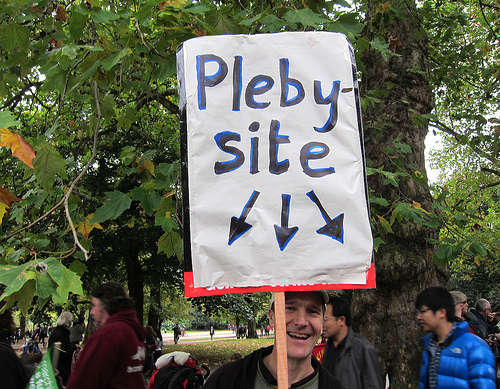
Picture of a protester holding a sign referencing Andrew Mitchell, involved in the 'plebgate' police misconduct case.
Protester holding a placard referencing Andrew Mitchell.

Police Misconduct investigation

I support Mr. Oborne’s call for a Royal Commission. There has to be an in-depth and impartial enquiry into at least:

  • police conduct at the lower level, where prosecutions are started and stories fabricated, and
  • at the higher level, where police officers who are guilty of misconduct, fabrication etc. are treated leniently by their superiors in the Police.

There can be no more easy rides for the police. Penalties must be harsher to act as a deterrent to future misconduct.

The option of early retirement must be removed for those in the Police who are found guilty of misconduct, and, where appropriate, they should be prosecuted in the criminal courts to the full extent of the law.

If ordinary citizens like Karim Allison are expected to defend themselves in court when charged with criminal offences, then why shouldn’t their accusers?

If you have been prosecuted for an offence where you suspect the police fabricated or exaggerated evidence, contact me, Iain Gould, using the online form below, on 0151 933 5525, or via my firm’s website.

Images:

Andrew Mitchell: cc licensed ( BY ) flickr photo by DFID – UK Department for…: http://flickr.com/photos/dfid/4603106939/

Protester: cc licensed ( BY SA ) flickr photo by Alan Stanton: http://flickr.com/photos/alanstanton/8110650330/

My Charon QC podcast about actions against the police

By Iain Gould, Solicitor

Actions against the police solicitor Iain GouldI was recently interviewed in my firm’s London offices by Mike Semple-Piggott for the Charon QC law tour. We discussed civil actions against the police and police misconduct.

Mike is a popular and experienced blogger who uses the pseudonym ‘Charon QC’ on his many websites. He is touring the country interviewing lawyers, academics and others involved in the legal profession.

The interview was wide-ranging and interesting to do.  I described some of the practical issues of pursuing claims against the police using case studies and current examples. We also addressed public interest issues in the widest sense.

You can hear it here.