An individual is put on probation either because s/he has been serving a community sentence or because s/he has been released from prison on license or on parole.
The individual is then obliged to engage with the probation service for the entirety of the probation period, during which time they must:
attend regular meetings with an offender manager;
do unpaid work;
complete an education or training course; and/ or
get treatment for addictions like drugs or alcohol.
Should the individual fail to comply with the terms set by probation, they are liable to be “breached” and obliged to return to Court. This might be because the individual did something that the sentence banned them from doing, committing another crime or missing appointments with their offender manager.Alternatively, the individual might be arrested and recalled to prison if they breach their license or parole conditions. The individual will then serve 14 or 28 days depending on the length of their original sentence and upon release will be put back on probation until the end of that sentence.
In 2014, the probation system was transformed with a £3.7 billion program of part-privatisation. The management of low and medium risk offenders was transferred to so-called Community Rehabilitation Companies (CRCs). Only the highest risk individuals were kept under public sector supervision.
But the Government’s privatisation program was dogged by controversy and criticism from the outset. I have previously blogged about concerns highlighted by the Chief Inspector of Probation in 2019. The criticism was such that shortly after, the Secretary of State announced that from December 2020, all offenders would be monitored by the National Probation Service again, thereby ending the role of the CRCs a mere 6 years after their much- vaunted inauguration.
In my last blog on this issue, I highlighted the case of Neil Rogers who by reason of Merseyside Community Rehabilitation Company’s incompetence, was wrongly recalled to prison to serve 28 days. As a result, he suffered not only loss of liberty but also psychological upset, and damage to his relationship with his family, and received an award of compensation to reflect his loss.
Sadly, this was not the only case of incompetence by the Merseyside Community Rehabilitation Company affecting one of my clients. This time, the victim of that Company’s incompetence, my client Tracey Williams (name changed), was not an individual on license and subject to recall to prison but rather someone who was reported for breach of probation and issued with a summons to attend Court.
Tracy was sentenced to 10 months in custody in late 2016. The sentence was suspended for two years and Tracey was to be supervised by Merseyside Rehabilitation Company for that time period.
Initially, the company was satisfied with Tracey’s level of engagement but in May 2018, her engagement allegedly dropped off, such that she was not meeting requirements. Merseyside CRC, conscious of their contractual obligations, believed that Tracey was in breach of the Court’s sentence and therefore reported her for that breach.
The Court processed the breach report and summoned Tracey to Court. Tracey failed to attend and a warrant for her arrest was issued.
Upon notification of the warrant, Merseyside Police then sought to arrest Tracey and in July 2018, attended her home address. Tracey was arrested in front of her partner and two children and then transported to a local police station where she was kept overnight to appear before the Court the next day.
At court and before Tracey appeared before the Magistrates, Tracey was told that there had been a “mistake” and she was immediately released, having spent some 15 hours in wrongful custody.
Upon investigation, I established that Merseyside Rehabilitation Company had failed to record Tracey’s change of address. Tracey had advised her offender manager in May 2017 of her move and she sent emails in October and November 2017 in which she clearly identified her new address.
However, her reported breach notification was sent to her old address, as was the subsequent Court summons. Tracey was therefore oblivious of both the allegation of breach and also the Court summons.
To compound matters, Tracey had not in fact breached the terms of her probation. She had engaged with the CRC’s requirements throughout and done everything asked of her.
Confident of success, I intimated a claim against Merseyside Rehabilitation Company on behalf of Tracey alleging negligence and breach of Human Rights.
Following investigation, the Company denied liability, suggesting that Tracey was entirely responsible for her arrest and detention and that their record keeping was not defective (although we had strong evidence that it was).
I then issued County Court proceedings on behalf of Tracey, and true to their incompetent form, Merseyside Rehabilitation Company missed the deadline for filing a Defence, such that I was able to apply for Judgment by default. Despite some half baked effort to set Judgment aside, the company subsequently put forward realistic settlement proposals and agreed to pay Tracey damages and costs.
This is yet another case of a probation company sending someone to jail not because they have actually breached the terms of probation or because they have committed a crime, but rather because of the negligence of the probation officer and/or the probation company.
Sadly, this appears to be a side effect of the botched part-privatisation process, with the CRCs apparently putting profits before people: both in terms of their duty of care owed to people on probation, and in terms of the standards of recruitment and training of their own staff. The latter in particular appears to have been highly inadequate, given the shocking errors these cases highlight, and the gross miscarriages of justice arising from them. If there was anyone in need of close scrutiny and vigilant supervision, it appears to have been more those running the CRCs than the people on probation.
If you or anyone you know has been the victim of similar errors/ incompetence from the Probation Service or a Community Rehabilitation Company, please contact me for advice.
Violence begets violence; we have witnessed shocking scenes this week from the other side of the Atlantic, as Minneapolis erupted into flames as protests and riots broke out following the circulation of a video showing the death of George Floyd in Police custody. Actually ‘custody’ is too dainty and dignified a word for what was actually being done to George at the time of his death; a Police officer (now identified as Derek Chauvin and charged with third-degree murder) can be seen pinning him down on the ground by kneeling on his neck, and refusing George’s desperate pleas, and the pleas of numerous passersby, to let him breathe. Floyd’s crime, it seemed, was suspicion of attempting to use a forged cheque in a grocery store. Another Officer stands nonchalantly behind Chauvin in this very distressing video footage, hands in his pockets, apparently utterly unconcerned at his colleague’s actions. In a time when hundreds of thousands of people across the world are struggling for breath as a result of Coronavirus infection, it is tragic to witness the same type of suffering being inflicted by one human to another, and the fact that the violence was being inflicted by a man in a Police uniform against an unarmed black man is even more depressing.
Here in the UK we have, I believe, a similar problem of Police Officers (generally white) reacting with excessive force towards ethnic minority individuals, although fortunately (if we can put it that way) our Police Forces are not as heavily armed with weapons designed to inflict ‘lethal outcomes’ upon suspects and so at least on this side of the Atlantic, the results of a Police Officer’s brutality does not often cause a fatality – though there is no doubt about the severe physical and emotional scars it can leave.
I am heartened by the fact that the IOPC is investigating my client’s case and other related matters in the Birmingham area; it has come to light that the same Officer who assaulted my client (and who has now been suspended from the West Midlands Force) was apparently also caught on CCTV footage the previous day dragging a 44 year old black man from his bicycle, and tearing off the man’s coronavirus mask. Media reports state that the video shows the assault then escalating, with a female Officer holding the black man down as the male Officer punches him repeatedly.
Yet further footage has also emerged from February of this year – shockingly showing what appears to be the very same male Police officer ordering a 30 year old black man (Trevalie Wyse) in the Handsworth area of Birmingham to get down on the ground, although he was not a suspect to crime, but rather a witness to a car crash. When Trevalie refused to comply with this outrageous command, he was then shot with a taser. Sometimes, words just escape you…
I also welcome the announcement made earlier this month that there will be a general review of taser use across the whole of England and Wales, lead by the IOPC in response to a need for greater transparency and scrutiny of the weapon’s continued ‘roll out’. Whilst the Government plans to arm up to 10,000 more Police officers with these ‘stun guns’ in the near future, Worcestershire Coroner Geraint Williams, investigating the 2017 death of 30 year old father Marc Cole, following his being tasered by Police multiple times, issued a warning in April that “future deaths will occur unless action is taken.”
There is increasing evidence of disproportionate taser use against black men, and also people with mental health issues. Taser incidents in England and Wales rose by 30% during 2018- 19 to a total of 22,000. It is manifestly obvious that there was not a 30% increase in violent crime during that same period.
20% of those incidents involved tasers being used or threatened against black people – who make up only 3.3% of the population.
Let us hope that on this occasion the IOPC will live up to its media billing as the Police ‘watchdog’ and not, frankly, behave like the poodle it often is when reviewing Police crimes and misdemeanours…
As I have made clear on many previous occasions in this blog, I am concerned about the widespread ‘roll out’ of tasers to the majority of frontline Officers, as introducing a ‘paramilitary’ ethos into British Policing which I strongly feel is both unnecessary and counter- productive. This is a country with a largely passive and law-abiding population – witness how obediently the government’s Lockdown rules were followed by the vast majority (with the exception of Prime Minister’s advisers, of course). I am concerned that the more Police Officers are armed with weapons – even ‘less lethal’ ones like Axon Corporation’s increasingly ubiquitous Taser gun – the more those Officers risk becoming dehumanised (perhaps in their conception of themselves, perhaps in the eyes of others), and adopting the mindset of soldiers on patrol in hostile territory, rather than being fellow citizens ‘policing by consent’. This can lead to outbursts of unnecessary violence and/or unnecessary escalations of a conflict situation, whether that takes the form of Officers deploying ‘guns and gas’ or more ‘old school’ beatings and kickings as we have witnessed on countless ‘social media’ channels.
So it is a good thing that the IOPC is finally flexing what muscle it has, and I hope this will be the signal for a wider reconsideration of the role of taser and other weaponry in the hands of the Police, and an investigation into the cultures of Police protectionism which still exist and which both seem to attract ‘bad apples’ in the first place, and then tend to protect far too many of those ‘rogue officers’, for far too long.
Thankfully, it is increasingly hard for those within the Police hierarchies who may want to make excuses for their officers/ shield them from any real sanction when they commit acts of unjustifiable, or questionable violence, when so many of those acts of violence are now caught and exposed by mobile phone footage – smart phones, of course, being even more ubiquitous in our society than tasers amongst the Police.
This is another issue I have highlighted in my recent blogs – the great rebalancing of the scales of justice caused by the ability of people – whether themselves the victims of Police misconduct, or concerned/ socially conscious bystanders – to record the true facts of an interaction with the Police, giving lies few places to hide.
A description posted by a friend on Facebook this week in relation to the Minneapolis crisis, seems a very apt way to frame it: Camera phones and social media circulation together create “a potentially radical mirror of the surveillance state.”
The more videos of this kind are shot, whether in this country or in America, the fewer people will be; we can only hope.
Another day, another report of a police officer dismissed for inappropriate contact with a vulnerable victim of crime (see here).
The unnamed PCSO of Warwickshire Police used social media to make contact with a female burglary victim after visiting her house in his professional capacity to offer crime prevention tips. The woman reported the officer’s behaviour and the Force’s Professional Standards Department commenced an investigation. Misconduct proceedings were subsequently brought against the officer, which concluded at a hearing on the 5th of May. There, it was found that the officer’s behaviour amounted to gross misconduct and that had he not quit in advance, he would have been sacked.
Media reports of this case coincided with a settlement that I have just agreed with Thames Valley police for another young woman. The background facts are remarkably similar; a police officer making inappropriate contact with a vulnerable female victim of crime.
In November 2017, my client Gemma Hawkins (name changed) attended her local police station to report details of the emotional and physical abuse which she had suffered at the hands of her ex partner.
PC Green attended upon her. Gemma explained what had happened and PC Green took a brief account. Gemma was with PC Green for about 30 minutes and assumed that the Police would now take action.
Following the meeting, PC Green proceeded to text Gemma, first from his work mobile phone and then from his personal mobile phone. Although the texts initially centred on Gemma‘s crime report, PC Green soon became suggestive and flirty with messages such as “Which is your favourite room at home?“, “It’s freezing. I can’t get warm, any ideas?” and “Only place I’m warm is in bed”. Over the following weeks, the messages became increasingly frequent, often daily, and were sent at all times of day when PC Green was both on and off duty.
Gemma was very disturbed by these messages and found them highly inappropriate, but at the same time she was nervous as PC Green was in a position of authority and she didn’t want to do anything to affect the investigation. In the circumstances, she played along, responding to his texts but rarely instigating any conversation herself (other than complaining about the lack of action against her ex partner). Those issues were conveniently ignored by PC Green who, without Gemma’s knowledge had in fact “filed” her report as a “non-recordable incident” and had taken no further action.
However, he continued to use the now ‘phantom’ investigation of Gemma’s ex- partner as an excuse to continue to make exploitative contact with her by phone/ text message.
After a few months, Gemma became very frustrated that nothing was happening as regards her ex partner and reported her concerns to a more senior officer. She expressed hope that this time her complaint would be taken more seriously and not as an opportunity to “chat me up“.
An investigation commenced. It was clear that PC Green had abused his position as a Police officer in an effort to pursue an improper emotional/sexual relationship with Gemma, something all the more reprehensible given that she had come to him as the victim of an abusive and exploitative boyfriend. PC Green was interviewed, during which he accepted that he was fully aware of Force guidance defining such behaviour as a serious form of corruption which would not be tolerated, and that he had “overstepped boundaries” in his efforts to form a relationship with my client.
Misconduct proceedings were brought against PC Green. At a misconduct hearing in July 2018, he was found to have failed to have treated my client, a vulnerable victim of domestic abuse, with respect and courtesy by sending messages of a personal nature and had failed to respond with advice to concerns of her domestic situation. As is often the case, Green himself had resigned before the hearing, but the Force made it crystal clear that he would have been dismissed for gross misconduct had he still been a serving Officer.
I intimated a claim on Gemma’s behalf against Thames Valley police, who were vicariously liable for their Officer’s actions/ exploitation of his Police role. TVP suggested that a claim was not made out because there was no evidence of ‘damage’, either injury or loss. Their argument was that although the text messages may have suggested or hinted that PC Green wanted to start a relationship with Gemma, they were not “overtly invasive or sexual” and in fact “might seem innocuous to an outsider“. It was very disappointing to be met with this response, which seemed designed to diminish and demean Gemma and everything she had gone through. On the one hand, the Force had taken appropriate disciplinary action against PC Green, but now with the other they were denying Gemma’s claim and almost endorsing Green’s outrageous conduct as ‘no big deal’, displaying an old school ‘well boys will be boys…’ mentality.
In response, I commissioned expert medical evidence which confirmed that PC Green’s contact had caused a material deterioration in Gemma‘s already vulnerable mental state, resulting in an anxiety and depressive disorder.
Following negotiation, Thames Valley police have agreed to pay Gemma £22,500 in compensation plus legal costs. I am sure you will agree that this is far from an “innocuous” amount of damages, and it reflects the true seriousness of this type of Police misconduct and the real harm it can cause.
This is a guest post by my colleague and fellow solicitor, John Hagan.
Another day, and so another shocking video of excessive force from a Police Officer, this time of Greater Manchester Police.
Mobile phone footage filmed by a bystander (watch it below) captured the moment when a black man was shot from close-range by a taser- wielding GMP Officer with no warning, no notice, no justification.
Mr Desmond Mombeyarara had been stopped by Police apparently on suspicion of driving offences, and was talking to the Officers, having just put down his young son – who distressingly witnessed what then unfolded – when one of them shot him with a taser ‘stun gun’.
The taser caused Mr Mombeyarara to collapse to the ground, where he lay helpless as his son cried out “Daddy, Daddy” and the Officer leant over him and discharged the taser again, causing Mr Mombeyarara to convulse upon the ground, whilst shouting instructions to Mr Mombeyarara to put his hands behind his back.
From the video evidence this appears to have been a fairly straight forward interaction between the Police and Mr Mombeyarara in the minutes beforehand, who can be heard saying (not shouting) that he is “Not causing a problem” just seconds before he is shot.
This is exactly the type of scenario which I and other lawyers spoke up against and warned about, when Police Forces nationwide started to push for greater “roll out” of taser guns to all “front line” officers. Training and vetting of Officers must be tightened and increased as their ‘firepower’ is increased, in my opinion, or you run the risk of this kind of incident occurring – where an Officer will just casually produce a taser and shoot a person they are interacting with, as if it is no big deal (which perhaps from the Officer’s point of view it isn’t).
In most situations, a taser gun should be seen as a weapon of last resort, not a device simply to be used to short- circuit a proper discussion with a suspect. College of Policing guidance to Officers requires them to consider 3 “core questions”-
1. If force is justified, how immediate and grave is the threat posed ?
2. Are there any means, short of the use of force, capable of achieving the officer’s lawful objective ?
3. Having regard to the nature and gravity of the threat, and the potential for adverse consequences to arise from the use of force – including the risk of escalation and the exposure of others to harm – what is the minimum level of force required to attain the objective identified and would use of that level of force be proportionate or excessive ?
I would challenge anyone making an objective assessment of this video to conclude that the Officers involved came anywhere near passing the test for reasonable use of force posed by those core questions. This is hammered home by the Ten Key Principles Governing the Use of Force by the Police Service, which include the following injunction as Principle 3 –
“Police officers shall, as far as possible, apply non- violent methods before resorting to any use of force. They should use force only when other methods have proved ineffective, or when it is honestly and reasonably judged that there is no realistic prospect of achieving the lawful objective identified without force.”
Could either of the Officers involved in this incident honestly argue that they had no alternative other than to taser Mr Mombeyarara at that moment? They appear to have acted with total disregard for the strictures set down by the College of Policing; we can certainly challenge how effective was their training in these guidelines and models of behaviour, if all of that training, as it apparently did, went out of the window simply because one of the Officers had a taser within easy reach.
In my opinion, the increasing number of incidents like this being caught on camera is a warning as to quite how many Officers are going straight to a device to which electrocutes and paralyses a person, causing them to fall helplessly – but far from harmlessly – to the floor – as soon as they have any sort of disagreement or dispute with that person. This is a state of affairs which demonstrates laziness from the officers involved and/or a lack of awareness of the extent of the risk this weapon poses to a person’s health (life and limb?); not least to add, in this particular case, the mental scar the Officer may so casually have inflicted on the young child who witnessed his father being, quite frankly, ‘gunned down’ in front of him.
We honestly have to ask what was going through this officer’s mind, and do we want to have a society in which a few moments of ‘talking back’ to an officer justifies him incapacitating you through electrocution?
Let us keep front and centre in our consideration of these issues, the fact that the producers of the Taser weapon themselves (the American corporation Axon) market it as a ‘less lethal’ not non- lethal weapon. The possibility of serious injury or death exists on each and every occasion when the weapon is deployed.
It is also both disturbing and unsurprising that the victim in this case was once again a black male. It is well documented how our predominantly ethnically white police force will use their taser weapons disproportionatly against people of black and ethnic minority backgrounds/ appearance. A recent report in the Guardian newspaper highlighted how use of tasers increased by 39% last year as more and more Officers were armed by them, and Home Office figures revealed that black people in England and Wales were almost 8 times more likely to have tasers used against them than white people. It would seem that the increasing prevalence of this weapon is exacerbating long- existing problems of confirmation bias and ingrained racism in the attitudes of our Police towards black and ethnic minority members of society. That is yet another reason to take a long look at whether their increased ‘roll out’ should be allowed to continue.
Cold, hard statistics like that, as well as the vivid evidence of individual incidents such as this video, demonstrate that some Police officers simply can’t be trusted with these weapons.
We can only hope that the Independent Office of Police Conduct will now do their duty and thoroughly and impartially investigate this incident and sanction the Officers involved – as it seems that many officers are going to have to be snapped out of the dangerous complacency into which they have fallen in terms of their relationship with the taser gun, by a suitable shock to the system.
There is of course an appropriate place for these weapons in the Police officer’s arsenal. The use of a taser to render helpless a knife wielding terrorist on the London underground is an incident we all recall, and the Officers involved in that incident were rightly praised for their bravery. But what these officers of GMP did was not brave; in fact it was totally unnecessary. Officers need these weapons to handle terrorists and other dangerous criminals; they must not become a kind of go to ‘tagging device’ used in any interaction the officer feels like, any low- level dispute, any minor aggravation. Officers should not use this device to bypass their brains, or their duty to always use reason and empathy to attempt to de-escalate and resolve a situation. To do otherwise is an abuse of power, and any Officer who does that is far from being a hero.
I noted that a lot of the media outlets carrying this video included a ‘trigger warning’ captioned before the video started to play… well, that is far more warning than Mr Mombeyarara got.
In the aftermath of a recent video showing a Lancashire Police officer – blissfully ignorant of the fact he was being filmed by a bystander – threaten to “make something up” to justify a man’s arrest, I wrote a blog commenting on issues of surveillance in society and the increasing importance of mobile phone footage in legal cases.
One of the points I made was that, rather than being fearful of ‘Big Brother’ looking over our shoulder, we should be grateful for all the ‘little brothers and sisters’ out there who, thanks to the now ubiquitous technology of smartphones (placing the equivalent of a small film studio in each person’s pocket!), have captured and shared videos exposing Police misconduct, violence and corruption.
I highlighted several of my own client’s claims in which such video evidence played a crucial part in achieving victory, severely embarrassing the defence put forwards by the Police, contradicting false evidence and, in effect, stripping the Officers involved of the ‘power of the uniform’ behind which they often hide – lazily assuming that what they say goes and that they will always be believed in opposition to ‘Joe Public’.
But the sharing of videos of Police misconduct is important in a much wider sense than just their direct utility in an individual case; the more people who get to see these videos, the more levelling of the age-old imbalance of power between agents of the state and private citizens will occur. Many people, thankfully, have never been on the end of violence from or unlawful use of arrest powers by Police Officers, but much more so now than twenty or thirty years ago those people can have their eyes opened to some of the abuses of Police power which sadly do occur. Rather than just seeing ‘the uniform’ people can learn from videos circulated on publication platforms such as ‘You Tube’ to avoid assumptions that an Officer is likely to be telling the truth just because of his occupation. Sad though they are to watch, they are a salutary and healthy reminder to wider society to treat every case of alleged Police misconduct on its merits and not default to always believing the Officers, as was commonplace in generations gone by.
Videos like the recent one from Lancashire, are clear evidence for all to see of the blatant lies that can be told by Officers attempting to justify an unlawful arrest, or cover up their own wrongdoing, and it is no wonder that one of the first things Officers will do on entering into a confrontation with a person is to attempt to snatch their phone away!
The more people who see videos like this, the more society as a whole gains a realistic impression of the wide variance in integrity and calibre of character between Police officers, and learns to see the three dimensional people behind the one dimensional uniform, and the temptations to abuse which institutional power brings with it. People also become more informed as to their own rights and what they should do if they do end up in an adverse situation with the Police, through no fault of their own. The prevalence and wide circulation of such videos helps to tame Police power and restrain abuses (not least because Officers will be conscious that they might easily end up on ‘candid camera’) and also encourages those who have been wronged to take action in the form of a complaint or civil claim – recognising that they are not alone, that they are more likely to be believed than they may have feared, and showing that justice can be done.
In this respect I would like to give a hearty ‘shout out’ to the best site addressing Police misconduct issues in the UK – the ‘Biggest of the Little Brothers’ in my opinion – Rob Warner’s excellent “Crimebodge” blog and You Tube channel.
Crimebodge’s excellently curated channel presents genuine and compelling videos of Police misconduct, as well as educating people who have been the victims of such misdemeanours as to what they can do about it. Each one of those videos published by Crimebodge is a step towards righting the wrong seen within it, and taken together they make the site a very powerful force for calling the Police to account, highlighting abuse of power and thereby restraining future abuses.
In my opinion, the functioning of the civil justice system in regards access to justice in claims against the Police and other State/ Government bodies and agents, depends just as much on reputable ‘video blogs’ such as Crimebodge as it does on the claims pursued by specialist solicitors such as myself. Whilst lawyers such as myself fight often long- fought, though very worthwhile battles on behalf of individual clients, Crimebodge, through the creation of such a wide audience for the videos which he publishes (each averaging hundreds of thousands of views), plays a crucial role in ensuring that my clients will be given a fair hearing by judges and juries throughout the land, because people able to access this material have greater knowledge about what really goes on the front lines of the ‘Thin Blue line’ and thereby gain a more healthily and fair mindedly sceptical approach to the evidence than prevailed in the ‘bad old days’ of paternalistic Police corruption.
Many of you may have seen the video widely circulated in the media recently, showing a vicious assault upon a 15 year boy by a West Midlands Police Officer. For those who haven’t, you can see it here.
Although I am unable to reveal the identity of the victim, I can confirm that I have received instructions to act on his behalf from his mother for what appears to be a totally unjustified and heinous act of violence against the boy.
The Officer can clearly be seen in the video knocking my client to the floor by striking him in the face, and then, when he was lying helpless on the floor, kicking him hard in the back (with a kick which could, quite frankly, have ended up connecting with the boy’s head).
That kick is quite sickening and seems to me to be something akin to what you would expect a thug in a street-fight to do to his opponent, not a Police Officer to do to a child, no matter what provocation the Officer may claim to have suffered. Clearly a ‘red mist’ had descended upon the Officer, and his kick was intended to cause pain, not to effect any legitimate control or detention of the boy.
What is actually more disturbing to me however, than the level of violence used by the Officer – no matter how inappropriate and unnecessary it was – are the Officer’s subsequent actions. He escorted my client home and informed my client’s mother that my client had in fact assaulted him (the Officer) by punching the Officer in the face, but that the Officer was (in effect) going to ‘let him off’ because there was ‘no room’ at any local Police Station during the current Covid-19 crisis to facilitate the boy’s arrest and detention. Only after the Officer had left was my client, a traumatised 15 year old boy, able to reveal to his mother what had really happened i.e that he had been punched in the head by the Officer and then kicked as he lay on the ground.
That is the truly shocking event – the lies told by the Officer, who obviously expected that the honourable uniform that he wears would cover up his crime, a crime he compounded in the most hypocritical and dishonest way by attempting to turn it back upon its true victim i.e by accusing my client of assaulting him.
Doubtless the Officer expected to get away with this, for who would believe the account of a teenage boy in such circumstances against that of a Police Officer with all the weight of his profession and support of his Force behind him ?
My client’s mother recalls that when the Officer was relaying his false version of events to her at the front door of her home, he had activated his body camera, doubtless to get an ‘early record’ of his version of events. This camera is also believed to have caught my client’s mother swearing at the Officer when she saw how upset her son was.
My understanding is that the Officer was not operating his body camera during the time when he laid hands on my client. It is very disappointing and frustrating that Police policy appears to regard the activation of cameras as entirely discretionary to each Officer in each individual circumstance. Body cameras seem to be tools which the Police can use for their own purposes when it suits them, but which are not to be obligatorily activated when an Officer starts interacting with a member of the public suspected of a crime. This type of situation should, in my opinion, come with mandatory instructions upon Officers to use their expensive electronic equipment to properly record and document everything that unfolds – for everyone’s safety and in the interests of justice to all, not just that of the Officer who chooses to turn the camera on or off at his own discretion – ‘editing’ out of the real world a version of events to suit himself.
Fortunately, and unbeknownst to the Officer, another camera positioned on a private house nearby was ‘looking over his shoulder’ – and so we all get to witness the truth, which, we can be absolutely sure, the Officer would never have told, had his crime not been so irrefutably exposed.
I am now actively involved in the misconduct investigation and in due course will be bringing a claim against West Midlands Police for substantial damages.
Update
I am pleased to confirm that, after negotiation, West Midlands Police agreed an out-of-court settlement of £25,000 plus legal fees.
In the midst of the current global pandemic, there are those who think governments across the world may use the crisis as an excuse to drastically – and permanently – increase surveillance of their citizens under the guise of ‘health monitoring’. This might be through the use of drones, facial recognition software, or mandatory ‘tracking apps’ installed on people’s phones. Invoking memories of the increase in State surveillance, and State intrusion into individual’s privacy in the aftermath of the September 11th terrorist attacks of 2001,Ron Deibert of the University of Toronto, one of the world’s leading experts on mobile phone surveillance, described in an interview with the Guardian (14/4/20) how increased surveillance procedures introduced in response to the present crisis could turn out to be “9/11 on steroids”.
This is the classic fear epitomised by George Orwell with the slogan “Big Brother is Watching You” in his novel of a dystopian future, 1984.
I have to say though, that my practical experience in fighting for clients who have been the victims of injustice at the hands of Police officers is that more prevalent video surveillance in society is our friend, not our foe, especially when you consider that a lot of that video surveillance power – the majority of it in fact – is not in the hands of the state, but the citizen – i.e all of us, with our mobile phones.
Here are just a few examples of clients I have represented, whose cases were immeasurably strengthened by the existence of mobile phone or other video footage –
‘Mohammed’ whose mobile phone recording of his conversation with a West Yorkshire Police officer proved that the officer’s statement that he had informed Mohammed that he was being detained for a Drugs search was untrue; rather the Officer, saying nothing about a drugs search, had instead badgered Mohammed for his name and address whilst alleging Mohammed was “committing anti- social behaviour” – the nature of any such behaviour being completely unspecified (Mohammed was sitting quietly in a car at the time). In the same case, I also had the benefit of footage from CCTV cameras from a nearby building which demonstrated that the Officer’s assertions that Mohammed’s companion had run at him and pushed him, and that Mohammed had then ‘broken away from him’ whilst the Officer was trying to search/ detain him were also untrue. In fact, it was clear from the CCTV footage that it was the Officer who had walked away from Mohammed, after ‘confiscating’ his mobile phone ! Subsequent criminal proceedings against Mohammed for allegedly assaulting the Officer were dropped once Mohammed’s mobile phone footage was produced, and likewise his civil claim for compensation was settled before reaching Trial. I strongly feel that West Yorkshire Police would have fought both sets of proceedings ‘tooth and nail’ to Trial were it not for the existence of the video evidence giving the lie to their Officer’s account.
‘Mark’ whose mobile phone footage of his interaction with a British Transport Police officer in a London railway station demonstrated incontrovertibly that the Officer had detained Mark against his will without, on the Officer’s own admission, having the necessary grounds to arrest him, or any other legitimate power to detain him temporarily (e.g for a search).
‘John’ who was subjected to physical violence at the hands of two Merseyside Police officers who claimed he tried to escape from a drugs search – in fact his phone footage demonstrates that after answering the Officer’s questions he was allowed to go his way, and the Officers only laid hands on him after they heard him calling one of them an ‘idiot’ (a fairly tame remark I’m sure you’ll agree). The Officers also subsequently alleged that John had been swearing and shouting, but this was also disproved by the mobile phone footage.
‘Linda’ whose claim against Lincolnshire Police I have recently settled for close to £10,000 and who was the victim of Police brutality when an Officer, objecting to the fact that she had been filming his arrest of her partner on her phone (for a minor traffic violation) came after her as she walked away making a telephone call to her partner’s mother, grabbed her from behind, seized her phone and wrestled it out of her grasp, causing her to be knocked against a car in the process (all of this witnessed by Linda’s 12 year old daughter). The Officer had absolutely no basis to take Linda’s phone, but his actions in doing so are far from uncommon in my experience – Officers dislike being filmed and not having control of the footage, despite the fact they are almost all now equipped with Body Cameras themselves and have no power to require members of the public to stop filming them. It is very common for Officers to claim they are confiscating phones as “evidence” when they have no power to do so.
My long experience of cases such as these meant that I was, like many of us I’m sure, saddened but not shocked to see the video footage which has been widely circulated in the media over the last 24 hours of a Lancashire Police officer apparently threatening to “make something up” to justify an Accrington man’s arrest (read the news report with video here). The Officer can clearly be heard to say, when the young man protests that he’s done nothing wrong, “I’ll make something up, Public Order? squaring up to a Police Officer? – shall I do that, who are they going to believe, me or you?” The Officer then repeats those last words in a furious shout “WHO ARE THEY GOING TO BELIEVE, ME OR YOU?”
Fortunately, the answer to the Officer’s question is provided, loud and clear, by the circulation of this video.
As I noted above, almost all Officers on patrol are now equipped with their own Body Worn Cameras – but the Officer decides when he wants to record using the camera, and when he doesn’t.
I say that it is quite right and proper that the great power of the Police – so dangerous when abused – is held to account when appropriate by the testimony of the type of video evidence that we all now have ‘in our pockets’. This is especially the case when you think of all those years gone by, before the advent of the ‘smartphone’, when the Police Officers in the four cases I have described above, and also in the Accrington incident, would have stood a good chance of getting away ‘scot- free’ with the lies they told and/or their unlawful acts. Society is more healthy where the rights of the ‘the man on the street’ are reinforced by this type of evidence; reminding people that you shouldn’t always take Police Officers at their word, sad though it is to say it. The rights of citizens and the power of the Police are thereby more balanced and fair.
In conclusion therefore; I’m not so worried about ‘Big Brother’ looking over our shoulder. Rather I’m happy that the Police know that all the ‘little brothers and sisters’ out there are, potentially, watching them!
I have previously blogged about my client Julie who was arrested on suspicion of child neglect. She had been arrested at her children’s school, taken to a local Police Station, held in a cell for a couple of hours and then released with no further action to be taken.
When Julie first contacted me nearly 4 years later, her stated aim was for the deletion of her personal details from the Police National Computer.
The arrest had been her one and only lifetime interaction with the Police and had been traumatic in itself, but what continued to “torment” her was the existence of an entry on the PNC that would impact her negatively for the rest of her life, and in particular destroy any chance of resuming her former career as a Carer.
Julie established that the information held on the PNC included her full name, date of birth, ethnicity, place of birth, nationality, personal description (including eye colour, hair colour and style, dominant hand and whether she was visually impaired), address as at the time of arrest, occupation as at date of arrest and shockingly brief (and out-of-context) details of the arrest circumstances, specifically: “Assault/ill-treat/neglect/abandon a Child/young person to cause unnecessary suffering/injury“, as well as her photograph. Such a vague and generic summary of the alleged reason for Julie’s arrest, clearly left the door wide open for anyone reading it to assume the worst about her.
Julie was “horrified to discover that the wrongful arrest details and a mugshot … still existed, in spite of not having been charged with anything” and that this information/ misinformation could “be viewed by Police all over the country”.
She established following online research that it is possible to have personal data deleted from the PNC, but only if you are able to evidence good grounds for deletion.
Julie then applied direct to ACRO for the deletion of the PNC entry.
Julie’s stated grounds for deletion included the following;
No Crime; I am not guilty of neglect. My son walked out on me. He told me to “fuck off “. He walked out and was gone overnight. He was 6 foot at the time. I was arrested the next day when I took my younger child to school.
False allegation; I am not a neglectful parent. My son later admitted to police that he had lied. He admitted causing criminal damage to our home. He also admitted to having made unprovoked physical attacks on myself.
Unlawful arrest; I believe that the arrest was not lawful because no crime was committed.
Unlawfully taken; because no crime was committed, my photograph and or any other data should be removed/deleted/destroyed.
Incorrect disposal; I was told that no further action will be taken. I should not of been arrested in the first place.
Julie went on to describe the impact of her data still being on the PNC:
that she had suffered with anxiety/depression
that she could not apply for jobs and
had no future in her previous field of work as a Carer which required a fully enhanced DBS check.
In truth, ACRO is just a conduit, a postman if you like, and the body that reviews such applications is the Force who put the data on the PNC in the first place, ie the arresting force for they are the “data controllers” of the information.
A month later, ACRO advised that the Records Management Unit of the arresting force had considered the application. With a view to ensuring Julie’s privacy, I will not identify the Force, and so will simply replace the name of the force with “X” in the following transcription. This is what they said;
We “note that early deletion is requested by virtue of the following ground(s);
Unlawfully taken Mistaken identity/unlawful arrest No crime Malicious/false allegation Incorrect disposal Suspect status not clear at the time of arrest Public interest
X Police review of this matter has now concluded and we must advise that X Police decision is that deletion by virtue of these grounds is REFUSED and the application cannot be upheld.
Rationale:
Each application submitted to X Police is judged by applying a stringent framework of the record deletion process. This means that to apply all, or even one, of the seven grounds quoted, X Police must identify corroborative evidence to support and subsequently approve early deletion.
Upon conclusion of our review X Police find there is insufficient evidence to support deletion based on the grounds, therefore [Julie’s] records will be retained.”
In the circumstances, ACRO confirmed that;
Julie’s record would be retained on the Police National Computer until she was deemed to have reached 100 years of age in accordance with current policy outlined in the guidance “Deletion of records for National Police Systems”;
and
the Force had decided to retain her custody image in accordance with the management of Police Information (MOPI) framework.
As is all too often the case, Julie’s application had been rejected without proper consideration of the facts of the case, her representations or the relevant criteria. Despite suggesting that ‘rationale’ would be provided, in fact, there was no rationale for the decision.
Julie asked me to assist in lodging an appeal.
On review of her case, I was of the opinion that her arrest had been entirely unlawful, and that to begin with, we should focus on a civil action against X Police for damages for false imprisonment and assault/battery; and then in due course we would address the PNC record. I explained that an admission of liability and/or payment of damages in a civil action would greatly strengthen her appeal for Record deletion.
Following the successful conclusion of Julie’s claim, i.e. the Police’s admission of liability for her wrongful arrest, and payment of damages, I wrote to ACRO demonstrating that the previous decision not to delete Julie’s PNC entry was perverse, and that in light of the outcome of the civil proceedings, this decision must be reversed.
I am pleased to confirm that following review, X Police agreed to delete the entry. Here’s what they said;
“We can confirm that a full review has been conducted independently from the initial decisionmaker, and in liaising with the legal services department and data protection office.
Upon completion of this assessment, X police support deletion of records held on the Police National Computer. Therefore this letter constitutes formal confirmation that all records have been deleted from the police national computer system in relation to this offence”.
By instructing me, Julie had successfully achieved her overriding objective, which was deletion of the PNC entry and custody photograph. But there was more, for she also now has the satisfaction of an admission that her arrest was unlawful, and she has recovered financial compensation to reflect her loss of liberty and the trauma and distress of this terrible incident.
Here’s what Julie has to say about her experience;
I am writing this reference regarding the AMAZING work that my solicitor (Lawyer) Mr Iain Gould recently did for me.
Firstly let me explain to you how I came into contact with Iain Gould; I was at the end of my rope due to having suffered in an extreme way due to a very deeply wrongful arrest. I was feeling absolutely tormented and in pieces………..The police had a deeply personal and negative impact upon my very existence and had changed and damaged my life for the worse forever……….
I turned to the internet, I was doing google search after google search desperately seeking actual, genuine, practical help. Eventually I discovered a page on a blog on wordpress which held a particular significance. This blog was written by Iain Gould and it stated that he is a solicitor (lawyer) who specialises in legal action against the police.
Having never in my 44 years had any previous arrests or convictions or anything, not so much as a single parking ticket I’d had absolutely no idea whatsoever and no clue as to WHOM would be able to help me.
The desperate googling that I was doing led me to the wordpress blog that solicitor (Lawyer) Iain Gould runs. I found an online form on his blog which I completed.
In response, I received an initial phone call from Iain Gould himself. I was deeply embarrassed by the information that I had to impart, however I did so and left nothing out. To my extreme joy and delight after considering whether I had a case or not I was then taken on as a client by Solicitor (Lawyer) Iain Gould.
I had never before in my life heard of something called The Police National Computer. Basically I was HORRIFIED to discover that the wrongful arrest details and a mugshot of myself STILL existed, in spite of not having been charged with anything alongside a pack of lies about myself on a computer system that may be viewed by police all over the country. Clearly that would further impact my life negatively for the rest of my life and destroy completely any potential career prospects. Not only was the “information” that they held about me untrue, it was also deeply damaging.
As a solicitor, Iain Gould listens to what you have to say and makes you feel that you ARE being both listened to and taken seriously as a client. He has a very fast ability to be able to extract relevant material to your case and cut through anything that is not relevant. As a client I was kept informed at all times of how the case was progressing and I did my best to try not to bombard my solicitor with emails.
I felt that to take legal action against the police is a terrifying prospect as a client with no legal knowledge myself and it is absolutely imperative to obtain a solicitor (Lawyer) who has got extensive experience and knowledge in this field. This is not an easy task due to the fact that many solicitors would hesitate to take on such a task and my guess would be that even fewer solicitors would be successful.
Police can and do get things very wrong at times and when they do so you would require a very specialist solicitor (Lawyer) to help you.
I am both amazed and delighted to state that my solicitor (Lawyer) Iain Gould was entirely successful in the legal action that he undertook for me against the police. My name has been legally cleared, and I hope that this should be the beginning of a new chapter of life for myself that I hope will actually BE a life full of possibilities as opposed to a mere existence.
If you are seeking a solicitor after having suffered at the hands of the police then I heartily recommend Iain Gould. He gets results and is efficient, professional and is basically pure gold!
Mr Iain Gould, you have my wholehearted gratitude forever.
How you can help me
I hope that you have enjoyed reading this week’s blog post and the many others available on this website. If you have, then I would like to ask you a favour – in a world in which large and non-specialist law firms (generally from a personal injury background) are increasingly throwing huge marketing budgets into online advertising in order to ‘capture’ Actions Against the Police clients – I need your help to ensure that those in need of real expert advice come to the best place for representation. If you value the insights and expertise which I share on this blog, and the results which I have achieved for the people whose stories are recounted here, please post a positive review on Trustpilot to get the word out. Every 5 star review I receive makes a big difference in helping those who need the right advice to come to the right place. Thank you!
Last night’s headlines confirm that the UK’s Coronovirus “lockdown” is to continue and reminded me of the dramatic headlines of 3 weeks ago; the “End of Freedom” according to The Daily Telegraph while the Sun had a picture of a giant padlock on its front page with the headline, “House Arrest”.
Coincidentally, only a few weeks before the lockdown began, in the case of R (on the application of Jalloh) (Respondent) v the Secretary of State for the Home Department (Appellant), the Supreme Court was obliged to consider and decide whether a man held under house arrest could be said to have been imprisoned and therefore able to sue the Government for compensation for false imprisonment.
On the 30th October 2013, the Claimant, a Liberian national named Ibrahima Jalloh, was issued with a document headed “Notice of Restriction” by an immigration officer. The notice stated that he was liable to be detained under the Immigration Act 1971 but that he would not be detained. Instead, restrictions would be imposed upon him, specifically an obligation to report to an immigration officer 3 days a week, to live at a specified address and to observe a night time curfew monitored by an electronic tag. The notice continued; “If you fail to comply with any of these restrictions you will be liable on conviction to a fine…. or imprisonment….”.
The Claimant was fitted with an electronic tag on 3 February 2014 and the curfew was in place from 3 February 2014 until 14 July 2016, a total of 891 days.
Eventually, the Claimant challenged the lawfulness of the curfew by judicial review and the Court held that the Secretary of State had no power to impose a curfew by way of restriction.
Mr Jalloh then brought a claim for compensation for false imprisonment arguing that he had been confined to his house with no legal basis for long periods of time. The question for the Court then was did the Claimant’s house arrest constitute false imprisonment. Yes, said Mr Justice Lewis at first instance. The Secretary of State appealed. The Court of Appeal now considered the issue. Did the curfew amount to false imprisonment? Yes, said the Court of Appeal. The Secretary of State, apparently with money to burn, lodged a final appeal to the Supreme Court inviting the Court to give guidance as to what “imprisonment” means.
The Supreme Court unanimously dismissed the Secretary of State’s appeal. Lady Hale delivering judgment for the Court, held that the essence of imprisonment is being made to stay in a particular place by another person whether he wants to do so or not. The methods which might be used to ‘imprison’ a person are “many and various. They could be physical barriers, such as locks and bars. They could be physical people, such as guards who would physically prevent the person leaving if he tried to do so. They could also be threats, whether of force or of legal process.”
In Mr Jalloh’s case, the Court was in no doubt that the Secretary of State defined the place where Mr Jalloh was to stay between 11.00pm and 7.00 am every day. There was no suggestion that he could go somewhere else during that time without the Secretary’s permission.
Furthermore, Mr Jalloh’s compliance was “enforced”. He was wearing an electronic tag. If he left his home address, that would be detected and reported. He was warned in the clearest possible terms that should he break the curfew, he would be liable to a fine or imprisonment. In short, Lady Hale found that “the idea that the Claimant was a free agent, able to come and go as he pleased, is completely unreal”.
For those interested, you can read the full Judgment here, or even better, watch it here (note the Supreme Court Judges exercising social distancing at a time when the Covid-19 virus had yet to take over every aspect of our daily lives and work).
I was extremely heartened by this judgment which upholds that principle of protection of an individual’s liberty from State power/oppression which has been central to British Law and society ever since the Magna Carta itself. Such signals from the Supreme Court that the rights and freedoms enshrined in the UK’s “unwritten constitution” are alive and well, will be welcomed by many during the present crisis, when concerns about Police over-reach of powers and encroachment upon our civil liberties are validly held.
Liverpool Crown Court heard how Lunt formed, or attempted to form, sexual relationships with several women he met in the course of his Police duties (either as victims of crime or witnesses), exploiting both their trust and the honour and responsibilities of his profession.
Lunt received a sentence of 18 months imprisonment, which was suspended for 2 years only after the Judge David Aubrey QC heard that during the current pandemic Lunt was required to be at home to care for his children, as his wife was the deputy manager of a pre-school nursery and hence designated a “key worker.”
Judge Aubrey was clearly minded only to suspend the sentence because of the exceptional circumstances created by the Coronavirus, condemning Lunt in the following terms –
“You gained the trust of vulnerable women and utilized that trust for your own sexual advantages and desires. You crossed the boundaries of your duties as a police officer and did so knowingly. All of the women were vulnerable to exploitation and that is precisely what you did. I am satisfied your conduct was akin to grooming.”
In short; whilst the rest of us are subject to ‘lockdown’ it has proved a useful means for this particular corrupt officer to escape lock-up…
Reflecting on this judgment, I am obviously pleased that more and more officers are being brought to account for this type of crime in the criminal courts. However, the approach which the Police then take to the legitimate claims subsequently brought by the Officer’s victims in the County Court all too often continues to be unnecessarily obstructive and combative, in my experience.
I recently had to fight a contested application in a case where Cheshire Police were seeking to withhold disclosure of key documents in a case where my client was, tragically, the victim of a predatory Police officer who groomed and raped her when she was only 13 years old. The Police were, in effect, seeking to withhold from my client and her family, documents which I believe will reveal significant culpability on their part in failing to properly ‘vet’ the Officer, and then in further failing to supervise him so as to prevent the terrible crime he committed against my client.
Quite rightly, the Court has ordered that Cheshire Constabulary provide full disclosure of the documents within the next 6 weeks – notwithstanding an attempt by their lawyers to substantially delay their compliance with the order by reference to – you guessed it – the ‘exceptional circumstances’ created by the Coronavirus outbreak…
Let us all hope that across both the criminal and civil court systems, justice continues to be done, notwithstanding the challenges presented by Covid- 19; I will certainly be continuing to play my part to ensure that it does.
Reflecting on the current Covid-19 crisis which has engulfed the world – we are for once, literally, ‘all in this together’ – my first thoughts are to wish all readers of this blog well, and to hope that you and your families stay safe during this time of physical, emotional and financial upheaval, which is absolutely unprecedented for the vast majority of us.
The ‘Lockdown’ of the country has given many pause for thought. Obviously the Police, along with the other emergency services, are on the front-line of the fight against the virus, and have a difficult job to do in enforcing the new rules and regulations which have been brought in by the government. But the very difficulty of striking that balance, between freedoms and restrictions, and the voices of criticism which have, quite rightly in my opinion, been raised by some in regards to Police Officers overstepping the mark and being too heavy handed in their enforcement or interpretation of the new rules set out in the Health Protection (Coronarivus Restrictions) Regulations 2020 are actually signs of the robust health of our democracy and civic society. Would people prefer to have all discretion taken away from them, as in a society such as China where political freedoms and opportunity for free speech are severely limited? Draconian steps were taken by the Chinese government to ‘freeze’ the city of Wuhan, at the epicenter of the outbreak, in a strange post-apocalyptic scenario where people were literally forbidden from stepping outside their homes; yet this ‘protection’ goes hand in hand with the local authorities earlier persecution of the whistle-blowing doctor, Li Wenliang, who was one of the first to warn about the spread of the virus, who was forced into a public recantation of his (clearly legitimate) concerns, and who, tragically, subsequently became one of the virus’s victims himself. Surely even in a time of danger we do not want to live in a police state, but rather a state where the police are part of society, the ideal of ‘citizens in uniform’.
In this regard I echo the warnings voiced by the former Supreme Court Judge, Lord Sumption, who lamented the heavy-handedness of Derbyshire Police who had turned themselves, in his opinion, into over-zealous, glorified “school prefects” in their use of tactics such as using a drone to spy upon a Sheffield couple walking their dog in the Peak District, and sought to ‘shame’ them by posting images of them on Twitter. North Yorkshire Police, meanwhile, was reported to have set up check-points to allow them to stop people travelling and question them as to their destination. “Papers please!” might be the next demand; is that a place we want to go to as a society?
Other news reports identified cases in which Forces were telling people they could only exercise for an hour a day, or issuing a summons to a household for shopping for what were deemed to be “non-essential” items, or forbidding shops from selling Easter eggs! Here we see the obvious dangers of over-zealous policing in new and uncertain times. The Police in those cases were racing ahead of the law and behaving in a draconian manner; perhaps out of the best of intentions; but this is the danger of the mindset many officers seem to adopt. Many Officers seem to assume that their daily purpose is to look for opportunities to use their powers to punish and restrict people’s behaviour – even when they may not fully understand what those powers are (a classic example being the misuse of powers to enter a person’s home without a warrant under Ss.17 and 18 of the Police & Criminal Evidence Act, as I have blogged about on several occasions) and when rather they should be operating from a mindset of looking for all avenues of resolving, diffusing or leaving a situation ‘be’ without the use of punitive powers/intervention as a default. There is a real danger of over-eagerness in Police action sometimes; the psychological pull of being given new toys and wanting to play with them.
As Lord Sumption cautioned, the Police must act to enforce only the actual law, and not the personal preferences of senior government ministers; that is the crucial difference between living in a liberal democracy and a ‘police state’. The Police are here to help the law of the land function in a healthy and open and proper manner, as fellow citizens invested with a special, but not exclusive, responsibility; their purpose is not to act as paramilitaries for the executive or the strong-arm of government. Of course, individual freedom brings with it individual responsibility in equal measure and we must all do what we can to sensibly limit the spread of this terrible virus. But just as with the threats posed by terrorism, we should be careful not to react to this threat by going too far in the opposite direction. An Englishman’s home, as has been said before in this blog, in his castle; it should not be his prison!
I was thankful to read the words of the Chief Constable of Avon and Somerset Constabulary who speaking to BBC Newsnight last week, agreed that the consent of the public was key, and that “we’re not going to enforce our way out of this problem.”
The fact, however, that many front line officers were going further than what the new legislation actually allows them to do, was sadly not a surprise to me.
I hope that Officers the length and breadth of the country will take to heart the latest guidance issued by the College of Policing and the National Police Chiefs Council, rather than over-zealously interpreting and implementing both the actual powers given by the emergency legislation, and those phantom powers which some officers assumed that they had, as the above examples suggest. The key principle of British policing is set out in the following words in the new guidance, and it is this type of spirit of the law which should always predominate over the letter of the law, particularly in ‘grey’ areas of interpretation, in my opinion –
“We police by consent. The initial police response should be to encourage voluntary compliance. There is no power to ‘stop and account’. The police will apply the law in a system that is flexible, discretionary and pragmatic. This will enable officers to make sensible decisions and employ their judgment. Enforcement should be a last resort.”
Whenever the Police are given new powers to interfere in people’s lives, it is crucial to ask the question, who will police those powers and prevent their abuse? That is why it is right for lawyers and journalists to highlight and criticize situations when we believe the Police are going too far in seeking to restrict people’s freedoms, even in this time of crisis. Sometimes, freedoms once infringed upon, cannot always or completely be taken back and the thriving of our open, liberal society in the long term depends not only in dealing with the shocking, often scary, but only temporary crisis of Coronavirus, but in also a slower, wider and determined sense, maintaining the correct balance between personal freedom and responsibility, the enforcement of the law, and state supervision over and intervention into our lives, which must be kept to as little as is healthily possible.
Back in October 2017, The College of Policing issued new guidance specifically to those who preside over Police Misconduct Proceedings. This was to ensure consistent and proportionate determinations by reference to relevant criteria which included the officer’s record, culpability for the misconduct, the harm caused, aggravating factors and mitigation.
The guidance is, in my opinion, clear and comprehensive and the decision to publish it very commendable. But I question why the guidance is said to be issued only to those chairing misconduct proceedings, i.e. Senior and Chief Officers and independent legally qualified Chairs and not to all those involved in the entire misconduct investigation (from start to finish) and in particular, those involved in determining the level of misconduct once an allegation has been investigated (i.e. ‘the Appropriate Authority’).
What do I mean?
Misconduct for Police Officers will involve a breach of the Standards of Professional Behaviour which are;
Honesty and Integrity
Police officers are honest, act with integrity and do not compromise or abuse their position.
Authority, Respect and Courtesy
Police officers act with self-control and tolerance, treating members of the public and colleagues with respect and courtesy.
Police officers do not abuse their powers or authority and respect the rights of all
individuals.
Equality and Diversity
Police officers act with fairness and impartiality. They do not discriminate unlawfully or unfairly.
Use of Force
Police officers only use force to the extent that it is necessary, proportionate and
reasonable in all the circumstances.
Orders and Instructions
Police officers only give and carry out lawful orders and instructions.
Police officers abide by police regulations, force policies and lawful orders.
Duties and Responsibilities
Police officers are diligent in the exercise of their duties and responsibilities.
Confidentiality
Police officers treat information with respect and access or disclose it only in the proper course of police duties.
Fitness for Duty
Police officers when on duty or presenting themselves for duty are fit to carry out their duties and responsibilities.
Discreditable Conduct
Police officers behave in a manner which does not discredit the police service or
undermine public confidence, whether on or off duty.
Challenging and Reporting Improper Conduct
Police officers report, challenge or take action against the conduct of colleagues which has fallen below the standards of professional behaviour expected.
Each case of wrongdoing is categorised as either misconduct or gross misconduct. Misconduct is a breach of the standards of professional behaviour whilst gross misconduct is a breach of the standards of professional behaviour so serious that dismissal is justified.
An allegation of misconduct can lead to an internal Misconduct Meeting, whereas an allegation of gross misconduct leads to a Misconduct Hearing which is usually held in public.
An appearance at a Misconduct Hearing can lead to the officer being sacked, whilst a Misconduct Meeting’s maximum penalty is a final written warning. The distinction is not only pertinent as regards outcome but also public scrutiny; only Misconduct Hearings (with some exceptions) are held in public.
I have long considered Professional Standard Departments to be too protective of those Officers accused of misconduct and their efforts to keep complaints ‘in house’ suspicious. Yes, sometimes there is a right of appeal to the ‘independent’ IOPC that is exercised and yes, sometimes the IOPC will intervene and reclassify misconduct as gross misconduct and direct consideration by a Misconduct Hearing but in my experience this rarely happens and too often, allegations of misconduct which are clearly serious and ‘gross’ are dealt with, or ‘covered up’ in house. Take for example the case of PC Norman, which you can read about here.
One case that does buck the trend is that involving a client I am currently representing.
Back in April 2017, my client was at home when she was visited by an Enforcement Officer in respect of an outstanding/unsatisfied debt.
My client went outside to meet the Enforcement Officer and noticed that her vehicle had been fixed with a clamp and a seizure notice.
My client also noted another vehicle, parked in front of her own, which she believed, at that time, to belong to the Enforcement Officer.
My client did not have the financial resources to immediately settle the debt and was content to allow seizure of her vehicle.
At or about this time, my client’s son and cousin also arrived at the scene.
As my client believed that her vehicle was to be seized imminently, she began to remove personal items from the car and transfer these to her home address.
Suddenly and unexpectedly, the Enforcement Officer alleged that a parcel had been removed from his vehicle and that damage had been caused to his vehicle.
My client advised the Enforcement Officer she had no knowledge whatsoever of either issue.
The Enforcement Officer indicated his intentions to contact the Police and my client witnessed a phone call taking place.
My client suggested to her son and cousin that they should leave the area, in order that they did not become embroiled with the Enforcement Officer’s spurious allegations.
My client’s advice was heeded and the two males walked off.
My client overheard the Enforcement Officer providing a description to the Police of her son and cousin and their direction of travel.
My client collected the final few personal items from her car and went inside.
A few minutes later, a Police Sergeant arrived. He was aggressive from the outset. He advised my client that he was looking for an unspecified parcel, wished to enter her home to look for it and if she didn’t open her front door voluntarily, he would force entry.
By this stage, a second uniformed officer arrived at the scene.
The Officer continued to insist that he be allowed entry, otherwise he would force entry.
My client refused to allow the Officers entry and so the Officers attempted to force entry to my client’s home.
Concerned that the Sergeant would cause damage, my client agreed to allow the Officers access and opened her front door. My client was however anxious to ensure that the Enforcement Officer did not gain access and so locked the door behind her.
The Sergeant demanded that my client unlock the door and she reluctantly complied. The Sergeant then demanded that my client hand over her house keys. My client refused.
Both Officers then moved towards my client, who fell onto her sofa. The Officers then attempted to physically remove the keys from my client, which my client resisted.
During the struggle, my client received a number of heavy blows (which she believes were punches from one or both officers) to her head.
To her horror, my client at one stage witnessed the Sergeant wielding a CS gas incapacitant, which he threatened to deploy against her.
Eventually, both officers managed to overpower my client and seize her house keys. My client was then restrained in handcuffs and advised that she was under arrest for “breach of the peace”.
The Sergeant proceeded to open the front door and invited the Enforcement Officer to enter the house and recover whatever he “wanted”. To be clear, the Enforcement Officer had no right to enter in the circumstances, nor did the Sergeant have power to let him enter. This was a gross disturbance of the privacy of my clients’ home, a trespass invited and encouraged by the Officer who had attacked her.
Despite the motivations of the Sergeant being expressed as ‘looking for a parcel’, no such search was carried out.
The Enforcement Officer then carried out a search of the address and concluded that there were no items of sufficient value to satisfy the remainder of the debt and left.
My client was then released from her handcuffs.
The Police Officers and the Enforcement Officer then drove away from the scene.
The next day my client attended her local Police Station to report the conduct of the Officers and was subsequently contacted by Professional Standards who recorded the complaint and commenced an investigation.
Misconduct or gross misconduct?
Upon initial assessment, an Officer considered the Sergeant’s alleged actions to constitute gross misconduct, specifically that
“it is alleged that the Sergeant has abused his authority and had gained unlawful entry to the complainant’s property. Whilst within the property has used force on the complainant when arresting for a breach of the peace, in circumstances that may make the arrest unlawful. The complainant states that she has been hit several times and threatened with CS by the Sergeant. Taking into account the chain of events, I consider the totality of the conduct alleged if proven or admitted to be a breach of the standards of professional behaviour so serious that dismissal would be justified. Therefore on the information known at this time I assess this as Gross Misconduct which could proceed to a Misconduct Hearing. The use of force could also amount to a criminal assault”.
The complaint was then investigated and the evidence was reviewed and assessed by the Force’s Appropriate Authority, a Detective Superintendent who clearly identified the failings of both Officers who had entered my clients’ home and which to a large extent were admitted. Both Officers accepted in interview that they did not have any lawful powers to enter and/or search my client’s property. As such any force used upon my client whilst in her home would also be unreasonable and excessive.
However, the Appropriate Authority took a somewhat different view as to the appropriate outcome than had the initial reviewing Officer. She considered the case suitable for a referral to a Misconduct Meeting only. Dismissal, in her view, “could not be justified” and “rehabilitation through the sanctions available at a misconduct meeting” was deemed appropriate.
With my help, my client appealed this decision to the IOPC. We argued that the Sergeant’s behaviour clearly constituted gross misconduct and that determination of the outcome by a Misconduct Hearing was appropriate.
The IOPC, on review, agreed with us and found as follows;
Culpability
The Sergeant was a Senior Officer with 15 years’ experience as a Police Officer.
It is entirely unacceptable for Police Officers who are responsible for enforcing the law, to break the law themselves, the seriousness of the offence must be considered. In this case ……, both Officers’ actions were unlawful in forcing entry, in arresting and in their use of force. Whilst the Officers sought to explain their actions, the fact remains that they did not have any police powers to take the actions that they did.
Many people come into contact with the Police when they are at a particularly difficult or distressing point in their lives and they are entitled to be treated professionally. Even though the Police were called by the Enforcement Officer as a result of his car being damaged and a package being stolen from his car, the complainant was in a vulnerable situation, in terms of her social circumstance, she was experiencing financial difficulties and dealing with a distressing situation with a bailiff. The Sergeant paid no regard to this and concentrated immediately on assisting the bailiff and in gaining entry into the property and not in investigating properly the allegation of crime by the Enforcement Officer.
Harm
The complainant was [wrongfully arrested and caused physical injuries] as a result of the use of force by both Officers.
Mitigation
In interview, the Sergeant stated he was direct, possibly too direct and abrupt in his approach to the Complainant but denied being aggressive. The evidence suggested otherwise. When interviewed, the Sergeant had the opportunity to reflect upon and pass comment on his behaviour and accept responsibility for his actions. He did not, particularly given he had no powers to do any of the actions taken by him. The Sergeant failed to recognise how his behaviour had had an impact on the Complainant.
In short, the IOPC found that in light of these aggravating factors in terms of the culpability and harm caused, specifically the abuse of trust, my client’s vulnerability and cumulatively, the multiple allegations and breaches of standards of behaviour, this was clearly a serious case that warranted referral to a Police Misconduct Hearing and as such the Force in question was directed to hold a Misconduct Hearing. Months later, the Misconduct Hearing took place, at the conclusion of which the Sergeant was dismissed for gross misuse of his Police powers.
However, the Sergeant appealed to the Police Appeals Tribunal (PAT) arguing that his dismissal was ‘unsafe’ because of an impression of actual or apparent bias on the part of the Misconduct Hearing Panel (another story, another blog). The PAT agreed and accordingly a second Misconduct Hearing was convened.
Following that second hearing, it was decided once again that the Sergeant should be dismissed. The new decision, of course, gave the Sergeant a fresh right of appeal and yes, he lodged a further appeal. He now has a new representative and a new angle; the sanction imposed (i.e. dismissal), he argues, was too harsh and should be replaced with a lesser sanction.
Part of the Sergeant’s new appeal relates to the conduct of the Appropriate Authority, specifically her initial decision that his case was not gross misconduct. Obviously, I feel that initial decision was wrong (as did the IOPC) but it is concerning to me that the Appropriate Authority’s apparent inexperience and lack of training led her to make that incorrect decision, giving the Sergeant a ‘lifeline’ in this case that I do not think he deserves. Perhaps if the AA had had better grounding in the COP Guidance then she would not have made that incorrect decision in the first place.
I remain very optimistic that the Sergeant’s latest appeal – notwithstanding the fact that Police Officers committing acts of misconduct often seem to have ‘more lives than a cat’ – will be rejected and his dismissal confirmed. It is the only appropriate sanction for his gross abuse of power. What is concerning, however, is that without my assistance, leading to the intervention of the IOPC, the Appropriate Authority would have classed this case as “simple” misconduct only (not gross), leading to the Sergeant avoiding the appropriate sanction (dismissal) and being given a mere ‘slap on the wrist’ by comparison.
Sadly, this is yet another example of why the Police cannot yet be trusted to ‘police themselves’ when it comes to complaint investigations, and why the College of Police Guidance should be inculcated at all levels of the decision making chain – from the Officers initially reviewing the complaint, to the Appropriate Authority and upwards – or else it will be pointless, as case of gross misconduct may never come before the Hearing Panels to whom the Guidance is currently directed, allowing rogue Officers such as the Sergeant in this case, to escape justice. A wider dissemination of the Guidance would, in my opinion, help to ensure a more healthy, unbiased and effective culture in the Police complaints system.
Update
I am pleased to confirm that, after negotiations, Nottinghamshire Police agreed an out-of-court settlement of £40,000 together with my client’s legal fees. You can read about the settlement here.
A hot topic for Police forces throughout England & Wales of late has been identifying and dismissing officers who have sought to exploit their position for sexual gain. The issue has been highlighted by various agencies charged with holding the Police to account including the IOPC and Her Majesty’s Inspectorate of Constabulary .
In my experience, Anti-corruption units & Professional Standards Departments have finally begun to treat the issue seriously. Often, the Police will receive a report of inappropriate behaviour by an officer that leads to an investigation which establishes that the first complaint is just the tip of the iceberg.
In 2017, Yvonne called me and ask that I take on her case. She had been contacted by the Anti Corruption Unit of her local force. They were investigating an officer, PC A, for Misconduct.
A vulnerable woman had contacted the force & disclosed that PC A, who had attended upon her regarding a domestic situation, was in contact with her on a social basis and she was considering forming a relationship with him.
PC A’s personal telephone data was obtained for the previous 12 months which showed contact with 4 females whom PC A had come into contact with during the execution of his duties as a Police Officer and with whom PC A had sought to establish or had established a relationship. One of these women was my client, Yvonne.
I have written about Yvonne’s story previously (‘How Police Guidance Fails Sexual Abuse Victims’). In essence, she was a long-term victim of domestic violence, now groomed by PC A who had been assigned to her case and then encouraged to enter into a sexual relationship with him.
But what of the other women?
The second woman identified, Joanne who was a recent divorcee and single mother, had been involved in a minor road traffic accident. PC A attended. He recorded that her tyres were bald & that she had no valid MOT but he failed to instigate a criminal prosecution. Instead, he called her later from his personal mobile phone and explained that she wouldn’t get any points because he had “sorted it out”. He subsequently made further calls and sent text messages attempting to establish a relationship. Joanne wasn’t interested and got her brother to call PC A and pretend he was her boyfriend.
The third woman identified, Kelly, had called the Police to report her estranged husband for emotional abuse. PC A attended upon her. He advised that no criminal case was made out, but that he would keep in contact with her in case there were any further developments. He used his personal number to contact her and once again tried to establish a relationship. Ultimately, Kelly was confident enough to advise PC A that she wasn’t interested & contact tailed off.
The fourth woman, Anne, was another recent divorcee and single mother. Her estranged husband reported her for the theft of a bike and PC A attended upon her. The allegation was groundless but once again PC A came up with an excuse to contact her using his mobile phone with a view to establishing a relationship. Once again, Anne was eventually strong enough to advise PC A that she did not want a relationship and once again contact ended.
Unsurprisingly, the investigators established from a review of his phone records that PC A was not in the habit of providing his personal mobile number to members of the public who were male or who were female and in a stable relationship. He was cynically targeting the most vulnerable members of society, the very people most in need of Police protection, for his own sexual gratification. We can rightly describe his behaviour as predatory.
Whilst there may be a distinction between sexual predators, who specifically seek employment as Police Officers with the intention of gaining access to vulnerable women and children – the real ‘wolves in sheep’s clothing’ – on the one hand, and those who may commence their Police careers with honest intentions but who through some default of character or temperament, succumb to the temptations and corruptions of power and opportunity, there is no doubt that all men who seek to exploit their station in the Police for sexual gratification must be rooted out and their victims given all available help and support.
I presently represent Zac Sharif-Ali. Back in 2012 when he was just 21 years old, he was in the park when he was targeted by a Police Officer for a stop and search. My client has always believed that the only ‘grounds’ for the search was the colour of his skin.
During this encounter, he was subjected to an aggressive assault by the officer, who used a choke-hold around his neck, causing my client to fear he might die. He was then taken into Police custody where he was further subjected to the indignity of a strip-search. The search was, of course, negative; my client was entirely innocent and had been doing nothing more in the park that day than walking his dog and eating a sandwich.
The Officer falsely maintained that he had suspected my client to have been a drug dealer, but during the course of a subsequent misconduct investigation it came to light that the Officer’s superior had concerns about the Officer’s pattern of conducting stop-searches on individuals during his lunch-hour, apparently in order to justify him putting his feet up for the rest of the day.
My client was, it seems the Officer’s latest victim in this regard, being subjected to a totally unnecessary level of force and humiliation.
My client immediately pursued an official complaint against the Officer, which to his increasing despair dragged on for nearly 6 years before resulting in the complete exoneration of the Officer at a Police misconduct meeting.
Undeterred, my client commenced Court proceedings against the Police for false imprisonment and assault and battery.
The Police filed a robust defence to the claim disputing my client’s account of events. Then three months before the scheduled trial, out of the blue, the Defendant Force admitted liability – though without any apology even after all this time, and making it clear that from their point of view they were admitting liability only ‘on a technicality’.
The case is now awaiting an Assessment of Damages hearing.
In addition to basic damages for pain, suffering and loss of liberty, my client claims aggravated and exemplary damages.
Aggravated damages
Aggravated damages are awarded at the Court’s discretion in addition to basic damages in exceptional cases where:
The Police have acted to aggravate the Claimant’s basic loss by causing injury to feelings, for example by insulting, humiliating, degrading, distressing and/or outraging the individual; and
It could result in the Claimant not receiving sufficient compensation for the injuries suffered if the award was restricted to a basic damages only.
Accordingly, aggravated damages are usually awarded in cases involving very serious misconduct/ misbehaviour on the part of the Police (whether individually in the form of the Officer committing the wrongful behaviour in the first place, or institutionally in the way the Police as an organisation have responded to the person’s claim/ complaint).
The Court has given guidelines on the circumstances which might justify an award of aggravated damages including:
humiliating circumstances; or
any conduct of those responsible in the incident which shows they have behaved in a high-handed, insulting, malicious or oppressive manner.
Aggravating features can also include the way litigation and trial are conducted.
Exemplary damages
An award of exemplary damages is even more exceptional than an award of aggravated damages, as the object of exemplary damages is to punish the Police rather than to compensate the individual.
The principle behind other types of damages (basic and aggravated) is to ‘make up’ to the Claimant for the wrong that has been done to him, and to, insofar as possible, put him back in the position he would have been in were it not for the wrongdoing. Exemplary damages go beyond that, in being designed to punish the Police, almost in the way of a ‘fine’ which they must pay (to the Claimant) on top of the other damages.
Exemplary damages can only be awarded if the Police’s wrongdoing constituted oppressive, arbitrary and/or unconstitutional action. They are designed to have a ‘deterrent’ effect to prevent such behaviour occurring again in the future.
There are, in my opinion, numerous reasons as to why aggravated and exemplary damages should be awarded in my present client’s case, but in particular because of how badly his complaint was investigated and handled, specifically:
There was an abject failure by the Defendant’s Professional Standards Department to uphold my client’s complaints, despite clear evidence supporting what he said.
My client had to repeatedly appeal to the then Police watchdog, the IPCC.
The Defendant force has failed and continues to fail to provide any or any proper explanation to my client and/or to take full responsibility for the actions of its Officer.
The Defendant force took no action against the Officer following a misconduct meeting.
The complaints process lasted six years and concluded with no action.
Tomorrow, changes to the Police Complaint system come into effect which will, according to the Home Office, “shake up” how complaints against the police are handled. The changes will (they say) ensure that complaints are dealt with “quickly, effectively and proportionately, not just for the benefit of the public but also for the police”. As well as simplifying the complaints system, it is said that the changes mean Police and Crime Commissioners will have a greater role to increase independence and improve complaints handling.
Policing and Crime Minister Kit Malthouse has said that when Police Forces fall short of their professional standards:
“it is important to have a system that can quickly establish what has gone wrong, hold officers to account where necessary and ensure lessons are learned. These reforms will deliver this and ensure the public can maintain confidence in the integrity of our world-class police.”
The Home Office add that:
“the reforms will also deliver a more efficient system for dealing with police misconduct, making the investigation processes simpler and therefore quicker, including a requirement to provide an explanation where investigations take longer than 12 months and importantly, the reforms aim to make the discipline system more proportionate and encourage a much greater emphasis on learning from mistakes.”
The Home Office maintains that it has worked closely with various bodies to develop a comprehensive package of improvements. These include:
simplifying the complaints system, making it easier to navigate and putting a greater emphasis on handling complaints in a reasonable and proportionate manner. An enhanced role for Police and Crime Commissioners will strengthen independence.
further measures to increase the IOPC’s effectiveness and independence in investigating all serious and sensitive matters involving the police
focusing the formal discipline system on breaches of professional standards that would result in formal disciplinary action, enabling line managers to focus on improving individual learning and behaviours in response to lower level conduct matters – based on a new Reflective Practice Review Process
there are new provisions to improve the efficiency and transparency of misconduct investigations
increasing the transparency of appeals against misconduct findings by replacing the current retired police officer as a member of the panel with an independent layperson and introducing new provisions to improve the timeliness and efficiency of proceedings.
Whilst certainly I welcome some of these proposals – specifically those geared towards greater transparency in proceedings, and increasing the independence of the misconduct panels, as well as beefing up the IOPC – long experience has taught me to be cautious about how much real change we will see as opposed to mere ‘window dressing’.
I am also highly suspicious of such phrases as “simplicity and proportionality” which could be used by Police Forces to minimise investigations of certain complaints, or even dispense with them all together, under the guise of “proportionality”.
Proportionality, i.e attaching a theoretical price tag to everything, can sometimes come at the expense of important matters of principle and is, in my opinion, often the enemy of justice and the last refuge of the scoundrel. Proportionality is, after all, a vague and subjective concept which here will be a tool in the hands of the Police, not the Complainant. What is very important to an individual who has suffered wrong at the hands of a Police Force, may be something arbitrarily deemed “disproportionate” to investigate by the Police themselves, for self-serving ends.
In the meantime, I’m not holding my breath in the hope that the new reforms will herald a sea-change in the way the Police conduct complaints, I will continue to pursue meritorious claims such as that of my present client, hoping to achieve a significant result in terms of an exemplary damages award which might go a longer way to encouraging the Police to treat complaints more fairly and independently, than all the pious words of a government report.
Update
I am pleased to confirm that, after the institution of Court proceedings and an aborted 4 day Assessment of Damages hearing, the Metropolitan Police agreed an out-of-court settlement of £30,000 together with my client’s legal fees. You can read more about Zac’s case here.
What price an admission of liability in a claim for wrongful arrest?
Upon initial instructions, clients will almost always tell me that their priority is
to secure justice
for the police to admit wrongdoing, to apologise and/or
admit liability.
Financial compensation is a secondary consideration.
The sad reality is that despite, or perhaps because of, their status as a public body, the police are very defensive when accused of knowingly acting outside their powers, and highly reluctant to admit ‘in black and white’ that they have done so. In this respect, Police Forces are aided by the Civil Procedure Rules which as a general rule operate under the assumption that civil claims are all about financial compensation and therefore if the Defendant offers enough, a Defendant can “buy off” a claim without admitting liability, or having their actions scrutinised in the light of day at trial.
The Court has however, on certain occasions, recognised that the purpose and aim of civil justice is not always met by the simple payment of compensation and that sometimes a financial settlement alone does not provide a Claimant with the vindication he/she seeks.
I am currently acting on behalf of a woman who is bringing a claim against her local Police Force.
Julie was arrested in 2015. At this time, Julie was struggling to cope with the behaviour of her 15 year old son Kieron who was prone to violent outbursts. She contacted the Police on a number of occasions to report these concerns and asked for assistance from the Police/Social Services.
On a day in March, there was a further incident between Julie and her son, when Julie returned home to establish that Kieron had damaged her bedroom door. Julie asked Kieron why he had caused the damage. In response, Kieron told Julie to “fuck off” and immediately stormed out of the house. When Kieron did not return, Julie contacted the Police to report events and subsequently received a telephone message from a Police Sergeant confirming that Police were looking for Kieron.
Throughout the night, Julie was understandably worried about her son’s welfare and contacted the Police again the next morning for any update. Julie thought it was best that she and her daughter try to continue as normally as possible, and accordingly she got herself and her daughter ready and accompanied her daughter to school. At school, Julie then saw a teacher at the school gate and advised that Kieron was missing.
Later that morning, Julie telephoned her children’s school and was informed that Kieron had attended.
Subsequently Julie’s daughter telephoned Julie in distress, so Julie attended the school to establish what was happening. Upon arrival, Julie saw and comforted her daughter, and was then asked to speak to two police officers in private. She was told that Kieron had been out all night. Julie explained what had happened and that she had notified the Police of this. One Officer advised that the Police had no record of her calling. Julie confirmed that she had and that in response, she had received a voicemail from an Officer and that she could play back the message. However the Officers present were not interested and declined to listen to the message.
One Officer radioed through and again it was suggested that there was no record of Julie having reported Kieron missing. Again, Julie disputed this and again made reference to the message on her phone. However at 12.40, whilst still on the school premises, Julie was arrested on suspicion of child neglect. Julie was transported to the local Police Station where her detention was authorised.
Julie is a person of good character having had no previous adverse dealings with the police. Given the circumstances that were unfolding, Julie was understandably “upset and emotional” as recorded in the Custody Record.
Julie was processed, searched and then detained in a cell.
Two and a half hours later whilst in her police cell, Julie was informed that no further action was to be taken and she was to be released. Julie was informed that her son would hereafter be accommodated by Social Services and her daughter would be returned to her.
Julie was advised that her call reporting Kieron missing had been inaccurately logged but had now been correctly located.
Upon her release from police custody at 16.05, Julie was again recorded to be “quite emotional” and transport home was arranged.
Julie was traumatised by the allegation and her arrest. She considered herself to be a devoted mother who was dedicated to, and lived for, her children who were always loved and well cared for.
She stated that she was always amongst the first five parents at the school gate, waiting to collect her children at the end of the school day; she had often helped out on school trips when her children were younger; and she had been a parent helper at swimming classes, at school fitness events, and with reading. She always attended parents’ evenings and school awards ceremonies, and was very proud of her children’s achievements. She was emphatic that she was never neglectful, she had always “made a constant effort”.
She reported that in or around 2014 the behaviour of her eldest child, Kieron became problematic; he was around the age of 15 at the time. Initially she put this down to “teenage rubbish” and hoped that Kieron would grow out of it. She described him as being destructive to their home, treating her disrespectfully, and being violent towards her. She had taken her son to the GP, who referred him to Child and Adolescent Mental Health Services (CAHMS), and she had spoken to his school about her concerns that he may have Asperger’s or some other condition.
My client found her arrest to be publicly humiliating and felt that the record of her arrest would taint her character and employment prospects.
Following review, I decided to take on Julie’s case. The Police failed to respond to an initial letter of claim, and so it was necessary both to issue and serve Court proceedings. In response, the Police then filed a Defence denying liability.
Notwithstanding the terms of the Defence, the Police subsequently put forward a financial offer pursuant to CPR Part 36 to settle the claim. By reason of the terms of Part 36, the Claimant must obtain a judgment more advantageous than the stated offer otherwise they will be penalised in legal costs.
The Police’s offer reflected a reasonable valuation of the claim but here, the Claimant’s main objective was not financial compensation but rather securing an admission of liability and deletion of all records pertaining to her arrest.
In the circumstances, and notwithstanding the significant risks of an adverse cost order, but with my blessing, the Police’s offer was rejected. In turn my client, on my advice, put forward a counter offer, £500 lower than the Police offer on condition that the Police admitted liability – such that if accepted, the Defendant, a public body, would pay out less money …… surely an attractive option to any cash strapped Police Force in these difficult times?
In response, the Police rejected my client’s counter offer and put forward a revised offer to settle, £1,000 higher than our offer but again without admission of liability, i.e. yet more money but with no acceptance of responsibility.
Once again, my client wishes to reject the Police’s offer, and I am willing to back her, but the present scenario starkly highlights the risk my client is taking over exposure to adverse costs (and therefore potentially walking away with a “pyrrhic victory” and a costs order against her). However, she is willing to take that risk because the principle of the Police admitting they were at fault is more important to her than pounds and pence.
If the status quo remains, the case proceeds to trial and the Claimant establishes liability, ‘beats’ her own offer, but fails to beat the Defendant’s offer, I am optimistic that the Court will not penalise my client. Why? The reason is that had my client accepted either of the Police’s offers, the real issue would still have been outstanding and my client would not have established that her arrest was unlawful and thereby restored her reputation. That is the real purpose of this litigation. My view is supported by the recent High Court decision of MR V Commissioner of Police for the Metropolis (2019) which cited with approval, the House of Lords decision of Ashley v Chief Constable of Sussex (2008); in essence that the remedies provided by the law of tort are not limited to obtaining of financial compensation.
In the MR case, (which, like Julie’s case was essentially a claim for unlawful arrest), it was held on appeal that the Claimant should be able to recover his legal costs despite not beating the Defendant’s offer of £4,000 at Trial (the Claimant was in fact awarded damages of only £2,750). The reason for this decision was that the Claimant had prior to Trial made an offer to settle for no damages, but an admission of liability and reasonable costs. On appeal, Mrs Justice McGowan found the Claimant’s offer to be a genuine and significant concession.
Decisions such as that in MR give me encouragement that the Judiciary increasingly understands that money does not always make the world go round, and that particularly in claims against the Police an admission, or finding, of liability (which is, in effect, a declaration that the Claimant was unlawfully arrested) is often worth far more than a four or even five figure damages sum.
However, it will take brave Claimants such as Julie, and lawyers who are prepared to back them, to firmly establish this as a principle of law, by not being bought off by monetary offers with no admission of wrongdoing attached. In other words, don’t let the Police give you ‘zero’ answer on liability, or ‘zero’ apology, by buying you off with more ‘zeros’.
Update
I am delighted to report that Julie’s civil claim for wrongful arrest has now settled with a full admission of liability and payment of damages and costs.
This admission of liability, which the Police were initially very resistant to making (as I have described above) was absolutely worth fighting for.
Once we had won that admission from the Police, with Julie holding her nerve despite the litigation tactics deployed by the Police, the claim was able to be settled, saving both parties substantial legal costs and time AND most importantly giving Julie the opportunity to have the stigma of her arrest entirely deleted from the Police National Computer system, which had been her overriding goal throughout the case – as I describe here.
Just over 2 years ago, a new client emailed me. Pedro, from South America, had just been acquitted of assaulting a police officer following a trial at the Magistrates’ Court. He now wanted to bring an action against the Met Police and was hoping for some “justice”.
I was in London at the time and suggested he call me in the morning. Later that same day, he replied advising that he had decided to carry on with the same firm that had represented him in the Magistrates’ Court. You can see our text messages below:
After a few days, Pedro called me. He explained that following enquiries with his criminal defence solicitors he had decided that he wanted me to act.
I obtained Pedro’s file of papers from his criminal defence solicitors and all other available documentation and then met him for a lengthy face-to-face meeting whereupon I took his full instructions.
Following a night out in April 2017, Pedro had fallen foul of encountered several Metropolitan Police Officers in an incident that resulted in him being violently arrested for allegedly breaching section 5 of the Public Order Act and assaulting 2 officers, during which arrest he suffered multiple soft tissue injuries. As above, he was subsequently prosecuted and acquitted following trial at Stratford Magistrates’ Court.
In terms of evidence, we had Pedro’s account (somewhat tainted by his admission that during the day he had drank 6 pints of beer and 3 glasses of spirits), the account of 5 police officers and some limited CCTV footage which caught the later part of the incident only.
The first thing I had to do was disabuse Pedro of the notion that just because he had been acquitted, he had a ‘cast iron’ claim against the Met.
Certainly his acquittal was of paramount importance to his proposed claim for malicious prosecution (no acquittal, no claim).
Furthermore, the findings of the Magistrates’ Court were certainly helpful to Pedro’s cause and in my opinion, would make it difficult for the police to defend the claim. Difficult, but not impossible, as the findings of the Magistrates’ Court were not binding upon the civil court and further, involved meeting a different standard of proof (beyond reasonable doubt).
At the outset of my contact with Pedro, I had alluded to the difficulties that lay ahead for him in his proposed claim. After many years of experience in this field of law, I am accustomed to the trials and tribulations (literal and metaphorical) of pursuing a successful civil action against the police. I have previously blogged about such issues in my blog, ‘Attrition warfare’ and Pedro’s case proved no exception.
Once I intimated a claim on Pedro’s behalf, the Met refused to either admit or deny liability and instead offered £3,000 plus costs in settlement. It was necessary to issue Court proceedings whereupon, of course, a robust defence was filed denying all liability.
Notwithstanding these hurdles, relying on my expertise and knowledge of the law, and familiarity with the way the police litigate these cases, I was able to guide Pedro’s case to a successful conclusion and, I am pleased to confirm that I have just settled his claim for £30,000 plus costs. This is 10 times the amount that the Met initially offered him in settlement of his claim.
I am pleased for both of us that Pedro decided to trust me to handle his case. This is a very specialist area of law, andto get the right result when you are fighting what is often an uphill battle against the Police, you need the right lawyer.
The following is the very kind testimonial which Pedro provided me at the conclusion of his case:-
I contacted Iain Gould. He offered a meeting and straight to the point explanation of what was the cards he had in hands.
The determination to help and winning attitude sounded like an extra ability and not just fancy words i remember reading on “professionals” websites.
During the period of whole process Iain has worked effectively with detail in every action and procedures which provided me with the peace of mind knowing that the someone was going to pay for the injustice i was put through.
In every single legal term and language on documentation received to be signed there was a phone call from Iain followed by explanations of their meanings, how he was going to proceed and different options for me to choose. Due the full trust gained within very short period of time, i have many times just allowed Iain to decide on his own in what was the best and act upon it on my behalf.
Iain has been Amazing throughout the whole process proving that he is a outstanding professional with exceptional standards and vast knowledge on the subject; I could not have chosen better qualified or any other Person to deal with.
Historically, the term ‘juvenile’ as used in the Police and Criminal Evidence Act 1984 (PACE) has referred to a child under 17. Section 42 of the Criminal Justice and Courts Act 2015 (CJCA) extended the definition of ‘juvenile’ for the purposes of PACE to include any child or young person who appears to be under the age of 18, establishing the same protections for all those aged under 18 and bringing the definition into line with that of the UN Convention of the Rights of the Child (UNCRC).
Safeguards for children/young people
PACE incorporates a number of safeguards for children/young people caught up in the criminal justice system. Any contact between a child and police officers can be very frightening and distressing and have long-term adverse consequences for vulnerable young minds which are still in the process of maturing. The need for such protective measures should be self-evident. Self-evident to all except for some Police Officers it seems.
I have just concluded a claim for John, a young man from Merseyside who’s just turned 19. Back on 23rd February 2017, John was just 16 and as is evident from his custody photograph taken that day, a young-looking 16.
At the time, his older brother, Kevin was dating a girl from Scarborough (Lauren). The weekend before, Lauren had come over and stayed with Kevin and his family. On the 23rd February, Kevin agreed to drive Lauren home. John had never been to Yorkshire before so went along for the ride.
Upon arrival at Lauren’s home address in Scarborough, Kevin parked up and he and Lauren went inside leaving John sat in the front passenger seat.
A short while later, a Police van pulled up close by and a number of officers alighted and surrounded the car in which John was sat before one of them opened the front passenger door and asked him where the driver was. John explained that his brother was the driver, that he was in a house close by and that he would be back soon.
An officer instructed John to step onto the pavement.
John was required to provide his name and date of birth, which he did, thereby indicating that he was a minor, which was apparent in any event.
John was then told that he would be taken to the police van. John was escorted to the van by two officers. He was instructed to step inside the vehicle, whereupon he was told he was to be subjected to a “strip search.” No legal justification or grounds for the search were provided to him.
Unlawful intimate strip-search
John was instructed to pull down his track suit bottoms and underwear, whereupon the officers conducted an extremely intimate search.
Wrongful arrest
To his complete shock John was then informed that he was under arrest on suspicion of possession of cannabis, irrespective of the fact that no drugs had been found upon him.
John was then detained in the police van for an extended period of time (in excess of 60 minutes) until he was transported to Scarborough police station, which was no more than a mile away , where his detention continued.
Following arrival at Scarborough police station, details of John’s arrest were reported to the custody officer, but details of the strip/intimate search were not disclosed, nor was the negative result of such searches.
Despite John requesting that his father be promptly informed of his arrest, John’s dad was not in fact informed until some three hours later by which time he was unable to attend the police station to act as appropriate adult. Consequently it was necessary for a representative from the Youth Offending Team to do so.
John was obliged to provide fingerprints and a DNA sample and was then detained in a cell until the appropriate adult arrived whereupon he was interviewed. After six hours in custody, John was finally released. In due course, John received confirmation that no further action would be taken.
The facts of the case would form a great quiz for trainee police cadets as to what Codes of Practice were breached except for the sad fact that this catalogue of terrors was actually perpetrated against a real person. Focusing just on the search, what did the officers do wrong?
The strip/intimate search was conducted in the absence of an appropriate adult to which John was entitled.
No authorisation for the search was provided by an Inspector.
John was not told of the legal authority for the search.
John was not told of any legal grounds for the search.
John did not provide, nor could he provide, consent to the search.
The strip/intimate search was carried out by a police officer, when it ought to have been carried out by a Registered Medical Practitioner or Nurse.
No documentation of the search was kept or maintained, thereby breaching section 3 of the Police and Criminal Evidence Act 1984.
Contrary to Code A paragraph 4.2B, no record of the search was made in the custody record.
The officers knew that the fact and/or manner of the strip/intimate search rendered it unlawful or a breach of the Codes of Practice but conducted it regardless.
The officers knew that the fact and/or manner of the strip/intimate search (in the dark, in a van, without giving reasons or legal authority and without any appropriate adult) was highly distressing and embarrassing to John but conducted it regardless.
In short, the search was carried out with wholesale disregard for every significant safeguard guaranteed pursuant to the Police and Criminal Evidence Act 1984.
Formal complaint
Upon John’s release from police custody, John’s dad – having been notified of what had happened – immediately lodged a formal complaint which was subsequently investigated by the North Yorkshire Police Professional Standards Department. Following investigation, the Professional Standards Department conceded that the actions of their officer were in breach of
(i) the statutory provisions relating to strip searches in the Police and Criminal Evidence act 1984, and
(ii) the relevant Codes of Practice thereto.
Disciplinary action was brought against the two officers who had carried out the search.
Civil claim
Once the complaint investigation had been concluded, I was instructed to pursue a civil claim for compensation on behalf of John. Sadly but unsurprisingly and notwithstanding the findings of the Professional Standards Department, the Chief Constable denied liability and it was necessary to issue court proceedings.
I am pleased to report that following issue John’s case has now settled for £10,000.00 damages, plus costs.
This settlement is a fair award of compensation but monetary compensation was not the priority for John and his family. As John’s dad said to me just last week, by bringing this action, the family wanted to expose this abuse of police power in the hope that other children/young people will not suffer as John did. The power of the police to fulfil their functions and duties is wholly dependent upon public approval of their actions and behaviour and on their ability to police by consent. The carrying out of illegal strip-searches on children is a gross abuse by officers of the trust and extraordinary power placed in their hands by our society, and it is for the good of everyone that such abuses be highlighted and prevented, in so far as possible, from occurring in the future.
A child’s first real experience of the Police should not be the degrading and humiliating one which John underwent. If the Police want the next generation to have trust and confidence in them, they should learn the lesson of this case well.
The Government announced this week that the UK’s terrorism threat level has been downgraded from “severe” to “substantial” and as such the terrorism threat is now at its lowest since August 2014. “Substantial” is the third of five ratings at which the threat level operates and indicates a terrorist attack “is likely”.
I am quite sure that the risk of a terrorist attack remains real but whatever the level of perceived threat, it’s incredibly important that previous terrorist attacks and/or the current threat level should not affect the way in which Police Officers approach situations, which should be done in accordance with their training and with approved techniques.
Walking whilst black
I have recently concluded a claim for a young black Londoner (whom I shall identify as “Steven”) where it is blatantly apparent Officers concerned in his arrest and detention lost sight of their powers and responsibilities and carried out what I consider to be an unlawful arrest. The Metropolitan Police evidently agreed because although liability was disputed they have recently settled Steven’s claim such that he is to receive a five figure settlement award.
Back in October 2014, Steven was walking along Ealing Broadway having been for a haircut, when he was stopped by two Police Officers.
One Officer said that Steven had been stopped because he was suspected of following another police officer from Ealing Police Station.
Steven, who had never been in trouble with the Police, was shocked at the allegation and politely said words to the effect that he had not followed anyone. He told the officers confronting him that they were in fact the first police officers he had seen all day.
One Officer nevertheless told Steven to “stand over there” and pointed towards a nearby shop. Steven did as instructed.
Unlawful stop and search
The Officer then conducted a pat-down search and asked Steven for his name and address. Steven found the request intrusive but provided the information as requested.
The Officer then said that Steven “looked suspicious” and that he thought Steven was “linked to something that had happened earlier on”.
Steven told the officers where he had been and what he had been doing over the course of the day.
The Officer then asked Steven if he knew “what had been happening on the news as regards to terrorism”. Steven replied, “No.”
The Officer said, “Anyone seen acting suspiciously outside a police station is treated very seriously as the police are on red alert.” Steven replied, “I was just going home.”
The Officer then repeated the suggestion that a police officer had been followed outside a police station and implied that Steven was the person who had followed this police officer.
It subsequently transpired that a PCSO had earlier that day reported that she had been followed from the Police station by two black males and then several hours later, another Police Officer had left the Police Station and reported that he had been followed by Steven.
Steven again denied the allegation and questioned why he would do such a thing. Steven reiterated that he had simply been on his way home.
More Police Officers, both uniformed and plain-clothed, joined the first 2 Officers on the scene.
Steven was confused and shocked about what was happening to him.
Steven also felt embarrassed, as he was being treated like a criminal, as members of the public in the vicinity were staring at him as he was questioned by the police.
One of the plain-clothed officers told Steven to hand over his phone, so that he could “have a look through it”. Steven did so and provided his password.
After a little while, Steven asked the plain-clothed Officer whether he had found anything on his phone. The plain-clothed Officer replied that Steven had “some nice food”on the phone. Steven knew from this that the Officer had been looking through his photographs.
One of the officers then asked Steven what he did for a living. Steven explained that he was a chef.
Steven then heard one of the officers speak into his radio and attempt to verify Steven’s identity. Eventually the response came back that Steven did not have any previous convictions and that he was not wanted by the police.
Throughout this time, Steven repeatedly asked if he could go.
Steven was eventually informed by one of the Officers that he had called for a Sergeant to come down and speak to Steven. The Officer said that the Sergeant was on his way.
Steven, who had been compliant throughout, felt increasingly worried and victimised.
Steven asked how long the Sergeant would be. The Officer said that the Sergeant would be no longer than around five minutes.
After what felt to Steven like 15 minutes, the Sergeant finally arrived on the scene. The Sergeant spoke with some of the Officers, before approaching Steven.
The Sergeant asked Steven for his name and whether he had his passport on him, where he had been that day, and where he had been going when stopped by the police. Steven answered the Sergeant’s questions and explained that he did not have his passport on him.
The Sergeant then said to Steven, “I don’t believe you and your story.” The Sergeant then asked Steven if he was “selling drugs”.
Steven, as a young Black man, immediately felt that he had been stereotyped, targeted and racially discriminated against. This new accusation clearly had nothing to do with the original allegation that Steven had been following a Police Officer. Steven replied, “No.”
The Sergeant then said words to the effect of,
“Coming from where I’m coming from, if you was in my shoes, how would you look at this?”
Steven replied words to the effect of,
“I was simply walking with an intention to go home and on my way home to get something to eat. I changed my mind and was walking to the bus. What is wrong with that?”
The Sergeant ignored Steven’s response and went to speak to some of the other Officers, who were huddled together in a group.
Terrorism, Drugs or Harassment?
A decision was made to arrest Steven and he was handcuffed to the rear.
One of the Officers told Steven he was “under arrest for suspicion of harassment”.
Steven was shocked, distressed and angry. He could not understand how the position had seemingly changed from an allegation of following a Police Officer, to being questioned about terrorism and drugs, to an arrest for harassment.
The Officers then escorted Steven to a nearby police vehicle and transported to Acton Police Station.
Once at the Police Station, Steven was put before the Custody Sergeant and booked into custody.
Steven was subjected to a pat-down search and had his property removed from him.
Illegal strip search
Steven was then taken to a room away from the custody desk and subjected to a strip search.
Steven understandably felt extremely embarrassed, humiliated and degraded by this experience; like many people who experience a Police strip-search, he felt as though he was deliberately being stripped of his dignity as well as his clothes.
Steven was taken from the room and had his DNA, fingerprints and photograph taken.
Steven was then placed into a small, cold cell.
After a few hours in the cell, a female Officer visited the cell. The officer informed Steven that he was going to have an interview so that he could tell his “side of the story”. She told Steven that he could do this with or without a lawyer but that it might take some time for a lawyer to arrive.
Steven agreed to be interviewed without a lawyer because he wanted to get out of the Police Station as quickly as possible.
Shortly after this, at or around 23:59, Steven was taken from the cell for interview.
During the course of the interview, Steven answered all questions put to him. This included questions about his views on the Police and his views on Syria.
At the conclusion of the interview, Steven was returned to the cell.
Following interview, Steven continued asking the officers what was happening but was told that the people dealing with his case had gone home.
Steven felt trapped and as if he would never get out of the cell.
Steven eventually managed to fall asleep, but periodically woke up due to the noise of the cell-block and thoughts running through his mind.
At some point, Steven pressed the cell buzzer and asked if he could call his family. Steven was worried that his family would be concerned about his whereabouts. He had seemingly vanished from the face of the Earth.
Steven explained to the person who answered the buzzer that the contact number was in his phone. Steven was informed that his phone had not yet been returned from the lab.
Steven was not able to call anyone else, as he did not know any contact numbers without having access to his phone.
Eventually an Officer attended the cell and told Steven that he could leave the Police Station. Steven was taken to the custody desk.
At the custody desk, Steven was informed that he was being released on bail, to surrender at a later date.
Steven’s property, with the exception of his phone, was returned to him.
Steven was released at or around 16:35.
Steven walked from the police station to the nearest bus stop and caught the bus home.
Release and Complaint
On arrival home, Steven discovered from members of his family that the Police had attended the premises whilst he was at the Police Station and had searched his bedroom.
Members of Steven’s family were upset about what had happened. Again, Steven felt like his privacy had been invaded.
A few days later, two Officers attended Steven’s home to return his phone. He was told that the Police knew he was “not a terrorist” and that his bail had been “lifted”.
Steven subsequently filed a complaint. Following investigation, his complaint was dismissed. He appealed to the Independent Police “Watchdog” (in reality, often the Police “Lapdog” I am afraid) the IPCC. The IPCC rejected his appeal. They concluded that the stop was justified given the context (i.e. the then terrorist threat level) and the Officers’ allegations of being followed.
Analysis
It’s quite evident that the grounds for Steven’s ‘stop and search’ were questionable to say the least. On Steven’s account, on the one hand he was told that he had been stopped because of the offence for which he was later arrested and on the other hand he was informed that he looked suspicious and reference was made to drugs and terrorism. It seems that Steven’s race/ethnicity was a primary factor in the Officer’ decision-making from the outset.
But I believe that the legality of Steven’s arrest for harassment was also highly questionable given that a single act cannot constitute harassment. The offence is only committed if there is a course of conduct. If it was not reasonable to suspect Steven of a course of conduct, it could not have been reasonable to suspect him of the offence of harassment.
Furthermore, in respect of the allegation that Steven was a suspect for having followed a PCSO earlier that day, Steven’s description simply did not match the description of the actual suspects (if indeed the men could have been genuinely suspected of having committed an offence or at least one incident that may have formed the basis of an offence of harassment). It could not have been reasonable to arrest Steven for an offence based on a description of a suspect or suspects that did not correspond to his appearance. The only feature, it seems, that was broadly similar was the fact that the suspects and Steven were not white as indeed are millions of people in this country. Suggestions about a climate of terrorism/fear about terrorism do not negate the need for every arrest to be founded on reasonable grounds of suspicion.
If it was not reasonable to suspect Steven of having followed the PCSO, even if it had been reasonable to suspect that Steven was following another Officer based on his (entirely innocent) actions, the requisite course of conduct would not have been made out for the purposes of the offence by following that Officer alone. It would be necessary to show reasonable grounds to establish a course of conduct, which in my opinion could not be shown, because Steven could not have reasonably been suspected to have been involved in following the PSCO.
In the circumstances, Steven’s arrest for harassment was in my opinion entirely unlawful, as was everything that followed afterwards including his degrading strip-search and the search of his home address. This is reflected in the significant damages and legal costs which are now to be paid by the Metropolitan Police in settlement of Steven’s claim.
Conclusion
I believe that it is highly important to pursue claims on behalf of individuals such as Steven as a natural corrective – sometimes the only remedy available – against Police over-reach of their powers of stop search and arrest particularly where the complaint process has failed the victim, as it so often does.
Terrorists commit ghastly, high-profile crimes but the reality is that the percentage of us that they can directly be harmed by their activities is extremely small. What terrorism is much more effective at doing is creating a disproportionately big climate of fear, whereby, as I am sure is the terrorists intention, they can scare us into harming ourselves and changing the character of our open, liberal, democratic society by swinging towards ‘draconian’ or paranoid policing. Steven’s arrest and detention was one such over-reaction by the Police, in circumstances heavily tinged with racism, which we must guard against as keenly as we guard against terrorist attacks themselves.
Police abuse of power is a problem which whilst at a much lower-level of wrongdoing is a more pervasive risk and one which could do greater long-term damage to the fabric of our society.
Traditionally, when someone was accused of a crime, the Police would invariably arrest them, take them into custody and interview them whilst under arrest.
The law has now changed and the police should only arrest if it is considered necessary, so that people who are suspected of committing (in particular) a low level crime are often approached and asked to voluntarily attend to a Police Station for an interview under caution.
Most people when contacted in such circumstances will cooperate with the Police, arrange a date and time and then attend. The alternative is far less attractive; arrest without further notice at any time of day or night.
Notwithstanding this threat, some choose to ‘run the gauntlet’ and risk arrest on the basis that either they’re innocent (and therefore why should they cooperate with a Police enquiry based on false premises) or because they put their head in the sand and hope the issue will go away.
In this scenario, the Police as a general rule don’t give up, but rather double their efforts to locate and arrest the individual (the “necessity to arrest” criteria easily being satisfied when there is a history of non-cooperation/deliberate evasion).
But it’s important to remember that Police powers to enter premises for the purpose of arresting a “wanted” person are specifically restricted to indictable offences only (per Section 17(1)(b) of PACE.)
An indictable offence is an offence that can be tried in the Crown Court (rather than only in the Magistrates Court), such offences are therefore generally more serious.
Thus a potential trap is set for the particular brand of hapless Police Officer who doesn’t give due consideration to the extent of his powers when seeking to arrest an individual wanted for summary only offences who has failed to cooperate with a request to voluntarily attend the Police Station.
A perfect example is a case I’ve just settled against Essex Police.
Stephen and Tom had a fractious relationship with their neighbours Mr and Mrs G that culminated in an incident that occurred one Friday night in May 2018, when Mrs G returned home having walked her dog. Stephen was outside his house gardening. Mrs G alleges that when she walked past Stephen, he told her to ‘piss off’. When challenged as to his behaviour, Stephen allegedly clenched his fists and bared his teeth (causing Mrs G to be frightened and intimidated) and shouted abuse at her. Upon returning home Mrs G told her husband, who immediately went to confront Stephen. By this time, Tom came out. Upon approach, Stephen allegedly lunged towards Mr G swinging his arms, trying to hit him. Tom then restrained Stephen and Mr G walked away.
Mr and Mrs G then contacted the Police and gave the above account. Stephen maintains that Mrs G’s allegations as to his behaviour were false.
Officers made concerted efforts to contact Stephen via phone, email and personal visits to his home address over a 2 month period. Each contact became more and more threatening, the final note suggesting that his vehicle details would be circulated and “Full stop checks required.”
Stephen was adamant that he’d done nothing wrong and refused to be intimidated by what he considered to be Police harassment. Yet further, he did a little homework and established when and where he could potentially be arrested.
Eventually, one Saturday morning in July 2018, PC Adams and PC Zahir attended Stephen’s home address when he and Tom were home. To gain entry, the Officers jumped over a locked gate and then knocked on the front door. Tom answered and immediately advised that the Officers were not welcome, that they should leave and that they were trespassing. PC Adams explained that he wouldn’t leave until the matter was resolved and asked Tom if he was Stephen.
Tom questioned the lawful authority of the Officers to be on his premises and PC Adams specified that this was by virtue of Section 17 of the Police and Criminal Evidence Act 1984 – to arrest for an offence.
Despite Tom making it very clear that he was not prepared to engage with the Officers and that they should leave, PC Adams insisted that they would not leave until the matter was resolved.
By virtue of Tom’s refusal to confirm that he was not Stephen, PC Adams then stated that he was under arrest, as he could not be certain that Tom was not Stephen. Tom was arrested and handcuffed to the front. At this stage Stephen appeared and it became obvious to the Officers that they’d arrested the wrong man.
Tom was immediately de-arrested and the handcuffs were removed.
As this took place, Stephen retreated to an upstairs bathroom, where he locked himself in.
PC Adams followed and threatened that should Stephen not open the door, he would force entry.
Stephen stated to PC Adams on more than one occasion that the offences he was accused of were summary only offences, (only capable of being tried in the Magistrate’s not Crown Court) hence that Section 17 of the Police and Criminal Evidence Act 1984 did not apply and that he (PC Adams) was a trespasser.
PC Adams rejected Stephen’s representations, maintaining that his presence was perfectly lawful and with that, promptly proceeded to kick the bathroom door open, before affecting Stephen’s arrest and applying handcuffs.
Following his arrest, Stephen continued to insist that Officers were acting unlawfully as trespassers, but PC Adams proceeded regardless.
Stephen was then transported to and detained at his local Police Station.
The arrest details endorsed on the Custody Record clearly demonstrated that both offences under investigation were summary only, specifically harassment and common assault.
The offences of harassment and common assault are always summary only offences. There was therefore no power for the Officers to enter the premises under section 17 of PACE which is only engaged where the arrest is for an indictable offence.
In the circumstances, I brought a claim for both Stephen and Tom against the Police for trespass, false imprisonment and assault and battery and after negotiation, agreed settlements of £5,000 for Stephen and £2,500 for Tom.
This is yet another example of Police Offices breaking the law by either failing to understand, or flagrantly disregarding the limits of their extensive powers. As far as summary only offences are concerned, an Englishman’s home remains his castle.
“Police Officers have got immense power. You know, they can change your life in an instant, by what they believe and what they don’t believe about you. And he made me believe…because of who he was, he impressed upon me that I was a willing party and that I was complicit.”
“The Police who are abusing their position, sexually and for other motivations, need to be stopped. Police Forces need to be doing more.”
Those are the words of women who were interviewed by HMICFRS (Her Majesty’s Inspectorate of Constabulary & Fire and Rescue Services) for their recent report on the subject of abuse of public position for a sexual purpose, entitled “Shining a light on betrayal.” The series of HMICFRS investigations on this subject, beginning in 2015, have helped this particular category of victims of Police corruption to have a voice which was previously often denied to them; and I am proud to have been able to help many such victims speak out in recent years.
Although progress in rooting out this form of abuse has been made, the report highlighted that some Police Forces in England and Wales have not properly vetted more than half of their Officers and civilian staff, and that this is a major concern given the Government’s proclaimed intention to find 20,000 new recruits for the Police profession over the next 3 years. Furthermore, several Forces were found to be entirely lacking in software to enable them to monitor how their officers and civilian staff use ICT (information and communication technology) systems. Often, in my experience, abusers working within the Police Force use computer database information, and indeed Police-issued mobile phones and other devices, to target and exploit their victims.
The report quite rightly criticises many Forces for being “far too slow” in combating this devastating form of corruption in public office; a corruption all the more iniquitous as it involves exploiting extremely vulnerable individuals who may not, at least at first, recognise themselves as being victims. One such person amongst my clients, was a woman with severe mental health problems with whom an officer had sex whilst she was receiving treatment in hospital following a suicide attempt.
Shockingly, there is as yet no national requirement to vet Officers who transfer between Forces. The HMICFRS report expresses “deep concerns” at the amount of Police staff who do not have correct vetting. This can lead to terrible cases of exploitation and abuse of highly vulnerable people including, amongst the clients I currently represent, a 13-year-old teenage girl, groomed and raped by an Officer who had visited her family home.
I think it is important to also highlight that abusers are not always Officers, but can include Police staff members employed in scientific, support or administrative roles within the Force. As the NPCC (National Police Chiefs Council) definition makes clear, abuse of position for a sexual purpose encompasses –
“Any behaviour by a police officer or police staff member, whether on or off duty, that takes advantage of their position as a member of the police service to misuse their position, authority or powers in order to pursue a sexual or improper emotional relationship with any member of the public.”
In light of the above, I was very happy to contribute recently to a documentary on this subject, “Exposure – Predator Police Uncovered”, which is being aired tonight on ITV, and I will conclude this blog by echoing the words of Her Majesty’s Inspector of Constabulary – If you are a victim of this form of abuse, or you know someone who is, coming forwards and letting your voice be heard is a vital step towards rooting out this corruption, and the historic Police culture of indifference or ignorance which enabled it to continue for so long.

 An individual is put on probation either because s/he has been serving a community sentence or because s/he has been released from prison on license or on parole.
 Sadly, this was not the only case of incompetence by the Merseyside Community Rehabilitation Company affecting one of my clients. This time, the victim of that Company’s incompetence, my client Tracey Williams (name changed), was not an individual on license and subject to recall to prison but rather someone who was reported for breach of probation and issued with a summons to attend Court.




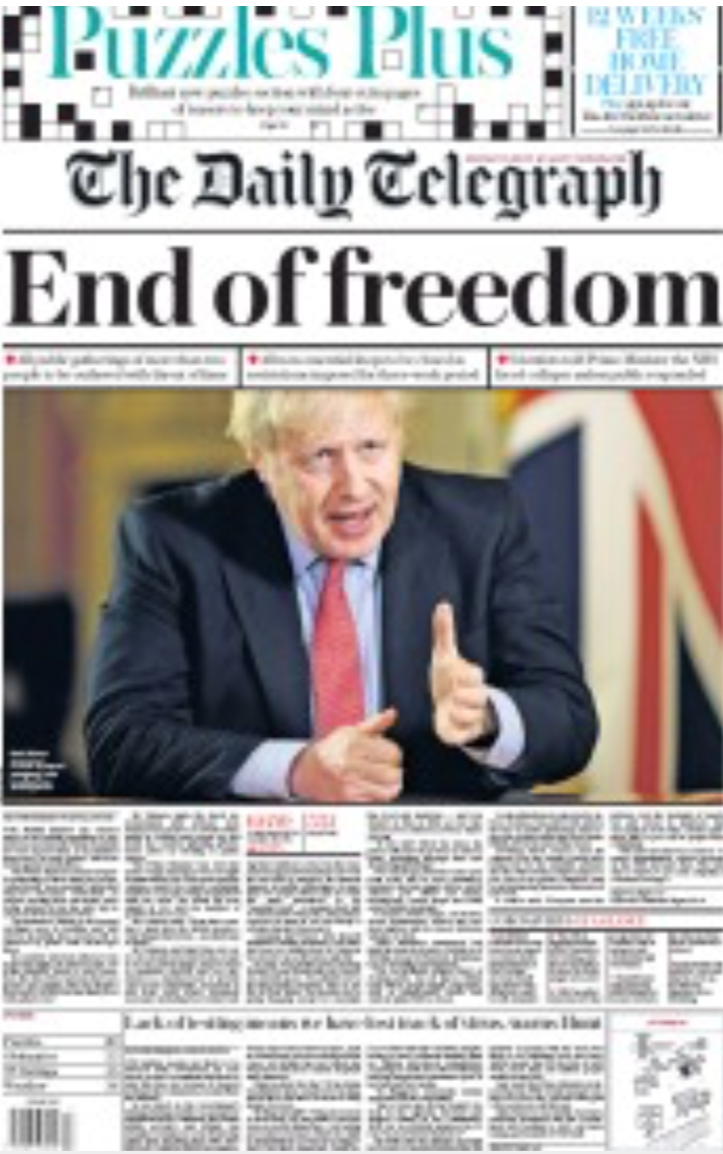






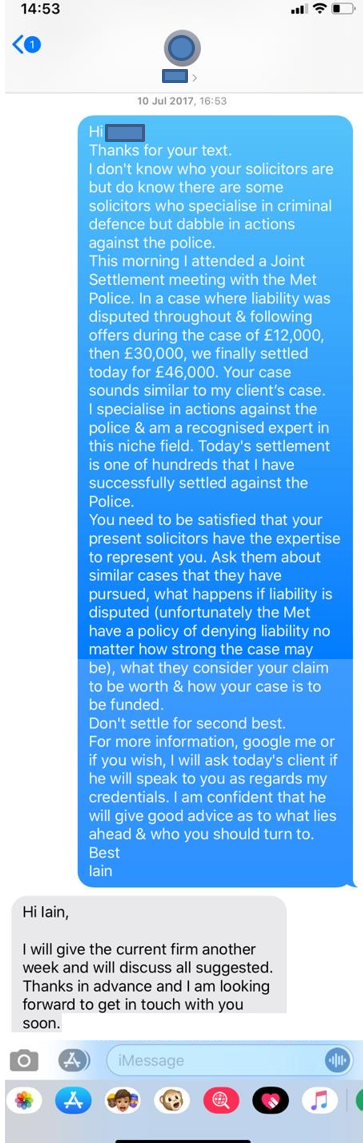
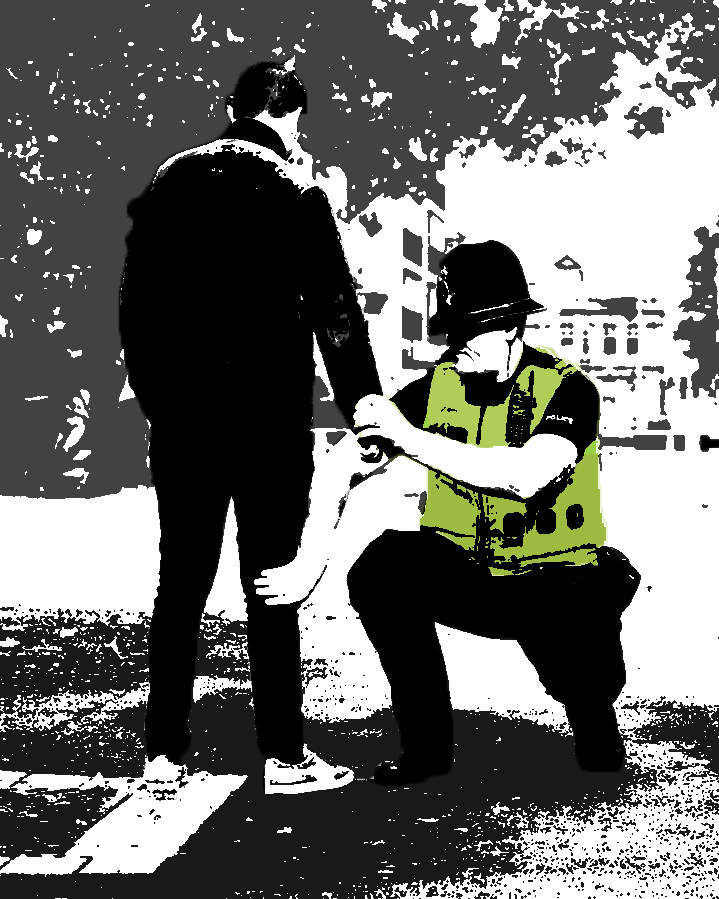



You must be logged in to post a comment.