Last year I blogged about the frustrations, delays and inadequacies of the Police Complaints process, by reference to the case of my client Emmanuel Madugbah, an NHS worker who heroically worked 43 consecutive days at Northwick Park Hospital during the critical phase of the first Coronavirus surge in 2020, witnessing the death of many patients, and also his own colleagues becoming patients.
Emmanuel, who is a man of exemplary character, was going about his lawful business in Watford in October 2019 when he was ‘ambushed’ by a group of Police Officers who pointed a taser weapon at him, forced him to the ground and handcuffed his hands behind his back.
It subsequently transpired that the Officers had mistaken Emmanuel for another black man, whom they were seeking to arrest. Emmanuel strongly feels that there was very little physical resemblance between himself and the real suspect – other than them both being black.
Although my client’s complaint related to a single and relatively straightforward incident, Cambridgeshire Constabulary’s complaint investigation was only finalised on 19 April 2023 i.e. 3 years and 4 months later.
Of far greater concern to me, however, than the length of time which it takes their complaint investigations to be finalised, is the pro-police bias displayed by most Forces’ Professional Standards Departments, bordering on active antagonism towards complainants, of which Cambridgeshire PSD is certainly no exception.
During the investigation of Emmanuel’s complaint, it was necessary for me to appeal on my client’s behalf not once, but three times to the Independent Office of Police Conduct (IOPC).
On each occasion my client’s appeal was upheld or partially upheld, and Cambridgeshire Police were ordered to take remedial action in regard to clear inadequacies in their handling of the complaint, including the following –
Their initial report lacking attention to detail given the “overriding seriousness” of the allegations;
The investigating officer not displaying sufficient objectivity in assessing the allegations and when weighing the officers accounts against other evidence;
Failures by the investigating officer to properly explain his conclusions;
Failing to properly interrogate the officers alleged ‘reasonably held suspicion’ that my client was the real suspect.
The IOPC also censured the failure of the Officers who stopped my client to record the incident on body camera.
Throughout this process, both I and Emmanuel have remained highly concerned that the three white officers who assaulted and detained Emmanuel apparently leapt to their conclusions on the basis of his skin colour, and in the absence of any other similarity between the real suspect (a man in his 20s) and Emmanuel (a man in his 40s) other than the highly generic factor that they both wore beards of some description. I strongly suspect that a white man would never have been identified on the basis of skin colour and facial hair alone.
Not only is it right to question the lack of objectivity and independence displayed by Cambridgeshire PSD in this process, it is also proper to question how much public money has been wasted by the Police failure to properly and thoroughly investigate Emmanuel’s complaint at the first time of asking – rather than having to have their homework marked and returned to them for revision by myself and the IOPC on no less than three occasions.
I will also highlight that throughout the appeal and reinvestigation process, Cambridgeshire PSD repeatedly failed to pursue lines of enquiry which the IOPC had requested – leading the IOPC to bemoan the Force’s unwillingness to fully ‘probe’ their officers’ accounts. In the end, Cambridgeshire Constabulary was allowed to hide behind “the passage of time” as a reason for their officers not to be questioned further – i.e the delay of three years which the Force itself was entirely responsible for. Disappointingly the IOPC acquiesced in this, but it is rare for our Independent Office of Police Conduct to show much stomach for a fight with resistant Police Forces.
The ultimate outcome of the investigation into Emmanuel’s complaint was the issuing of the following apology by Cambridgeshire Constabulary to my client on 19 April 2023 –
“It is clear that there was an incident of mistaken identity and on behalf of Cambridgeshire Constabulary, I would like to offer you a sincere apology for any distress this may have caused you.”
I will leave it to the readers of this blog to determine how sincere that apology actually was, given that it did not materialise until three appeals to the IOPC had been upheld over the course of 3 years.
In the meantime, I am now proceeding with civil litigation on behalf of Emmanuel in order to achieve the true vindication and appropriate compensation which, I believe, he deserves from the Chief Constable of Cambridgeshire. In my previous blog post I spoke about the difference between the Police Complaints ‘circus’ and the much fairer and transparent process of the Court system, in which people have their hands on the ‘steering wheel’ provided by being the driving party in the litigation, rather than being mere passengers on the ‘merry-go-round’ of a complaint investigation.
If you believe that you have suffered from Police misconduct and have received a complaint report purporting to find that the officers involved did no wrong, I would strongly urge you to consult an expert in Actions against the Police such as myself, because it is my sad, but time-tested, experience that most Police complaints reports– and Police apologies – aren’t worth the paper they’re written on.
Baroness Casey’s recent report on the Metropolitan Police highlighted a raft of systemic problems in that Force – including under-resourcing, poor training and leadership on the ‘frontlines’, the misuse of ‘Misuse of Drugs Act’ searches – particularly against people of the “over -policed and under-protected” Black and Asian communities of the city – and officers ‘closing ranks’ in the face of even the most clear-cut complaints; all of which issues intersect in today’s blog.
Therefore, let us now step from the pages of the Casey report into the real streets of London…
My client, Suleman Iqbal is of British Pakistan ethnicity and works as an engineer for British Telecom.
On the afternoon of the 30 June 2020, Suleman went to visit his cousin who lives in Walthamstow.
Suleman was driving a two door BMW motor vehicle, fitted with tinted windows.
It was a hot sunny day. Suleman was wearing a baseball cap and had both front windows down. He was playing loud music on the car stereo and was smoking a cigarette.
As my client proceeded along Shaftsbury Road, there were cars parked up on either side of the road making passage slow. As he passed Shaftsbury Primary School, he was obliged to stop because of another car travelling in the opposite direction.
Whilst he was stationary, the rear passenger side window of Suleman’s car was suddenly and without any warning smashed by a Metropolitan Police Officer now known to be PC Harrington using an extended baton.
Whilst Suleman was distracted by the glass breaking, a second officer, now known to be PS Mason reached through the open driver’s window and seized Suleman’s right wrist and then forced his hand and arm backwards causing Suleman significant pain and discomfort and causing him to drop his cigarette. He was in a state of shock and did not understand why he was being brutally attacked like this.
A third officer, now known to be PC Roberts then took hold of Suleman’s right arm and forced it backwards causing him further pain and discomfort, whilst PS Mason opened the driver’s door and seized my client’s lower right leg, before pulling him partially out of the car.
At this time, the car was still in gear and Suleman’s left foot was on the brake. So as to stop the car moving forward, and a potentially serious accident occurring, Suleman took the car out of gear and applied the handbrake before voluntarily exiting his vehicle.
My client was understandably angry and remonstrated with the officers asserting that there was no basis for their actions.
“Assisted” by the Police?
Suleman was now led away from his vehicle and handcuffed to the rear by three officers believed to be PC Roberts, PC Halabi and PC Boyle. This was witnessed by a significant number of members of the public, who were out and about on the street in the lovely weather.
Whilst Suleman was being handcuffed, PC Harrington approached with his baton still extended, menacingly brought his baton up close to Suleman’s face and then flicked Suleman’s cap off his head with his right hand.
The bully-boy tactics now worsened as PC Harrington grabbed Suleman by the neck with his right hand, whilst still holding his baton in his left hand, and forced Suleman backwards whilst he continued to be restrained and handcuffed by the three officers behind.
This attack upon Suleman, and his manhandling generally as he was led away from his car – later disingenuously described by the Police lawyers as Suleman being “assisted out of the BMW” was captured on video by a concerned passer-by, and is shown here with Suleman’s permission:
Suleman was understandably incensed by PC Harrington’s actions and immediately demanded his name.
In response, officers now accused Suleman of spitting (which was untrue) and PC Harrington and PS Mason grabbed the top of Suleman’s t-shirt and raised this up to cover his mouth and nose whilst simultaneously forcing Suleman’s head backwards. Meanwhile, the three officers at the rear continued to restrain and handcuff him. Suleman struggled to breathe and in panic cried out that the officers were ‘strangling’ him. He also informed the officers that he was asthmatic. This was a totally unjustified and brutal use of force perpetrated by a ‘gang’ of Officers upon a man who was their helpless prisoner, and could have had tragic results.
When the other officers had completed handcuffing Suleman, PC Harrington and PS Mason released their grip on his shirt, uncovering his face. Suleman was then forced up against a wall/ railings where his left leg was forcibly held against the wall and a spit hood secured over his head. Suleman again struggled to breathe. Numerous members of the public were observing Suleman’s brutal mistreatment at close hand.
Two officers continued to restrain my client by holding him against the wall notwithstanding that he was handcuffed and was not trying to escape.
Suleman continued to assert that he could not breathe and was told to “calm down”. PS Mason asserted that the spit hood would not impede his breathing “in the slightest”.
PS Mason then approached the Claimant and told him “I ran to the driver’s window. I made eye contact with you ….. I screamed, please stop the car. I saw you attempt to drive off quicker ….. you revved the engine…. You failed to stop your vehicle when requested to do so.”
Prior to the events described, my client had in fact been unaware of the presence of any officers. Suleman disputed PS Mason’s version of events and truthfully asserted that he had not made eye contact with PS Mason, that PC Harrington had smashed his window for no reason and that PC Harrington had strangled him by the neck.
PS Mason asserted that in fact PC Harrington had “put” his hand around the Claimant’s mouth/face because he was spitting. Suleman responded, “Don’t lie officer, please don’t lie to me.”
After several minutes, PC Mason removed the spit hood from Suleman’s head, but my client continued to be handcuffed and restrained against the wall.
Suleman was aware of numerous people in the street watching events, around 30 local residents having come out of their houses or paused in their journeys, which added to his sense of degradation and outrage.
He asked if the handcuffs could be removed but was ignored. He asked if he could turn around (from facing the wall) but his request was rejected because he was said to be “agitated”.
Suleman was subjected to a ‘pat down’ search and his car was extensively searched. Officers removed from Suleman’s car: his laptop; mobile phones; and wallet, which was then inspected to establish his personal details. One of the officers claimed he could smell cannabis in Suleman’s car, which was not only untrue, but evidently could not have been the initial basis for the attack upon Suleman and his vehicle.
By this stage, an officer believed to be PS Sheehan had attended. Suleman remonstrated as to the use of force and his detention. PS Sheehan advised that his complaint would be reviewed.
Suleman was asked about his car. He confirmed that he was a trader and had purchased the vehicle the day before. Further, that he had a trade insurance policy which he could show on his phone.
PS Sheehan advised that my client would still not be released. Suleman demanded to know why given that there were so many officers, he was compliant, and the officers had his wallet and keys. He was ignored and continued to be held whilst ‘insurance checks’ were made.
Several minutes passed and Suleman again asked to be released. An officer believed to be PC Halahi said, “No, because you’re still angry” and “We’re just going to see what other offences you’ve committed or if there’s anything there?”
Finally, at 17.07, evidently having failed to find any alternative justification for assaulting my client following their initial unjustified stop, PS Sheehan directed that the handcuffs be removed, and officers removed the handcuffs.
PS Sheehan subsequently provided Suleman with the details of all the officers involved. PS Sheehan reassured my client that he would speak to the officers about the incident and call Suleman thereafter. Suleman requested a copy of the stop and search form, however none was provided.
Suleman felt nauseous and was experiencing pain and discomfort in his neck and wrists. He requested that the officers call an ambulance whilst he sat down at the side of the road.
The ambulance service sent a taxi to collect Suleman and conveyed him to Newham Hospital.
At hospital it was noted that my client had bruising to his right wrist and red ligature marks to his neck in the shape of fingers. Suleman also reported a severe headache and was provided with painkillers. Upon discharge, my client’s cousin picked him and drove him home.
PS Sheehan failed to call Suleman as promised and so Suleman called him. PS Sheehan stated that he had viewed the Body Worn Video of the officers at the scene and advised that he did not believe that there was anything wrong with their conduct. PS Sheehan also claimed that prior to the car window being smashed an officer had run down the road after Suleman’s car shouting for him to stop.
This knee-jerk dismissal of his legitimate complaint only added insult to Suleman’s injury.
Suing the Police
When Suleman instructed me to make a compensation claim on his behalf against the Met, he explained how he had required a month off work owing to injuries to his neck and wrist, but that the biggest effect of the incident was not physical but psychological – he suffered very disturbed sleep and anxiety symptoms, which were particularly provoked by him seeing Police officers and vehicles – an unavoidably regular occurrence for anyone who lives and works in a bustling urban environment like London. He was subsequently diagnosed with a specific phobia/ adjustment disorder.
When I presented Suleman’s claim to the Metropolitan Police they failed to respond on the issue of liability, forcing us to issue civil Court proceedings. A Defence was then filed in which the Met alleged that their officers had followed (and violently stopped) Suleman’s vehicle because he was behaving “suspiciously” – what this amounted to was an allegation that Suleman had performed a U-turn after allegedly seeing a Police personnel carrier, although it was not suggested that the Police were otherwise looking for Suleman or his vehicle, or that he had been driving in an unlawful manner.
On the basis of this tenuous reason the Police had then set off in pursuit of Suleman, and the events described above had occurred. The Police now admitted that Suleman had been unlawfully detained and ‘technically’ assaulted “from the point of assisting the Claimant out of the BMW”, but only because officers had forgotten to comply with the requirements of Section 2 of the Police and Criminal Evidence Act (i.e identifying themselves and explaining their actions) when searching Suleman and his vehicle. It was now asserted that search was carried out under the Misuse of Drugs Act 1971, although none of that had been said to Suleman at the time.
Notwithstanding the Police assertion that their actions were justified and their errors mere ‘technicalities’ I continued to strongly press Suleman’s case, and I am pleased to confirm that it has recently settled with an agreement by the Met to pay Suleman £17,500 and his legal costs.
As I stressed in another recent blog post, the ‘founding constitution’ of British policing is the principle of ‘Policing by Consent’ – the idea that democratic Policing derives its legitimacy from the people, rather than the State – and that the wellspring of its authority is the “approval, respect and affectionof the public” (Charles Reith, 1956) with Officers being ‘members of the public in uniform’ rather than the type of paramilitaries who would rule through fear and violence in an authoritarian State. Looking at the actions of the Officers who dealt with Suleman that day, I would seriously question whether they appear to be guided by a desire to earn the “approval, respect and affection” of the public. All too often, Police Officers seem to think primarily, not of their power coming from the people, but of the power they have over the people, and respond with anger and/or violence to any perceived infringement of their authority.
Until such attitudes are changed, the state of health of ‘Policing by Consent’ in this country will remain borderline.
Awareness of issues of sexual abuse between children and a commitment to the safeguarding of children from such abuse are probably at higher levels in our society than they have ever been, but such issues must be addressed with the utmost care, consideration and sensitivity – lest in trying to solve one problem those in authority create another problem.
A BBC report last year highlighted that more than half the teachers consulted from the NASUWT Union felt that their schools did not have adequate procedures in place to deal with ‘peer on peer’ sexual abuse and a lot of the teachers consulted felt ill equipped to address these issues because they lacked training.
Sadly, the Police are another professional body whose actions suggest that their Officers often lack the proper training to respond with appropriate sensitivity and proportionality to allegations of sexual abuse in which the alleged perpetrator and the alleged victim are both children.
The unnecessary criminalisation of a child
In late 2020 my client, a 13-year-old schoolgirl, was arrested at home on suspicion of common assault, false imprisonment, making or distributing indecent images of a child and inciting a child to engage in sexual activity. In a subsequent witness statement, the arresting Police Officer re-counted the explanation that he gave to my client at the time of her arrest as follows:-
“We have received a report today that over the summer you and a couple of others have been in an outbuilding in some sort of garden where it has been alleged that REDACTED has been dared to kiss a boy called REDACTED then has been dared to give him oral sex. Later on all the group has gone back to the address and it has been alleged that you have told REDACTED that she did not do it right and she would have to do it again. She has refused and it has been alleged that you have pushed her into the shed and held the door shut. …………..It has been alleged that you and another girl have recorded this and it has now been distributed.
At this time, the Police also seized my client’s mobile phone.
My client was then transported into Custody at a Police Station where she was required to provide her fingerprints and a DNA sample – just as if she were an adult criminal suspect – and was then detained for several hours before being interviewed (in the presence of her mother) and then released at approximately midnight ‘under investigation’.
The arrest necessity reasons as specified in the Custody Record were as follows:-
Allow the prompt and effective investigation;
Protect a child or other vulnerable person.
During my client’s interview under caution, it transpired that the event giving rise to the alleged offence had occurred several months earlier (on an unspecified date in the summer of 2020) and that the Police had not yet obtained a formal statement from the alleged victim.
It was also put to my client that other children had been present at the time of the alleged offence and that somebody may have videoed the incident. Under legal advice, my client chose not to answer any of the questions put to her.
A month later, my client’s mother received a telephone call from the Police to advise that no further action would be taken against my client on the basis that no criminal activity had taken place and my client’s mobile phone was returned to her.
Truth or Dare?
The Detective Sergeant who had investigated this matter wrote a summary of her findings as follows –
In summary, this is a case of a truth and dare game that has possibly escalated. REDACTED accepts that she was not forced into committing a sexual act on REDACTED but felt peer pressure into doing it. This is denied by all other people present at the time. There is no evidence of any coercion or incitement, no assault and no false imprisonment. REDACTED states that there were 2 incidents. This is not supported by any other witnesses who all maintain that there was just one.
The DS went on to conclude –
This case therefore is now complete. I request that the matter is filed. Although it is clear that a sexual act has taken place between two 14 year old children, there is no evidence to suggest that this was forced in any way and there was no imbalance of power or threats. Although REDACTED indicates she felt peer pressured into doing it, she also accepts that she did not verbalise this and therefore no one would have been aware. She was not assaulted or falsely imprisoned in the shed at any time and therefore there is no evidence to support or prove any of the offences for which the children were arrested. Although it is confirmed that a recording took place, there are differing stories around how this came about and whose idea it was. It was confirmed that it was recorded on the sister’s phone, again with differing explanations as to how this came about. As stated, CPS would not criminalise children for this. I request that this matter is filed with no further action.
The Rights of Children
A lawful arrest requires 2 elements:-
A person’s involvement or suspected involvement or attempted involvement in the commission of a criminal offence; and
Reasonable grounds for believing that the person’s arrest is necessary.
When I was consulted by my client’s mother, it was my opinion that her arrest and detention were manifestly unlawful, as not being founded upon reasonable suspicion of the commission of the alleged offence and/or because arrest was not necessary as required by Section 24 of the Police and Criminal Evidence Act 1984 (PACE).
Even leaving aside the lack of evidence that any crime had been committed in the first place, it was clear to me, when you considered the young age of the persons involved and the length of time that had elapsed since the alleged offence that it simply could not have been “necessary” to arrest my client – and that in so far as was required, the investigation into this matter could and should have been progressed by means of a voluntary interview, taking place without the shock and stigma of arrest.
The Police in rushing to arrest my client – as if she were an adult rather than a young teenager – were in dereliction of the guidance set down by the College of Policing for such matters –
a. Children and young people are a protected group with specific vulnerabilities. Their treatment in detention is governed not only by domestic legislation but also by the UN Convention on the Rights of the Child (UNCRC) which the UK has signed and ratified. The UNCRC defines a child as a human being below the age of 18, unless the relevant laws recognise an earlier age of majority. Officers must take into account the age of a child or young person when deciding whether any of the Code G statutory grounds for arrest apply. They should pay particular regard to the timing of any necessary arrests of children and young people and ensure that they are detained for no longer than needed…
b. Of note, the UNCRC specifically states that “no child shall be deprived of his or her liberty unlawfully or arbitrarily. The arrest, detention or imprisonment of a child shall be in conformity with the law and shall be used only as a measure of last resort and for the shortest appropriate period of time”.
Words of Advice
The Police investigation log for this incident noted that “strong words of advice” had been given to my client and the other children involved in this matter.
I would like to echo such ‘strong words of advice’ back in the direction of the Police – who in unnecessarily arresting my client caused her real and really easily avoidable trauma. Teens generally have enough of an emotional maze to navigate each week of their lives without also having to process the shame, embarrassment and anxiety of being arrested in the place of safety that should be their homes, in front of their parents, deprived of their liberty and semi-criminalised by the dehumanising custody process. For a long time after this event, my client suffered nightmares, depression and low self- esteem. Fortunately, she has now overcome this and has regained her emotional confidence and health, but the consequences of her ill-advised and unnecessary arrest could have been far worse and long- lasting.
Safeguarding children is one of the key foundation stones of our society – and that includes responding sensitively and appropriately to allegations of ‘peer on peer’ sexual abuse and ensuring that, in attempting to help an alleged victim, harm is not unnecessarily caused to other innocent children, in this case the trauma of ‘adult’ arrest.
My client is now happily able to move on with her life; she has recovered a significant award of compensation to reflect her wrongful arrest and the record of her arrest on the Police National Computer has been deleted. I trust that the Police Force concerned will take the lessons learned in this case to heart.
Today’s blog is about the importance of finding the right solicitor to handle your Action Against the Police case. Whilst I pride myself on being such a specialist – as evidenced by my track record of success and the testimony of my clients on this website – there are, frankly, many other solicitors out there who advertise for Actions Against the Police work without having the necessary expertise to do a competent job.
Advertising for cases is one thing, winning them is another.
An example of this is a case I have recently settled on behalf of a husband and wife, whom I will identify for the purposes of this blog as Alice and Colin.
Alice and Colin experienced a traumatic event in June 2020 when their car was ‘ambushed’ by Metropolitan Police Officers who deployed a stinger device across the road, puncturing the tyres of their vehicle and bringing it to a violent halt.
The couple were bundled from the car – Colin was immediately handcuffed – and thereafter they were both detained for approximately an hour at the roadside, without arrest.
It transpired that an inaccurate report had wrongly caused the Metropolitan Police to believe that Alice and Colin’s vehicle had been involved in the ‘abduction’ of a child. There was in fact no child in the couple’s vehicle, and nor had there been at any point in their journey that day – this was very much a case of ‘mistaken identity’ which appears to have arisen from false information given to the Police by a member of the public.
Alice and Colin initially instructed a firm of lawyers whom I shall identify as “X Solicitors”. This firm’s website claims to deliver the ‘highest standards’ in actions against the police.
X Solicitors sent a letter of claim on behalf of Alice and Colin to the Met, but on receiving a denial of liability relying upon Section 17 powers of search under the Police and Criminal Evidence Act 1984, prevaricated about continuing further with the claim.
Seemingly unable to decide upon the merits of the claim without outside assistance, X Solicitors instructed a barrister who prepared an Advice which concluded that Alice and Colin’s claims were unmeritorious. Clinging to the Barrister’s coattails, X Solicitors ultimately informed Alice and Colin that their detention would “in ours and the Barrister’s view be considered reasonable”.
Thankfully, however, Alice and Colin did not let matters rest with the purportedly ‘expert’ advice of X Solicitors and instead consulted me for a second opinion.
Having reviewed the evidence, I was pleased to advise Alice and Colin that I not only felt that they both had legitimate claims against the Met – but that those claims were so strong that there was as good chance we would be able to get the Police to settle without the need for Court proceedings.
I therefore sent the Met what was in effect a fresh letter of claim on behalf of Alice and Colin, raising the following arguments which X Solicitors (and their barrister) had completely overlooked –
Even if it was conceded that Police Officers had a reasonable basis to deploy the stinger and stop my clients’ vehicle for the purposes of establishing whether it contained a kidnapped child, Section 17 of PACE did not grant a power to detain the occupants of the premises (in this case the vehicle) and any lawful basis for detaining either of my clients would in any event have evaporated once the search of the vehicle had been completed – which, given the size of the car, could not realistically have taken any more than 5 minutes.
At no point were either of my clients placed under arrest, but were nevertheless ‘detained’ for approximately an hour.
Furthermore, and in any event, the use of force upon Colin, in the form of handcuffs, was unlawful either on the basis that it was a disproportionate use of force against a wholly compliant and none threatening individual and/or was unlawful in that even if the initial application of handcuffs was justified the duration of the application of those handcuffs – approximately 30 minutes in total – was unlawful in that it was excessive and that the handcuffs were being maintained upon my client during his period of false imprisonment (as identified above).
Within a few months of my intervention on behalf of Alice and Colin, their claims – which had been rapidly approaching the third anniversary of the incident – were brought to a successful conclusion with the Met agreeing to pay both of them a significant award of damages and legal costs.
As I had indicated to Alice and Colin, it had not even been necessary to instigate legal proceedings in order to achieve this result.
I am proud to say that rather than spending thousands of pounds on advertising, I will let my track record of success in Actions Against the Police speak for itself. I possess the confidence and experience that those who dabble in these sorts of claims lack, and I will leave no stone unturned in order to achieve justice for my clients.
The frequency with which I blog about Police abuse of stop and search powers – in fact twice in the last month alone (see the reports about the cases of my clients Mo Izhar and James Reid – is I think indicative of how little our Police Forces can be trusted to use that power properly and proportionately. It is also, sadly, no coincidence that the majority of my blogs on this subject involve men of Black or Asian ethnic heritage. In my experience the misuse of stop and search powers by the Police is a problem at the very interface of two particular Police vices – authoritarian tendencies and retrogressive racism (which runs the full range from ‘schoolboy’ stereotyping to real racial animus).
Reflecting on Baroness Casey’s uncompromising enquiry into the state of health of the Metropolitan Police Service, I note that her findings closely match my own experience in this regard.
Her report quotes numerous examples of discrimination in the use of stop and search straight from the mouths of non-white Officers in the Force itself, one of whom told her –
“A lot of Officers are coming in who are not from London…none of them have been stopped and searched in their lives…I was stopped and searched 50 times before I joined”.
The Officers joining the Met from outside London are, of course, overwhelming white.
Baroness Casey cites numerous examples of bad practice in Met Police stop-searches, including-
Officers justifying the search on the basis of a person’s ethnicity alone.
Officers behaving in a rude/ uncivil manner during the search.
Officers using excessive force leaving those searched – often young people – humiliated, distressed and untrusting of the Police.
As I highlighted in last week’s blog post the legitimacy (and, frankly, efficacy) of Policing depends on public trust and confidence. Baroness Casey repeatedly stresses this point in her report –
“To date, the Met has been unable to explain clearly enough why [stop and search] is justified on the scale it uses it, and in the manner and way it is carried out, particularly on Black Londoners. It has damaged trust. If the Met is unable to explain and justify its disproportionate use and the impacts of these, then it needs a fundamental reset.”
Anyone who lives or works at the front line of British policing – such as black and Asian metropolitans and Police misconduct lawyers such as me – can see that trust and confidence is being eroded by the continued Police misuse of stop and search powers, a tide in which the racial prejudice element in Policing has failed to recede in the way that it has in so many other parts of our modern life and culture.
The following statistics from Metropolitan Police Stop and Search data largely speak for themselves-
Around 70% – 80% of all stop and searches lead to no further action.
The more stop and searches are done, the greater the proportion of no further actions.
In 2019-20 only 12% of stop and searches in London led to a subsequent arrest.
The Misuse of Drugs Act was consistently the most used reason to stop and search in London, not weapons.
That latter fact is a particularly important one to bear in mind, given that the Met in particular often seeks to justify its disproportionate use of stop and search powers upon young black men because of the higher prevalence of knife crime amongst that demographic.
The fact is that most stop and searches are not about stopping knife crime at all and are often based only on the dubious and easily abused excuse of an Officer ‘smelling cannabis’ – see for example the widely reported case of my client Tariq Stanley.
The Casey report also highlights the conclusions of a February 2019 research study by the Centre For Crime and Justice Studies –
Overall, our analysis of 10 years worth of London-wide data suggest that although stop and search had a weak association with some forms of crime, this effect was at the outer margins of statistical and social significance. We found no evidence for effects on robbery and theft, vehicle crime or criminal damage and inconsistent evidence of very small effects on burglary, no domestic violent crime and total crime.
The combined effect of these facts and data is, in my opinion, now raising a pressing question – should we strip the Police of their stop and search powers? There is reason to think that not only does the current deployment of ‘stop and search’ fail to reduce crime it may actually be indirectly exacerbating it, by turning people against the Police and crippling the type of community cooperation which is essential for effective policing, not only in terms of rooting out criminals, but stopping crime taking root in the first place. This is particularly the case amongst those predominately Black, Asian or other minority ethnic urban communities which the Casey report describes as being “Over -policed and under- protected”.
Personally, I think we should put the Police nationwide on probation when it comes to stop and search powers. Section 1 of the Police and Criminal Evidence Act 1984 (PACE) empowers Constables to search persons or vehicles for “stolen or prohibited articles”. Likewise, Section 23 of the Misuse of Drugs Act 1971 empowers Constables to search persons or vehicles for “controlled drugs”. Both PACE and the Misuse of Drugs Act make the use of that power contingent on the Constable possessing reasonable grounds of suspicion.
Pause now, and look again at the Met Police data highlighted in Baroness Casey’s report – if 70%-80% of stop- searches lead to no further action, then it is clearly the case that the vast majority of people searched do not in fact have any prohibited article or drug upon them and the obvious conclusion from this extremely low ‘hit’ rate, is that the Police are habitually abusing their stop and search powers by targeting individuals for whom there are no objectively reasonable grounds of suspicion. If there were reasonable grounds, it is manifest that the ‘success’ rate from stop- searches would be much higher.
I suggest therefore that all of our Forces are put on an 18-month period of probation with the power of their Constables to carry out stop/searches under Section 1 PACE and Section 23 Misuse of Drugs Act to be rescinded if their hit rate of positive stop and searches does not increase to at least 50%.
Until such time as a Government initiative for holistic reform of Policing culture is genuinely and determinedly undertaken, it will continue to fall upon the shoulders of those who have been wronged by Police misuse of stop and search powers, and the lawyers such as myself who represent them, to punish the Police for this invidious form of misconduct and try to draw the poison from the wound they thereby inflict upon society.
News headlines this week were dominated by the publication of Baroness Casey’s long-awaited review into the standards of behaviour and internal culture of the Metropolitan Police, which was prompted by the public outcry following the rape and murder of Sarah Everard by a Metropolitan Police officer in March 2021. As highlighted by Baroness Casey in the foreword to her report, Sarah’s mother Susan Everard spoke courageously and almost overwhelmingly of her torment at the thought of her daughter’s last hours and her outrage that Sarah’s killer “masqueraded as a policeman in order to get what he wanted.”
I consider the fact that other Police officers failed to pull that mask from the face of the rapist and killer who was amongst them, and, indeed, by their actions and behaviour may have helped him – and others – to keep such a mask in place for so long, to lie at the heart of all that is wrong and rotten in Policing.
Baroness Casey eloquently summarises this problem in her report –
“Of course I accept that so many police officers go to work for the right reasons. They are committed to public service, and I thank them for that. But policing needs to accept that the job can also attract predators and bullies – those who want power over their fellow citizens, and to use those powers to cause harm and discriminate. All of British policing needs to be alive to this very serious risk. It needs to keep them out when they try to get in, to root them out where they exist, and to guard against the corrosive effects that their actions have on trust, confidence and the fundamental Peelian principles of policing by consent.
I am unconvinced that police forces are fully alive to that risk, nor that the Met fully understands the gravity of its situation as a whole. If a plane fell out of the sky tomorrow, a whole industry would stop and ask itself why. It would be a catalyst for self-examination, and then root and branch reform. Instead the Met preferred to pretend that their own perpetrators of unconscionable crimes were just ‘bad apples’, or not police officers at all. So throughout this review, I have asked myself time and again, if these crimes cannot prompt that self-reflection and reform, then what will it take?”
As the Casey report highlights, one of the fundamental problems in the management and culture of the Met is that its “processes do not effectively root out bad officers…” and it is too easy for senior officers to “ignore poor performing officers or let those with conduct issues get away with bad behaviour.”
“This Met is tasked with upholding law and order and keeping citizens safe. But it has failed over time to ensure the integrity of its officers and therefore of the organisation. Despite the obvious signals of major failure – with heinous crimes perpetrated by serving Met officers – it did not stop to question its processes.
Policing will attract those who wish to abuse the powers conferred by a warrant card. The Met has not taken this fact seriously…”
The report correctly focuses on the fact that concerns about officers raised through the misconduct or complaints process are not well recorded and are “more likely to be dismissed than acted upon… time and time again, those complaining are not believed or supported. ”
This, to me, is the original sin which lies at the heart of the failure of the Police to properly police themselves, to catch the criminals in their own ranks and prevent abuse of power by bullies, predators and other corrupt actors.
The Police mindset which I have witnessed over three decades of representing the victims of Police misconduct, is that complaints are generally treated as hostile attacks on the Police as a whole and the spirit with which they are half-heartedly investigated or the bias with which they are rejected (after consideration of the same facts which time and time again will lead a civil court to subsequently rule in favour of the victim) is one apparently motivated – in terms of culture and processes – by a fraternal spirit whose primary focus is to protect brother officers (and it almost always is ‘brother’ officers) from the ‘outsiders’.
“Behaviour which in most other organisations would lead to instant dismissal or serious disciplinary action – particularly amongst those who work routinely with vulnerable people – is too often addressed through management action or reflective practice.”
The often very intelligent people who lead the Police seem willfully blind to this failing. The Police as an institution seem to define as a virtue and a point of pride that they ‘stick up’ for their own, like soldiers in a war. But this is not a war – the public are those to whom the Police must, by definition, owe the highest duty, but whom all too often are treated as the alien, the other, the rival team, the enemy.
This is epitomised by every Professional Standards Department investigator who cloaks himself in the language of a judge, purporting to objectively weigh the facts “on the balance of probabilities” but who always starts with his hand holding down one side of the scales and rarely, if ever, removes it completely.
I can think of so many cases I have personally handled in which the initial Police misconduct investigation fully exonerated the officers concerned of any wrongdoing – often delivering that decision in hectoring, lecturing tones, patronising and victim blaming the complainant – only for the Police to apparently ‘reconsider’ the evidence when faced with Court proceedings and put their money where their mouth should have been. I point as a recent example to the case of my client Allon.
Witness also the recent response of Merseyside Police to the finding of a judge and jury that one of their officers had not only unlawfully assaulted my client John Kennedy and broken his arm during a ‘welfare visit’, but that this officer and his colleague had, in effect, then conspired to frame John for an offence he had not committed. Merseyside Police refused to accept any criticism of the officers and indeed ‘commended’ them for their actions that night.
These are not signs of an institution which has its priorities right, but one in which there is a deeply unhealthy ‘code of silence’, almost like the oath of omerta which binds a gang together, as I have written about here.
Even when the Police do apologise, it is very often through gritted teeth or in a type of passive-aggressive manner which only succeeds in adding insult to injury, indicating a real failure on the part of the Police to want to learn from their mistakes and change.
What Is The Solution?
Baroness Casey’s charge-sheet against the Met includes the following vices, sadly ingrained in Policing, about which I have been blogging for years –
Too much hubris, too little humility
Defensiveness and denial
Systems which support wrongdoers not whistleblowers
A lack of accountability and transparency
These are all symptoms of a wider malaise which Louise Casey succinctly identifies in this phrase: “the Met has become unanchored from the principles of policing by consent.”
The key recommendations of her report are as follows –
Reform of the misconduct process;
Change of vetting standards “with a relentless focus on identifying and reducing opportunities for predators who seek to abuse the powers of a police officer…”;
Making it easier to dismiss officers guilty of misconduct;
A kind of ‘truth and reconcilation’ commission – “The Met should introduce a new process with Londoners to apologise for past failings and rebuild consent”, particularly with ethnic communities, women and children;
Greater financial and emotional support for frontline officers;
Listening to Londoner’s voices – creating mechanisms for greater transparency and accountability.
If sufficient progress is not achieved within 2- 5 years then Baroness Casey recommends that “more radical, structural options” such as breaking up the Met into three smaller Policing institutions might be required, or in other words, turning a moribund Goliath into several brand-new Davids. This type of reformation would be similar to the transformation of the Royal Ulster Constabulary into the Police Service of Northern Ireland: exorcising the ghosts of the old system in an attempt to offer a fresh start for all, with transparency and accountability at its heart.
The ‘founding constitution’ of British Policing are the so-called Peelian principles, named after the founder of the Met, Sir Robert Peel. These enshrine the idea that Policing derives its legitimacy from the people, rather than the state – founded upon the “approval, respect and affectionof the public” (Charles Reith, 1956) rather than originating from a top-down projection of fear, surveillance and government power. As ‘members of the public in uniform’, constables are supposed to owe their primary devotion to the public – but all too often become enmeshed and corrupted by the pull and lure of loyalty to the uniform.
Baroness Casey culminates her report with the following, powerful plea –
“The Met cannot afford to squander the valuable contributions of people who want to make policing better. It needs to be prepared to listen, to understand that communication goes both ways and that they have to be humble and learn what they can give. The Met does not always know better, and cannot have all the answers…If the Met can rid itself of this tendency to want people to reaffirm what they’re doing as opposed to genuinely looking for insights and changes so it can improve relationships with local communities, then it might start to turn a corner.”
I very much applaud that sentiment and wish to not only echo her words, but to amplify them. It may not have escaped your notice that the examples I turned to above regarding Police failures to recognise misconduct and properly police themselves were all drawn from Forces the length and the breadth of the country, other than the Met (specifically – Hertfordshire, Merseyside, Derbyshire, Devon & Cornwall – the list could easily go on).
The Police could go such a very long way to fixing most of their fundamental problems by co-operating in the creation of a transparent, robust and rigorously independent complaint system; and that process would start by taking on board the fair criticisms which have been directed at them for decades by commentators such as myself.
I would strongly urge the government to ensure that every Police Force in England and Wales is now investigated in the same thorough and rigorous manner; that there be a ‘Casey Inquiry’ into the whole of British policing. If Policing by consent is broken in London, it is broken everywhere and it is not only the leadership of the Met which needs to wake up to that fact and start learning lessons quickly.
Today’s blog contains a trifecta of Police misbehaviour – an unjustified ‘stop and search’ of an Asian man, based on prejudiced profiling; the abuse of greater Policing power during Lockdown and the old Police habit of breaking the rules when no-one’s looking (or they think they’ll get away with it).
Abuse of Stop & Search Powers
During the second surge of the Covid pandemic, in November 2020, my client Mohammad Izhar was working as a Security Guard at a Covid Vaccination Centre in Aylesbury.
Whilst working the night shift, Mo drove to a nearby petrol station to refuel his car, an Audi A4. Having done so, he returned to the Centre. Mo is a man of entirely good character with no previous convictions, although he had previously been stopped and searched under the Misuse of Drugs Act – something for which Mo felt the Police had ‘targeted’ him because he was an Asian man driving a prestige vehicle.
On the night in question, Mo noticed a Thames Valley Police car following him closely as he neared the Vaccination Centre, and pulled over to the side of the road.
A male Officer and a female Officer, believed to be PC Clarke and PC McLaughlin, alighted from their vehicle and then approached Mo’s car. Mo remained in his seat and wound the window down; he explained to the officers that he was working and was about to shut the gates to the Centre. For his own protection, Mo wisely started recording events on his mobile phone.
The officers demanded ID. Mo confirmed his name and address and produced his security badge.
PC McLaughlin stated that because of the Covid pandemic, Officers were checking on “lots of different people.” She then told him “Due to what you’re known for, we’re going to do a Section 23 search.”
Mo was taken aback and immediately asked PC McLaughlin what she understood he was “known for”. PC McLaughlin did not respond and instead asked my client to get out of his car.
At this point, Mo and the two Police officers were joined by one of Mo’s work colleagues (whom I will identify by the name ‘Shahid’). Shahid had noticed what was going on and approached on foot.
In full view of Shahid, the male officer, PC Clarke, began to search Mo by doing a pat down search.
Mo again asserted that no reason for the stop and search had been given. PC McLaughlin replied, “We’ve already told you, due to Covid checks and at the time of day, it’s unusual to have vehicles out, so we’re doing checks.”
That was not, of course, a valid basis for a stop & search – particularly given that Mo had explained where he worked and produced ID.
PC McLaughlin then stated (in front of Shahid) “I’ve done checks on you, and you’ve come back as being known for drugs.” Mo was understandably mortified that the officer was besmirching his character like this in the presence of his work colleague.
Shahid then correctly pointed out that neither Officer had identified themselves. PC McLaughlin advised that she would give a form to Mo on completion which would confirm the Officers’ identity. He was, in fact, entitled to know who they were before the search commenced (even if the Officers had possessed a valid reason for detaining and searching him).
After a two-minute search of Mo’s person, which proved negative, PC McLaughlin advised that she would now check my client’s vehicle. That search likewise proved negative.
The Officers then provided Mo with a Stop Form. PC McLaughlin then said as follows, once again right in front of my client’s colleague;
“We’ve checked you because of Covid and the time of day and it’s the early hours of the morning and it’s come back as in trade, previous keeper details only, so we stopped you and we’ve done checks on you and it’s come back as being known for drugs so now we’ve checked you and your vehicle and there’s nothing in there so we’ve given you a word of advice that if you’re driving around at this time of day, especially in times of Covid, expect to be stopped.”
The Stop Form recorded the search grounds as;
“Male was seen driving around Aylesbury, Gatehouse Road. Due to the time of day and Covid, driver of the vehicle was stop checked, male was known for drugs.”
Having unnecessarily detained Mo, and embarrassed him in front of his work colleague, the officers then left.
Who Polices the Police?
In a constitutional democracy, the contract between the Police and the public, is that the public consent to the Police having extraordinary powers over them provided the Police respect the limits of those powers and the rules that are enshrined in law to ensure proper accountability for the use of that power and to prevent its abuse.
This incident is sadly a ‘classic’ example of the Police showing an utter disregard, we might even say disinterest, for the rules which are supposed to ring-fence their power and a reminder of how often Police used to ‘get away’ with this sort of misconduct when, in the days before everyone had a smartphone in their pocket, it all happened “off camera.”
In a blatant breach of the rules for conducting a stop/ search, as laid down by the Police & Criminal Evidence Act 1984 (PACE) –
The Officers failed to inform Mo that he was being detained for the purpose of a search.
The Officers did not give an explanation of the reasons for their search.
The Officers did not at any point prior to commencement of the search advise Mo what they were looking for.
The Officers failed to identify themselves (i.e. give their names).
The Officers failed to identify the station at which they were based.
The Officers failed to identify the legislation under which they were searching Mo.
The Police Officers also subsequently contended that Shahid had not arrived before Mo was searched and that they did not state that Mo was “known for drugs” within earshot of Shahid – both of which contentions were demonstrably untrue – but only by reason of the mobile phone footage. Neither officer had recorded the incident on body camera, despite the prevalence of such devices amongst the modern Police Force. I am once again left to reflect that in answer to the old Latin question : Quis custodiet Ipsos custodes? (Who Polices the Police ?) – the answer is that iPhones do a better job of this than the IOPC.
It is, in my opinion, a cynical and unjust abuse of power for officers to use previous negative stop/ search encounters as justification for targeting the same individual again. Mo’s behaviour on the night was unimpeachable and leads us both to consider that he may well have been picked out not because of anything he was doing but because of his appearance combined with the appearance of his vehicle.
The officers involved in this incident appeared frankly disinterested and unashamed by their breaking of all the rules listed above, and I am very pleased that Mo and I were ultimately able to hold them to account through a combination of his mobile phone footage, my legal expertise and our mutual determination.
After initially denying any wrongdoing by their Officers, Thames Valley Police were eventually brought to book by the Civil Court proceedings I instigated on behalf of Mo, shortly before the case was due to go to Trial. Despite the (thankfully) short duration of Mo’s unlawful detention during this search (approximately 10 minutes) I was able to secure him damages of £2,400 plus legal costs.
I reflect on the fact that this incident occurred during one of the Covid Lockdowns, when many Police Officers seemed happy for another excuse to unleash their inner authoritarian; but the truth is that this type of unjustified and possibly prejudiced stop-and-search is an age-old story on our streets.
If you believe that you have fallen victim to such an injustice, please contact me for advice and together we’ll Police the Police.
In this week’s blog post I will discuss a case which highlights the risks to liberty which modern motorists face because of the increasing number of ‘cloned’ vehicles on the road combined with insufficiently thorough or intelligent policing (i.e. a new problem combined with a very old one).
Automatic Number Plate Recognition, generally abbreviated as ANPR, refers to a technology now used by Police forces around the world (but which originated in the UK) for a variety of law-enforcement purposes. ANPR systems utilise the ubiquitous camera- coverage of our transport network – CCTV cameras, road enforcement cameras, mobile Police units etc – to allow the Police to track the movement or location of vehicles of interest, by reference to the registration plate. As vehicles pass ANPR cameras their registrations are being read and recorded and this allows the Police to carry out a retrospective search – potentially going back 12 months in time, to establish the movements of a particular vehicle. The registration plate of that vehicle will be fed into the ANPR database, which will then produce what is in effect a map of the vehicle’s journeys over the relevant time period, with ‘hits’ from cameras providing snapshots of the vehicle’s comings and goings on local and/or regional and/or national routes and the dates on which the vehicle was in the proximity of each camera.
An ANPR Alibi?
My client David, who lives in South Wales, was in possession of a Citroen Berlingo van, supplied and owned by his employer. The van was clearly marked with the distinctive red and black insignia of his employers. Due to David’s ill health, he was signed off work sick and the van had remained on David’s driveway for approximately 18 months. During that period the van had only been driven a few times.
Unbeknownst to David, another van with a registration plate cloned from David’s van was involved in an incident in London in June 2021, during which the driver of the Clone assaulted a cyclist. This was reported to the Metropolitan Police and the crime was investigated by PC Brown. Images of the Clone and its registration plate were captured on CCTV, and a description of the driver provided to the Police. At a point unknown, PC Brown contacted South Wales Police and requested that David be arrested.
In late November 2021 David was at his home address in the rear garden. Officers from South Wales Police, including PC Shankland, attended in a marked police van, which they parked outside David’s house. The officers then entered through David’s garage, passing the real van on the driveway, and approached David in the rear garden. David initially feared that they were there because something terrible had happened to his wife, but this awful fear then turned to a different kind of shock and confusion as the officers proceeded to arrest David for Grievous Bodily Harm. David was handcuffed to the front and escorted, bewildered, to the police van. He was upset to see that the officers had parked their van across his driveway with the vehicle’s blue lights activated, in full view of neighbours and passers-by.
David was conveyed to his nearest Police Station and produced before the custody sergeant. PC Shankland provided the circumstances of arrest as:
“TEAM 2… ARREST ON BEHALF OF MET POLICE. D/P ARRESTED SECTION 18 ASSAULT GBH. CIRCS: D/P SHOWN AS WANTED FOR MET OFFENCE. ALLEGATION D/P IS ALLEGED TO HAVE RUN A PEDAL CYCLIST OFF THE ROAD USING HIS VAN AND STOPPED. D/P HAS ALIGHTED FROM HIS VEHICLE AND HAS PUNCHED D/P TO THE FACE CAUSING INJURY REQUIRING 10 STITCHES.”
The arrest necessity reasons were given as:
“Allow the prompt and effective investigation; Prevent person causing physical injury; Prevent the disappearance of the person”
David’s detention was authorised, he was then processed, searched, had his fingerprints and DNA taken and was placed into a cell: the full, de-humanising ‘criminal suspect’ treatment. Whilst David was in custody, his wife returned home and, on finding David gone, became extremely concerned for his welfare because of his recent ill health. She was then informed by a neighbour that David had been arrested.
Late that evening, David’s detention was reviewed by Inspector Alexander, who commented to David that the arrest was unusual given how long it had been since the alleged assault (i.e. 5 months). David made representations to Inspector Alexander that he had not been in London for several years and about his ill health at the time of the alleged assault. Inspector Alexander then updated David’s custody record with the following entry:
“Detention authorisation
I have considered the account of the arresting officer detailing the circumstances of arrest and I consider that the arrested person’s detention is not necessary.
I earlier spoke to the DP on the cell intercom in order to conduct a review with him. When I spoke to the DP, he made representations to me to the effect that he should not be in custody. He stated that he was alleged to have committed a GBH in London in May 2021 and was aware that he had been linked purely from a work vehicle being linked to the scene.
He informed me that he had not been to London for 3 years and that he had actually been quite unwell at the time of the alleged offence due to COVID and other issues. His weight had dropped to 7 stone and he was not going very far, certainly not London. He stated that the van in question was parked on his driveway and had only driven 60 miles in 12 months, which would be confirmed through an officer going to the address and checking the odometer, which could be confirmed against recent MOT tests which also log the mileage.
I then spoke to the OIC [officer in case] from Metropolitan Police who, at this point, was en-route from London… to interview the DP and was approximately 2 hours away. The OIC informed me that essentially, the only evidence linking the DP to the offence was the index of the vehicle, which was passed by the complainant and was also captured on CCTV nearby…
The OIC informed me that ANPR [Automatic Number Plate Recognition] enquiries had been conducted, which returned no positive hits on the vehicle. I explained to the OIC the ANPR coverage within South Wales and on the M4, and the OIC conceded that the vehicle described in London may well have been on false plates.
Based on the information provided to me, I am not satisfied that there is sufficient evidence available to form reasonable suspicion that the DP was responsible for the offence. The offence took place 6 months ago and the DP resides in another part of the UK. The offence was a stranger crime. Therefore, I am also not satisfied that the necessity criteria for allowing the prompt and effective investigation (the offence is 6 months old and other background enquiries could have been conducted to implicate / negate the DP’s involvement prior to arrest), preventing the person causing physical injury (again, the offence is 6 months old and the DP resides in a different part of the UK from the offence location) or preventing the disappearance of the person (the DP has a fixed address).
I have given the OIC some advice as to what background enquiries could be conducted, with the assistance of SWP, into confirming whether or not the DP was in fact responsible, such as ANPR enquiries, VOSA [Vehicle and Operator Services Agency] enquiries, considering taking a statement or interviewing the DP as a VA [Voluntary Attendance] etc.
I have since spoken to the DP. He is happy for his contact details to be passed to the Metropolitan Police for them to progress their enquiries outside of detention, either as a witness or voluntary attendance. Equally, he is happy for an officer to attend and inspect his vehicle, which he states will confirm its lack of movement over the past 12 months.
In view of the above circumstances, at the point of conducting the Inspector’s review, I am not prepared to authorise the DP’s continued detention as I do not feel that it is necessary.
The DP is to be released without charge.”
Based on the above, David was then released from custody under investigation (after approximately 8 hours of detention) with the understanding that a non-custodial interview would be arranged the following day.
David found the incident to be deeply distressing. Not only was he shocked at being arrested for a violent offence that he knew nothing about, but also was also deeply humiliated by the public manner of his arrest. Afterwards, David remained fearful that ‘lightning might strike twice’ and that he could again be arrested for a crime of which he knew nothing. This made it hard for him to put these upsetting events behind him.
ANPR & Human Error
When David contacted me for advice, I reviewed the evidence and advised him that he had a strong claim for wrongful arrest based on a lack of reasonable grounds to suspect he was the culprit and/or a lack of necessity to arrest him (as opposed to the Police making further enquiries without arrest). This was on the basis that – even leaving aside differences in the appearance of both David and his van from that of the suspect and his vehicle – there was no evidence to suggest that David’s vehicle had travelled between London and South Wales at any time between the incident and David’s arrest.
ANPR technology had been used, but the Police at both ends of this process – at the Met and in South Wales – had each failed to recognise the obvious significance of the absence of ANPR hits for the vehicle registration on the roads between the offence location and the arrest location. If David really was the culprit, ANPR would have recorded his vehicle travelling between London and South Wales. Unless David’s vehicle could ‘teleport’ the obvious conclusion from the lack of ANPR recordings should have been that it was a wholly separate vehicle with the same registration plate (i.e a clone) which was involved in the London incident.
As Inspector Alexander appears to have noted, it frankly beggars belief that the offending vehicle would not have generated ‘hits’ on the ANPR system showing it travelling between South Wales and London if it had in fact undertaken that journey and the absence of ANPR hits for this registration on any of the roads between South Wales and the Capital was highly persuasive evidence that the vehicle belonging to David had remained in Wales throughout the relevant time period. Any technology is only as good, of course, as its human users, and if a modicum of intelligence had been applied to the ANPR process as outlined above – the Police could surely have ruled out David’s vehicle as the offending vehicle.
Such a reckless misuse of Police powers – causing deep distress to David and his wife and depriving David of his liberty for approximately 8 hours – was almost as bad as deliberate abuse of power.
The chain of errors which led to David’s disastrous day, had originated with the Met, but it was also valid to pursue a claim for wrongful arrest against South Wales Police themselves on the basis that their Officers had a duty to assess the strength of the evidence against my client prior to arresting him and Inspector Jones’ post-arrest summary of the evidence clearly set out why South Wales Police should not have acted upon the Met’s request.
On my advice, David pursued claims against both the Metropolitan Police Service and South Wales Police for their combined bungling of the investigation which had led to his wrongful arrest, and I am pleased to confirm that I was able to secure a total settlement of £8,000 damages for David, plus his legal costs.
Ultimately, this was a case where two Police Forces were at fault in terms of negligent decision making and I was very happy to help David hold them both to account, although the case also serves as a somewhat chilling reminder about how ‘vehicle identity theft’ in the form of cloned registration plates potentially puts us all at risk of losing our liberty if the Police subsequently fail to join the evidential dots with due diligence.
As do we all, Police Officers investigating crimes have to adapt to modern circumstances. The fact that any person who is identified on the basis of a vehicle registration plate only could be at risk of wrongful arrest if that plate has been cloned, should give officers long pause for thought when they are considering whether to arrest – especially when there is a significant geographical disparity between the location of the crime and the location of the suspect and also when, as in this case, there has also been such a significant passage of time.
I also have to add that this is the fourth such case that I have handled in the last few years in which gross Police errors – specifically in the form of violent stops and/or arrests of innocent motorists – could have been avoided had ANPR data been sensibly interpreted.
What is the point of having a ‘surveillance society’ if the law enforcement administrators of that surveillance can’t be trusted to use it properly or proportionately?
Once again, the forthright new Metropolitan Police Commissioner, Sir Mark Rowley has acknowledged – in the kind of no-nonsense terms which I applaud – a major problem in Policing, namely the abuse of ‘stop and search’ powers which, as the Commissioner put it“burns through [public] trust”.
Police ‘stop and search’ powers (generally exercised under Section 1 of the Police and Criminal Evidence Act 1984 or Section 23 of the Misuse of Drugs Act) are rigorously governed – at least on paper – by Section 2 PACE and Code A of the Police Codes of Practice annexed to PACE. (See my blog post here about the “GOWISELY” safeguards for more information on this topic.)
However, all too often, Officers cynically or lazily ignore the safeguards dictated by legislation and carry out searches without any proper power or grounds to do so – failing to provide the necessary explanation about why and by whom search powers are being used, which are deliberately written in to the Codes of Practice so as to ensure transparency and accountability.
Without a rigorous adherence to these rules – as plainly acknowledged by Sir Mark – Police Officers can be perceived by the wider community as behaving in an abusive and/or arbitrary manner – which damages the trust that is essential between the Police and the public both to ensure the ethical legitimacy of Policing in a democratic society (Policing by consent) and to ensure that, on a practical level, the public are willing to assist and cooperate with the Police, rather than view them as antagonistic intruders in their lives.
All of these issues of community trust are all the more sharpened when people of non-white ethnicity are subjected to unlawful searches. The statistics are inescapable in this regard – people of black ethnic appearance are almost 9 times more likely to be subject to ‘stop and search’ tactics by Police Officers in England and Wales than are white people, according to a recent Spotlight report by His Majesty’s Inspectorate of Constabulary.
The case which I am going to discuss today involves my client, James Reid.
James is black British and a man of exemplary character.
In the early afternoon of 24 May 2022 James was standing outside his home when a marked police car pulled up, and two officers of West Midlands Police, one of whom is now known to be PC Cook, alighted and rapidly approached James.
PC Cook advised that a vehicle had just made off in suspicious circumstances and James was to be detained for a search.
James had done nothing wrong and calmy protested “Mate are you seriously going to do this?” PC Cook confirmed that he was intent on searching James, and immediately handcuffed my client (despite his calm demeanour) causing him pain and discomfort.
PC Cook now clarified the background circumstances, stating that: “A vehicle has just made off from officers that potentially may well be cloned. You’re walking away, there’s still two occupants in the vehicle and you’re walking from nearby. Hence the reason you’re going to be detained for the purpose of a search to see if you’ve got any items on you relating to that vehicle, if not, you’ll be on your way.”
The officer then advised his name, that he was from the Force Traffic Unit and that at the conclusion of the search, he would inform James how he could “get a copy of the search.”
PC Cook then carried out a ‘pat down’ search of my client and searched his pockets. During the search, one of James’ neighbours walked past, causing him acute embarrassment.
PC Cook asked James for his name and date of birth, which James duly provided and the officer used this information to make enquiries into my client’s background.
Whilst fully cooperating, James was nevertheless understandably frustrated that he had been detained – and handcuffed – and asserted “This ain’t right, putting me in cuffs like this, like I’m a criminal.”
The entire interaction between James and PC Cook was recorded on the officer’s body worn camera, an invaluable tool in the modern administration of justice.
Eventually, after approximately 5 – 10 minutes, James was released and told he was free to go. PC Cook did not however provide James with a “stop form” nor advise him as to how he could obtain one.
James subsequently lodged a complaint in regards to this incident. West Midlands Police Professional Standards Department adopted the ‘usual approach’ to this public complaint i.e. to act as if their primary goal was not to objectively investigate the complaint, but rather to defend the Officer. They asserted that PC Cook was responding to a report of an abandoned vehicle on cloned plates and that James had been “seen to walk from the direction of the vehicle” before he was stopped and searched. No apology was offered and his complaint was dismissed.
As a result of his handcuffing in this incident, James suffered pain and discomfort in both of his wrists for several days. He also had a history of anxiety/panic attacks which flared up badly after this incident – causing him symptoms of breathing difficulty, sweating palms and a feeling of being completely overwhelmed. This caused James to have to attend upon his GP and to be prescribed medicine; the panic attacks continued for around 3-4 months afterwards.
When James consulted me, I assessed the evidence and formed the view that the actions of the Police were arbitrary, oppressive and unconstitutional and had caused James totally unnecessary embarrassment and degradation.
On James’ behalf I sent a letter of claim to West Midlands Police, giving them an opportunity to settle James’ claims for assault and battery and unlawful detention without the need for Court proceedings.
West Midlands Police rejected that opportunity, maintaining the same denial of liability with which their Professional Standards Department had earlier responded to James’ complaint.
I then had no hesitation in issuing Court proceedings on behalf of James.
I was confident that James would succeed if the case went to Trial, on a number of grounds, which included the following:-
PC Cook lacked reasonable suspicion to carry out the search because, even on his own account, he neither saw James in the ‘cloned’ vehicle nor saw him in proximity to that vehicle (which was unsurprising because James was never in the vehicle and knew nothing about it).
Furthermore, and in any event, PC Cook had failed to comply with Section 2 PACE/Code A in that he failed to specify a legitimate object for the search (“items relating to that vehicle” is not the same as “stolen or prohibited articles”) – and if PC Cook meant the latter, he failed to say so.
The Officer also failed to specify the legislation he was purporting to utilise and he failed to provide James with a written stop/search record or explain how he could obtain one (despite at the beginning of the search saying that he would do so).
The Defence which was filed in response to the Court proceedings contended that PC Cook had legitimately detained and searched James pursuant to S.1 of PACE 1984.
However, as I observed above, that section only allows an Officer to search a person for ‘Stolen or prohibited articles’. PC Cook in fact informed James that the object of his search was “items relating to a [potentially cloned] vehicle” which is not at all the same as ‘stolen or prohibited articles’.
It seemed to me that PC Cook either did not know the law that he was purporting to exercise, or proceeded with his search of James notwithstanding the fact that he knew he was exceeding the powers available to him.
A cloned vehicle may of course itself be a solen article – but presumably PC Cook did not think that James had the vehicle tucked away on his person…
Pertinently, James had not been seen in the vehicle, nor had he been seen in the close proximity to the vehicle – there was merely the tenuous assertion that he was seen walking from the same general direction as the location in which the vehicle had been abandoned. That could not constitute reasonable grounds of suspicion for searching James in my opinion; and the whole encounter carried with it overtones, as is often the case in this type of incident, of racial prejudice – it certainly crossed James’ mind that the reason he had been targeted by the Officer, despite his having nothing to do with the cloned vehicle, was because of the colour of his skin.
Even more poignantly, James was not on his own when he first saw the Police approaching – he was actually walking with his teenage son. Suspecting, as many black men do, that they might be on the receiving end of unwarranted Police attention, James had immediately directed his son to go inside their house because he didn’t want the young man to be subjected to the degrading and alienating process that then befell him i.e. unjustified handcuffing, detention and questioning.
This is exactly what I believe Sir Mark Rowley was referring to, when he spoke about abuse of stop and search powers as ‘burning through the trust’ of our communities. No young person’s first encounter with the Police should be being unlawfully taken prisoner, handcuffed and searched, but for all too many – particularly young black men – that tragically is the case.
Despite Sir Mark’s welcome admission, the Police Forces of England and Wales clearly still have a lot to do to improve their Officers’ standards of behaviour in this regard. They have a lot of trust to win back which has been lost as a result of generations of ethnic minority men being mistreated on our streets and that mistreatment becoming ingrained in the mindset of our communities.
I am pleased to report, however, that after I provided a strong rebuttal to their defence, West Midlands Police quickly agreed to compensate James in the sum of £2,500 and pay his legal costs.
My client may understandably lack trust in the Police after this incident – but hopefully I have shown him that he can have trust in our justice system. At the conclusion of the case, James posted the following review-
“[Iain] fought my corner every step of the way…couldn’t speak any higher of the way he took on this case for me. I would recommend [him] to anyone, the very best around.”
Now we all wait to see how long it will take for Sir Mark Rowley’s leadership to change frontline British Policing, where actions must speak louder than words.
On many occasions, I have come across Police officers arresting an individual not because of what he had done – but because of what they had done to him i.e incidents in which the Police inflict serious injuries on an individual and then decide to arrest and detain him in an attempt to ‘justify’ or explain away their use of force upon him. Just such a nightmare scenario was inflicted on my client Michael, late one night in September 2020, as I will discuss in this week’s blog.
Michael was travelling as a passenger in a friend’s car. Having driven to a nearby garage to buy refreshments, the two men returned and parked up in a road near Michael’s friend’s house in Wakefield. Owing to the time of night, the street was deserted.
As Michael exited the front passenger side door of the car, he saw a man dressed in black. It was not immediately apparent to Michael that this man was a Police Officer, although he later discovered him to be PC Pearson of West Yorkshire Police.
When Michael first saw PC Pearson, the Officer was standing at the driver’s door of Michael’s friend’s car (which was open) and appeared to be leaning into the car.
Not realising at first that Pearson was a Police Officer, Michael walked around the front of the car and asked him what he was doing. Rather than explaining his purpose, PC Pearson responded in an aggressive tone “I can open it if I want to” (i.e. referring to the fact that he had opened the driver’s door).
Michael queried this. Again, rather than explaining what he was doing, PC Pearson told Michael to “jog on”, again in an aggressive tone.
Michael asked PC Pearson what he meant by this, to which the Officer responded “Jog on, don’t turn around and get attitude with me”.
Michael was perplexed by the man’s confrontational tone and queried what he was on about. By this time, Michael was standing a normal conversational distance from PC Pearson, with the open driver’s side door of the car in between them.
Becoming more heated and aggressive, PC Pearson shouted at Michael “Back off now”.
Michael had neither behaved nor spoken aggressively to the Officer and indeed there was a car door between then. His only offence, it seems, was to question what the Officer was doing.
PC Pearson shouted “Back off away from me” again, and at greater volume.
Michael now queried “Who are you shouting at?” and muttered, under his breath and at such a low volume that it could not be heard on PC Pearson’s Body worn Camera footage (BWC), the words “silly cunt”.
PC Pearson now grabbed Michael’s jacket, shouting at him, “Don’t you turn around and call me a silly cunt. You’re getting locked up lad”. The Officer then repeated “You’re getting locked up for calling me a silly cunt”.
PC Pearson now continued his assault of Michael, by pushing my client up against the car, with the Officer’s right fist pressing into the area of Michael’s throat.
Another male Officer approached, now known to be PC Corden.
Michael was bewildered and frightened by what was happening to him. PC Pearson forced Michael’s head downwards with his hand, and in a panic – seeking to stop himself from falling to the ground – Michael instinctively grabbed out to hold onto something. In doing this, he may have inadvertently made contact with the taser on PC Corden’s belt. PC Corden now started shouting “Let go of my taser, let go of my fucking taser”, whilst punching Michael repeatedly in the face (or “used a striking technique to the face” as the Police’s doublespeak jargon would have it – as if such delicate phrasing could retrospectively pull those vicious punches).
Michael was then handcuffed and taken to the Officers’ car. He was already experiencing a lot of facial pain, particularly around his right eye, and bleeding heavily from his nose.
Stunned and bewildered, Michael was now taken under arrest to Havertop Police Station. There a custody record was made which stated that Michael had been arrested on suspicion of an offence under Section 5 of the Public Order Act 1986.
Necessity for the arrest was recorded in the Custody record as “Allow the prompt and effective investigation; prevent an offence against public decency”.
Michael was detained all night before being interviewed at approximately 9.45am. Even after his interview however he was not released until almost 1pm. He was never charged with any offence.
My review of the evidence
After Michael contacted me for help I obtained and reviewed the available evidence in this case, and in particular the Officers’ body worn camera footage.
Having considered the same, I was strongly of the opinion that PC Pearson could not reasonably have suspected Michael of having committed a “Public Order” offence, for the following reasons –
• Michael muttered a swear word under his breath, at such low volume that it could hardly be heard on the BWC footage;
• In the circumstances, there was no possibility that anyone other than PC Pearson, PC Corden or Michael’s friend was able to hear Michael’s words;
• The officers themselves at no point indicated that either of them were caused harassment, alarm or distress by Michael’s words or behaviour, and in subsequent statements neither of them said that they were caused harassment, alarm or distress by Michael’s words or behaviour;
• Both PC Pearson and PC Corden themselves used ‘obscenities’, shouted at high volume and in an aggressive tone, during the course of the incident.
Furthermore, and in any event, Michael’s arrest was simply unnecessary because –
• There was no reason to believe that, had he been asked for his name and address, Michael would not have given this information, and any offence that PC Pearson believed him to have committed, could have been investigated in due course without the need for arrest;
• There was no possible reason to believe that Michael would commit an offence against public decency if not arrested. There was a stark disparity between Michael’s ‘sotto voce’ muttering with the aggressive shouting of obscenities by both of the Police Officers;
It was, in my opinion, plain from the body worn camera footage that Michael was arrested not out of any belief that his arrest was necessary, but because of PC Pearson’s antecedently aggressive attitude and personal dislike of what Michael had muttered, combined with the need for the Officers to justify the battery they had committed against him.
Police Brutality
Michael did not just suffer the indignity and loss of liberty of a wrongful arrest as a result of the actions of PCs Pearson and Corden – he had been badly beaten by the Officers and was left with significant physical and psychological injuries.
Immediately after the incident, Michael was in pain and bleeding from his nose. He developed significant bruising and swelling to his face leading him to have to attend A&E two days after the incident. A hospital CT scan of Michael’s facial bones was reported as showing “Right orbital floor and anterior maxillary wall fracture”.
Michael was subsequently further examined by a Maxillofacial Surgeon who diagnosed a “Right naso-orbital fracture with medial displacement of the right nasal pillar”. He was also suffering from blurred vision and was referred for an ophthalmology assessment.
My client subsequently had to undergo open reduction and internal fixation of his nasal fracture and nasal septoplasty in October 2020 though, even afterwards, was left with symptoms of discomfort in the form of headaches, numbness of his mouth and a deviated nasal septum which interfered with his breathing.
Michael was also subsequently diagnosed as suffering from a Phobic Anxiety Disorder in relation to the Police and was, distressingly, left with a right eye more sunken into his face than his left, causing him problems with his vision.
Frankly, Michael had suffered the type of injuries that might have been inflicted upon him by late-night muggers; all at the hands of the Police.
A Police Complaint ‘Whitewash’
The Police officers had behaved like arrogant bullies, and in my opinion, the evidence was there for all to see on the Body Worn Camera footage, but his legitimate complaint was given typical ‘Whitewash’ treatment by West Yorkshire Professional Standards Department. Some of the highlights – or should that be ‘low lights’? – of the complaint response were as follows-
• The report that was prepared into the complaint considered the Body Worn Camera footage, but asserted, contrary to what can be seen on that footage, that “…the evidence does not support [Michael’s] view that PC Pearson was immediately rude…”;
• The report says, contrary to what can be seen on the BWC footage, that “..[Michael]…moved into PC Pearson’s personal space and was heard (sic) direct vile and abusive language towards PC Pearson”;
• The report is drafted in terms calculated to suggest that Michael’s grabbing hold of something that happened to be the taser was something other than an attempt to prevent himself from falling, contrary to what can be observed on the BWC footage;
• The report likewise refers to Michael having shown ‘aggression’, contrary to what can be observed on the BWC footage;
• The report fails to acknowledge that the alleged ‘vile and abusive language’ by Michael was in reality an ‘under the breath’ comment and completely glosses over the fact that PC Corden himself shouted obscenities.
But the truth comes out in the ‘Wash’
West Yorkshire Police followed up their rejection of Michael’s complaint by also denying liability in response to the letter of claim which I sent on his behalf.
Undismayed, and very familiar with the Police playbook in these matters, I reassured Michael and advised him to issue Court proceedings against the Chief Constable for both wrongful arrest and assault and battery.
Despite filing a Defence to the claim which ostensibly maintained a complete denial of any wrongdoing, West Yorkshire then made overtures of settlement – starting with an offer of £17,500 damages. This starkly contrasts with their failure to make any offer of settlement prior to commencement of the Court proceedings.
On my advice, Michael rejected that offer and we continued with the proceedings; eventually bringing the Police to book with an agreed settlement of £35,000 damages for Michael’s injuries and loss of liberty. I was proud to have achieved justice for a very deserving client in the face of both Police ‘Red Mist’ and ‘White Wash’ – i.e the front line officer’s aggression and loss of temper combined with the back room officer’s desire to cover up his colleague’s misdeeds, which are the dual problems at the heart of many of the cases which I handle.
Once again, we are left to ponder what confidence the public should place in the internal investigations of Police ‘Professional Standards’? West Yorkshire Police maintained that their officers had done no wrong – and yet did not want the objective evidence of what had occurred to come before a Judge and Jury. I think we can all draw our own lesson from that.
I will let my client have the last word in this blog by quoting here from the kind review which he provided afterwards. It is being able to make a difference like this which makes my job so worthwhile-
“I didn’t realise how lucky I was at the time but after working with Iain for over 2 years we recently settled my case for a sum way more than I would have thought possible at the start.
Fighting through the lies and deceit of the police and seeing it all the way through to the end, when in honesty, it wasn’t always looking good for us.
Iain is fearless and I couldn’t have wished for a better representative of my case, he exceeded what I had hoped for from the start.
A huge thank you to Iain Gould for taking on my case, representing me and finalising my case with a very satisfactory outcome.”
A claim which I have recently concluded against Hertfordshire Constabulary has demonstrated once again the significant benefits to the administration of justice and proper accountability of the Police which arise from the fact that Officers now habitually wear body cameras during their interactions with the public. We should all be grateful that Big Brother is now watching Big Brother (as it were) but also aware of the fact that ‘old habits die hard’ and that the Police still frequently adopt the same “deny and dispute” tactics which were used when all of these events happened ‘off camera’.
The case in question concerned Hertfordshire Police Officers being called out to attend the aftermath of a party at a private dwelling in which two friends, Paul (who was the owner of the house), and Steven, had got into an argument over an item of damaged furniture which had turned ‘physical’ – there was some pushing and shoving, though neither man sustained any injury.
Paul’s female partner telephoned the Police as she was concerned that Steven was not going to leave the house.
However, by the time the Police arrived, not only had Steven exited the house, but tempers had simmered down and he and Paul simply wanted to patch things up.
The Police found Steven outside the house calm but confused about why matters had escalated so badly between him and his friend.
The Police then witnessed Paul coming out of the house and ‘making peace’ with Steven by shaking his hand.
As Paul then returned towards the house, he was aggressively pursued by one Police Officer who threatened Paul with arrest “for being drunk and disorderly” if he did not immediately return back inside his house. The officer was making reference to the offence of “Being drunk and disorderly in a public place” contrary to Section 91 of the Criminal Justice Act 1967.
This was despite the fact that:-
• Paul was not behaving in a “disorderly” manner and nor was Steven – multiple Officers had just witnessed the two men shaking hands and speaking in a calm and kindly manner to one another;
• Paul was clearly in the process of returning to his house in any event; and
• The location of these events was actually an area of private land upon which the cited offence could not be committed.
Conscious of that latter fact, Paul paused just as he was about to re-enter his house and queried with the Officer how he could possibly be committing the alleged offence in this location (as it was private land). Paul then turned and made to walk inside his home – only to be seized by the Officer, who grabbed hold of Paul’s arm and said in a self-satisfied manner, “You’re outside now”.
As the Officer pulled forcefully on Paul’s arm – apparently attempting to prevent him from re-entering the safety of his house – another Officer who had already entered the house, seized Paul from behind and the two Officers bundled Paul to the ground, shouting and swearing at him.
During this process the first Officer informed Paul that he was, “Under arrest for being drunk and disorderly in a public place”.
Paul was then handcuffed and kept ‘prisoner’ outside his house, before being de-arrested approximately 10 minutes later.
After viewing the body camera footage of this incident, I was strongly of the opinion that Paul had been grossly mistreated and should never have been assaulted, handcuffed or arrested – the only silver lining for him was that thankfully this abuse of power was of a relatively short duration.
Notwithstanding the clear testimony of their own body camera recordings (Four of the Officers who were present that night had their cameras ‘rolling’), Hertfordshire Police initially tried to get away with merely a ‘technical’ admission of liability and a minimal offer of damages (and no offer of legal costs) in response to the claim which I presented on Paul’s behalf.
The lawyers acting on behalf of Hertfordshire Police now argued that Paul, “Could and should have been arrested for breach of the peace which is a criminal offence in a private [or] pubic place. The behaviour of your client…should have been dealt with by way of a criminal prosecution and they are fortunate that is not the route the Police took.”
I felt that this was an outrageous position for the Police to adopt and I was deeply unimpressed by their behaviour.
The simple fact of the matter – as amply attested by the available body camera evidence – was that Paul, irrespective of whether he was in a public or private place, was simply not behaving in any kind of manner which amounted to disorder or a breach of the peace when the Officer purported to arrest him.
It was my confident view that any Judge or Jury viewing the body camera footage would conclude that when Officers laid hands upon Paul – apparently in a blatant attempt to prevent him from re-entering the ‘safety’ of his house – the only people present who were behaving in a disorderly manner were the Officers themselves.
No breach of the peace was occurring at the time of the Police arrival on the scene, nor could any such offence have been contemplated as likely to occur in the near future, given that Officers had just witnessed Paul and Steven shaking hands and Paul was leaving the scene and returning inside his house when the irate Police Officer laid hands upon him; indeed it was that perverse action by the Officer which actually kept Paul and Steven in any proximity to one another.
I am very pleased to confirm that Paul’s case for unlawful arrest has recently been successfully concluded for a sizeable award of damages plus his legal costs. But this case is a salutary reminder of the lengths to which the Police are prepared to go in order to dispute a legitimate claim – even in the face of clear and compelling body camera evidence to the contrary. It gives us significant pause for thought to reflect on the degree to which the Police were able to get away with wrongful denials of liability in the past when the objective evidence of their own body cameras was simply not there to testify against them.
I will always fight my client’s corner, but I am grateful for the extent of body camera footage now available to help make that fight fairer.
My advice, if you have suffered a wrong at the hands of the Police, is to take immediate steps, for example by registering a complaint or pursuing a Subject Access Request, to ensure that all body camera evidence is preserved. It could prove absolutely crucial.
In a number of recent blog posts I have had to highlight the disgraceful treatment which people experiencing episodes of mental ill-health, or suspected episodes, can suffer at the hands of a Policing Profession which often seems to default to treating mental ill-health, including conditions as common as depression and anxiety, as if it were a crime. Today’s blog concerns yet another shocking example of this.
“We’re here to help you”
In December 2018, my client Allon, a successful businessman, was experiencing some family problems which put him in a distressed state of mind. He is a man of entirely good character who had never had any adverse interactions with the Police.
On the evening in question Allon had a telephone conversation with his mother which caused him some distress and resulted in him sending her a message indicating that he might take an ‘overdose’ of his prescription medication and did not care whether he woke up in the morning or not. After sending this video to his mother, Allon took approximately 3 pills with a small amount of whiskey and fell asleep in his car.
He awoke in the early hours of the morning of the following day.
Unaffected by the small amount of medication and alcohol that he had taken, and feeling hungry, Allon drove to a nearby Service Station in the hope of finding something to eat there. It was then his intention to go and stay with his father.
Unbeknownst to Allon, his mother had notified Hertfordshire Police about the family’s concern for Allon’s whereabouts and well-being and two officers, PC Wild and PC Daly, were dispatched to locate Allon and his vehicle.
The Police Officers duly located Allon’s car parked on the Petrol Station forecourt of the Service Station. Allon was at that time inside the forecourt shop perusing the shelves with a view to buying a sandwich and a bottle of water. He was behaving in an entirely unremarkable manner and was looking forward to seeing his father.
Owing to the time of day there were no other customers in the shop, therefore when PC Wild entered the shop – having noted Allon’s car on the forecourt – he must have naturally assumed that Allon was the man he was looking for.
PC Wild approached and asked Allon how he was, to which Allon replied that he was “Okay, not too bad, not too good” and asked how he could help the officer.
PC Wild asked Allon to confirm that it was his car parked on the forecourt, which Allon did.
Perplexed by this line of enquiry Allon asked PC Wild “Is there a problem? Am I under arrest?” to which PC Wild replied, “There’s no problem and you’re not under arrest.”
PC Wild then said he would like to speak further with Allon, but did not supply the purpose of this request.
Allon, who just wanted his privacy respected, said he did not wish to speak with the officer any further.
PC Wild replied, “If I want to talk to you, you have to talk to me.”
Allon replied that he knew his rights and that if he was not under arrest he did not have to speak to the officer, and explained that he was simply attempting to buy a sandwich.
Unnerved by this encounter, Allon now decided that he would in fact leave the shop without buying anything and accordingly told PC Wild that he was going back to his car. In all of his communications with PC Wild, Allon had been polite and calm.
Allon then exited the shop through the sliding double doors. However, without saying anything, PC Wild followed closely behind Allon and then grabbed Allon from behind as he was walking out onto the forecourt.
Shocked and confused Allon pulled away from PC Wild’s unexpected grip and backed away from him holding his arms out in front of him in a non-threatening manner.
However, the second officer, PC Daly, who had remained out on the forecourt, now approached at a rapid pace training his taser gun upon Allon.
I will pause here to remind readers that the only purpose of the officers’ encounter with Allon was to check on his welfare – and indeed they had now clearly seen him alive and well and behaving in an entirely normal manner. They were expressly not there to arrest or question him in relation to any criminal offence – and yet now began to behave as if that was exactly what they were doing – escalating to unprovoked physical force and the production of a potentially lethal electro-shock gun within a matter of minutes.
Allon showed the officers his hands, in which he was holding only his mobile phone, and stated they were putting him in a position of stress, duress and alarm. However, PC Daly continued to train the taser upon Allon, giving him no choice but to cross his arms across his body in a defensive stance.
Allon begged PC Daly to lower his taser, but the officer refused to do so.
Confronted with this inexplicable level of violence, Allon began to back away across the forecourt, and was pursued by both officers. When Allon then came to a halt, with his back to a wall – PC Daly, without warning, tasered him.
Thanks to his quick reflexes, Allon was able to use his arm to slash away the wires which connected the taser barbs to the gun. He was therefore able to escape the full force of the electric shock which the officer had intended to inflict upon him.
In a state of understandable distress, Allon now approached PC Daly in order to remonstrate with him. At no point, however, did he use any force against PC Daly and nor did he threaten to do so.
A taser gun delivers a brutal electric shock to a person’s body, generally causing them to lose control of their limbs and collapse helplessly to the ground like a puppet with its strings cut – a collapse which is not only accompanied by the excruciating, albeit transitory, pain of the electrocution but which also carries with it the real risk of serious injury if, for example, a taser victim’s head smacks against a wall or the ground.
Allon had escaped such a fate – but PC Daly’s next move was to further raise the stakes of violence by discharging his taser in drive-stun mode directly into the side of Allon’s neck. This is a use of the taser weapon where the barbs are not launched and instead the electric current is discharged into the victim through direct contact between the weapon and the victim’s skin.
PC Wild now joined in the assault – striking Allon’s legs from behind with his baton and shouting aggressively at him “Get down!”
Allon was scared by the violence being unleashed against him and was experiencing increasing amounts of pain. Owing to the time of night, there did not seem to be any other people in the vicinity and Allon had no idea why he was being savagely attacked in this manner.
The two officers continued to push and pull Allon, and beat him with a baton, causing Allon to cry out in fear and confusion “What the fuck is wrong with you…..?”
Having beaten Allon face down to the ground after multiple baton strikes and use of the taser, the officers pressed their body weight down upon Allon. In desperation, Allon tried to prop himself up off the ground with his right arm, but was pushed back face down on the ground by PC Daly who shouted “Get on the fucking floor!” Allon was now being pressed down into the ground by the officers’ body weight and was struggling to breathe.
At or around the same time, the officers sprayed Allon in his face at close range with PAVA, an anti-personnel incapacity liquid. Allon later described how this made his eyes and ears feel as though they were on fire and how he could now barely see. He felt as though he was going to lose consciousness and experienced further pain to the back of his left leg. Allon also felt the officers handcuffing his hands tightly behind his back and bending his left thumb and wrist in the process, causing him yet further injury.
Allon heard one of the officers asserting that they were here to “help” him; but everything they had done up to that point was the diametric opposite. PC Daly now informed Allon that he was being “detained under Section 136 of the Mental Health Act for your own safety.”
Only now did the officers begin to relent and move Allon up into a kneeling position which at least enabled him to breathe more easily. Mentally and physically traumatised, Allon was then permitted to stand up. He remained in handcuffs, the officers’ prisoner, as numerous other police units began to arrive at the scene.
Shell-shocked by what had happened to him, Allon told the officers “I was just trying to sort my head out – and you beat me, you tasered me and you maced me.”
To which PC Wild replied: “But you sent your mum some videos didn’t you?”
Hearing this, Allon understandably protested: “Yeah – and I woke up, didn’t I? And I’m trying to get some fucking water and sort my head out – and I come outside and get fucking maced, electrocuted and beaten by the Police.”
The extent of the injuries which Allon suffered as a result of this “welfare check” can be seen in these photographs:
Detention under Section 136 of the Mental Health Act 1983
Allon’s left wrist started swelling up and he realised he had lost sensation in his left thumb. He asked the officers to loosen his handcuffs, but this request was refused.
With numerous other officers now in attendance, Allon’s car keys and mobile phone were confiscated from him, and he was then placed in a police van and taken to a nearby hospital.
Allon requested that he be allowed to make a phone call to a family member or solicitor, but the request was refused, and the officers informed Allon that he could not speak to anyone “Under Section 136”.
This was a reference to the power under which the officers were claiming the right to detain Allon (and also, presumably, the right to have tasered and beaten him black and blue). Section 136 of the Mental Health Act 1983 provides as follows –
(1)If a person appears to a constable to be suffering from mental disorder and to be in immediate need of care or control, the constable may, if he thinks it necessary to do so in the interests of that person or for the protection of other persons—
(a)remove the person to a place of safety within the meaning of section 135, or
(b)if the person is already at a place of safety within the meaning of that section, keep the person at that place or remove the person to another place of safety.
…
(1C) Before deciding to remove a person to, or to keep a person at, a place of safety under subsection (1), the constable must, if it is practicable to do so, consult—
(a)a registered medical practitioner,
(b)a registered nurse,
(c)an approved mental health professional, or
(d)a person of a description specified in regulations made by the Secretary of State.]
(2)A person [removed to, or kept at,] a place of safety under this section may be detained there for a period not exceeding [the permitted period of detention] for the purpose of enabling him to be examined by a registered medical practitioner and to be interviewed by an [approved mental health professional] and of making any necessary arrangements for his treatment or care.
Section 135 of the Mental Health Act defines a “Place of Safety” in the following terms-
(3B)
(6)In this section “place of safety” means residential accommodation provided by a local social services authority under [F15Part 1 of the Care Act 2014 or] [F16Part 4 of the Social Services and Well-being (Wales) Act 2014] F17. . . , a hospital as defined by this Act, a police station, [F18an independent hospital or care home] for mentally disordered persons or any other suitable place F19….
It has always been my view that at no point during his encounter with the Police had Allon ever met the definition of “appearing to be suffering from a mental disorder requiring immediate care or control” and therefore the use of this draconian power, to take into custody an otherwise entirely law-abiding citizen, was completely unjustified. However – if the power had been properly exercised- its ultimate purpose (for the care of the apparently mentally disordered individual) is so that the Police can take the person to get treatment at an appropriate venue i.e. a Mental Health Hospital.
In Allon’s case the Police were unable to take him to a Mental Health Hospital at first, because, in view of the extent of the injuries PCs Wild and Daly had inflicted upon him, it was clear that Allon required immediate assessment in an Emergency Department. As any of us would, Allon felt deeply ashamed and humiliated being led into a busy A & E Department in handcuffs. He knew that anybody seeing him would assume he was a criminal – and a dangerous criminal at that. This could not have been further from the truth.
It was only after Allon had received emergency medical treatment, including an x-ray of his now badly swollen left hand, that the Police finally took him to a Mental Health Hospital where he was assessed by a doctor who found that there was “No evidence of mental health disorder and no current risk identified” and accordingly immediately discharged him.
Shell-shocked Allon was now at last free to return home, having been wrongly detained for over 14 hours, but he would be trapped for much longerby the mental and physical anguish which this brutal incident had inflicted upon him.
Suing the Police
The first step which Allon took to seek justice for what had happened to him, was to lodge a formal complaint with Hertfordshire Constabulary. As is usual however, his complaint fell on deaf ears. The Professional Standards Department produced a report which not only fully exonerated their officers, but which adopted a lecturing/hectoring tone towards Allon which, frankly, added insult to injury. Apparently closing his eyes to the plain evidence of the CCTV footage, the Investigating Officer falsely suggested that Allon had been “advancing” on PC Daly when the taser was first discharged. The Complaint Investigator then went on to place all the blame upon Allon, writing “[Allon]…needs to take responsibility for his actions, in that he went missing from Surrey, sent concerning suicidal messages to his mother, and allegedly consumed substances and did not comply with officers when they requested to speak to him.” No misconduct was found on the part of either officer, and no ‘organisational learnings’ were identified.
Once again, on reading this Complaint Investigation Report, I was left with the distinct impression that Police Professional Standards Departments have as their primary, albeit unspoken, mission statement the dismissal of as many complaints as possible, a fact betrayed by the partisan, pro-Police tone of much of their report writing. PSD very often come across as nothing more than the cheerleaders of their Force’s frontline Officers. And cheerleaders, of course, support their team whether right or wrong.
I then assisted Allon in appealing the complaint outcome to the Independent Office of Police Conduct (IOPC) who, regrettably but again not unexpectedly, endorsed the original police decision.
However, free of the shackles of the dysfunctional police complaints system, I was now able to assist Allon in really bringing the fight to the Chief Constable of Hertfordshire, through the means of civil court proceedings.
The High Court and the County Court are forums in which the Police do not judge the Police and very different outcomes can therefore be achieved than through the biased and inefficient complaint system.
Having reviewed the evidence of this incident, including the CCTV footage from the Service Station which Allon had swiftly taken steps to obtain before it was overwritten, I advised Allon that he had a strong claim against the Police in respect of both unlawful detention and assault and battery.
In my opinion, there were simply no reasonable grounds for PCs Wild or Daly to suspect that Allon was ‘mentally disordered’ or ‘in immediate need of care and control’ within the meaning of the Mental Health Act 1983.
When the incident began, approximately 12 hours had elapsed since Allon had sent the text messages which had caused his family members some concern, and when the Police Officers encountered Allon it was clear that he was calm, controlled and simply making a reasonable attempt to buy a sandwich. What the officers then did to him – apparently because he refused to have an extended conversation with one of them – was totally egregious and unjustified.
PCs Wild and Daly had quite literally unloaded upon Allon the full extent of the weaponry and uses of force that were available to them i.e. hand to hand combat, taser discharge, baton strike, PAVA spray and handcuffing. I repeat again, that this was an incident which both officers knew to be a welfare check on a vulnerable man.
Notwithstanding the mistakes made by PCs Wild and Daly on the night of the incident itself, Hertfordshire Constabulary as an institution then had multiple opportunities to put things right – either by upholding Allon’s justified complaint or making an offer of settlement in response to the detailed pre-action letter of claim which I sent on his behalf.
Sadly, Hertfordshire failed to take either of those opportunities – instead maintaining a strenuous denial of liability regarding all aspects of the claim and making no offer of compensation, nor word of apology, whatsoever.
As a result, Court proceedings had to be initiated, to which the Police responded with a detailed defence.
However, I continued to press my client’s case with determination, making it clear that Allon and I would see this matter all the way through to trial if necessary and, shortly before the fourth anniversary of this terrible incident, Hertfordshire Constabulary finally offered to settle Allon’s claim for £70,000 damages plus his legal costs.
One wonders what the lawyers who advised the Chief Constable to settle this claim for that level of damages were able to see in the evidence, that the supposedly ‘impartial’ Police Complaint Investigator and then IOPC reviewer had apparently been unable to see when they chose to absolve PCs Wild and Daly from any criticism?
I am very proud to have been able to achieve this accountability and restitution for Allon, who showed great personal fortitude and bravery in seeing his case through to victory despite 4 years of rejection, obstruction, delay and manoeuvring by the Police. But when one reflects upon the extreme force used upon an entirely non-criminal subject and compounded by the almost naked prejudice of the Police complaint system, one is still left with a bad taste in the mouth: as if you’d just been PAVA-sprayed at point blank range in the face, in fact. Allon deserved so much better than this and so does the whole of our society, but the Police seem fundamentally unwilling to even acknowledge their mistakes, let alone learn from them.
I will certainly continue to play my part to try and change that.
As I write this, news has just broken of the sentence passed against David Carrick, the self-proclaimed “untouchable” who committed 85 offences, including rape, sexual assault, and false imprisonment whilst a serving Metropolitan Police officer between 2003 – 2020. His despicable crimes blighted the lives of at least twelve women and now he will, hopefully, spend the rest of his life behind bars.
But this second monster of the Met, after Wayne Couzens, is just one of hundreds of officers who have now been accused of predatory, abusive, and misogynistic behaviour. It looks like a reckoning is occurring, but we have to ask why it was at the cost of a young woman’s life? It was only Couzens’ rape and murder of Sarah Everard in March 2021 which seems to have burst the bubble of complicity which existed in the Police profession, the tolerance of an abhorrent culture of toxic masculinity and the wilful failure of the Police to police themselves. Protecting comrades has been the watchword of the Police, instead of protecting the public – at the cost of lost and ruined lives.
Only yesterday the City of London Police became the latest to announce a huge increase in the number of misconduct allegations made against their officers; a rise of 190% in the last 9 months, apparently driven by internal reports made by colleagues against their colleagues. These cases include “police perpetrated domestic abuse, sexual misconduct, misogyny and violence against women and girls.” The City of London Force attempted to ‘spin’ this statistic to its benefit by proclaiming that it demonstrated “staff awareness of the standards of professional behaviour and trust in the force to appropriately investigate such allegations”, but that latter comment is particularly telling – revealing the truth that prior to the revolution in Police accountability that we are witnessing, sparked by the outrage over Sarah Everard’s abduction and murder – most officers either thought misogynistic and abusive behaviour by male officers was ‘no big deal’ or were too frightened for their careers to report it.
– HM Inspectorate of Constabulary reports that “unsuitable” men being allowed to join the Police is “widespread” to such an extent that a review of hundreds of officers revealed that about 10% should never have got through the vetting process,
we can see the terrible extent of the problem: a problem that must have been in plain sight for Police officers themselves for decades, but which they chose not to see. These officers are the very people specially trained and empowered to root out the criminals amongst us.
Another of my clients was made pregnant by the Police officer who had arrested her only weeks before – but when she reported this matter, even after her child’s paternity was confirmed by DNA testing, the Police Force in question excused their officer on the basis that the officer claimed the sexual encounter had taken place whilst he was ‘off duty’.
This list could continue and would make grim reading.
No matter what the pious words we now hear from Police leadership, it is an inescapable truth that all Chief Constables, past and present, bear responsibility for the Police culture in which predators, misogynists and abusers were able to prosper and which allowed Police officers more lives than a cat when it came to allegations of crime and misconduct – until the dawn of that horrible day when the Police, as an institution, finally looked at themselves in the mirror.
Reform is finally coming, but what a price has been paid for it.
This is a guest post by my colleague and fellow solicitor, Aidan Walley.
Iain has previously written about the power of an apology for Claimants who have been wronged by Police forces. Even when admitting fault and paying compensation to Claimants, Police forces have no legal obligation to apologise nor could any Court force them to. However, to many Claimants an apology is worth more than any compensation they could recover. That was certainly the case for my clients David and Jessica experienced in June 2021. At the time they both lived at 22 Greensleeves Road in Sussex. At the time Jessica was 5 months pregnant with twins, the couple’s first children.
That night David and Jessica were asleep in the top bedroom of their flat when they were awakened by the sound of someone forcing entry downstairs through the front door. David immediately rushed down the stairs to confront the intruders and protect Jessica and their unborn children.
David found himself confronted by several Police officers shining torch lights, shouting, and pointing Tasers at him. The officers briefly searched the flat and then left after realising they had the wrong address.
The incident left David and Jessica highly agitated and distressed. David was deeply concerned for Jessica and their unborn children and called 999. The operator recommended that David summon a Police medic to assess Jessica, thankfully both Jessica and the babies were fine.
Sometime later that night a senior officer in charge of the operation attended the premises. The officer explained that the Police had intelligence that a suspected murderer was hiding in a flat on the same street and officers had planned to raid that flat to arrest the suspect. The address that the suspect was hiding in was 26 Greensleeves Road, however due to an administrative error 22 Greensleeves Road had been put on Police paperwork instead. The officer apologised to David and Jessica and said that someone would be in touch to repair the front door.
David later established that after leaving their home, the officers then entered 26 Greensleeves Road to search for the murder suspect. Due to the mistaken raid on David and Jessica’s home, the real suspect had been alerted to the Police presence in the street and escaped onto the roof, where he remained in a standoff with officers for several hours.
Afterwards David did not return to work for several days both due to the shock of the incident and in the expectation that someone from the Police would attend to replace the premises’ door. After several days David and Jessica left the premises to go and stay with Jessica’s parents for approximately two weeks as they no longer felt safe in their own home.
As a result of this incident both David and Jessica suffered psychological trauma and had to be prescribed sleeping tablets by their GPs.
On behalf of David and Jessica I submitted a claim to Sussex Police for trespass, false imprisonment, assault and battery, and breach of Article 8 of the European Convention on Human Rights. Despite accepting that a mistake had been made and acknowledging the apology of the senior officer on the night, Sussex Police denied liability asserting that the officers had lawfully entered David and Jessica’s home using powers under section 17 of the Police and Criminal Evidence Act 1984.
Section 17 states:
17 Entry for purpose of arrest etc.
Subject to the following provisions of this section, and without prejudice to any other enactment, a constable may enter and search any premises for the purpose—
…
(b) of arresting a person for an indictable offence (ie murder).
Yet further, Sussex Police refused to provide a written apology stating that one was not needed as the senior officer on the night had already done so. Notwithstanding this denial, Sussex Police did offer a £1,000 “gesture of good will”.
However, the Police denial of liability was clearly unsustainable given that the officers had raided the wrong address due to their own mistake. As the officers had no power to enter any address other than the correct one, any actions they committed, such as threatening David with a Taser, whilst in David and Jessica’s home was also unlawful.
I therefore had no hesitation in advising David and Jessica to reject the Police’s offers and commission medical evidence from a psychological expert. After examining David, the expert in his report highlighted the following:
“He (David) said that after a while they received an offer of £1000 from the Police, without any apology or acceptance of liability and he found this very insulting and it made him even more angry.”
After disclosing the medical reports and following further negotiations, Sussex Police ultimately agreed to pay David and Jessica a combined settlement of £14,000 plus their legal costs. The Police also finally agreed given a written apology to David and Jessica:
“As a Force, we always do our utmost to ensure that any information we act on is accurate, but unfortunately on very rare occasions we get it wrong. Attending your address was one of those occasions, and for that we are truly sorry.
I appreciate and understand that our interactions would have caused you significant distress as entirely innocent parties.
It is hoped that compensation, together with this letter, can bring you closure.
I wish you and your family well for the future and thank you for bringing this to our attention.”
Had Sussex Police apologised immediately on presentation of the claim they could have saved David and Jessica from further anguish. However, I am pleased to say that with the formal apology that I was able to obtain for them David and Jessica were able to put this terrible event behind them and enjoy being the parents of their newly born twins.
Should the Police ever come knocking down the wrong door, you know who to call.
(The names and address of my clients have been changed.)
My client Leon is a black man who lives and works in Manchester; he is approximately 5ft 10in tall and of stocky build. Although this generally goes without saying, I will highlight here the fact, the relevance of which will soon become clear, that Leon, like most of us, is in possession of hands at the end of both of his arms…
One morning in May 2022, Leon, who is a Civil Servant, was working from home when several officers of Greater Manchester Police knocked on his front door.
On opening his front door, my client was asked for his name which he confirmed in full. The Officers then stepped into Leon’s flat, grabbed his left arm and handcuffed him, whilst simultaneously advising him that he was under arrest for robbery. Leon was in a state of shock; he had committed no criminal offence and immediately remonstrated, to no avail. The officers told Leon that everything would be sorted at the Police Station.
Leon was allowed to collect a few possessions (his phone and wallet) and was then escorted to a marked police van parked outside.
Leon had lived in the flat for approximately 10 months and was mortified at the thought of what his neighbours would think if they saw him being paraded like a handcuffed criminal.
After a 10 – 15 minutes delay, Leon was transported to Pendleton Police Station. Upon arrival, there was a further delay because the Police Station was said to be at capacity.
Leon again questioned why he had been arrested and furthermore why the Officers had deemed it necessary to handcuff him, given the fact that, despite his shock, he had been entirely calm and compliant with their instructions. One of the officers replied that Leon was “a big lad” and the officer did not want to “get decked”.
The Officer, a white man, then added, “I thought it would be like the Green Mile”, referring to the Hollywood movie featuring a large, strong black man who is a ‘death row’ prisoner. When Leon realised what the officer was saying he was deeply offended, considering the officer’s ‘joke’ to be not merely inappropriate but, frankly, evidence of shameless racial stereotyping.
After further delay, my client could hear the Officer talking on the radio. Unbeknownst to Leon, it seemed the penny had just dropped for the Police. The Officer now asked Leon to put his hands up. Leon questioned why, but the Officer simply insisted, “Just show me your hands.” Leon complied. The Officer now shook his head and advised that they had received “further intelligence” and as a result he was satisfied that Leon was not the wanted person after all and that he could now be immediately released.
The Officer removed Leon’s handcuffs and offered to drive him home. It was during that journey back to Leon’s flat that the Officer opened up about what he had apparently just discovered; that the suspect they were after had only one hand. Leon was flabbergasted by this information. The Officer’s final comment, on dropping Leon back off home, was that this was a “CID fuck up”.
Although the whole incident had lasted less than an hour, for Leon the mental trauma of this event was much more long lasting, leading him to consult his GP about anxiety. Leon was left feeling apprehensive whenever he heard a van outside his house concerned that it might be the Police to arrest him another fool’s errand. He also felt anxious when seeing Police Officers when out and about.
In the aftermath of this incident Leon contacted me for expert advice and assistance and I was very happy to act for him. It was clear that he was an innocent man who had suffered a terrible experience as a result of a hotch potch of incompetence, unprofessionalism and racial stereotyping on the part of Greater Manchester Police.
Greater Manchester Police’s initial response to the claim was to deny that Leon had been wrongly arrested – stating that they initially had reason to believe he was the “real suspect”, although it was subsequently established that he wasn’t – and it was asserted that Leon had been treated appropriately throughout and that the Officers had had “a good rapport” with Leon.
I required Greater Manchester Police to provide me with the evidence which they were now asserting had given their Officers an initial reasonable suspicion to arrest Leon and from this I noted that the Police were searching for a black man, with no left hand, who had robbed a Discount Booze shop. Although the offender’s name was reported to the Police as ‘Leon’ no surname was given, there was nothing else to link him to my client other than the fact that they were both black men and, of course, there was one rather important descriptor of the offender which the Police omitted to acknowledge when arguing that their Officers had formed a reasonable suspicion my client was the real suspect i.e. the fact that Leon has two hands.
It seemed to me from my review of the evidential material, that Leon had been identified simply because he was a black man with the same first name as the suspect (not an uncommon name) and lived in the local neighbourhood. My client has no criminal record and his details were obtained by the Police through a “voter check”.
It also seems, crucially, that the four Officers who were despatched to Leon’s house that day were not told in advance of the key distinguishing characteristic of the man they were looking for i.e. the absence of a left hand.
I brought Court proceedings on behalf of Leon and obtained and disclosed to Greater Manchester Police a medical report detailing the extent of the psychological impact this incident had had upon Leon, notwithstanding its short duration. I am pleased to say that after further negotiation GMP then backed down and agreed to settle Leon’s claim for damages for wrongful arrest in the sum of £5,000.
Casual racist attitudes were, in this incident, married to ‘Keystone Cops’ levels of incompetence; what we witness here as the arrest of a black man on the apparent basis of his black name only, and notwithstanding the fact that GMP knew they were looking for an extremely distinctive individual with only one hand. It is appalling that none of the four Police Officers who were despatched to pull Leon out of his home and take him into custody had apparently been given that most basic piece of information about the suspect.
Leon and I hope that by our highlighting of this catalogue of errors, Greater Manchester Police will learn to do better and next time not intrude into and abuse the life of a innocent man.
In my recent review of the year 2022, I drew together important themes from across the hundreds of Police misconduct cases which I and my colleagues John Hagan and Aidan Walley handled in that year. Many of those key issues came together in one particular claim against Merseyside Police which is the subject of today’s blog post – the pro-Police bias of the Complaint system; the Police officers’ ‘code of silence’ when it comes to supporting their colleagues; the Police’s problem with apologising; and the importance of upholding the integrity of our homes against Police violence and abuse of State power.
This is the story of how I won £50,000 damages for an innocent man whom Merseyside Police Officers first brutally assaulted and then attempted to frame for the ‘reverse crime’ of assaulting them.
It illustrates at one and the same time both the robust health of our civil justice system – in particular the role which Jurors can help to play in re- balancing the power disparity between a private citizen and an entire Police Force – and yet also that unhealthy Police culture whose reflex is not only to look the other way when Officers commit crimes but also to unrepentantly defend and uphold those Officers – no matter what the cost to either the principles of justice, or the public purse.
Police ‘Welfare’ Visit Results in Snapped Arm
The incident in question occurred in June 2017.
My client, John Kennedy is a man of entirely good character who has for many years suffered from mental health issues, principally centred around episodes of anxiety and depression which can cause him to have thoughts of suicide/self-harm.
John lives alone and on the evening in question posted a message on Facebook indicating that he intended to take an overdose of Diazepam tablets. He was distressed because of a family bereavement. As a result of the Facebook post, one of John’s friends contacted Merseyside Police at around 01.29am to report concerns for John’s welfare. Let us pause here to note the very important point that John was not being reported for committing a crime – the Police were being requested by a friend to check on John’s welfare because it was believed he might self-harm. Sadly however, the authoritarian tendencies of many Police Officers seemingly cause them to adopt the same attitude in conducting welfare visits that they would adopt when kicking down the door to arrest a suspected criminal…
John was first visited at 06.34am by two Police Officers whom he spoke to at his front door, after they had tried to force entry. John denied their request for entry and asked the Officers to leave him in peace; this pair of Officers respected John’s wishes and left him on the basis that they had seen that he was safe and well (now some five hours after the initial report).
However, at around 12.50pm on the same day (i.e. just over six hours later) John, who was asleep in bed, was roused by loud knocking on his door. As he looked from his bedroom window he saw two different, male Officers outside – now known to be PC Hughes and PC Price of Merseyside Police.
John went downstairs but did not want the Officers to come in. His account of what followed is that the front door was jammed but one of the Officers kicked it open and both Hughes and Price, entered John’s address contrary to his wishes. The officers would later say that they were relying upon their power under Section 17 of the Police and Criminal Evidence Act (PACE) 1984 to enter the premises in order to “save life or limb” – notwithstanding the fact that John was up and about interacting with the officers and clearly not in any state of injury.
John was upset at the Officers’ intrusion into his house and made repeated requests that they leave immediately. However, despite the fact that it was clear that John was well and not in any immediate danger to life or limb the Officers refused to leave and instead remained on the premises.
When John tried to leave his living room to go to the lavatory PC Hughes physically stopped him and pushed him on a nearby settee, where John knocked against the television set.
Again, his request for the Officers to leave his house was ignored.
PC Price then set off to perform a search of the premises and John was now finally permitted to leave the living room. He used the lavatory and went into the kitchen to get water.
With John’s mental health issues severely aggravated by the conduct of the Officers towards him – John in protest brought a glass of water and some further Diazepam tablets back to the living room and consumed them in front of the Officers.
PC Hughes then, suddenly and without warning, grabbed John by both arms and tripped him up causing him to lose his balance. John was then thrown face first onto the settee and pushed down with considerable force into the cushions, which restricted his breathing.
Trapped helplessly on the couch by the Officer, John felt weight pressing down into his back (which he believes to have been PC Hughes’ knee) and then felt his left arm being twisted behind his back and being pulled upwards away from his body. At the same time John felt his arm being bent inwards at the elbow.
John then felt sudden and excruciating pain in his left arm, and simultaneously heard a loud ‘popping’ noise. John tapped on the couch with his free right arm and it was only now that PC Hughes appeared to appreciate the extent of the injury that he had just caused to the young man whose welfare was the whole purpose of the Police visit to the house.
PC Hughes now released his restraint grip on John, who slid from the couch onto the floor in a state of shock and agony to his arm.
PC Hughes, having broken John’s left arm, realised that it was now necessary to call an ambulance. John was taken for emergency treatment at the Royal Liverpool Hospital. He was assessed at the hospital, and it was established that he had suffered a fracture to the mid shaft of his left humerus, and he was discharged home on the understanding that he would have to return in a few weeks for an operation.
John was with his mother and brother when he left the hospital building at around 7pm that night, but if he thought he had had a bad day already things were sadly now about to get even more bizarre and nightmarish. For as John left the hospital, he was approached by different Officers of Merseyside Police and told that he was under arrest for assault on PC Price – and who indeed initially attempted to handcuff him despite the fact that he had a broken arm in an obvious plaster cast. The Officers desisted in this attempt following pleas from John’s mother and brother – but it is another example of how Police Officers so often default to handcuffing suspects without any thought as to whether that degrading and painful use of force is actually necessary.
John was then taken into Custody at St Anne Street Police Station – humiliated, scared and deeply traumatised. John, of course, had no prior experience of being in Police Custody, or being incarcerated in a cell and he became so distressed that he tore at the cast on his arm causing sufficient damage to it that he had at one point to be returned to the hospital under Police escort for the cast to be reapplied.
The following day John was interviewed in the presence of a Solicitor and then charged with assaulting PC Price in the execution of his duty contrary to Section 89(1) of the Police Act 1996. He was then released on bail with the terrifying prospect of a criminal conviction hanging over his head to compound his physical injuries and mental distress.
Once again, I will remind my readers that PCs Hughes and Price had been sent to check on John’s welfare. They had found him fit and well, if a little disgruntled, but otherwise safe at home – and had left him with a broken arm and a significant aggravation of his mental anxieties. Surely this was the twisted reverse of what the Police were supposed to be doing that day?
Magistrates Court proceedings – Exoneration
PC Hughes and PC Price then produced statements in support of the criminal prosecution of John. In their statements the officers falsely stated that John had become ‘aggressive’ and then intentionally injured PC Price by driving his shoulder into PC Price’s chest in what was described as a ‘rugby tackle’ manoeuvre.
This was simply not true. John had indeed been upset by the Officers’ entry into his house and then their refusal to leave – but he was not aggressive and had not threatened violence towards either Officer and, in particular, had not assaulted PC Price.
It was my opinion, when I reviewed the evidence, that the charge that John had assaulted PC Price had been manufactured by the Officers as a ‘smoke screen’ to deflect attention from PC Hughes’ own unjustified and unlawful assault upon John – which had resulted in the fracture of the young man’s arm in such terrifying circumstances.
On 27 November 2017, following trial at Sefton Magistrates Court, at which both PC Hughes and PC Price gave evidence, John was acquitted of assaulting PC Price.
He left the Court an innocent man – but would now face a 5-year battle to secure true justice in the face of every obstacle that Merseyside Police could throw at him.
Taking the fight to Merseyside Police
After his terrible injury, John required an operation which involved inserting a metal plate and pins into his left arm to fix the fracture. This left him with a long scar down his arm, which served as a constant reminder of what the Police had done to him, as well as persistent symptoms of stiffness and aching in his arm.
The extent of John’s injury can plainly be seen on the initial x-ray:
The extent of his scarringis shown below:
Injury caused by a Merseyside Police officer assault
With my assistance, John – in the aftermath of his not guilty verdict – raised a formal complaint with Merseyside Police Professional Standards Department.
After an internal investigation, Merseyside Professional Standards Department, in a result which starkly contrasts with that reached independently by both the Magistrates Court and later the County Court on the same questions of fact, resolved every dispute by favouring the account of PCs Hughes and Price over that of my client. In dismissing John’s complaint on all grounds the investigating officer DC Smith wrote as follows :-
“Although the Complainant sustained a fractured shoulder, I cannot find any evidence he was assaulted unlawfully. The accounts from the Officers and the Complainant when he was interviewed by the Police all support that the Police acted lawfully in restraining the Complainant so as to prevent him from causing further harm to himself.”
“Considering the evidence and the accounts given, Constable Price believed he had been assaulted and that the arrest was lawful, therefore not constituting false imprisonment.”
“I can find no evidence of the charging evidence being malicious.”
Merseyside Police would later insist on this piece of self-marked homework i.e. their own investigation into themselves being included in the County Court “trial bundle” when they were fighting John’s subsequent compensation claim against them, no doubt hoping that it would help sway the opinion of the Court in their favour.
It was also notable that the Complaint Investigation failed to censure either officer for failing to activate their body cameras, despite their own account of John’s escalating aggression towards them. This is yet another example of how Police body recording should be mandatory in any conflict situation with the public – for the safety of all concerned and the capturing of criminal actions – whoever is committing them.
After the rejection of John’s complaint, I commenced County Court proceedings on his behalf against the Chief Constable, who would be deemed vicariously liable if John’s allegations against PCs Hughes and Price could be proved in court. I also obtained expert medical evidence proving that John had sustained an oblique/ spiral type fracture to his left humerus which was compatible with a twisting/ bending force being applied to his arm and that, as the fracture was ‘displaced’, this indicated that significant force had been applied.
In response, Merseyside Police argued that the fracture had been caused by John actively resisting PC Hughes’s ‘restraint technique’, as he was ‘taken down’ onto the couch.
County Court proceedings – Vindication
The Police threw all the resources which they could into fighting John’s court claim – filing a detailed Defence and requiring John to be assessed by their own Orthopaedic and Psychiatric experts – with the legal battle culminating in a five-day Trial before Judge and Jury at Liverpool County Court in the summer of 2022, during which John was subjected to extensive cross-examination by the Police barrister and PCs Hughes and Price both attended to give evidence against him.
I am pleased to confirm however, that the truth of my client’s account was recognised by the Jury whose responses to the questions which were put to them at the conclusion of the evidence and legal arguments were as follows –
Question 1
Has Mr Kennedy proved so that it is more likely than not that PC Hughes forcefully, violently and excessively extended and rotated Mr Kennedy’s arm so that it fractured?
ANSWER: Yes
Question 2
Have the police proved that it is more likely than not that that Mr Kennedy intentionally shoulder barged PC Price?
ANSWER: No
Question 3
Have the police proved that it is more likely than not that PC Hughes informed Mr Kennedy that he was under arrest for assaulting a police officer as soon as was practicable?
ANSWER: No
Question 4
Have the police proved that it is more likely than not that PC Hughes informed Mr Kennedy that he was under arrest for assaulting PC Price at 14:50 hours?
ANSWER: No
Question 5
Have the police proved that it is more likely than not that PC Hughes believed it was necessary to arrest Mr Kennedy for the purpose of questioning or to prevent injury to himself or others?
ANSWER: No
On the basis of the Jurors’ findings the Judge ruled in favour of John in regard to all aspects of his claim i.e. the verdict of the Court was that John had not only been unlawfully assaulted and wrongfully arrested but that PC Hughes and PC Price had, with malicious intent, attempted to get an innocent man convicted of a criminal offence.
Following the conclusion of the Trial, which was intended to address liability issues only, leaving the assessment of damages open to a later date, Merseyside Police at long last opened settlement negotiations and I am pleased to confirm that in November 2022 the claim was settled by agreement for the payment of £50,000 damages to John, plus his legal costs.
“My Constable Right OR Wrong”
I noted with interest the fact that during the Trial PC Hughes was invited by his barrister to address the Court as to what would happen if he (PC Hughes) was found to have ‘fabricated evidence’.
The officer’s response was that he would “be sacked and receive a prison sentence.”
I very much felt that this was the Officer deliberately playing up to the Judge and Jury in an attempt to elicit their sympathy – and that what he was saying did not reflect the reality of the handling of Police complaints which almost always seemed to be conducted with the aim and ethos of exonerating/excusing the Officer if at all possible.
It is this attitude of “My Constable right or wrong” – we might call it a form of twisted, internal Police Force Patriotism – which has led to very much that is wrong in the state and culture of Policing today and unfortunately my fear that it remains alive and unwell in Merseyside Police were confirmed when, after the conclusion of the Trial, I took up PC Hughes on his offer (as it were) and wrote to Merseyside Police Professional Standards urging them to re-open the complaint investigation. I pointed out that a Jury had found that PCs Hughes and Price had caused the malicious prosecution of an innocent man by means of false witness statements, compounded by their having twice endorsed those statements whilst under oath at Court.
In response, Merseyside Police remained entirely unrepentant, refusing to reopen the complaint and, indeed, proudly beating the drum for their Officers when the story about John’s case was broken by Jonathan Humphries of the Liverpool Echo with Deputy Chief Constable Ian Critchley choosing instead to praise both officers for their “incredible selfless work” in “saving someone’s life.”
I consider this yet another depressing example of a chronic problem; the wilful refusal of Police hierarchies to properly scrutinise and punish Police misconduct.
Courage and Perseverance
John’s case is an example of how courage, perseverance and hard work can culminate in the victory of one man against the resources and determination of an entire Police Force.
The officers who visited John’s house on the night of this incident were there to ensure his welfare only; he is a man of exceptional character, who had never been accused of any criminal offence. Yet the officers behaved towards him with disrespect and aggression, culminating in them shattering the sanctity and safety of John’s home by breaking his arm and then bringing false charges of assault against him.
John had to face the terrible stress of not only incarceration in a Police cell and an interview under criminal caution, for an offence for which he could have been sent to prison, but also two trials at which Merseyside Police marshalled the sworn testimony of multiple officers and the expert advocacy of lawyers in an attempt first to wrongly convict John (at the Magistrates Court) and then to strenuously delay and deny his legitimate claim for compensation (at the County Court). In between the two trials John also suffered the further slap in the face of Merseyside Police completely dismissing his complaint about these events – a decision which the verdict of the jury at Liverpool County Court last summer now reveals to have been entirely wrong.
In the face of all of this adversity however, John never gave up and justice has now been done. I hope his example will inspire others to hold the Police to account for such gross acts of abuse of power.
Regular readers of this blog will know that one of its most important themes is that with power comes responsibility and I make no apologies for frequently returning to that topic. Highlighting and holding to account those who deliberately, recklessly or incompetently misuse their special authority is one of the key underpinnings in maintaining a fair society which has properly accountable institutions.
Today’s subject, on that theme, concerns the reckless misuse of those powers that are granted to Police Officers to ‘break’ the normal rules of the road in an emergency response situation.
Complying with traffic lights (including pedestrian crossings)
However the College of Policing Authorised Professional Practice (APP) on Road Policing cautions Police drivers as follows:-
“The law as defined in statute by the Road Traffic Act 1988, prohibits dangerous and careless driving. This applies to Police Officers as well as the public. Police Officers must exhibit the care and skill of a competent and careful driver, the standard by which an Officer’s driving is judged”.
And furthermore:-
“Even where a statutory exemption exists, an Officer must always give due regard to their driving manner and behaviour which should not put other road users or members of the public at risk which cannot be justified”.
Furthermore, Police drivers receive training based on “Roadcraft: The Police Driver’s Handbook” – considered to be the “bible” of best practice in emergency driving, and this handbook contains the following key guidance-
“Most drivers seeing or hearing the warning of an approaching emergency vehicle will try to give way to you but the use of warning equipment does not give you the protection or right of way. You may take advantage if other road users and pedestrians give way to you – but only if it is safe to do so.”
And-
“Police drivers can use statutory exemptions from speed limits but you must be able to stop safely within the distance you can see to be clear on your own side of the road. During an emergency response, never compromise safety in order to save time. It is far better to arrive later than not at all.”
And-
“When you pass red signals, you should treat them as a STOP and/or GIVE WAY signs. Do not proceed until you are sure that the way is clear, that no other road user will be endangered and that no other driver will be forced to change speed or course to avoid a collision.”
Circumstances of the accident
On an evening in September 2020 a telephone call was received by West Mercia Police highlighting concern for an individual’s safety. The caller requested that a welfare check be carried out as the woman in question had threatened to take her own life.
The incident was deemed to require a ‘Grade 1 emergency response’ and two officers, including PC Edward Wood, were dispatched to deal with the matter in a marked Police car displaying blue lights. PC Wood was driving.
The Police car being driven by PC Wood proceeding at high speed along the A38 and entered the A38/Birmingham Road junction against a red traffic light signal and there collided with a Chevrolet motor car which was at the time making a right-hand turn from the A38 towards Birmingham Road, with the benefit of a green traffic light signal.
The collision was so forceful that the driver of the vehicle containing my client later stated that he felt “very lucky to be alive” as his car was spun around and knocked onto its side by the force of the collision.
My clients, who I will call Joseph and Rebecca for the purposes of this blog post, were passengers in the Chevrolet – which was upended by the force of the impact and rolled up to three times before coming to a halt, balanced on its side. Both of my clients, along with their friend who was driving the car and who had to later be cut loose by the fire brigade, had the terrifying experience of ‘coming round’ trapped and injured in an upended vehicle. Joseph, in particular, was bleeding heavily from a deep laceration to his head but managed to extricate himself from the wreck. Ambulance staff were quickly on hand.
My clients have both acknowledged that they feel extremely fortunate to have been able to ‘walk away’ from such a devasting accident; sentiments I am sure you will agree with when you see the following photographs of the crash scene-
Both Joseph and Rebecca have, however, suffered psychological trauma in addition to their physical injuries – particularly being haunted by the thought of how close they came to losing their friends, or their own lives, that night; and that is not so easy to walk away from.
Retrieval and analysis of telematics
The Police car involved in this incident was fitted with two telematics devices (a Siemens IDR unit and an Artemis unit).
The telematics data proved incontrovertibly that PC Wood was driving his motor car at a speed of 69mph on approach to the junction. The speed limit at the junction where the collision occurred was only 40mph.
The Police car was still travelling at 69mph only 11-13 meters from the point of impact, or 0.4 seconds prior to the collision. Typical ‘stopping distances’ at a speed of 70mph – per the Highway Code – are 96 meters, with a thinking distance of 21 meters.
Subsequent Police investigations based on the available mechanical data indicated that the impact speed of the Police vehicle was likely to have been in the region of 66mph. No wonder it caused such catastrophic damage, and we can only be thankful that this did not result in loss of life for any of the five people in the two vehicles.
As the IOPC (Independent Office of Police Conduct) investigation into this accident later stressed:-
“Emergency Response drivers are responsible in law for their actions. The statutory exemptions do not afford such drivers any protection against compromising safety and the objective test of driving standards would be considered against that of a competent and careful driver as set out by statute.”
The Duty of Care of Emergency Drivers
Police training does not give Emergency Response Officers ‘carte blanche’ to drive through a junction against a red traffic light at whatever speed they see fit – a Police driver is supposed to treat the junction as a give way and be aware of other vehicles which may not have fully appreciated his direction of travel or speed of approach.
Police driver’s Roadcraft training injuncts them to continually risk assess the situation and adopt a speed of approach that will enable them to stop, if necessary, particularly when proceeding through traffic lights. The duties of good observation and the ability to stop are paramount. As the handbook directs – “Your speed should allow you time to stop should an oncoming vehicle suddenly present itself in your vehicle’s path.”
The use of warning equipment i.e. emergency lights and sirens does not give Police drivers automatic ‘right of way’. The lights and sirens are a request for other drivers to give way to the emergency vehicle, and one which most drivers will comply with if they are aware of it, but activating emergency lights does not empower Police Officers to drive as if they were in an ‘action movie’ nor does it negate the ordinary rules of the road in terms of responsibility towards other vehicles.
Sadly, PC Wood failed to obey these precepts and a terrible collision occurred as a result.
I am now pursuing a claim for compensation on behalf of Rebecca and Joseph, and full liability for PC Wood’s negligence has been admitted by West Mercia Police.
Officers responding to an emergency call must avoid driving in such a reckless way that they not only fail to arrive at the emergency but also create a separate, life-threatening emergency in the process.
Please contact me for advice if you have been injured in a collision with a Police vehicle on an emergency response.
My clients’ names have been changed in this blog.
Update
I am pleased to confirm that, upon presentation of full details of their injuries and losses, West Mercia Police agreed out-of-court settlements of £24,000 for Joseph and £19,000 for Rebecca plus their legal costs.
I thought I would begin this year’s blog posts with a reminder, drawn from a Judgment handed down recently at Bradford County Court in favour of my client Syed Ahmed, about how the requirement for an arrest to satisfy the statutory ‘necessity’ criteria as well as grounds of reasonable suspicion of an offence, is such an important safeguard of our civil liberties.
The facts in this case were as follows:
My client Mr Ahmed brought a claim against West Yorkshire Police for false imprisonment, trespass to the person (i.e. assault and battery) and trespass to goods arising out of his arrest and detention on 26 September 2018. There was little dispute between the parties at the Trial of this matter as to the facts of the incident.
In summary, Mr Ahmed was driving home through Bradford when he was pulled over by a Police vehicle being driven by PC Boyle.
After my client had pulled over as directed by the Officer, PC Boyle approached and ordered Mr Ahmed to get out of his own car and to sit in the Police car. When Mr Ahmed questioned why this was necessary PC Boyle put his arm through the car window and attempted, but failed, to pull the keys from the ignition.
PC Boyle continued to demand that Mr Ahmed left the car – threatening to arrest him for obstructing Police if he failed to do so. Mr Ahmed continued to refuse to leave his vehicle, questioning the Officer as to what lawful power he was relying upon. PC Boyle replied that he was acting under Section 163 of the Road Traffic Act.
Mr Ahmed provided his driving licence to PC Boyle on request, but continued to refuse to exit the vehicle or give the Officer his keys, as he did not think this was necessary and he did not believe the Officer’s request in this regard to be a lawful one.
At this point PC Boyle then opened Mr Ahmed’s car door and placed a handcuff upon him. These interactions were all recorded on Mr Ahmed’s mobile phone, as follows:
Other Officers arrived at the scene following PC Boyle’s request for ‘backup’ and PC Boyle informed Mr Ahmed that he was now under arrest on suspicion of obstructing a Police Officer. My client protested the legitimacy of this and asked PC Boyle how he was defining ‘obstruction’ given that he had stopped when requested and provided his driving licence. He also expressed concern that in trying to remove the car key from the ignition PC Boyle had damaged the car.
Police Officers now forcibly removed Mr Ahmed from his car and applied the second handcuff and placed him in the rear of the Police vehicle. My client complained of pain to his back and arms.
PC Boyle then checked Mr Ahmed’s details and then informed him that he was de-arrested and that a Summons would now be issued in relation to the manner of Mr Ahmed’s driving. The Officer stated he had originally intended to simply inform Mr Ahmed that he was speeding, but because of his attitude he was now giving him a ticket.
Mr Ahmed’s period of detention was fortunately fairly short – approximately 10 minutes. However on return to his own vehicle, my client could not get his car to re-start as the ignition was not working. He called his cousin, a vehicle mechanic who was close by and able to attend and assist in getting the car started; Mr Ahmed subsequently established that the ignition barrel required replacing and he believed that this was due to damage caused by PC Boyle’s actions as described above.
Mr Ahmed was subsequently summonsed to Court for careless driving in March 2019. He pleaded not guilty to this offence and the matter was discontinued prior to going to Trial.
With my assistance, Mr Ahmed instituted County Court proceedings against the Chief Constable of West Yorkshire Police for false imprisonment (i.e. wrongful arrest) arguing that his arrest was not based on an honest and/or reasonable suspicion that he had committed an offence and furthermore that PC Boyle had not in any event given proper consideration as to whether such an arrest was necessary in the circumstances. Our argument was that even if an objectively reasonable suspicion existed in PC Boyle’s mind that he was being obstructed in the execution of his duty by Mr Ahmed (in the context of Mr Ahmed’s refusal to exit his car) the decision to arrest him was in the circumstances not a proportionate and lawful exercise of the Officer’s power.
Specifically, Section 24 (4) PACE requires that an arresting Officer must have reasonable grounds for believing that it is necessary to effect the arrest. The reasons for which an arrest may be necessary are exhaustively listed at Section 24 (5).
Furthermore, PACE Code G requires all Officers using the power of arrest to first consider if their objectives can be met by other, less intrusive means.
In particular:-
The Officer is required to examine and justify the reason or reasons why a person needs to be taken into Custody at a Police Station.
In considering the individual circumstances, the Officer must take into account the situation of the victim, the nature of the offence, the circumstances of the suspect and the needs of the investigative process.
The most commonly relied upon of the necessity criteria is that given at S.24(5)(e) PACE which is – “to allow the prompt and effective investigation of the offence or of the conduct of the person in question”.
Examples of what this would mean in practice are provided at Code G (para 2.9) as follows:-
It is thought unlikely that the person would attend at the Police Station voluntarily to be interviewed;
The person has made false statements and/or presented false evidence;
The person may have the opportunity to steal or destroy evidence;
The person may have the opportunity to make contact with co-suspects or conspirators;
It is believed the person may intimidate, threaten or otherwise make contact with witnesses.
The Trial
The Trial of Mr Ahmed’s claim took place between 17-20 October 2022.
After hearing all of the witness evidence and legal argument, the Jurors ruled in favour of the Police on the question as to whether PC Boyle ‘honestly believed’ that Mr Ahmed was obstructing him in carrying out road traffic checks and that PC Boyle honestly believed it was reasonably necessary to handcuff Mr Ahmed, prior to his arrest, to prevent Mr Ahmed from either assaulting him or driving away. The Jurors did however reject the Police assertion that Mr Ahmed had unlawfully assaulted PC Boyle by grabbing his body armour.
The Jury’s decision on those points was not the end of this matter, however. The Jurors role in civil claims is to make determinations on questions of fact – in this case whether or not an assault had taken place and whether or not PC Boyle honestly (i.e subjectively) believed it was necessary to handcuff and/or arrest my client.
It was now for the Judge to address the legal (rather than factual) question as to whether, regardless of PC Boyle’s own subjective belief, his actions against Mr Ahmed were objectively reasonable and necessary.
The Judge did conclude that it was objectively reasonable for PC Boyle to form the view that Mr Ahmed had obstructed him in the execution of his duties.
However, the Judge was now required to turn her mind as to whether the arrest was objectively necessary. The great importance of the ‘necessity criteria’ as a safeguard to civil liberty was reflected in the comments which the Judge, Ms Recorder Davies made at paragraph 63 of her Judgment –
In applying this test, I take account of the fact that necessity is more than simply ‘desirable’ or ‘convenient’ or ‘reasonable’. It is a high bar to tighten the accountability of a police officer. Whilst I have been told, and accept, that PC Boyle is an operationally experienced officer, to uphold the necessary safeguards to protect the Claimant’s liberty, his decision requires careful scrutiny.
In addressing this question the Judge cogently noted the following important points of evidence:-
The Claimant was in his vehicle with the door open, filming the exchange on his mobile phone, and his keys were no longer in the ignition.
The Claimant offered PC Boyle his driving licence and then handed it over to him and invited him to check it.
The road where the incident took place was a relatively narrow dead-end street and the likelihood of the Claimant escaping (given that he would have had to performed a 3 point turn to facilitate such a ‘getaway’) was low.
PC Boyle escalated the situation and failed to ask the Claimant any of the Road Traffic Act questions.
The Judge went on to conclude –
73. Immediately prior to the arrest PC Boyle had the licence which was all that he needed to perform his checks. PC Boyle said that he would not run the checks until he had the Claimant’s keys. However, I find there was no legal power to require this, nor any other objective justification for his position. The Claimant declined to hand over his keys but I find he was entitled to do so. He continued to dispute whether PC Boyle had a “criminal suspicion” on him and whether PC Boyle was entitled to open his car door.
76. It is right that the Claimant remained vocal until his arrest. However, when analysing the nature of the Claimant’s challenges to PC Boyle, he was urging the officer to carry out the necessary checks. He was engaging with the officer and proffered his driving licence without being asked. He had complied with the request made to pull onto Prince Royd Road the only request he was challenging was the requirement to leave his vehicle or hand his keys over. These are both powers which the Divisional Court makes clear an officer does not have without a further ground for suspicion that an offence had been committed. In this instance, PC Boyle arrested the Claimant as he had a suspicion that he was obstructing a police officer but the obstruction according to PC Boyle was that he was failing to permit him to carry out the necessary checks. This is circuitous reasoning. The Claimant had caused his vehicle to stop for a reasonable period of time by the point of the arrest, to enable the checks to be carried out. Therefore, applying the objective test, it was not reasonable for a decision maker, in the position of PC Boyle, to have reached the view that the Claimant was potentially going to cause physical injury or damage to property. Therefore, although PC Boyle initially had a discretion to arrest the Claimant, I reach the view that it was simply not necessary.
As a result of this finding, the arrest was not objectively reasonable and Mr Ahmed succeeded fully in his claim for unlawful arrest/false imprisonment, receiving compensatory damages and legal costs.
Recorder Davies further found that it was not objectively reasonable for PC Boyle to hold the belief that the Claimant was going to drive away, hence was not reasonable to apply handcuffs to him, nor to subsequently pull the Claimant’s handcuffed arm on two occasions – the Jury having already found that no assault occurred to PC Boyle – and hence Mr Ahmed’s claim for damages for assault and battery was also successful.
The purpose of the Judge’s objective review of Police actions, particularly here with regard to the necessity grounds for arrest, is to protect the public and safeguard liberty. Recorder Davies discharged her duties diligently in that regard, and I trust that PC Boyle and his colleagues will learn a salutary lesson from this about the lawful limits of their power.
In fact, I would say that learning that lesson is an absolute necessity.
How you can help me
I hope that you have enjoyed reading this week’s blog post and the many others available on this website. If you have, then I would like to ask you a favour – in a world in which large and non-specialist law firms (generally from a personal injury background) are increasingly throwing huge marketing budgets into online advertising in order to ‘capture’ Actions Against the Police clients – I need your help to ensure that those in need of real expert advice come to the best place for representation. If you value the insights and expertise which I share on this blog, and the results which I have achieved for the people whose stories are recounted here, please post a positive review on Trustpilot to get the word out. Every 5 star review I receive makes a big difference in helping those who need the right advice to come to the right place. Thank you!
As the end of another year rapidly approaches, I think we are all naturally inclined to pause – as much as we can amidst our busy lives – to reflect on the personal and professional journeys we have undertaken over the last 12 months. I would therefore like to use this week’s blog to take a look back at some of the most notable cases in which I have been involved this year and to reflect on what they meant to me and to my clients.
Shining A Spotlight on Unlawful Stop & Search
Because ‘stop and search’ is a lower-level power than an actual arrest, it is liable to be more frequently used, and hence abused. It is a power designed to keep our streets safe, but at the same time it can, if wrongly used, be a cause of fear and danger in itself, and I am pleased to have been able to win justice for many people this year against whom this power was misused or lazily invoked. Such Police misuse of stop-and-search powers is particularly a problem when coupled with racial profiling – for when Police carry out unjustified searches of young, ethnic minority males they are fuelling a vicious circle of distrust between such young men and the Police, which is entirely counter- productive to fighting crime. One of the most satisfying results which I achieved in this area was covered in my blog of 27/05/22 – in which I described how I won an apology and compensation from the Met Police for their unlawful search and handcuffing of a mixed race child – my client “Daniel”, who was aged only13 when this mistreatment occurred.
I was equally proud to achieve justice for my client Zac Sharif-Ali, whose story was covered in the Guardian newspaper in August. Zac, a young black man, fought a decade long legal battle against the Met after he was viciously assaulted by PC Duncan Bullock whilst out walking his dog in a public park. The Met were made to pay Zak damages of £30,000 but showed little true reflection or remorse upon their officer’s actions and offered only the most lukewarm of apologies.
Let us hope that Police leadership’s admission of the problem of racism in policing (see the joint statement of the National Police Chief’s Council and the College of Policing in the 2022 Police Race Action Plan) is not merely ‘public relations’ lip-service, but a true commitment to deep-seated cultural change.
Safeguarding Children from Arrest
In the case of ST v The Chief Constable of Nottinghamshire Police – in May of this year, the High Court sent an important message about the principal of safeguarding children from arrest except in cases of the utmost necessity, a principle which I was able to uphold on behalf of my 14 year old client “Harry”, as highlighted in my blog of 30/09/22.
Harry had been arrested on suspicion of a sexual offence against another teenager. As discussed in my blog, whilst the offence in question was a very serious one, there was no danger of immediate or continuing harm to the alleged victim, given the lapse of several months since the event was said to have occurred and this matter could and should have proceeded by way of a voluntary interview, thereby preserving Harry’s dignity and minimising the huge amount distress and anxiety caused to him and his parents. Furthermore, had the Police actually carried out full and proper enquiries with the alleged victim first, this matter could have been dealt with without Harry being subject to any Police interview at all, let alone arrest and detention, as the investigating officer herself concluded “there was no imbalance of power or threats…the CPS would not criminalise children for this.”
I trust that the Police Forces involved will take the lessons of these cases to heart and learn how to better protect the welfare of children in the future, especially to avoid their ‘adultification’ by unnecessary arrest.
Pressuring the Police To Improve Standards
Certainly not all cases which I handle arise out of active Police malice or aggression; many, sadly are caused by sloppy mistakes, or what we might call ‘schoolboy errors’ if their consequences weren’t so serious, such as-
Another wrongful arrest arising from a Court summons being sent to the wrong address;
A data error leading to bailiffs pursuing an innocent person;
British Transport Police informing the Disclosure & Barring Service that my client had a Reprimand (Youth Caution) for the making of ‘an indecent photograph on a child’, when in fact all he had on his record was a Reprimand for a minor criminal damage offence, committed when he was 15.
By bringing claims in relation to such gross errors, together my clients and I can hold the Police to account for misuse of their powers and encourage them to reform their practices and focus on the necessary staff training and attention to detail which will help to prevent future incidents of people having their lives turned upside down by something as ‘simple’ as a typo…
Questioning the Integrity of the Police Complaint System
In June of this year, I followed up on the story of my client Bryan Allden (for whom I won damages of £358,000 after a brutal Police baton attack) by reporting how the officer who attacked Bryan, PC Paul Knowles, had finally – though only indirectly – been served his just desserts and expelled from West Midlands Police, after he committed a data breach could have jeopardised a murder trial. The fact is, however, that the Police complaint system had already failed my client and the public by allowing Knowles to remain a Police officer after his 2015 assault against Bryan – despite the IPCC (forerunner of today’s Independent Office of Police Conduct) having found that Knowles had a case to answer for misconduct (and observing that the Officer’s overhead, downward baton strike upon Bryan could easily have caused fatal injuries). In fact, PC Knowles had ultimately received only the half-hearted sanction of ‘Management Action’ in the form of being sent on a First Aid refresher course for what he did to Bryan. This is a classic example of how too many Police Officers get too many second chances, as a result of a habitually toothless complaints and misconduct regime, enabled by a ‘watchdog’ in the form of the IOPC which is all too often a ‘poodle.
As Baroness Louise Casey stated in October of this year, at the time of publication of her interim report into the Met’s failing misconduct procedures – “There are moments when I have looked at the cases with people I’ve listened to and I have wondered what exactly would constitute gross misconduct in order to get them out of the force”.
Breaking the Police Code of Silence
In June , I highlighted the continuing problem of the “Police Code of Silence” which is a counterpart to the prejudiced Police complaints process and is the reason why, after my client Ben Joynes was headbutted in broad daylight by PC Mark Knights of Derbyshire Constabulary, in the presence or vicinity of no less than 5 other officers, it took Anti- corruption campaigner Rob Warner of Crimebodge to initiate a criminal prosecution of PC Knights – with no help from either the Police or CPS.
Having successfully settled Ben’s claim for damages for a substantial sum of money, I felt compelled to make the point that this case wasn’t just about the actions of one rogue Officer but rather the complicity through inaction of all the other Derbyshire Officers who witnessed what PC Knights did to Ben, but who then failed to intervene whether to assist my client, to arrest PC Knights himself or even to report PC Knights’ conduct to their Professional Standards Department. None of the five other Police Officers who were present at the scene of this incident took any action against PC Knights at the time, nor subsequently reported his conduct, and the two of those officers who attended the Magistrates Court Trial refused to be drawn into criticism of their colleague. As I wrote in my blog, Ben’s faith in the rule of law and trust in the Police was severely shaken by PC Knights’ brutal treatment of him, and this of course impacted him in a psychological way that was worse than his physical injuries. This psychological impact could have been averted if other Officers had come to Ben’s assistance and the handcuffs that day had ended up around PC Knights’ wrists, rather than Ben’s.
As my blog of 11/11/22 also demonstrated, this is a very prevalent problem which is unlikely to be banished overnight – Whilst PC Neville Bridgewood, was found guilty at Birmingham Magistrates Court of assaulting my client, the disturbing fact is that there were four other Police Officers present – all of whom apparently ‘looked the other way’ and couldn’t recall important details about the incident. Throughout the Trial these officers seemed as reluctant as PC Knight’s erstwhile colleagues to comment as to the lawfulness of the use of force by their fellow officer. On an even more sinister note, the judge concluded that PC Bridgewood had tried to make sure that his colleague’s body camera footage was not before the Court (by Bridgewood effectively asking his colleague to destroy the footage).
What is most concerning is that Bridgewood apparently thought he would get away with this frankly criminal request.
Victims, lawyers and journalists must continue to make noise, until this code of silence is broken.
Pushing Back against Authoritarian Tendencies
A number of significant cases which I brought against multiple Police Forces in relation to abuse of their powers during the initial Coronavirus lockdown of 2020 came to a head this year, including that which I covered in my blog of 05/08/22 – £30,000 damages awarded to my client Desmond Acquah, a black British army veteran.
“What am I supposed to do, fly to my bedroom after work?” was Desmond’s memorable retort to Hampshire Officers as they wrongfully assaulted and imprisoned him when he was trying to make his way homeafter a night-shift on the railways.
As I commented in my blog, it is true that the Police had suddenly been required to regulate an emergency ‘curfew’ under the auspices of hastily, and in some respects inadequately, drafted legislation – but those very factors should have led Officers to proceed with care and caution in order to ensure that they did not exceed the limits of their powers. Sadly, all too many officers appear to have relished exercising their new ‘lockdown’ muscles, rushing in where angels feared to tread and overlooking the purpose of the legislation, which was not about unnecessarily criminalising normal activities, but simply about keeping people safe.
Officers aggressively demanding the personal details of law-abiding citizens – as they did with Desmond – is an infringement of democratic values and a step towards an authoritarian ‘papers please’ state. Many Police Officers seem to be of a mindset which draws them towards such overreach of power, and it takes brave people like Desmond to stand up to them and teach them a lesson – through the proper use, rather than abuse, of the law.
Desmond’s case was also a prime example of another disappointing and perplexing tendency in Police misconduct claims: the decision of the Chief Constable to refuse Desmond’s offer to settle for a significantly lower sum of damages, if that payment was accompanied by an apology. However, rather than saying sorry for this abuse of power – and attempted criminalisation of a heroic key worker – the Chief Constable was prepared to put public money where her mouth should have been.
Sorry That the Police Can’t Say Sorry
Such a Police refusal to apologise – or, what is perhaps worse, their disingenuous dressing up of an excuse in the thinnest veneer of apology – is a very common theme of the ‘emotional’ response which Police Forces often show to Claimants, displaying the bruised and rather aggressive pride of institutions with egos.
As one of my clients, Brett Chamberlain, succinctly commented at the conclusion of his successful claim against Devon and Cornwall Police – “Funny how they’re not too fussed about dishing out £5K but a letter of apology is just too much to ask…there is little to no chance of reforming the Police when they can’t even admit their mistakes in a relatively trivial case. That’s why guys like you do a great job of holding them to account…”.
The Police could make things so much easier for themselves and everyone else, by issuing early, forthright and genuine apologies.
Assisting Victims of Sexual Violence and Misconduct
In my blog of 11/02/22 I explained how I helped a victim of rape to sue the Police and the Crown Prosecution Service for damages of £40,000 after both of those organisations were complicit in the negligent release of my client’s home address to the very man who had raped her. A severe and shocking case from which the Police Force concerned and the CPS have hopefully both learned important lessons. There is no sensitive data which needs more carefully protecting than the personal information of victims of sexual violence who have put their trust in our law enforcement institutions.
It does seem that barely a week has gone by this year without multiple news stories about Police Officers charged with sexual offences – usually the targeting of vulnerable women, often domestic violence victims, whom the Officer has come into contact with and who he marks as ‘easy prey’ for his own sexual gratification. This form of abuse of power is frankly endemic in our Police Forces and all too many women who call 999 risk inviting emergencies into their lives in the form of abusive/exploitative Officers – wolves in sheepdog’s clothing.
Educating people about their rights
I hope that my blogs throughout the year have also helped to educate people about their civil rights, and encourage them to seek legal advice if they think those rights have been infringed.
Of course, every case turns on its own particular circumstances; and my blogs are illustrative of matters which might lead you to seek formal legal advice; they do not of course constitute exhaustive advice in themselves on all aspects of such issues.
Protesting Against Police Abuse of Strip-Search Powers
Another sadly common form of Police abuse of power, and an issue about which I feel extremely strongly is that which was the subject of my blog of 02/02/22 regarding my client Yvonne Farrell, who was interviewed by BBC Newsnight.
The Police have powers to strip-search detainees on ‘welfare grounds’ in order to identify/ remove items with which they might harm themselves or others. All too often, however, Custody staff use this particularly degrading and humiliating act of battery as a ‘punishment’ designed to pressure a person to provide their personal details, or to silence their (often highly legitimate) complaints . In my opinion it is a low level form of torture, cynically and brutally enforced to break a person’s spirit – and many of my clients, who are quite properly indignant because they know they have been wrongfully arrested, are further victimised by this practice.
Thankfully, justice can be won – as it was for Yvonne and many others for whom I have acted.
And Upholding “An Englishman’s Home Is His Castle”
The principle enshrined in that saying ‘An Englishman’s home is his castle’ is in my opinion one of the foundational tenets of British justice and liberty – the right of a person in the privacy of their own home to be safe from unreasonable interference and intrusion by the State, whether ancient or modern. I am frequently called upon to uphold that principle by seeking restitution for clients who have suffered what can frankly be called ‘home invasions’ by Police Officers; and two of the most notable examples of this type of case on which I reported in 2022 involved Englishwomen defending their castle…
In February I discussed the case of my valiant client Hannah Currie who suffered a brutal attack upon her home when a gang of officers forced entry at multiple locations and used force against her, including threatening Hannah with a taser whilst she was holding her baby son in her arms all on the basis of bogus ‘welfare’ concerns. West Mercia Police subsequently admitted liability for trespass to land, wrongful arrest and assault and battery against Hannah and agreed to pay her £20,000 damages.
In October, Nottinghamshire Police paid £40,000 for the invasion of my client Sharon’s home. In this case, the Police took the side of a bailiff in a minor civil debt dispute. The lead officer, Sergeant Flint shouted at Sharon “Give me your keys or I’ll spray you” – before he and his colleague forced her to lie on her front on her living room floor, prised her house keys from her terrified grip and handcuffed her. All of this apparently so that PS Flint could then invite the bailiff to – “Come on in and help yourself to whatever”.
Sharon’s case was also yet another stark example of our dysfunctional Police complaints system. Investigated for gross misconduct arising from these events, Sergeant Flint was actually twice dismissed from the Force – and twice reinstated, ultimately being allowed back into uniform by the Police Appeals Tribunal and sanctioned only with a ‘final written warning’. This ineffectual process lasted for some four years, further traumatising Sharon who had to attend multiple misconduct hearings, during which she was subject to cross-examination that made her feel like she was the one who was on Trial and pulling her from emotional pillar to post.
Yet further, at no stage did Nottinghamshire Police offer any apology to Sharon, notwithstanding the fact that by the end of the process the Force themselves apparently wanted to see the Officer sacked…
Out With the Old, and In With The New
“You have to come to the conclusion there must be hundreds of people that shouldn’t be here, who should be thrown out. There must be hundreds who are behaving disgracefully, undermining our integrity and need ejecting”
– Sir Mark Rowley, Met Police Commissioner, October 2022.
In the fight for justice against Police misconduct I am one player in a bigger team which includes other lawyers – including my brilliant colleague John Hagan – journalists, medical experts, judges and jurors and – most importantly of all – those brave members of the public who are the victims of Police violence and abuse of power and who are nevertheless prepared to go round after round against the Police until they achieve the ‘knockout’ blow.
It is the courage and determination of my clients which I would most like to highlight and salute at this time of year. It goes without saying that none of my work would be possible without the trust, bravery and determination of these men and women and it is a pleasure for me to work with you all to hold the Police to account and help thereby to maintain the health of our liberal, civil democracy and the British principles of liberty of the person and fair play which are at the heart of it.
The battle will continue next year – but am I being optimistic when I sense that there may finally be winds of change blowing through our Policing institutions?
There has never been a time when Police misconduct issues have been more in the spotlight nor higher in public awareness than they are now – which is as a result of a number of shocking scandals and tragedies, combined with the modern prevalence of video recording technology and the admirable work of civil rights journalists and professional bloggers, amongst whose numbers I am proud to place myself.
Our Country’s previous ‘top cop’ Cressida Dick claimed that rogue and criminal Officers in the Met were just a few ‘bad apples’ and presided over a stagnant culture of racism, authoritarianism and toxic masculinity with a misconduct and complaints system so inefficient and pro-Police that it was an active part of the problem, rather than being anything close to a solution.
Now however, the new Commissioner of the Met – Sir Mark Rowley appears to have a much more realistic and honest attitude about the state of health of the biggest Police Force in England and Wales to such an extent that I recently commented – In this season of Christmas Carols, I find the #Met Police chief singing from the same hymn sheet as me: “The Met is harbouring hundreds of racists, misogynists and convicted criminals who cannot be fired due to weak misconduct procedures.”
Of course, it is the year to come which will begin to show us whether Sir Mark is paying more than merely lip service to these problems.
Furthermore, regardless of the best intentions of Police brass, it remains the case that there are structural political problems which impact on Police integrity, quality and performance – as highlighted this week by a former occupant of Sir Mark’s hot-seat, Lord Hogan- Howe, who during a House of Lords debate warned that the current Tory administrations reversal of previous Tory cuts to Police manpower risked letting the wrong people in the door through the ‘inevitable’ poor vetting and lowering of standards which rapid recruitment surges were likely to cause/ encourage.
Reform of Policing culture recruitment, training, supervision and misconduct practices are long overdue, and must begin with giving us Professional Standards departments which will zealously and impartially investigate civilian complaints against Police officers, rather than being fronts for the Police Federation. Perhaps the current coterie of Chief Constables, in response to public outcry and justified outrage are going to finally start Policing the Police and genuinely aim to deliver the 21st Century Police Force which we all deserve.
Regardless as to whether they do, I will certainly do my part to bring that about – as I know that thousands of you will as well.
The case of my client Tariq Stanley deservedly attracted a lot of media attention in its aftermath, the facts being quite stark and shocking. As reported by The Guardian this week, Tariq, an insurance underwriter, was minding his own business in his BMW car, parked outside his flat in London in April 2020, when Metropolitan Police Officers approached him for a drugs search, announcing that they could “smell cannabis”. No cannabis was ever found but Tariq, despite co-operating with the search, was needlessly manhandled and handcuffed by the gang of officers whose use of force caused Tariq to suffer a significant soft-tissue injury to his left wrist, as they unnecessarily forced his hands behind his back, and for which he later required hospital treatment.
To add insult to injury, the officers then arrested Tariq for purportedly “obstructing a drugs search” – although the reality was that he had done no more than verbally protest about the gratuitous use of handcuffs, despite his compliance. As a black man, Tariq felt understandably targeted by the officers because of his race, given the absence of any other reasonable explanation for their behaviour. As Tariq told the Guardian-
“It is still my belief that they saw me and their first instincts were negative racial thoughts rather than neutrality and that’s the mindset they need to get rid of if they want to move forward.”
Feeling that he was being abducted, Tariq was taken by the officers to Plumstead Police Station where he was detained overnight for a period of over 9 hours – spending the majority of the time locked in a cell, apart from a visit to hospital, where it was necessary for his wrist to be x-rayed, such was the severity of the injury the Police had inflicted upon him.
During his time in custody, Tariq suffered considerable mental trauma: he had a panic attack and was forced to undergo a strip-search. All of this, just like the initial handcuffing, was completely unnecessary, the evidential review officer concluding a few hours later that there was no evidence that Tariq had obstructed the search at all.
Tariq should never have been searched, should never have been handcuffed and should certainly never have been arrested. As a result of what the Police did to him, he was left with a hand so badly injured he had to wear a splint upon it for 8 weeks. Far worse, however, were the far- reaching mental effects which this horrible experience had upon Tariq. He lost his self- confidence and became unusually fearful ; he sold his ‘dream’ BMW because of the bad memories of the event which seeing it brought back.
Tariq felt humiliated and degraded by what the Police had done to him, dragged down into a pit of stereotypes by their brutal actions. Without any thought, they had changed his place in the world overnight and it would take a long time for him to overcome his anxieties and regain his self- confidence.
What Justice In the Police Complaint Process?
At an early stage in Tariq’s case the mighty IOPC (Independent Office of Police Conduct) washed their hands of this matter – as they do with the vast majority of complaints – and delegated the complaint investigation to the Met’s own Professional Standards Directorate.
The subsequent Professional Standards investigation purported to find that–
there was NO evidence that Tariq was a victim of racial profiling
there was NO evidence that he was searched unlawfully
the force used by the officers upon Tariq was entirely lawful and, indeed, “demonstrated restraint and control by the officers”
Tariq’s arrest was entirely lawful
appropriate medical care was provided whilst Tariq was in custody.
In other words, the complaint was comprehensively rejected on ALL grounds and as far as those officers tasked with the crucial responsibility of ensuring the professional health of the Metropolitan Police and guarding against abuse of power were concerned, all was well with the world and what had happened to Tariq could presumably happen to him again – and he would have no grounds for complaint.
I have long made clear my view of the ‘whitewashing’ ethos which predominates in the complaint handling culture of all of our Police Forces, and the Met is certainly no exception to this.
It is a sad truth that the Professional Standards departments of our Policing institutions have through actions which speak far louder than words, consistently demonstrated themselves to be ‘on the side’ of the officers under investigation rather than the public who are complaining of misconduct. What a very different attitude the Police take in response to a complaint about one of their own, as opposed to a complaint of criminal behaviour against a citizen. It is almost as if the Professional Standards units of our Police Forces are little more than branch- offices of the Police Federation: Union reps whose job it is to cheer-lead and protect their ‘members.’
Tariq’s case is yet another example of how broken the Police complaint system is, and the proof of that is in the outcome which I have been able to achieve for him through the far-more impartial institution of our Courts.
In response to Court proceedings, and notwithstanding the apparently ‘robust’ conclusions of their PSD, the Met have now agreed to settle Tariq’s claim on the following terms-
Compensatory damages in the sum of £22,500;
Payment of legal costs; AND
A written apology from a senior officer at the Met to Tariq, addressing the unlawfulness of their officers’ conduct against him.
It is that apology which means far more to Tariq than the monetary compensation, and hopefully it will go a long way to enabling him to obtain closure over these events and fully move on with his life; but it begs the question, what did the PSD officers fail to see that the Met now apparently fears a Jury will see?
Why was the apology which Tariq undoubtedly deserves, not offered to him in response to his complaint, at the earlier, unforced stage when it would have meant far more and gone a long way to mitigating Tariq’s suffering and sense of injustice?
Is the time approaching when we will have to take the task of investigating Police complaints entirely out of the hands of the Police themselves, because comrades simply can’t be trusted to police comrades?
In the meantime, if you have been let down by the Police complaints system, please contact me for expert assessment, advice, and assistance.







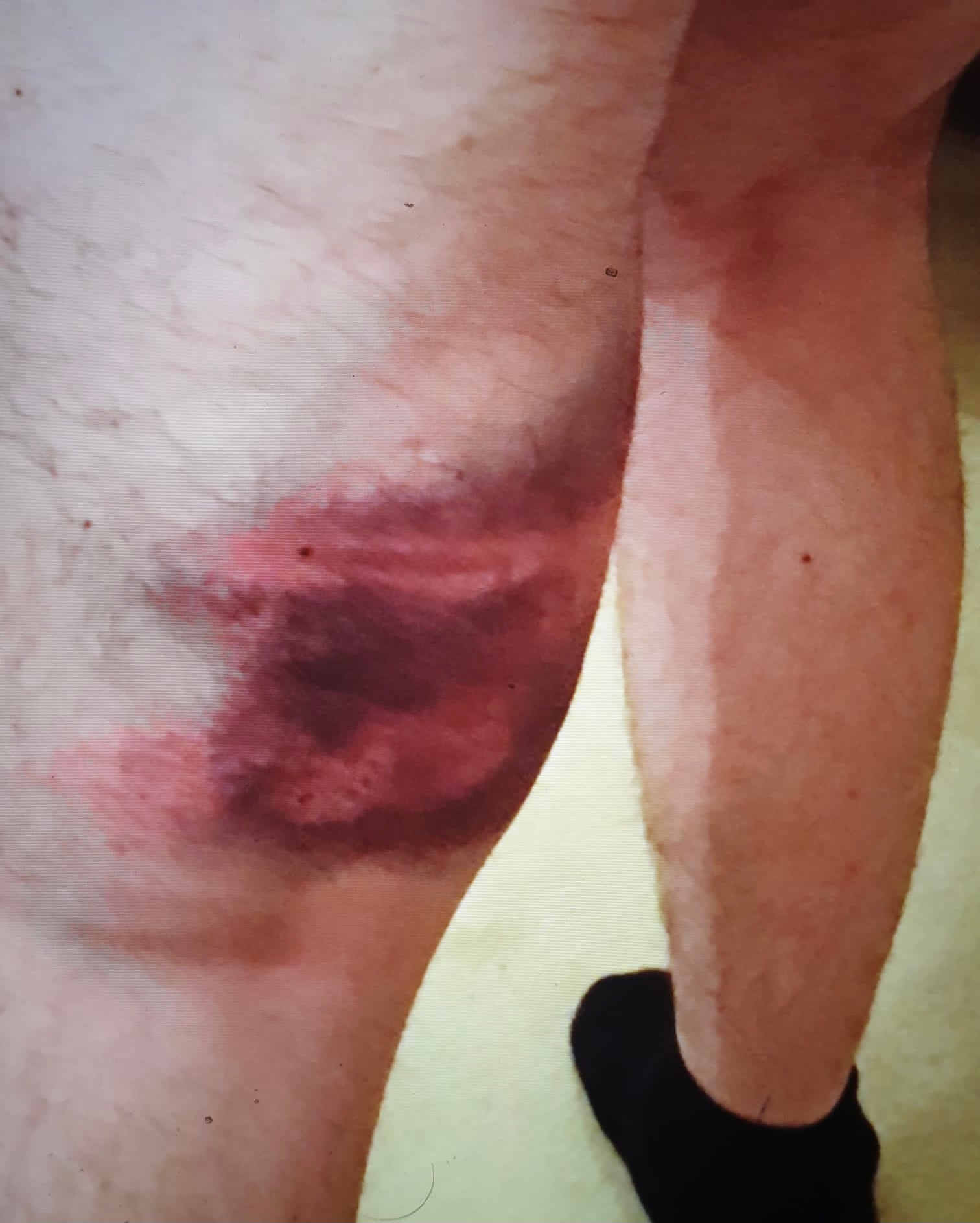


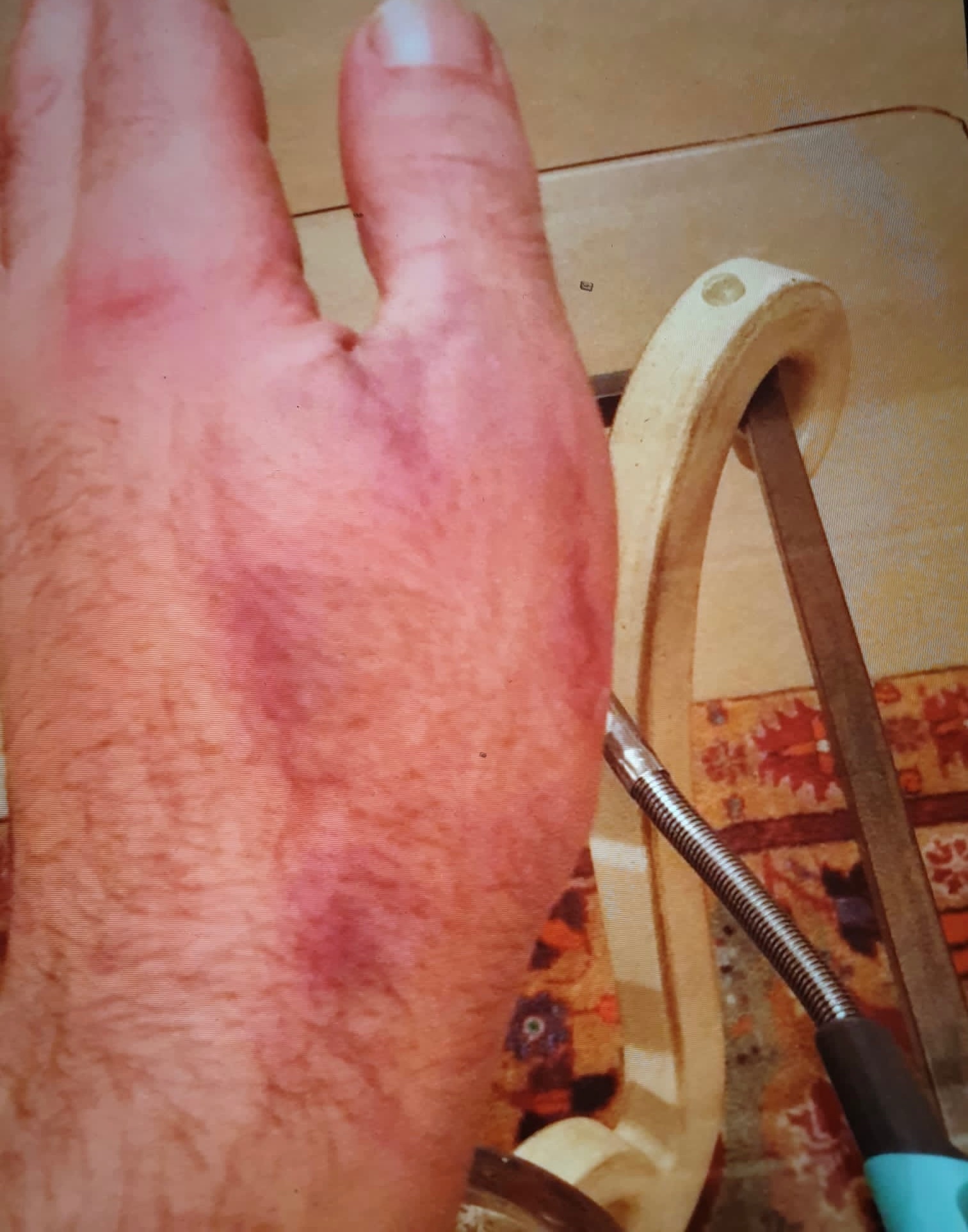




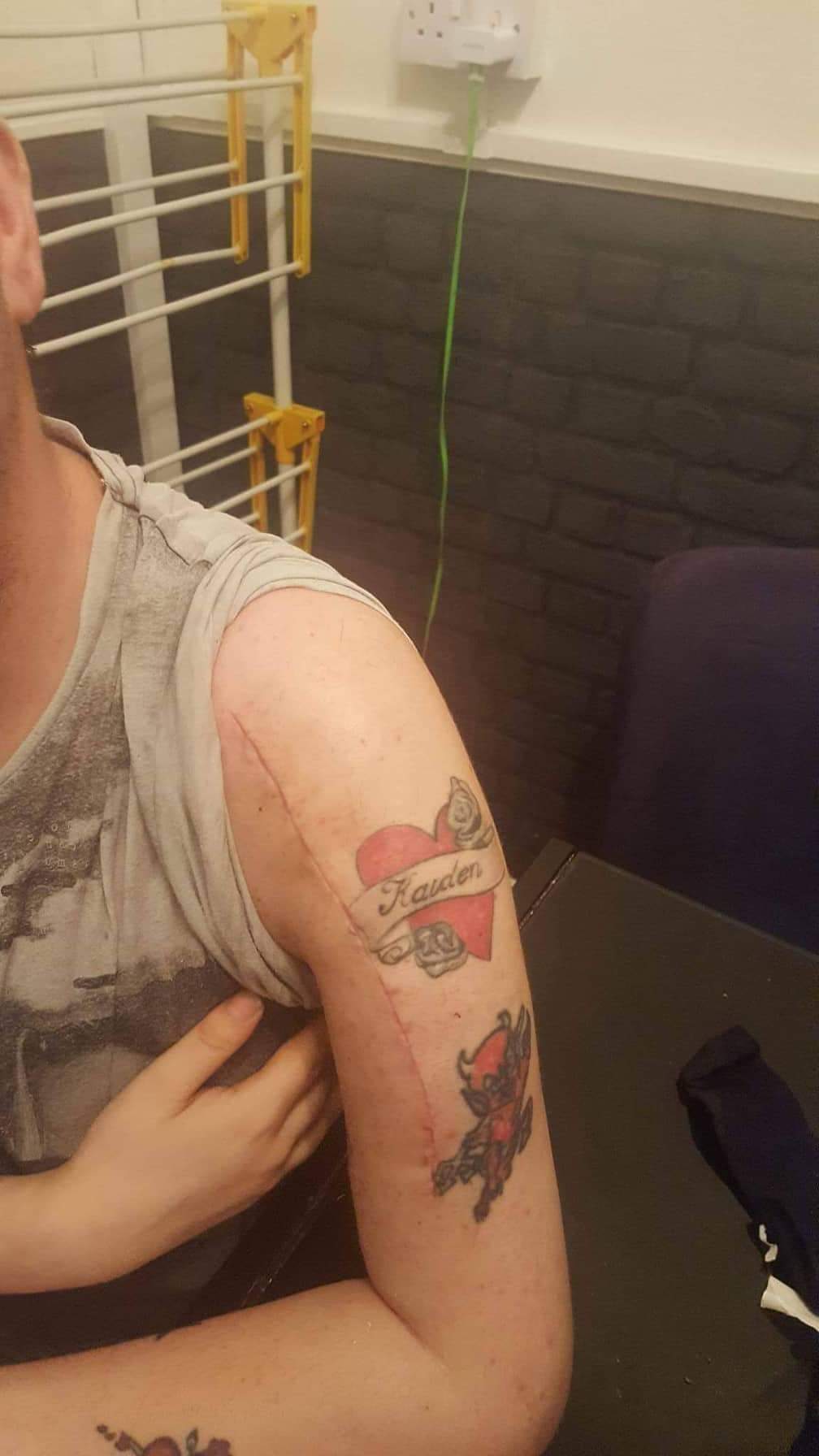

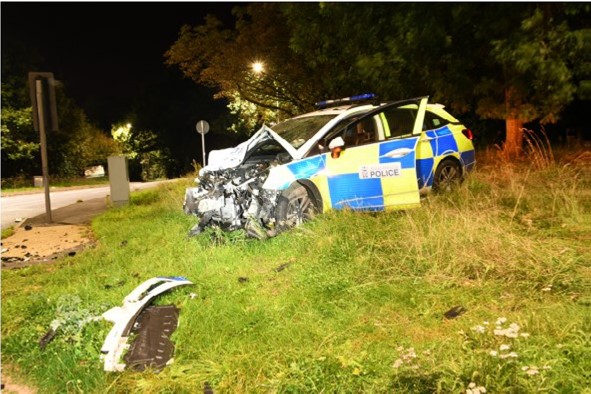
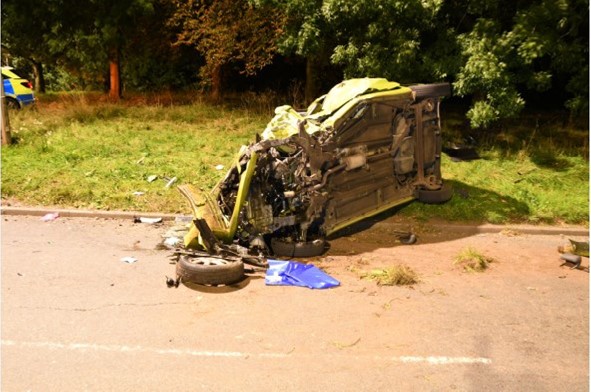



You must be logged in to post a comment.