
It is not illegal to record your interaction with a Police Officer in a public place on a mobile phone; indeed, as I have pointed out before, the ubiquity of mobile recording devices in modern society is a major reason why Police accountability for wrongdoing is increasing.
(An important caveat to the above is that I am generally assuming that the interaction you are filming is one which has been initiated either by the officer approaching you or the behaviour of the officer towards a third party in your presence. If you initiate the interaction for the purposes of trying to get a rise out of officers and film their reaction, that is not something which I morally condone and indeed you might be treading a fine line in such behaviour between legality and a public order offence).
Mobile phones can be shields of our civil rights and Little Brother’s eyes upon Big Brother, both at once; new technology to help preserve age-old rights to liberty and integrity of person.
They are the mirrors of the body cameras which Police Officers now themselves ubiquitously wear – but in this case, you crucially control the ‘on’ and ‘off’ buttons!
Plenty of scandalous cases reveal that Officers themselves cannot be trusted to police their own recordings – either not turning their cameras on in the first place, or seeking to delete incriminating footage.
In this context, it is important to highlight people’s rights in the face of what, experience tells me, is an increasing trend of Officers snatching phones and even arresting people who are filming them, their thuggish behaviour given a cynical veneer of legality by manipulation of the law, or a false conflation of powers.
There is nothing honest or legitimate in officers trying to stop people simply filming them. The officers’ motivations are almost always out of a desire to avoid scrutiny, or negate evidence that could impact on their latter ability to control the narrative of an arrest, stop-search or other potentially adverse encounter with the public.
As there is no law to stop the public from filming them in public, Police Officers with ill-intent or too much ego, or sometimes a lack of basic understanding, try to twist such a power out of a law designed to allow the seizure of evidence of crime – this being Section 19 of the Police & Criminal Evidence Act (PACE).
A classic example of this, is a case in which I currently act. Because it is at an early stage, I will only provide an outline of the key details without identifying either my client or the Force in question; but in a way these generalities are appropriate, because this is the type of ‘play’ which Officers up and down the country are regularly making – or attempting to make.
In June 2023 my client, a law-abiding woman of entirely good character, was at home, when she saw her sister being arrested by the Police in the road outside, following her sister having been involved in a dispute with a neighbour.
My client went outside to investigate and began recording events on her phone, whilst keeping her distance from the Officers.
Suddenly and without warning, a male Police Officer grabbed my client’s left wrist and left upper arm and said “I’m seizing that phone under Section 19 of PACE, I believe its got evidence of an offence, pass me the phone”.
Shocked, my client resisted this ‘Police mugging’, whereupon the Officer told her that she was “under arrest for resisting arrest”.
Other male and female Officers now ‘piled in’ and my client was forcefully handcuffed to the rear, whilst being forced face-down onto the bonnet of a Police car, and her mobile phone was wrenched from her grip.
A bystander asked if filming in public was not allowed, to which one of the male Officers chillingly replied, “We seize any mobile device that’s being used to record, it’s capturing evidence, an offence”. My client quite reasonably responded to this by telling the first Officer that she could have sent him the video, pointing out “All you had to do was ask”.
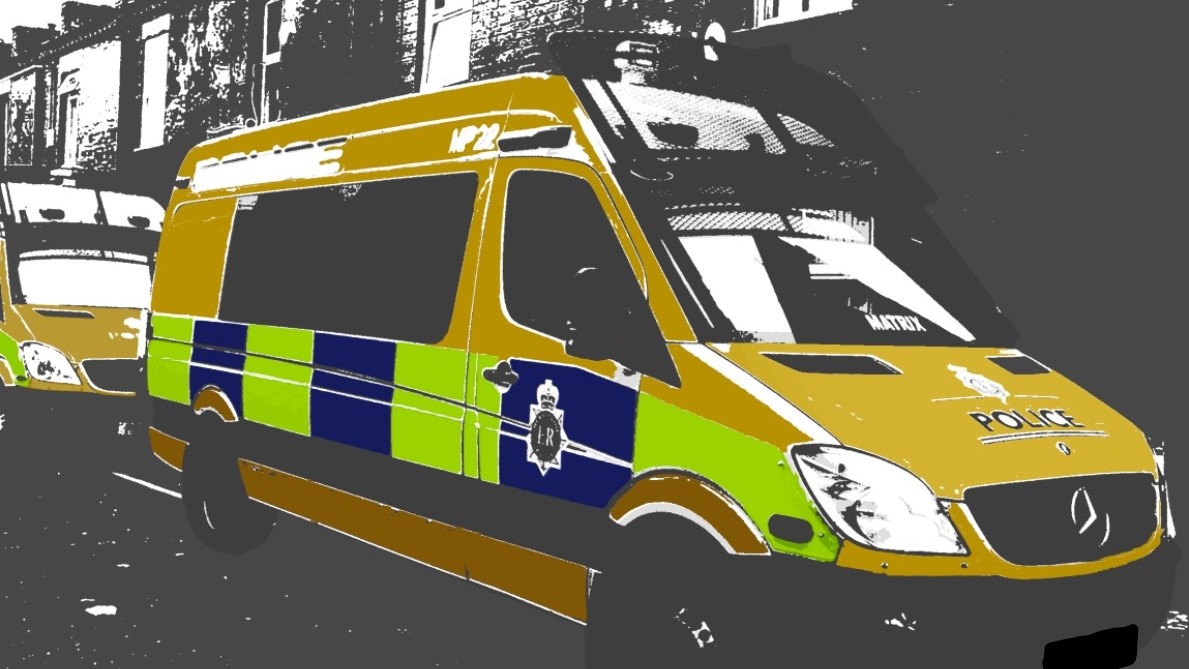
My client was then escorted to a Police carrier van, where the first Officer asked her if she understood why she had been arrested. My client told him that she did not at all understand, and again asserted that if the Officer wanted her phone footage, he could have just asked for it. The Officer threateningly replied “If you’re going to be difficult, I’ll take you to Custody”.
Unsurprisingly, however (because in reality, no offence had been committed), my client was now advised that she was being de-arrested and her handcuffs were removed.
However, when my client asked for her phone back, the Officer who had arrested her replied “It’s ours now” and said that she might get it back in six months. The Officer showed no compassion or concern at all for the disruption this would cause to my client’s work and personal life.
It was not until the following month, and after my client had proactively raised a number of complaints, that she was ‘allowed’ to come and collect her phone from a local Police Station.
Upon collection of the phone, my client noted that she had over 30 voice messages, one of which was from a local Walk-in-Centre where she had attended for treatment following her being manhandled by the Officers as described above. The message was now several days old. When my client belatedly made contact, she was advised that following a review of an x-ray which had been taken of her wrist and which had initially been thought to be clear, a fracture had in fact been identified and she now needed to go to hospital for further advice.
It will be noted that the Officers in this incident claimed the power to do what they wanted to do to my client’s person and property under Section 19 of PACE; a law which in my opinion is being as badly twisted by bully-boy Officers as are the limbs of those they unlawfully arrest whilst purporting to rely upon it.
Section 19 PACE actually provides as follows-
19 General power of seizure etc.
(1)The powers conferred by subsections (2), (3) and (4) below are exercisable by a constable who is lawfully on any premises.
(2)The constable may seize anything which is on the premises if he has reasonable grounds for believing—
(a)that it has been obtained in consequence of the commission of an offence; and
(b)that it is necessary to seize it in order to prevent it being concealed, lost, damaged, altered or destroyed.
(3)The constable may seize anything which is on the premises if he has reasonable grounds for believing—
(a)that it is evidence in relation to an offence which he is investigating or any other offence; and
(b)that it is necessary to seize it in order to prevent the evidence being concealed, lost, altered or destroyed.
(4)The constable may require any information which is [stored in any electronic form] and is accessible from the premises to be produced in a form in which it can be taken away and in which it is visible and legible [or from which it can readily be produced in a visible and legible form] if he has reasonable grounds for believing—
(a)that—
(i)it is evidence in relation to an offence which he is investigating or any other offence; or
(ii)it has been obtained in consequence of the commission of an offence; and
(b)that it is necessary to do so in order to prevent it being concealed, lost, tampered with or destroyed.
Section 19 is in a part of PACE which is specifically designated “Powers of Entry, Search & Seizure” and the proceeding sections are all about Police powers of entry into premises either with or without search warrants, in certain defined circumstances. It is clearly therefore a piece of legislation (drafted in 1983/4 let us not forget) which is designed to allow Officers investigating a crime to gather evidence of the crime, or the presumed proceeds of crime (such as stolen goods) whilst they are searching premises.
“Section 19” therefore does not give Police Officers the power to confiscate mobile phones in order to prevent filming. It was never intended to be used in this way, and Officers purporting to use it in this manner are doing so illegally. This becomes even clearer when the wording which I have highlighted in the legislation, above, is analysed-
- “Exercisable by a Constable who is lawfully on any premises” – Although ‘premises’ is a word which is not necessarily confined in its meaning to ‘indoors’- it can include a place in the open air – that place must be a distinct piece of land in single occupation/ ownership. The middle of the street (where my client’s encounter with the Police took place) can clearly not be defined as “premises.” If you are on a public highway, you are not “on premises” and thus Section 19 is irrelevant and inapplicable.
- Even if the encounter took place “on premises”, the Constable can still only seize “evidence in relation to an offence.” Filming in public is not itself an offence. Filming an officer talking to you is not an offence. Filming an officer searching or arresting somebody else is also not an offence.
- Even if a Constable can clear the above statutory hurdles, and does have legitimate grounds for believing that an offence has been ‘captured’ on your mobile phone, and you and he are currently “on premises” where Section 19 is exercisable, note the crucial caveat – “that it is necessary to seize it in order to prevent the evidence being concealed, lost, altered or destroyed.” In encounters of this nature, the person recording the Police is doing so precisely in order to preserve a record of what is happening, and it is nonsense to assert that there is an imminent danger of that evidence being destroyed. Indeed, what the Police really want to do through their intervention in this manner is not to preserve existing evidence, but to prevent the accumulation of further evidence – for the first thing they will do is to switch off the phone. They know this, and so do we, and it is a travesty of the law for them to pretend otherwise. Even if the Officer genuinely wanted to see, rather than stop, the recording – then the correct and lawful first port of call is simply to ask the person filming to send the officer a copy of the recording, as indeed my client pointed out to the Police in the incident described above “All you had to do was ask…”
Mobile phones are an intrinsic, even intimate, part of our lives today – as crucial to the person of the modern day as the wallet, diary, post-box, photo album, computer, and home and work landline phones were to people of the recent past; indeed, the phone is quite literally a device which is all of those things rolled into one!
It is quite correct in my opinion, for teachers to ban mobile phones from the classroom, and confiscate them from school pupils if they find them. What is totally wrong is for Police Officers to treat the world like a classroom they rule over and our personal privacy and property as fair game for the ‘adults’ to control. We are not children, and they are certainly not our teachers.
So for a start, let’s teach them what Section 19 of PACE actually says.
How you can help me
I hope that you have enjoyed reading this week’s blog post and the many others available on this website. If you have, then I would like to ask you a favour – in a world in which large and non-specialist law firms (generally from a personal injury background) are increasingly throwing huge marketing budgets into online advertising in order to ‘capture’ Actions Against the Police clients – I need your help to ensure that those in need of real expert advice come to the best place for representation. If you value the insights and expertise which I share on this blog, and the results which I have achieved for the people whose stories are recounted here, please post a positive review on Trustpilot to get the word out. Every 5 star review I receive makes a big difference in helping those who need the right advice to come to the right place. Thank you!


You must be logged in to post a comment.