In March of this year, BBC news reported on a case in which PC Ian Brown of Lincolnshire Police was cleared of misconduct in regards to his use of force, in the form of repeated baton strikes, upon a man who had already been tasered and restrained by other Officers.
The victim of PC Brown’s baton strikes was my client, whom I shall identify for this purposes of this blog as Christopher, and I am pleased to confirm that – notwithstanding the conclusion of the misconduct panel that PC Brown had “not breached standards of professional behaviour in relation to use of force and discreditable conduct” – I have now succeeded in holding Lincolnshire Police to account and have recovered a substantial award of damages and legal costs for my client.
The background to this incident was that Police were called to a residential street in Grantham in 2019 in response to reports that Chris was drunk and had committed acts of criminal damage at his mother’s address.
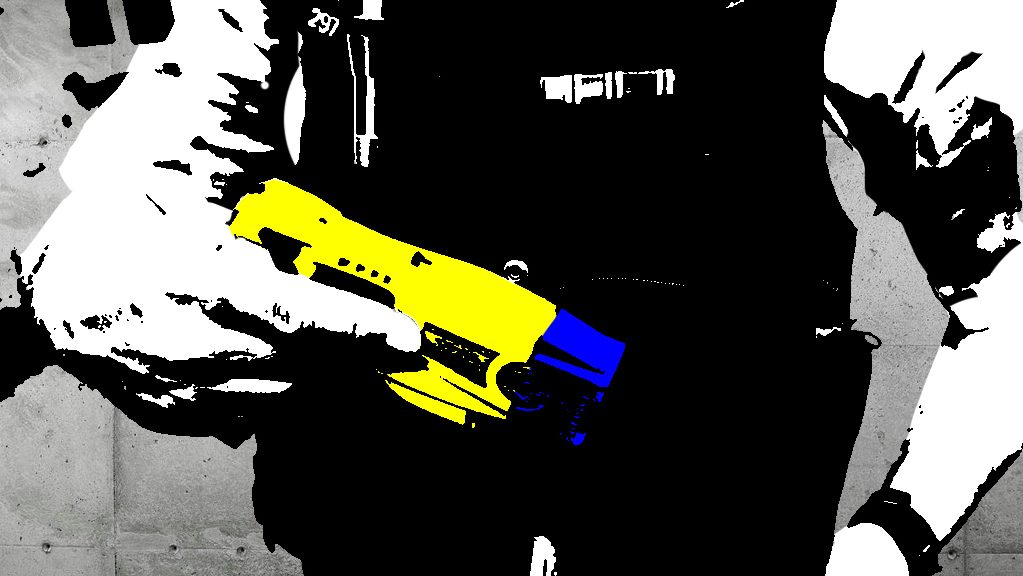
In total, five Officers attended at the scene. One of them tasered Chris, causing him to collapse to the ground.
After being tasered, Chris initially lay unresponsive on the ground whilst Officers handcuffed his arms behind his back. The Officers then lifted Chris up and moved him a short distance before putting him down on the ground again, where they also began to apply leg restraints. It was at this point, whilst several Officers were holding Chris face down on the ground, with handcuffs already applied, that Chris began crying out incoherently in distress. He was evidently confused and in pain, having been tasered only a few minutes before.
However, PC Brown’s response to Chris’s cries of distress was to deliver multiple baton strikes to Chris’s shoulder whilst shouting at him “Pack it in” and “No more, do you understand?”. Chris was to all intents and purposes completely defenceless at this point and only moments post-electrocution.
PC Brown is a particularly tall, strong Officer, measuring 6’ 4’’ in height and weighing 19 stone; at the time that he delivered these blows, not only was Chris under the control of several officers, it should have been manifestly obvious that Chris was still ‘coming back round’ after being tasered and was in a very vulnerable state. In my opinion, the officer’s actions were completely egregious and excessive and risked causing serious and unnecessary harm to my client.
Furthermore, PC Brown failed to subsequently complete a ‘Use of Force’ form as required (or even reference the incident in his pocket notebook) – perhaps indicative of the fact that the officer himself knew that his actions were unjustified.
My own assessment of PC Brown’s acts of violence was evidently shared by the Crown Prosecution Service, who authorised a charge of Actual Bodily Harm (ABH) against the Officer with the following comments-
“I consider the culpability of Ian Brown high – he is an experienced officer, he should be well conversed in methods of restraint control and necessity. From the evidence before me, the use of the baton at the time of 2nd and 3rd strike was neither proportionate nor necessary. The IP [Injured Party] is on the ground, he is prone, he does not appear to be struggling and appears to be under the control of the officers.
The case is aggravated by the fact that the DF [Defendant] is a serving police officer – with a significant period of service behind him.
The injury, on its own amounts to a common assault – however there are two strikes here with a baton – it is not a sustained assault but the use of the weapon to strike the IP whilst on the floor when he poses little if any risk in my view is excessive and amounts to ABH.”
However, the criminal courts often prove to be lenient and sympathetic forums when Police Officers are on trial, with the Defendant’s Police colleagues proving only ‘lukewarm’ witnesses for the Prosecution, reluctant to give adverse evidence against a fellow officer. Following trial at Nottingham Crown Court 30 August – 1 September 2022, PC Brown was indeed acquitted of having assaulted my client.
Likewise, as noted above, although Lincolnshire Professional Standards Department concluded that PC Brown had a ‘case to answer’ in respect of his use of force, on 8 March 2023 a disciplinary panel concluded that those allegations of excessive force and discreditable conduct were not proven.
Thankfully, justice has a ‘third prong’ to it in cases like this; the criminal and complaints process may have failed to produce the result my client wanted but, on his behalf, I was able to use the civil claims system to get Lincolnshire Police to admit liability for PC Brown’s excessive force and hence achieve a substantial damages award for Chris.
When the CPS were justifying the bringing of criminal charges against PC Brown, their lawyer wrote –
“The breach of trust here is significant in my view too. The public need to have confidence in the police that they will deal with detainees appropriately and that police assaults on detainees are not acceptable.”
On this occasion, Police accountability in the crucial area of excessive force and mistreatment of detainees has been achieved through use of our robust and rigorous civil justice system; a system in which I am very proud to play my part. Please contact me if you require advice or assistance in relation to any aspect of Police misconduct law.
My client’s name has been changed.


You must be logged in to post a comment.