
This week’s blog post comes from my colleague and fellow solicitor John Hagan. Like me, John specialises in civil actions against the police.
Here he reviews the new Public Order Act, and the Metropolitan Police’s interpretation of it when dealing with protesters, over the Coronation weekend.
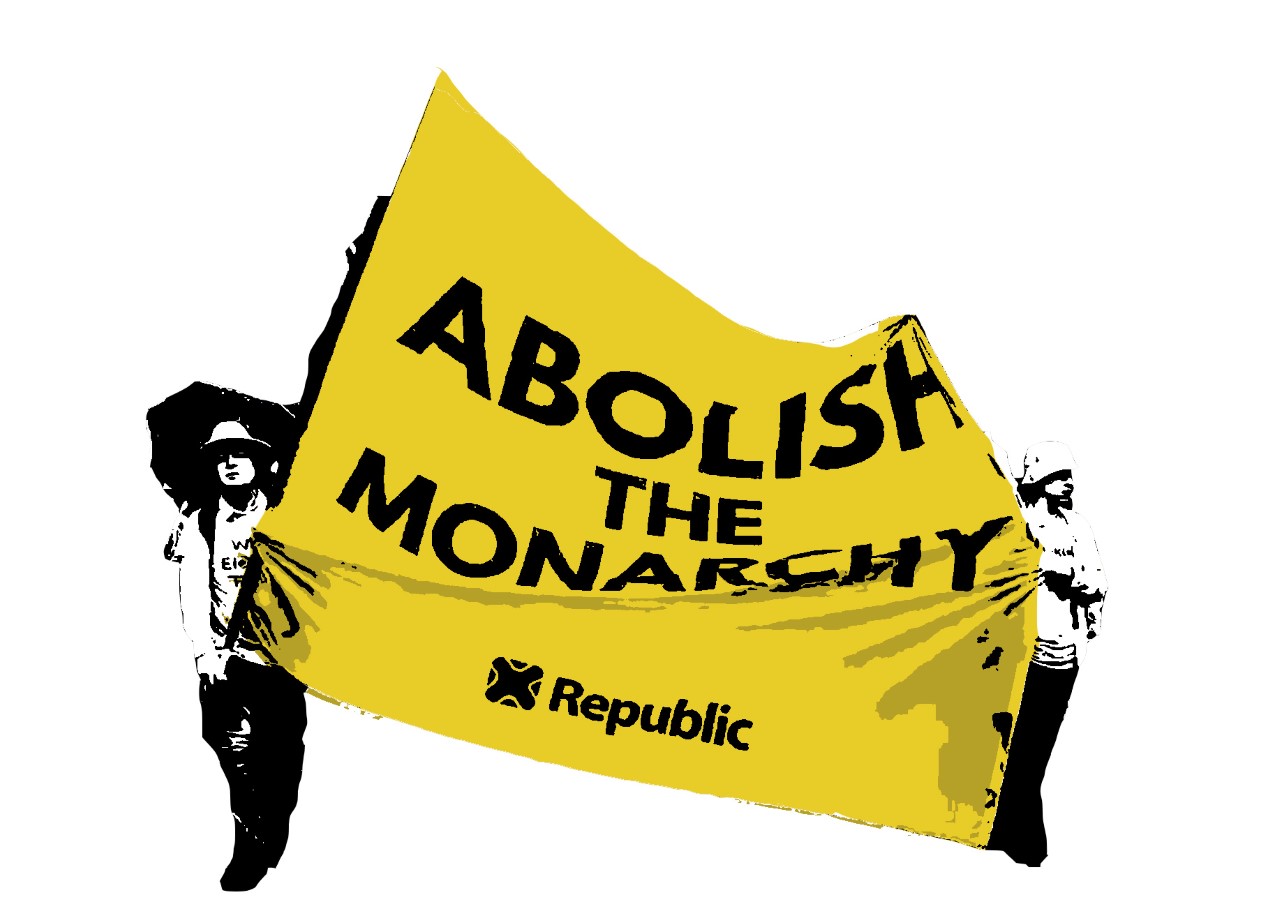
The Government’s new Public Order Act 2023 gained Royal assent only days before the Coronation of King Charles III on Saturday 6 May 2023. On the morning of the Coronation itself the Metropolitan Police, apparently using powers under the new Act, arrested six anti-monarchy protesters in London, including Graham Smith, the Head of the campaign group ‘Republic’.
The Government is insistent that the new Act will not curtail the right of people to protest peacefully – but will at the same time enable the Police to deal with those who are passive-aggressively disrupting the lives of other members of the public, for example by causing significant restrictions to traffic.
In response to the arrest of the Republic Group, Labour MP Lisa Nandy claimed that “Something has gone wrong” and that the Metropolitan Police must have made ‘mistakes’ in the arrests of the six protesters, on the basis that the Police have now announced that no action would be taken against them.
Of course, that statement is not entirely correct – the determination of whether an arrest is unlawful is not based on whether or not the person proves to be guilty of an offence, or even indeed whether there is subsequently found to be enough evidence to support a prosecution, regardless of its outcome. The question is whether, in the parameters of the laws of this country as set down by the Government, the Police did or did not have ‘reasonable suspicion’ that an offence was being committed.
As defined by Lord Devlin in Hussein v Chong Fook Kan (Privy Council Appeal No. 29 of 1968):
“Suspicion in its ordinary meaning is a state of conjecture or surmise where proof if lacking: ‘I suspect but I cannot prove’. Suspicion arises at or near the starting- point of an investigation of which the obtaining of prima facie proof is the end.”
The test of reasonable suspicion has a low bar which is appropriate, as it is a matter of common sense that the Police should not become liable for every arrest which does not result in a conviction. ‘Reasonable suspicion’ is a time-honoured method of balancing the rights of the individual against the needs of the Police to be able to operate effectively in the fight against crime, which must include leeway for them to make reasonable mistakes.
So of course, it is the word reasonable which is the key here – the Republic members were held on suspicion of possessing items which could allegedly be used for an illegal ‘locking on’ protest, contrary to Section 2 of the Act. These items turned out to be luggage straps which they claim were intended to secure their ‘Not My King’ protest placards.
It has to be said that luggage straps do not strike me as being made from material robust enough to facilitate a human ‘lock on’ protest, and therefore it does not seem surprising that the Republic arrestees have had their bail cancelled so quickly, officers now having returned the ‘offending items’ with a reported apology to the Republic chief. How much an ‘expression of regret’ without a formal admission of fault will count to those detained for up to 16 hours, in such politically charged circumstances, will remain to be seen.
Other arrests on Saturday included members of Westminster City Council’s women’s safety campaign Night Stars, who hand out rape alarms. The Police claimed they had intelligence which indicated that people were planning to use rape alarms to disrupt the Coronation parade.
The use of ‘pre-emptive’ Police powers to arrest people in the dubious circumstances outlined above certainly deserves investigation and I would urge all those who were arrested under anti-protest powers on Coronation Day to seek expert legal advice. Many of them may well have had their civil rights violated by overzealous, or even deliberately malicious policing. I note with interest that the Home Affairs select committee has announced an intention to examine the Met’s handling of republican protests at an evidence session next week.
The UK’s system of constitutional monarchy is based upon the theory that an apolitical head of state will help to preserve our age-old unwritten constitution, the bedrock of which are Common Law traditions upholding the liberty and privacy of the individual.
The Republic protesters were – inadvertently or otherwise – prevented from ‘raining’ on the royal parade, but I am sure that everyone who holds dear the true values of British liberal democracy will want the Police to be held to account if they have abused their powers and carried out wrongful arrests.
Those cheering for the Crown were, after all, cheering for a British State which holds supreme such values, and as a result can hold its head up high amongst the leading democracies of the World.


You must be logged in to post a comment.