Last year I blogged about the frustrations, delays and inadequacies of the Police Complaints process, by reference to the case of my client Emmanuel Madugbah, an NHS worker who heroically worked 43 consecutive days at Northwick Park Hospital during the critical phase of the first Coronavirus surge in 2020, witnessing the death of many patients, and also his own colleagues becoming patients.
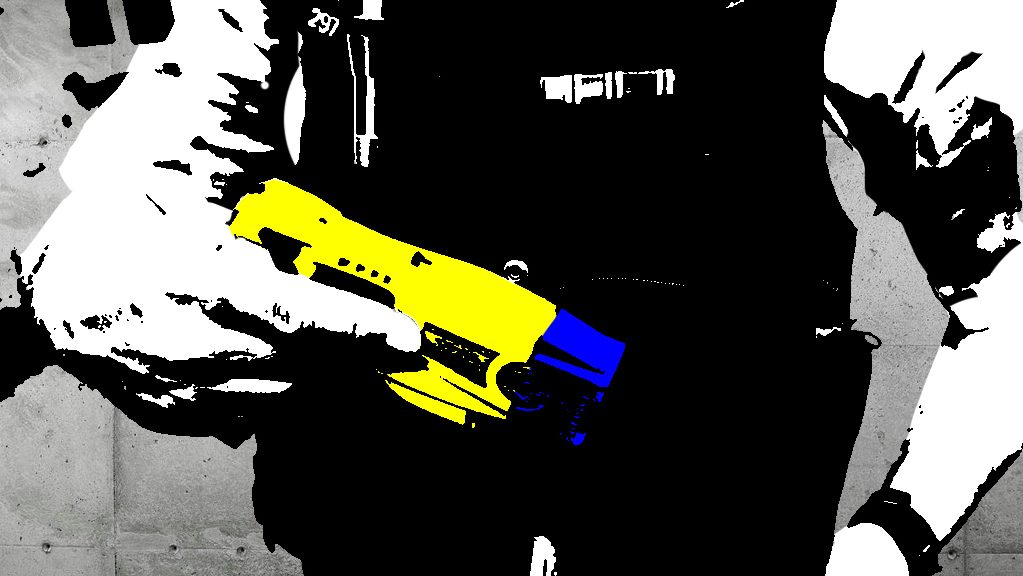
Emmanuel, who is a man of exemplary character, was going about his lawful business in Watford in October 2019 when he was ‘ambushed’ by a group of Police Officers who pointed a taser weapon at him, forced him to the ground and handcuffed his hands behind his back.
It subsequently transpired that the Officers had mistaken Emmanuel for another black man, whom they were seeking to arrest. Emmanuel strongly feels that there was very little physical resemblance between himself and the real suspect – other than them both being black.
Although my client’s complaint related to a single and relatively straightforward incident, Cambridgeshire Constabulary’s complaint investigation was only finalised on 19 April 2023 i.e. 3 years and 4 months later.
Of far greater concern to me, however, than the length of time which it takes their complaint investigations to be finalised, is the pro-police bias displayed by most Forces’ Professional Standards Departments, bordering on active antagonism towards complainants, of which Cambridgeshire PSD is certainly no exception.
During the investigation of Emmanuel’s complaint, it was necessary for me to appeal on my client’s behalf not once, but three times to the Independent Office of Police Conduct (IOPC).
On each occasion my client’s appeal was upheld or partially upheld, and Cambridgeshire Police were ordered to take remedial action in regard to clear inadequacies in their handling of the complaint, including the following –
- Their initial report lacking attention to detail given the “overriding seriousness” of the allegations;
- The investigating officer not displaying sufficient objectivity in assessing the allegations and when weighing the officers accounts against other evidence;
- Failures by the investigating officer to properly explain his conclusions;
- Failing to properly interrogate the officers alleged ‘reasonably held suspicion’ that my client was the real suspect.
The IOPC also censured the failure of the Officers who stopped my client to record the incident on body camera.
Throughout this process, both I and Emmanuel have remained highly concerned that the three white officers who assaulted and detained Emmanuel apparently leapt to their conclusions on the basis of his skin colour, and in the absence of any other similarity between the real suspect (a man in his 20s) and Emmanuel (a man in his 40s) other than the highly generic factor that they both wore beards of some description. I strongly suspect that a white man would never have been identified on the basis of skin colour and facial hair alone.
Not only is it right to question the lack of objectivity and independence displayed by Cambridgeshire PSD in this process, it is also proper to question how much public money has been wasted by the Police failure to properly and thoroughly investigate Emmanuel’s complaint at the first time of asking – rather than having to have their homework marked and returned to them for revision by myself and the IOPC on no less than three occasions.
I will also highlight that throughout the appeal and reinvestigation process, Cambridgeshire PSD repeatedly failed to pursue lines of enquiry which the IOPC had requested – leading the IOPC to bemoan the Force’s unwillingness to fully ‘probe’ their officers’ accounts. In the end, Cambridgeshire Constabulary was allowed to hide behind “the passage of time” as a reason for their officers not to be questioned further – i.e the delay of three years which the Force itself was entirely responsible for. Disappointingly the IOPC acquiesced in this, but it is rare for our Independent Office of Police Conduct to show much stomach for a fight with resistant Police Forces.
The ultimate outcome of the investigation into Emmanuel’s complaint was the issuing of the following apology by Cambridgeshire Constabulary to my client on 19 April 2023 –
“It is clear that there was an incident of mistaken identity and on behalf of Cambridgeshire Constabulary, I would like to offer you a sincere apology for any distress this may have caused you.”
I will leave it to the readers of this blog to determine how sincere that apology actually was, given that it did not materialise until three appeals to the IOPC had been upheld over the course of 3 years.
In the meantime, I am now proceeding with civil litigation on behalf of Emmanuel in order to achieve the true vindication and appropriate compensation which, I believe, he deserves from the Chief Constable of Cambridgeshire. In my previous blog post I spoke about the difference between the Police Complaints ‘circus’ and the much fairer and transparent process of the Court system, in which people have their hands on the ‘steering wheel’ provided by being the driving party in the litigation, rather than being mere passengers on the ‘merry-go-round’ of a complaint investigation.
If you believe that you have suffered from Police misconduct and have received a complaint report purporting to find that the officers involved did no wrong, I would strongly urge you to consult an expert in Actions against the Police such as myself, because it is my sad, but time-tested, experience that most Police complaints reports– and Police apologies – aren’t worth the paper they’re written on.


You must be logged in to post a comment.