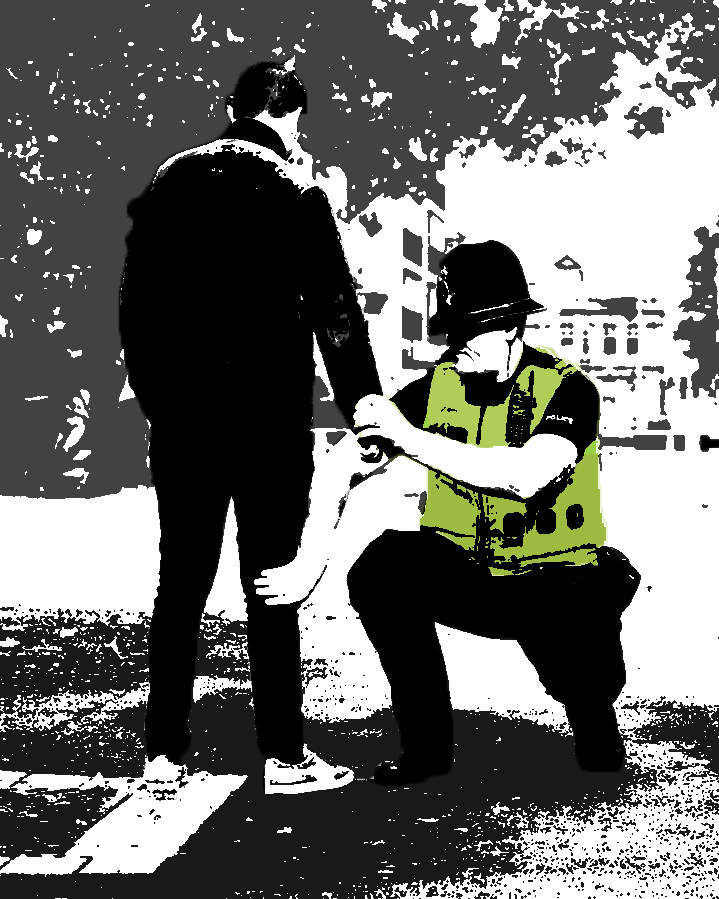
The frequency with which I blog about Police abuse of stop and search powers – in fact twice in the last month alone (see the reports about the cases of my clients Mo Izhar and James Reid – is I think indicative of how little our Police Forces can be trusted to use that power properly and proportionately. It is also, sadly, no coincidence that the majority of my blogs on this subject involve men of Black or Asian ethnic heritage. In my experience the misuse of stop and search powers by the Police is a problem at the very interface of two particular Police vices – authoritarian tendencies and retrogressive racism (which runs the full range from ‘schoolboy’ stereotyping to real racial animus).
Reflecting on Baroness Casey’s uncompromising enquiry into the state of health of the Metropolitan Police Service, I note that her findings closely match my own experience in this regard.
Her report quotes numerous examples of discrimination in the use of stop and search straight from the mouths of non-white Officers in the Force itself, one of whom told her –
“A lot of Officers are coming in who are not from London…none of them have been stopped and searched in their lives…I was stopped and searched 50 times before I joined”.
The Officers joining the Met from outside London are, of course, overwhelming white.
Baroness Casey cites numerous examples of bad practice in Met Police stop-searches, including-
- Officers justifying the search on the basis of a person’s ethnicity alone.
- Officers behaving in a rude/ uncivil manner during the search.
- Officers using excessive force leaving those searched – often young people – humiliated, distressed and untrusting of the Police.
As I highlighted in last week’s blog post the legitimacy (and, frankly, efficacy) of Policing depends on public trust and confidence. Baroness Casey repeatedly stresses this point in her report –
“To date, the Met has been unable to explain clearly enough why [stop and search] is justified on the scale it uses it, and in the manner and way it is carried out, particularly on Black Londoners. It has damaged trust. If the Met is unable to explain and justify its disproportionate use and the impacts of these, then it needs a fundamental reset.”
Anyone who lives or works at the front line of British policing – such as black and Asian metropolitans and Police misconduct lawyers such as me – can see that trust and confidence is being eroded by the continued Police misuse of stop and search powers, a tide in which the racial prejudice element in Policing has failed to recede in the way that it has in so many other parts of our modern life and culture.
The following statistics from Metropolitan Police Stop and Search data largely speak for themselves-
- Around 70% – 80% of all stop and searches lead to no further action.
- The more stop and searches are done, the greater the proportion of no further actions.
- In 2019-20 only 12% of stop and searches in London led to a subsequent arrest.
- The Misuse of Drugs Act was consistently the most used reason to stop and search in London, not weapons.
That latter fact is a particularly important one to bear in mind, given that the Met in particular often seeks to justify its disproportionate use of stop and search powers upon young black men because of the higher prevalence of knife crime amongst that demographic.
The fact is that most stop and searches are not about stopping knife crime at all and are often based only on the dubious and easily abused excuse of an Officer ‘smelling cannabis’ – see for example the widely reported case of my client Tariq Stanley.
The Casey report also highlights the conclusions of a February 2019 research study by the Centre For Crime and Justice Studies –
Overall, our analysis of 10 years worth of London-wide data suggest that although stop and search had a weak association with some forms of crime, this effect was at the outer margins of statistical and social significance. We found no evidence for effects on robbery and theft, vehicle crime or criminal damage and inconsistent evidence of very small effects on burglary, no domestic violent crime and total crime.
The combined effect of these facts and data is, in my opinion, now raising a pressing question – should we strip the Police of their stop and search powers? There is reason to think that not only does the current deployment of ‘stop and search’ fail to reduce crime it may actually be indirectly exacerbating it, by turning people against the Police and crippling the type of community cooperation which is essential for effective policing, not only in terms of rooting out criminals, but stopping crime taking root in the first place. This is particularly the case amongst those predominately Black, Asian or other minority ethnic urban communities which the Casey report describes as being “Over -policed and under- protected”.
Personally, I think we should put the Police nationwide on probation when it comes to stop and search powers. Section 1 of the Police and Criminal Evidence Act 1984 (PACE) empowers Constables to search persons or vehicles for “stolen or prohibited articles”. Likewise, Section 23 of the Misuse of Drugs Act 1971 empowers Constables to search persons or vehicles for “controlled drugs”. Both PACE and the Misuse of Drugs Act make the use of that power contingent on the Constable possessing reasonable grounds of suspicion.
Pause now, and look again at the Met Police data highlighted in Baroness Casey’s report – if 70%-80% of stop- searches lead to no further action, then it is clearly the case that the vast majority of people searched do not in fact have any prohibited article or drug upon them and the obvious conclusion from this extremely low ‘hit’ rate, is that the Police are habitually abusing their stop and search powers by targeting individuals for whom there are no objectively reasonable grounds of suspicion. If there were reasonable grounds, it is manifest that the ‘success’ rate from stop- searches would be much higher.
I suggest therefore that all of our Forces are put on an 18-month period of probation with the power of their Constables to carry out stop/searches under Section 1 PACE and Section 23 Misuse of Drugs Act to be rescinded if their hit rate of positive stop and searches does not increase to at least 50%.
Until such time as a Government initiative for holistic reform of Policing culture is genuinely and determinedly undertaken, it will continue to fall upon the shoulders of those who have been wronged by Police misuse of stop and search powers, and the lawyers such as myself who represent them, to punish the Police for this invidious form of misconduct and try to draw the poison from the wound they thereby inflict upon society.


You must be logged in to post a comment.